Accused Vault7 leaker argues Espionage Act charges are unconstitutional
Full article718 words · extracted from cyberscoop.com · click to collapse
Get our latest cybersecurity news first on Google.
Joshua Schulte's lawyer says some of the charges “are unconstitutionally overbroad and void for vagueness.”
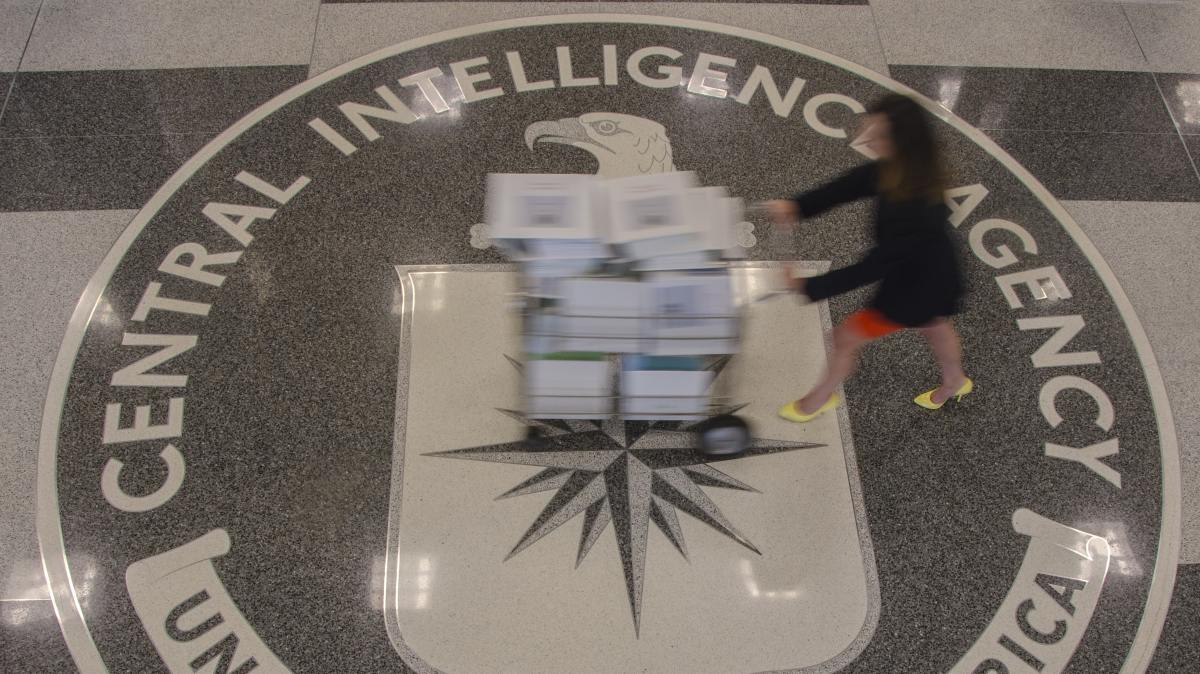
A former Central Intelligence Agency employee accused of providing U.S. secrets to WikiLeaks is asking a judge to toss some of the key charges against him, asserting they are unconstitutional.
A defense attorney for Joshua Schulte filed a motion on Tuesday asking a judge in the U.S. Southern District of New York to dismiss five charges prosecutors brought against Schulte under the Espionage Act and federal larceny law because they “are unconstitutionally overbroad and void for vagueness.”
The Department of Justice charged Schulte in June 2018 in connection with leaking a collection of CIA hacking tools used for cyber-espionage to WikiLeaks, which published much of the data under the name “Vault 7.” Schulte also has been accused of possessing child pornography, smuggling cell phones into his Manhattan jail cell, plotting a disinformation campaign to discredit his accusers and other wrongdoing as part of a years-long legal battle that’s only poised to escalate when the case goes to trial early next year. He has pleaded not guilty to all charges.
Schulte’s attorney, Edward Zas, asked Judge Paul Crotty to accept a pretrial motion which argues that the Espionage Act and federal larceny statutes do not apply in this case. The motion was due in July, though Zas wrote to Judge Crotty that the delay was “not a tactical, strategic, or reasoned decision.
“Counsel simply and inexcusably overlooked that the constitutionality of these statutes is open to serious question and vigorously debated by courts, journalists and commentators,” he said.
Zas went on to cite language in the Espionage Act and federal larceny statute that is “so vaguely worded,” and thus interpreted broadly, that they could be used to prosecute journalists and confidential sources “for obtaining and revealing truthful and important information about government activity to the public.” Zas also said the defense “did not realize that a viable motion to dismiss under the Constitution” existed until Oct. 22.
Observers have raised concerns about an indictment against WikiLeaks founder Julian Assange that alleges he violated the Espionage Act by obtaining and publishing secret U.S. diplomatic cables, a case the New York Times reported “could open the door to criminalizing activities that are crucial to American investigative journalists who write about national security matters.”
Schulte’s defense team is trying to convince the court to dismiss charges that could result in up to 50 years in prison if the defendant is convicted, Zas said.
The motion only is the latest update in a case that has grown more complicated as the legal wrangling has dragged on. After a heated courtroom debate, Judge Crotty ruled in September that the defense team may visit Schulte’s former CIA workstation to view one alleged scene of the crime. Schulte’s attorneys also asked the court to split the case into three trials, and appoint new counsel to represent him against charges that he violated security protocols from behind bars.
A full copy of the defense’s most recent motion is available below.
[documentcloud url=”http://www.documentcloud.org/documents/6541091-SchulteNov5.html” responsive=true]
Latest Podcasts
Government
FBI officials say AI is bolstering adversaries, emphasizing need to focus on cyber basics, patching
Feds accuse China of ‘systematic’ distillation of U.S. AI models
CIA’s Michael Ellis says cyber intelligence is changing how the agency operates
The G7 tells industry to hurry up and prep for post-quantum encryption
Technology
Threats
Chinese espionage groups swarm to exploit triple-link chain of zero-days
Microsoft discloses two actively exploited zero-days among 974 vulnerabilities
Russian national extradited to US for alleged involvement in bank-account takeover scheme
Attackers exploit zero-days in consistently besieged SonicWall product
Policy
Whistleblower says USPS deploying new, ‘untested’ IT systems governing mail-in ballots
‘Watershed 250’ test program in Texas looks to private sector for water cybersecurity help
Former sexual abuse victims say Grok used their images, videos to train deepfake capabilities
Cyber threats nudge Trump to sign executive order on foreign equipment in U.S. energy infrastructure
Text extracted automatically; images, tables and formatting may be missing. Original: https://cyberscoop.com/joshua-schulte-espionage-act-wikileaks-vault7/