FCC tightens rules on foreign firms building undersea cables, citing security
Full article944 words · extracted from cyberscoop.com · click to collapse
Get our latest cybersecurity news first on Google.
The agency said the cables responsible for powering that data explosion must be protected from acts of foreign sabotage.
Listen to this article
0:00
Learn more.
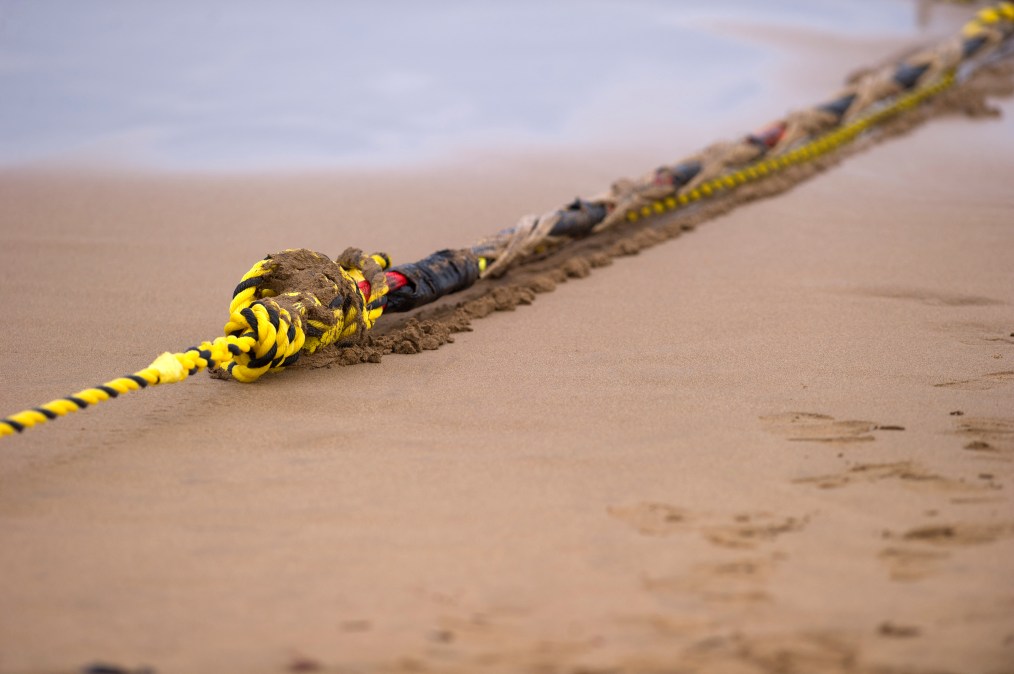
The Federal Communications Commission has adopted new rules to make it more difficult for foreign firms to apply for licensing to build out submarine cables, citing the need to protect the continued construction of critical undersea cables that underpin the internet and transcontinental communications.
The rules would require the FCC to presumptively deny “certain foreign adversary-controlled license applicants” from obtaining licenses needed to operate in U.S.-controlled waters. It would also restrict undersea capacity leasing agreements, ban the use of unspecified covered equipment and establish a range of physical and cybersecurity requirements on those same firms.
The FCC said that as the U.S. seeks to become “the unrivaled world leader in critical and emerging technologies and secure AI dominance,” the cables responsible for powering that data explosion must be protected from acts of foreign sabotage.
According to figures provided by the FCC, there are 90 cable systems already licensed by the agency. The FCC expects those numbers to grow significantly in coming years as businesses and governments continue to build out additional infrastructure.
In a statement, Chair Brendan Carr said the FCC’s order was meant to “facilitate, not frustrate” this expansion of submarine cable infrastructure, while making it harder for foreign nations to potentially gain influence or access to that infrastructure through an affiliate third-party company.
“We not only want to unleash the deployment of new undersea cables — we want to make sure those cables are secure. In recent years, we have seen submarine cable infrastructure threatened by foreign adversaries, like China,” Carr said.
An assessment by Recorded Future’s Insikt Group in July found that the growing submarine cable industry is facing a threat landscape that has “very likely escalated” over the past 18 months. Accidents continue to be the primary means of damage in publicly reported submarine cable incidents, but cybersecurity threats and cable-cutting techniques like anchor dragging are also rising.
Commissioner Anna Gomez noted that the FCC had not updated its rules around submarine cables in decades, despite their evolution into the backbone of global internet communications.
“As national security risks increased and our Government took steps large and small to protect our networks from foreign adversaries on multiple fronts, the Commission long coordinated with key federal agencies to protect submarine cables,” Gomez said.
One key challenge facing policymakers as this expansion continues will be putting hard security restrictions in place without slowing things down.
“The hard work of this item really was in finding the balance between, on the one hand, necessary security measures to protect critical U.S. communications infrastructure against foreign adversary threats and, on the other hand, clarifying and streamlining processes to provide economic certainty that will facilitate investment and minimizing regulatory burdens by removing duplicative or unnecessary requirements where possible,” Gomez said.
The FCC did not respond to a request for more details on the order by the time of publication.
More Scoops
FCC proposes public scorecard to rate telecoms on anti-robocall efforts
The agency also booted 14 phone service providers from U.S. networks for violating existing robocalling regulations.
FCC passes new cybersecurity rules for emergency systems, undersea cables

Open-source security is posing challenges governments can’t easily solve
Latest Podcasts
Government
FBI officials say AI is bolstering adversaries, emphasizing need to focus on cyber basics, patching
CIA’s Michael Ellis says cyber intelligence is changing how the agency operates
The G7 tells industry to hurry up and prep for post-quantum encryption
Jail time for Maine child in 764 marks turning point in federal law enforcement
Technology
Threats
Chinese espionage groups swarm to exploit triple-link chain of zero-days
Microsoft discloses two actively exploited zero-days among 974 vulnerabilities
Russian national extradited to US for alleged involvement in bank-account takeover scheme
Attackers exploit zero-days in consistently besieged SonicWall product
Policy
Whistleblower says USPS deploying new, ‘untested’ IT systems governing mail-in ballots
‘Watershed 250’ test program in Texas looks to private sector for water cybersecurity help
Cyber threats nudge Trump to sign executive order on foreign equipment in U.S. energy infrastructure
Election official says Tina Peters would be consultant, won’t have access to election systems
Text extracted automatically; images, tables and formatting may be missing. Original: https://cyberscoop.com/undersea-cable-fcc-licensing-foreign-companies/