Hackers exploit new MikroTik RouterOS flaws to hijack routers
Attackers actively exploit a MikroTik RouterOS SSH authentication bypass and privilege escalation chain, dubbed MikroTrick, to fully hijack internet-exposed routers.
Poland's CERT, with help from GPT-5.5-cyber and GPT-5.6-sol, discovered and confirmed active exploitation of a MikroTik RouterOS chain dubbed MikroTrick: SSH authentication bypass CVE-2026-67276 (incomplete RSA public key validation) chained with privilege escalation CVE-2026-86060 (crafted usernames granting full administrative privileges). A third flaw, CVE-2026-67277, allows unauthenticated kernel memory leaks or router crashes via the bandwidth-test service. Fixes shipped September 3 in RouterOS 7.25beta3, 7.24.2, 7.23.4, and 6.49.21, adding a startup compromise-detection mechanism. Shadowserver data showed 122,500 MikroTik devices with exposed SSH interfaces as of September 5, and the CERT published IoCs including two attacker IP addresses.
- CVE-2026-67276 allows SSH login without the private key when the public modulus is known
- CVE-2026-86060 grants full administrative privileges via specially crafted usernames
- CVE-2026-67277 lets unauthenticated attackers leak kernel memory or crash routers via the bandwidth-test service
- Fixed in RouterOS 7.25beta3, 7.24.2, 7.23.4, and 6.49.21 on September 3; ~122,500 devices had exposed SSH
- IoCs include specific SSH log entries, a privileged ops account, and IPs 82.192.72.4 and 103.102.31.18
Vulnerabilities mentionedAll →
| CVE | Vulnerability | CVSS | EPSS | Flags | Affected | Exposure | Published |
|---|---|---|---|---|---|---|---|
| CVE-2026-67276 | SSH RSA Authorized-Key Bypass in MikroTik RouterOS 7.x MikroTik RouterOS 7.x fails to compare the complete RSA public key when matching an SSH authentication attempt against an authorized user key, checking the key type and modulus but omitting the exponent. Because RouterOS verifies the signature against the client-supplied key, an attacker who knows the modulus of an authorized RSA key can present a key with exponent 1 and a forged signature and be accepted as that user without possessing the private key. Successful exploitation opens an SSH command channel as the target user, giving the attacker control of the router without a password or key. Only the RouterOS 7.x branch is affected, with fixes released in 7.23.4 (Long-term) and 7.24.2 (Stable). A public proof-of-concept is available and related reporting describes active campaigns hijacking MikroTik routers using chained RouterOS flaws, though this CVE is not in CISA KEV and its 30-day EPSS probability is low (0.2%). Do: Upgrade affected devices to RouterOS 7.23.4 (Long-term) or 7.24.2 (Stable) or later. Until patched, restrict SSH access to trusted management networks and, if feasible, remove or replace RSA authorized keys with other key types. Check devices for signs of compromise highlighted in recent reporting, such as an unexpected SSH user named '-2'. | 9.2 | <1% |
| mass~1M RouterOS 7.x devices (installed base in the millions; hundreds of thousands internet-exposed, with SSH a standard management service) | ||
| CVE-2026-86060 +1 in the same advisory: …67277 | Argument-Injection Flaw in MikroTik RouterOS SSH Login Enables Privilege Escalation CVE-2026-86060 is an argument-injection flaw (CWE-88) in MikroTik RouterOS's SSH login path: when a login supplies a username beginning with a prohibited character, the RouterOS login helper mishandles the argument, allowing the trusted RouterOS policy mask to be changed and privileges to be escalated. An unauthenticated attacker only needs the ability to reach the router's SSH service, since exploitation happens during the SSH login process itself. By altering the policy mask the attacker gains elevated rights on the device, and news reports indicate attackers have used this technique — including logins with usernames such as '-2' — as part of chains that take over routers without needing a password. Any RouterOS deployment running versions before the fixes (6.49.21 Long-term, 7.23.4 Long-term, 7.24.2 Stable) with SSH enabled or reachable is affected, with internet-exposed SSH at highest risk. Multiple outlets report the RouterOS flaws are being actively exploited in the wild, although no public proof-of-concept is known and the flaw is not yet in CISA KEV. Do: Upgrade RouterOS to 6.49.21 (Long-term), 7.23.4 (Long-term) or 7.24.2 (Stable) as applicable. Until patched, restrict SSH (TCP 22) to trusted management networks or disable the SSH service if unused, and review authentication logs and user/group policy settings for tampering — reports indicate attackers log in with usernames beginning with '-' (e.g., '-2'). | 9.2 group max | 1% | KEV PoC ×2 |
| mass≈1M+ devices: hundreds of thousands to over a million RouterOS devices are routinely observed internet-exposed, and far more expose SSH to the LAN |
Indicators of compromiseauto-extracted · verify before use · export allAll →
| Type | Indicator | Context |
|---|---|---|
| ipv4 | 103.102.31.18 | ccount 82.192.72.4 — linked to confirmed successful attacks 103.102.31.18 — observed attempting to exploit MikroTrick If compromise i |
| ipv4 | 82.192.72.4 | by ssh:-2@<ip>’ Presence of a highly privileged ops account 82.192.72.4 — linked to confirmed successful attacks 103.102.31.18 — ob |
Full article547 words · extracted from bleepingcomputer.com · click to collapse
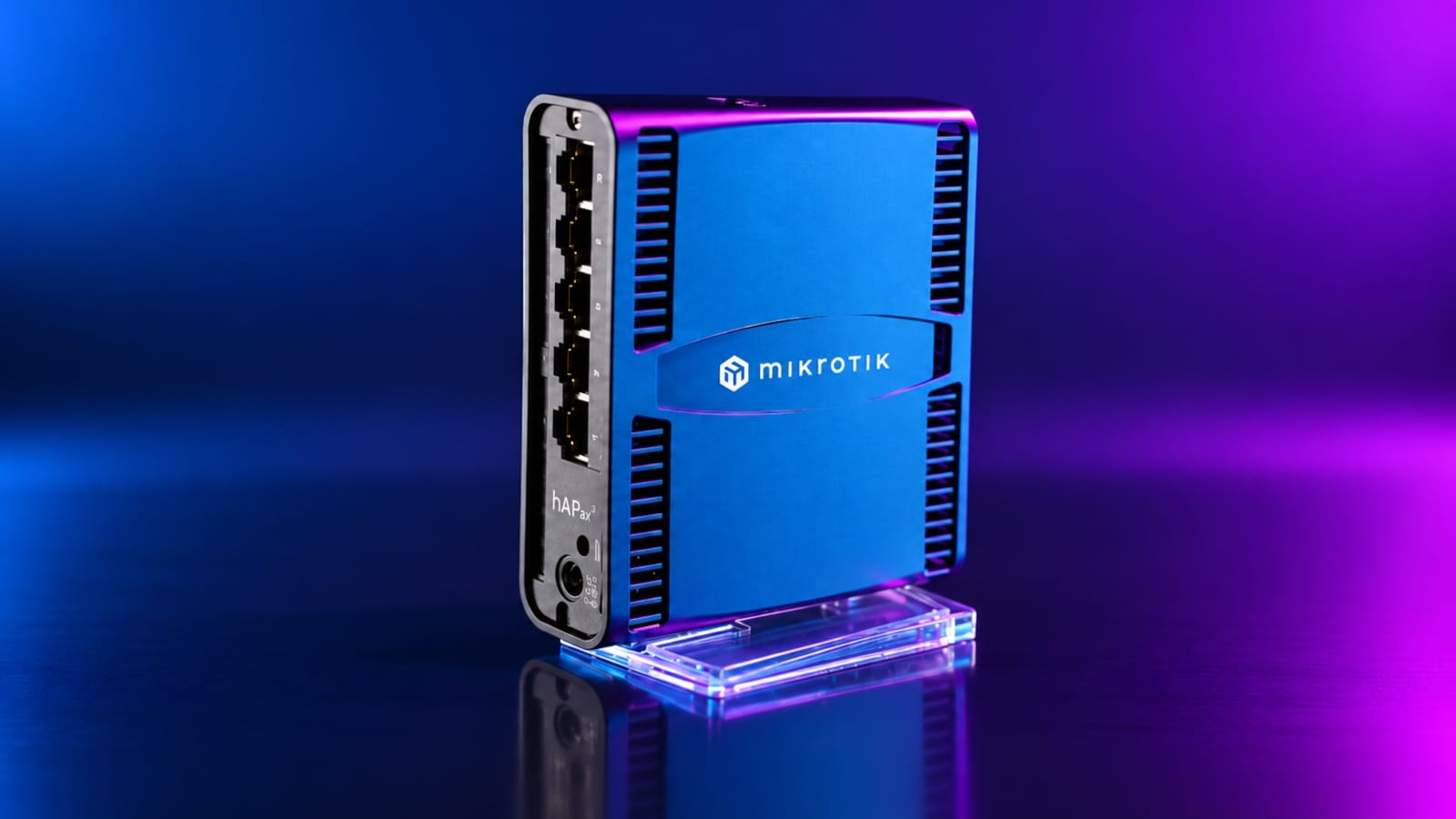
Hackers are exploiting a chain of two recently disclosed vulnerabilities in MikroTik routers to take control of devices with SSH services exposed to the internet.
One of the security issues, tracked as CVE-2026-67276, is an SSH authentication bypass flaw in MikroTik RouterOS caused by incomplete validation of RSA public keys.
An attacker who knows a username and the public modulus of that user’s key can exploit it by crafting a different key and logging in without the legitimate private key.
The second security issue is identified as CVE-2026-86060. It is an SSH privilege escalation flaw in MikroTik RouterOS due to improper handling of specially crafted usernames.
Hackers can leverage it using a specially crafted username to manipulate the SSH session so that the attacker obtains full administrative privileges.
Both vulnerabilities were discovered by Poland's CERT agency with the help of GPT-5.5-cyber and GPT-5.6-sol and received a critical severity rating.
The Polish agency dubbed the exploit chain “MikroTrick,” and warned that it is now actively exploited in the wild.
“In recent days we have been observing attacks against RouterOS devices accessible from the internet,” Poland's CERT warns.
“We have obtained confirmation that the attackers are exploiting this combination of vulnerabilities to take full control of devices whose SSH service is accessible from public networks.”
The Polish CERT also highlighted a third flaw, CVE-2026-67277, which affects the RouterOS bandwidth-test service and allows unauthenticated attackers to leak kernel memory or to remotely crash/restart the router.
MikroTik fixed the vulnerabilities in RouterOS 7.25beta3, 7.24.2, 7.23.4, and 6.49.21, released on September 3, and Poland's CERT validated the fixes.
In its advisory, the vendor notes that not all configurations are affected, but did not disclose any details to give users time to apply the security updates.
The updates add a compromise-detection mechanism to the routers that looks for known signs of unauthorized configuration changes at startup, disables malicious entries, and logs a critical warning.
However, the CERT notes that the absence of a marker indicating compromise should not be taken as a guarantee that a router has not been compromised.
The CERT shared the following indicators of compromise (IoCs):
- Log entries: ‘login failure for user -2 from <ip> via ssh’ and ‘user <name> added by ssh:-2@<ip>’
- Presence of a highly privileged ops account
- 82.192.72.4 — linked to confirmed successful attacks
- 103.102.31.18 — observed attempting to exploit MikroTrick
If compromise is suspected, the Polish agency recommends isolating the router, preserving logs and configuration, then factory-resetting the device and rebuilding it from a trusted configuration while rotating passwords, keys, and other secrets.
For those unable to apply the updates immediately, one recommendation is to restrict or disable externally accessible SSH, WWW/WWW-SSL, and bandwidth-test services, and avoid the built-in SSH clients and outbound TLS connections over untrusted networks.
As of September 5, there were 122,500 MikroTik devices with an exposed SSH interface, according to data provided by The ShadowServer Foundation. The exact number of devices vulnerable the MikroTik exploit was not determined, though.
Once attackers have valid credentials, only 37% of their actions are blocked
Overall prevention scores can hide what happens after initial access. Once attackers are using valid credentials, prevention drops sharply.
The Blue Report 2026 measures defenses technique by technique across 338 million simulations run in customer production environments.
Text extracted automatically; images, tables and formatting may be missing. Original: https://www.bleepingcomputer.com/news/security/hackers-exploit-new-mikrotik-routeros-flaws-to-hijack-routers/