Vulnerability disclosure policy bill for federal contractors clears Senate panel
Full article1,037 words · extracted from cyberscoop.com · click to collapse
Get our latest cybersecurity news first on Google.
The Homeland Security and Governmental Affairs Committee on Wednesday also advanced legislation to strengthen the federal IT supply chain.
Listen to this article
0:00
Learn more.
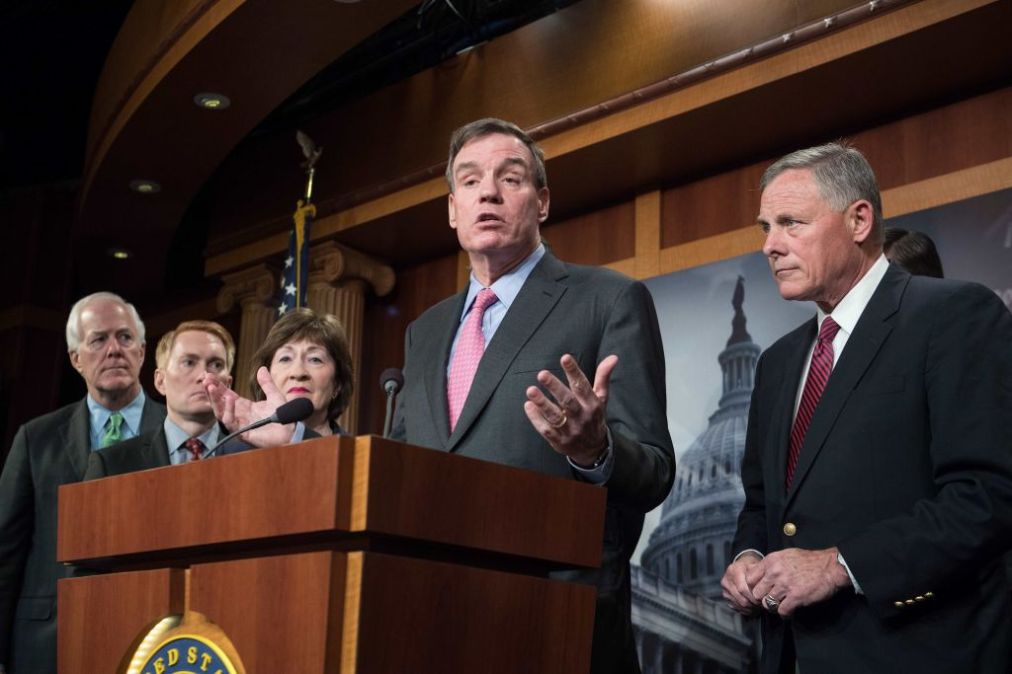
A bill that would require federal contractors to implement vulnerability disclosure policies that comply with National Institute of Standards and Technology guidelines cleared a key Senate panel Wednesday, setting the bipartisan legislation up for a vote before the full chamber.
The Federal Contractor Cybersecurity Vulnerability Reduction Act of 2024 (S. 5028) from Sens. Mark Warner, D-Va., and James Lankford, R-Okla., sailed through the Senate Homeland Security and Governmental Affairs Committee, after a companion bill from Rep. Nancy Mace, R-S.C., passed the House Oversight Committee in May.
The bill from Warner and Lankford would formalize a structure for contractors to receive vulnerability reports about their products and take action against them ahead of an attack. In announcing the legislation in August, Warner said that vulnerability disclosure policies, or VDPs, “are a crucial tool used to proactively identify and address software vulnerabilities,” and that this bill would “better protect our critical infrastructure and sensitive data from potential attacks.”
Federal law mandates that civilian federal agencies have VDPs, but no standard currently exists for federal contractors. The legislation would require contractors to accept, assess and manage any vulnerability reports that they receive.
The legislation was previously touted by cyber firms including Palo Alto Networks and HackerOne. In a statement provided to CyberScoop on Wednesday, Ilona Cohen, HackerOne’s chief legal and policy officer, said “the overwhelming bipartisan support in both the Senate and House” of the bill “provides additional momentum for enacting this legislation as part of this year’s” National Defense Authorization Act.
The bill was written in part as a response to the 2015 Office of Personnel Management data breach, in which vulnerabilities in systems used by two contractors that stored data on federal employee background checks were exploited.
“Federal agencies have made significant progress in implementing vulnerability disclosure policies,” Cohen said. “This legislation will address a gap in our nation’s cybersecurity defenses by requiring contractors to adopt this best practice to protect government information and personal data.”
Other cyber bills move forward
Days after Sens. Gary Peters, D-Mich., and Mike Rounds, R-S.D., introduced legislation to strengthen oversight powers of an interagency federal council charged with securing the government’s IT supply chain, the bill cleared HSGAC and now awaits a full Senate vote.
The Federal Acquisition Security Council Improvement Act of 2024 (S. 5310) from Peters, who chairs HSGAC, and Rounds, a member of the Senate Intelligence Committee, seeks to combat security threats posed by technology products made by companies with ties to foreign adversaries, particularly China.
The legislation, a companion to a House bill introduced in September, would give the Office of the National Cyber Director leadership authorities over the Federal Acquisition Security Council, which is currently overseen by the Office of Management and Budget.
The bill also aims to push the FASC to pursue orders to block the use of technologies that may threaten national security — something the council hasn’t done in its six years of existence. The legislation would establish a process to allow Congress to initiate investigations into potentially risky tech, with the FASC then ordering a ban on government purchases of that product or a ban on products from the company in question.
Two pieces of cybersecurity workforce legislation also cleared the Senate panel Wednesday: the DHS Cybersecurity On-the-Job Training Program Act (H.R. 3208) and the DHS Cybersecurity Internship Program Act (S. 5321). Both bills would amend the Homeland Security Act of 2002.
The first bill, introduced last year by Rep. Sheila Jackson Lee, D-Texas, directs DHS to develop a program to train agency workers on cyber-related matters at the department. The second bill, from Peters and Rep. Yvette Clarke, D-N.Y., would create a paid cybersecurity internship program within DHS.
More Scoops
Across party lines and industry, the verdict is the same: CISA is in trouble
The agency lost a third of its people in a year. Now industry and lawmakers on both sides say it's unprepared for a potential crisis.

Information sharing law’s expiration could squander government vulnerability hunting efforts, senator says
Cyber threat information law hurtles toward expiration, with poor prospects for renewal
Latest Podcasts
Government
FBI officials say AI is bolstering adversaries, emphasizing need to focus on cyber basics, patching
Feds accuse China of ‘systematic’ distillation of U.S. AI models
CIA’s Michael Ellis says cyber intelligence is changing how the agency operates
The G7 tells industry to hurry up and prep for post-quantum encryption
Technology
Threats
Chinese espionage groups swarm to exploit triple-link chain of zero-days
Russian national extradited to US for alleged involvement in bank-account takeover scheme
Attackers exploit zero-days in consistently besieged SonicWall product
Jail time for Maine child in 764 marks turning point in federal law enforcement
Policy
Whistleblower says USPS deploying new, ‘untested’ IT systems governing mail-in ballots
‘Watershed 250’ test program in Texas looks to private sector for water cybersecurity help
Former sexual abuse victims say Grok used their images, videos to train deepfake capabilities
Cyber threats nudge Trump to sign executive order on foreign equipment in U.S. energy infrastructure
Text extracted automatically; images, tables and formatting may be missing. Original: https://cyberscoop.com/federal-contractor-cybersecurity-vulnerability-reduction-act-2024/