Cyber workforce legislation vote gives rise to partisan rift on House Homeland Security Committee
Full article874 words · extracted from cyberscoop.com · click to collapse
Get our latest cybersecurity news first on Google.
Democrats voted against a bill they once supported, citing President Trump’s actions on cyber personnel.
Listen to this article
0:00
Learn more.
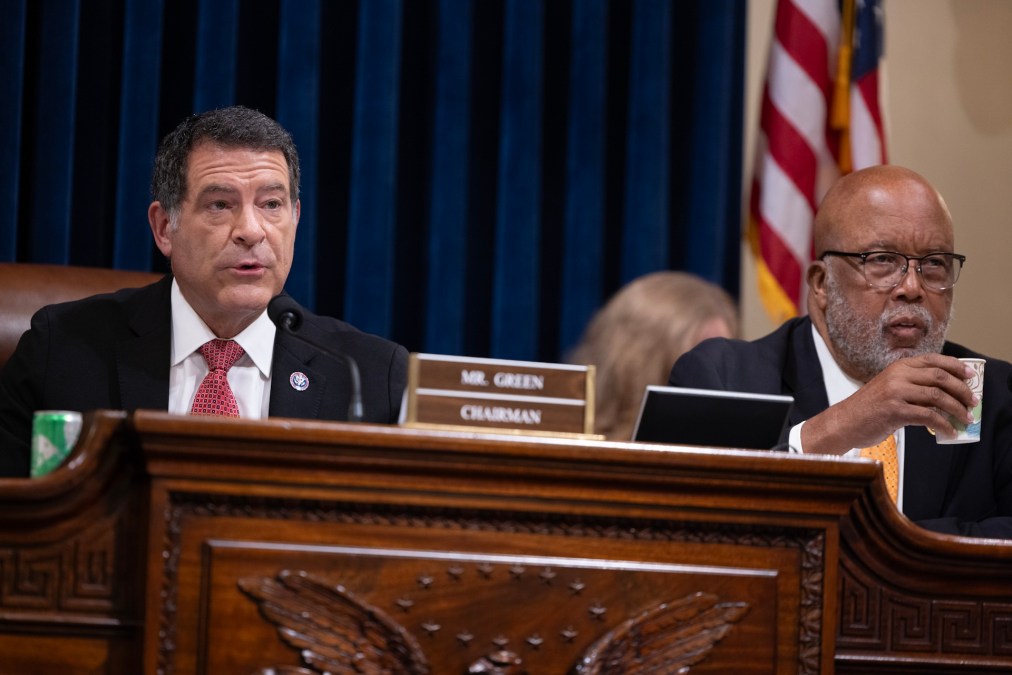
A partisan divide opened Wednesday over a bill to bolster the cyber workforce, legislation that earned unanimous support in the House Homeland Security Committee last year but that Democrats are now wary of under President Donald Trump.
Under the legislation, students at technical schools and community colleges would receive scholarships in return for two years of service in federal, state, local, tribal or territorial government cyber positions. The committee approved it Wednesday on a near party-line vote.
Its chief sponsor, Homeland Security Chairman Mark Green, R-Tenn., dubbed his PIVOTT Act “a practical measure for strengthening our cyber workforce,” and has counted it as a top legislative priority for the panel after first introducing it last fall.
But Democrats who supported it last year in a 27-0 committee vote said that as Trump moves to cut federal cyber workers and freeze grant programs that aid state and local governments, the legislation would be an empty gesture or worse.
“A bill that conditions scholarship on government service while the Trump administration is firing existing cyber employees and freezing hiring of new employees is a bait-and-switch, at best,” said Mississippi Rep. Bennie Thompson, the top Democrat on the committee. “Democrats don’t want to trick community college students in need thinking that there will be a federal cyber job waiting for them after graduation.”
The program would be housed within the Cybersecurity and Infrastructure Security Agency, where the administration has eliminated 130 positions thus far, with potential additional cuts looming. The cuts have affected cyber personnel at other agencies, too, and Thompson said that the administration is refusing to implement existing scholarship-for-service programs such as the Intelligence and Cybersecurity Diversity Fellowship program at the Department of Homeland Security.
“Over the past 37 days, we have witnessed an unprecedented assault on the federal workforce that renders this bill entirely unworkable,” Thompson said.
Green said that “cybersecurity is often viewed as one of the bipartisan areas where Congress can get things done” but criticized Democrats for their turnabout. “This is political games,” he said, from a party that “got their asses handed to them” in the 2024 elections.
The CISA cuts amount to just 3% of the agency workforce, he said. “It’s not like CISA’s been handicapped,” he added, noting that federal workers shouldn’t be shielded from the kind of scrutiny any non-federal employee might face. And the programs Democrats mentioned are “on pause, not ended.”
The one Democrat who voted in favor of the bill, Texas Rep. Julie Johnson, said the “concept was excellent,” but that it was “all hat, no cattle” because the cuts and lack of funding in the GOP budget undermine the measure’s goals.
Separately, Republicans voted down two resolutions from Thompson designed to, in his words, get information from DHS “about Trump administration actions that put the department’s information systems at risk, jeopardize its workforce and freeze homeland security grant funding.”
The committee doesn’t have enough facts about the Department of Government Efficiency personnel who are accessing information at DHS or what they’re doing with it, Democrats said.
No Republicans commented on the resolutions, which fell by votes of 13-8 and 13-10.
More Scoops
House intel bill includes provisions on state and local threat intelligence, election security, AI
The House Intelligence Committee advanced its fiscal 2027 authorization legislation Monday.

Open-source security is posing challenges governments can’t easily solve

Hill Dems hammer GOP for $250M CISA budget cut
Latest Podcasts
Government
FBI officials say AI is bolstering adversaries, emphasizing need to focus on cyber basics, patching
CIA’s Michael Ellis says cyber intelligence is changing how the agency operates
The G7 tells industry to hurry up and prep for post-quantum encryption
Jail time for Maine child in 764 marks turning point in federal law enforcement
Technology
Threats
Chinese espionage groups swarm to exploit triple-link chain of zero-days
Microsoft discloses two actively exploited zero-days among 974 vulnerabilities
Russian national extradited to US for alleged involvement in bank-account takeover scheme
Attackers exploit zero-days in consistently besieged SonicWall product
Policy
Whistleblower says USPS deploying new, ‘untested’ IT systems governing mail-in ballots
‘Watershed 250’ test program in Texas looks to private sector for water cybersecurity help
Former sexual abuse victims say Grok used their images, videos to train deepfake capabilities
Cyber threats nudge Trump to sign executive order on foreign equipment in U.S. energy infrastructure
Text extracted automatically; images, tables and formatting may be missing. Original: https://cyberscoop.com/cyber-workforce-legislation-partisan-rift-house-homeland-security-committee/