Russian hackers targeted Obama's aides as early as 2007, and attempts continue, report says
Indicators of compromiseauto-extracted · verify before use · export allAll →
| Type | Indicator | Context |
|---|---|---|
| domain | 37486-the-shocking-truth-about-election-rigging-in-america.rtf.lnk | ents were titled as “harvard-iop-fall-2016-poll[.]doc” and “37486-the-shocking-truth-about-election-rigging-in-america[.]rtf[.]lnk.” The evidence uncovered by Area 1, a firm founded by N |
| domain | harvard-iop-fall-2016-poll.doc | ections.” Several corresponding attachments were titled as “harvard-iop-fall-2016-poll[.]doc” and “37486-the-shocking-truth-about-election-rigging-in- |
Full article712 words · extracted from cyberscoop.com · click to collapse
Get our latest cybersecurity news first on Google.
Russia’s preeminent cyber espionage group, known as APT28 or Fancy Bear, heavily targeted former U.S. President Barack Obama’s staff while they campaigned for office in 2008, according to newly published research by U.S.-based cybersecurity firm Area 1 Security.
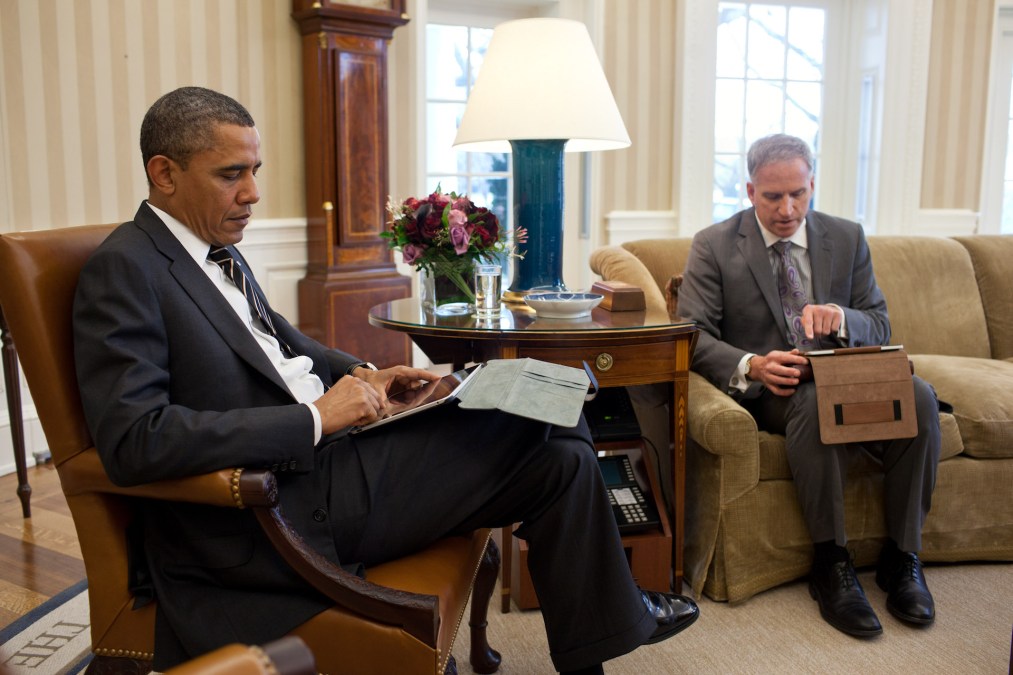
Russia’s preeminent cyber-espionage group, known as APT28 or Fancy Bear, heavily targeted Barack Obama’s staff during the 2008 campaign, according to newly published research by U.S.-based cybersecurity firm Area 1 Security.
The former president’s closest allies — including campaign staff, top aides and other senior U.S. officials — began receiving a barrage of phishing emails from Russian spies as far back as 2007, when he was still a U.S. senator. Some Obama associates continue to be targeted, Area 1 said. Ex-officials are still being sent phishing emails even though they left government years ago, a trend that shows the attackers’ persistence in trying to compromise assets.
A blog post published Friday afternoon by Area 1 shows that associated phishing emails commonly employed subject lines like “just FYI,” “RFI,” “eFax,” or “Elections.” Several corresponding attachments were titled as “harvard-iop-fall-2016-poll[.]doc” and “37486-the-shocking-truth-about-election-rigging-in-america[.]rtf[.]lnk.”
The evidence uncovered by Area 1, a firm founded by National Security Agency veterans, offers novel insight into how APT28 targets and automates cyberattacks on a wide swath of victims.
In 2013, NBC News first reported — citing unnamed intelligence officials — that Chinese hackers were responsible for a series of digital attacks in 2008 on the campaigns of Obama and Sen. John McCain, his Republican opponent. Russia’s apparent and simultaneous involvement in these intrusions had not been previously reported prior to the Area 1 report.
“Politicians need to evaluate their computer security posture of their campaigns before they announce they’re running for office,” said Area 1 co-founder Blake Darché. “These attacks won’t be the last targeting politicians.”
While the Area 1 report notes that more than 15 executive positions in the Obama administration were repetitively targeted by APT28 — including the director for the Office of Nuclear Threat Science and former U.S. ambassador to Russia — Area 1 did not disclose the names of specific individuals earmarked by Russian hackers.
Multiple individuals whose corresponding titles can be found listed in Area 1 Security’s report told Newsweek that they were unaware of being targeted by a foreign intelligence service.
It’s not uncommon for American political figures to be sent spear phishing emails — otherwise known as malicious emails with booby-trapped attachments that carry malware — from a wide range of cybercriminals. For example, Rep. Michael McCaul, R-Texas, told CyberScoop in January that he was the target of phishing emails on an “almost daily basis.”
Area 1 obtained evidence of this expansive, more than decade long, espionage campaign by monitoring a network of proprietary sensors — “[We] collected this information from our globally distributed sensor network that detects attacks at their earliest stage of formation,” Darché told CyberScoop.
Latest Podcasts
Government
FBI officials say AI is bolstering adversaries, emphasizing need to focus on cyber basics, patching
Feds accuse China of ‘systematic’ distillation of U.S. AI models
CIA’s Michael Ellis says cyber intelligence is changing how the agency operates
The G7 tells industry to hurry up and prep for post-quantum encryption
Technology
Threats
Microsoft discloses two actively exploited zero-days among 974 vulnerabilities
Russian national extradited to US for alleged involvement in bank-account takeover scheme
Attackers exploit zero-days in consistently besieged SonicWall product
Jail time for Maine child in 764 marks turning point in federal law enforcement
Policy
Whistleblower says USPS deploying new, ‘untested’ IT systems governing mail-in ballots
‘Watershed 250’ test program in Texas looks to private sector for water cybersecurity help
Former sexual abuse victims say Grok used their images, videos to train deepfake capabilities
Cyber threats nudge Trump to sign executive order on foreign equipment in U.S. energy infrastructure
Text extracted automatically; images, tables and formatting may be missing. Original: https://cyberscoop.com/russian-hackers-targeted-obamas-aides-early-2007-attempts-continue-report-says/