Legislation would designate ‘critical cyber threat actors,’ direct sanctions against them
Full article794 words · extracted from cyberscoop.com · click to collapse
Get our latest cybersecurity news first on Google.
The bill is a bid at further deterring cyberattacks, a sentiment with growing focus on the Hill and in the Trump administration.
Listen to this article
0:00
Learn more.
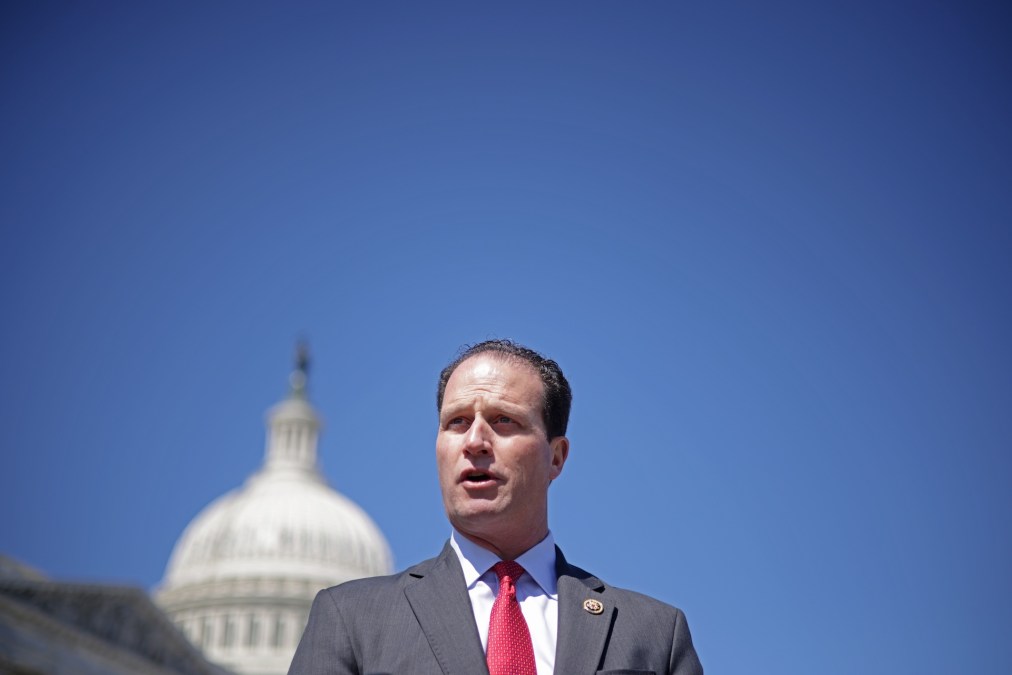
A House Republican introduced legislation Tuesday aimed at deterring cyberattacks against the United States at a time when the Trump administration is prioritizing the punishment of malicious hackers.
Rep. August Pfluger, R-Texas, revived legislation he first sponsored in 2022, the Cyber Deterrence and Response Act. The legislation would direct the executive branch to formally designate foreign parties behind major cyberattacks against the United States as a “critical cyber threat actor” who would be subject to sanctions. It also would establish a framework for attributing who’s behind cyber attacks, including contributions from cyber agencies and threat intelligence companies.
“As cyberattacks in the United States grow more sophisticated and widespread, we must ensure the Trump administration and all future administrations have a strong framework to hold bad actors accountable and safeguard our national security,” Pfluger said in a news release. “Protecting America’s critical infrastructure from malicious cyberattacks is essential, and this bill does exactly that.”
The legislation is the latest reflection of congressional dismay that began growing last year in response to the Salt Typhoon cyberespionage campaign that infiltrated telecommunications networks, and the sense that the United States wasn’t doing enough to make hackers pay for their behavior.
At a hearing Tuesday, Senate Commerce Chairman Ted Cruz, R-Tex., said the United States needs to do a better job of working “together to detect and deter attacks in real time.”
The Trump administration has said deterrence is one of the first pillars of its forthcoming cyber strategy.
The definition of “critical cyber threat actor” under Pfluger’s bill applies to hackers who disrupt the availability of computer networks, compromise computers that provide services in critical infrastructure, steal significant personal data or trade secrets, destabilize the financial or energy sectors or undermine the election process.
The president could waive sanctions against those designees if it explains its reasoning to Congress in writing, a common clause of sanctions legislation.
Pfluger’s measure is updated in some ways from its 2022 incarnation, such as by giving the Office of the National Cyber Director the leading role in designating critical cyber actors.
The legislation draws on bills that former Rep. Ted Yoho, R-Fla, introduced in past years. That legislation won House approval in 2018, but never advanced further.
More Scoops
House panel approves cyber information sharing, grant legislation as expiration deadlines loom
The Homeland Security Committee also voted out bills addressing pipeline cybersecurity and terrorists’ use of AI.

Senate legislation would direct federal agencies to fortify against quantum computing cyber threats
Exclusive: Peters, Rounds tee up bill to renew expiring cyber threat information sharing law
Latest Podcasts
Government
FBI officials say AI is bolstering adversaries, emphasizing need to focus on cyber basics, patching
Feds accuse China of ‘systematic’ distillation of U.S. AI models
CIA’s Michael Ellis says cyber intelligence is changing how the agency operates
The G7 tells industry to hurry up and prep for post-quantum encryption
Technology
Threats
Chinese espionage groups swarm to exploit triple-link chain of zero-days
Microsoft discloses two actively exploited zero-days among 974 vulnerabilities
Russian national extradited to US for alleged involvement in bank-account takeover scheme
Attackers exploit zero-days in consistently besieged SonicWall product
Policy
Whistleblower says USPS deploying new, ‘untested’ IT systems governing mail-in ballots
‘Watershed 250’ test program in Texas looks to private sector for water cybersecurity help
Former sexual abuse victims say Grok used their images, videos to train deepfake capabilities
Cyber threats nudge Trump to sign executive order on foreign equipment in U.S. energy infrastructure
Text extracted automatically; images, tables and formatting may be missing. Original: https://cyberscoop.com/legislation-would-designate-critical-cyber-threat-actors-direct-sanctions-against-them/