Intelligence community to meet with civil liberties groups on controversial surveillance tool
Full article909 words · extracted from cyberscoop.com · click to collapse
Get our latest cybersecurity news first on Google.
The clock is running down on reauthorization of Section 702 of the Foreign Intelligence Surveillance Act set to sunset later this year.
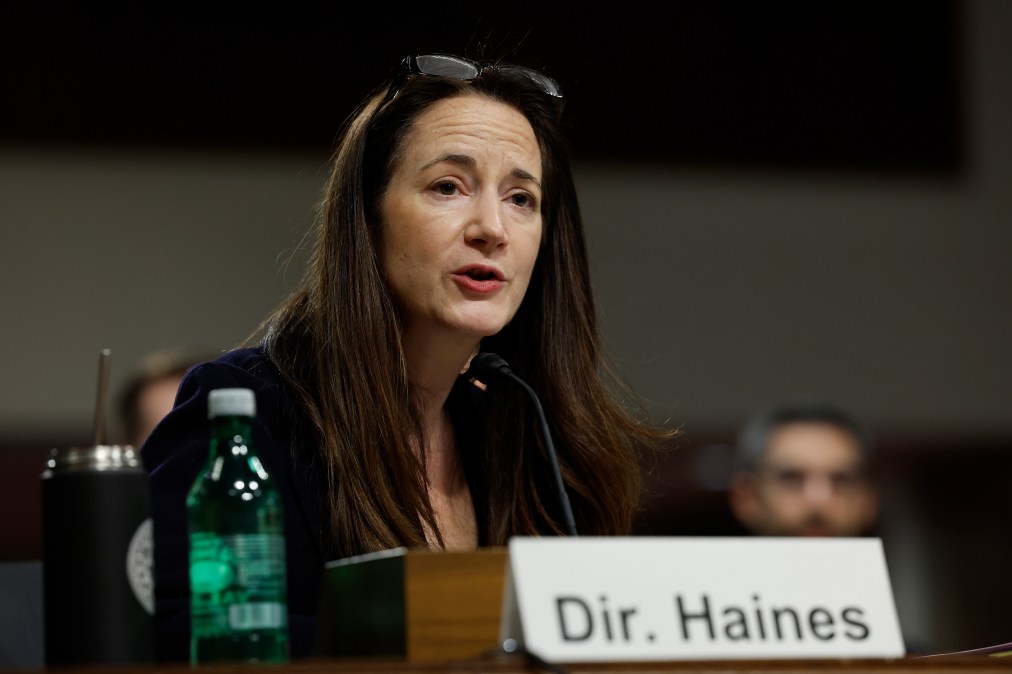
Director of National Intelligence Avril Haines will host a listening session on Thursday to hear from civil liberties groups about Section 702 of the Foreign Intelligence Surveillance Act, a powerful spying tool that’s scheduled to sunset at the end of 2023.
The event, which multiple attendees confirmed to CyberScoop, is the first major convening by the Biden administration to hear from reform-minded groups since the White House announced its support for renewing the authority in February.
The Washington Times first reported plans for the meeting and the invitation of the Cato Institute. CyberScoop confirmed separately that the meeting will include Demand Progress, the American Civil Liberties Union, the Project on Government Oversight, the Electronic Privacy Information Center and the Center for Democracy and Technology.
An invitation for the event said that other senior intelligence agency leaders would be in attendance. ODNI declined to name other agencies participating.
Section 702 of the FISA Act, which sunsets at the end of this year, is a powerful spying tool that allows intelligence agencies to collect the communications of non-U.S. persons abroad whose communications transit U.S. telecommunications systems. The Biden administration and members of the intelligence community have painted the tool as essential to the nation’s security, including combatting cyberattacks and the fentanyl crisis.
However, the program’s incidental collection of Americans’ data, which can then be searched by the FBI, has raised oversight concerns from civil liberties advocates and many lawmakers due to repeated abuse. As a result, lawmakers in both the Senate and House have said they won’t reauthorize the spying tool without significant reforms.
So far, officials have been vague about what if any reforms to Section 702 they would be willing to discuss. In July, administration officials concurred with a report from an independent group of presidential advisers that a warrant requirement would be “burdensome.” Civil liberties groups have challenged the administration’s reluctance, saying that it has yet to provide any proof that a warrant requirement would harm national security.
Advocates who are pushing for reforms say that the administration’s reluctance to come to the table has become a liability for reauthorization and has held back discussions on the Hill.
“It seems like the government wants a sunset of Section 702 before they show up with any actual reforms,” said one source familiar with the conversation. “If they were serious about this, this conversation would have happened six months ago.”
A source with knowledge of the situation said that administration officials have continued to lobby members of Congress behind closed doors for a “clean reauthorization,” meaning no reforms.
“I think the big question going into this meeting is what … the administration means when it says it’s pro-reform?” said the source.
The Biden administration faces an uphill battle for renewal in Congress where both leading Republicans and Democrats have expressed reluctance to renew the authority without significant reforms. Comprehensive reform legislation including Section 702 is expected in the coming weeks.
More Scoops
House intel bill includes provisions on state and local threat intelligence, election security, AI
The House Intelligence Committee advanced its fiscal 2027 authorization legislation Monday.
Dems press DNI nominee Jay Clayton on election security questions, but leave dismayed
Congress kicks the can down the road on surveillance law (again)
Latest Podcasts
Government
FBI officials say AI is bolstering adversaries, emphasizing need to focus on cyber basics, patching
Feds accuse China of ‘systematic’ distillation of U.S. AI models
CIA’s Michael Ellis says cyber intelligence is changing how the agency operates
The G7 tells industry to hurry up and prep for post-quantum encryption
Technology
Threats
Chinese espionage groups swarm to exploit triple-link chain of zero-days
Microsoft discloses two actively exploited zero-days among 974 vulnerabilities
Russian national extradited to US for alleged involvement in bank-account takeover scheme
Attackers exploit zero-days in consistently besieged SonicWall product
Policy
Whistleblower says USPS deploying new, ‘untested’ IT systems governing mail-in ballots
‘Watershed 250’ test program in Texas looks to private sector for water cybersecurity help
Former sexual abuse victims say Grok used their images, videos to train deepfake capabilities
Cyber threats nudge Trump to sign executive order on foreign equipment in U.S. energy infrastructure
Text extracted automatically; images, tables and formatting may be missing. Original: https://cyberscoop.com/intelligence-community-section-702/