South Sudan worked with Israeli surveillance company to monitor citizens, Amnesty finds
Full article1,043 words · extracted from cyberscoop.com · click to collapse
Get our latest cybersecurity news first on Google.
The government has a pervasive digital and physical surveillance regime, advocates say.
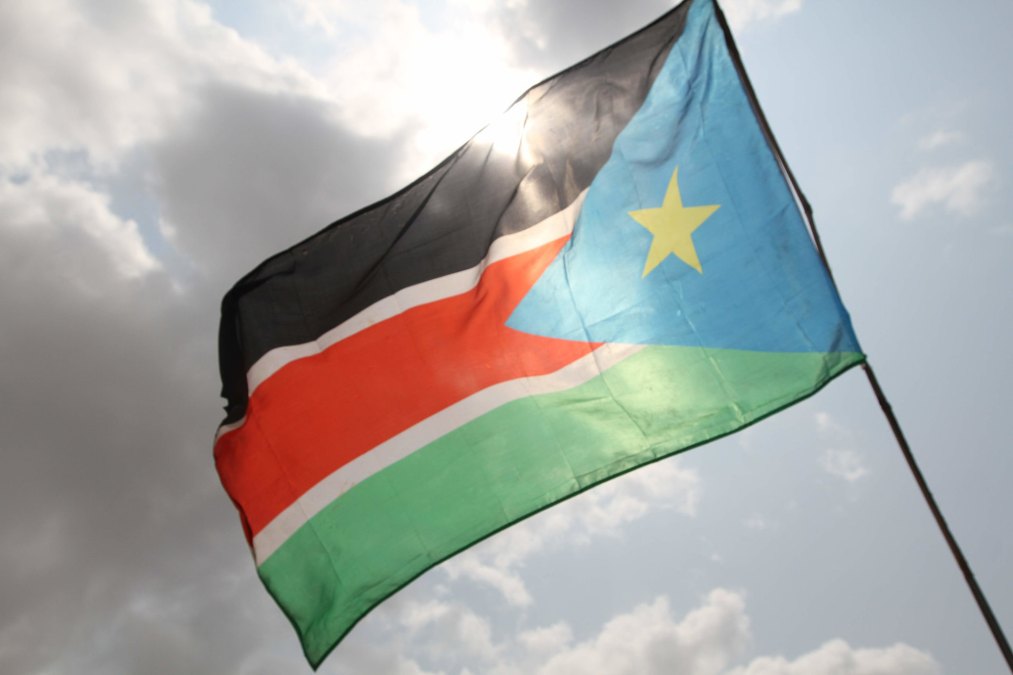
The South Sudanese government obtained surveillance capabilities from an Israeli company between at least 2015 and 2017 in order to wiretap citizens’ phones, according to an Amnesty International investigation published Tuesday.
The company, Verint Systems Ltd., a subsidiary of U.S.-based Verint Systems Inc., worked with the government of South Sudan to provide “communications interception equipment and annual support services,” according to documents reviewed by Amnesty International.
As part of the arrangement, South Sudan required Vivacell, a telecommunications company, to pay Verint at least $762,236 in order to intercept citizens’ communications, according to Amnesty’s assessment.
The reports of South Sudan’s National Security Service’s (NSS) intrusive surveillance meld into a pattern of dangerous human rights abuses in South Sudan, including prolonged detention, extrajudicial killings and the silencing of government critics, human rights activists and journalists, according to Amnesty. A United Nations Panel of Experts found in 2016 that NSS’ “ability to identify and illegally apprehend individuals has been significantly enhanced … because it has acquired additional communications interception equipment from Israel.”
One former employee of Vivacell told Amnesty that NSS has maintained direct access to all telecommunications service providers in the country using Israeli surveillance technology in order to wiretap phones. Another former employee of another telecommunications company, MTN South Sudan, said that as far back as 2013 the NSS worked with an Israeli firm that installed a box at their company, which could be used to monitor communications.
Neither the South Sudanese Embassy in the U.S. nor Verint immediately returned requests for comment.
The reported multi-pronged government surveillance operation in South Sudan is a stark reminder of the chilling effect surveillance can have on speech, and raises questions about the extent to which the private sector is a participant in South Sudan’s government surveillance, Amnesty said.
“Telecoms and surveillance technology companies have a responsibility to respect human rights in all their business operations,” Amnesty International’s Director for East and Southern Africa Deprose Muchena said in a statement. “Providing the NSS surveillance systems when there is a significant human rights risk and giving them unchecked access to telecoms networks is a dereliction of the companies’ responsibilities.”
Activists interviewed by Amnesty said they avoid speaking about sensitive topics on the phone and resort to speaking in person or on encrypted chat applications.
“The threat of surveillance is a weapon in itself — government critics and human rights activists told us they live in constant fear of being spied on,” Muchena said.
Amnesty is calling on South Sudanese authorities to step in and curtail the NSS’s surveillance operations and to investigate cases of unlawful surveillance and other human rights violations.
According to Privacy International, Verint has also supplied surveillance capabilities to security agencies in Uzbekistan and Kazakhstan.
Amnesty International also wants authorities in Israel to pay attention to the alleged human rights abuses in South Sudan and to examine whether its export licensing framework adequately works to prevent Israel-based technology firms from enabling or perpetrating harms elsewhere.
“The Government of Israel should create an effective and transparent export licensing regime that prevents exports of dual use surveillance equipment to countries where there is a likelihood that the exported surveillance equipment will be used to violate human rights,” the Amnesty International report on South Sudan states.
Amnesty International has previously attempted to reign in the export license of another Israel-based software surveillance firm, NSO Group, in order to try preventing abuses of its equipment around the world. Amnesty requested that an Israeli judge revoke the firm’s export license, citing alleged surveillance using NSO Group technologies of government critics and journalists in Mexico, Saudi Arabia and the United Arab Emirates. The judge denied that request last year.
NSO Group has denied its spyware can be used outside of tracking terrorism and other crimes.
Israel’s Embassy in the U.S. did not immediately return request for comment.
More Scoops

Researchers find Jordan government used Cellebrite phone-cracking tech against activists
The incidents occurred amid Gaza protests and suggest human rights violations, Citizen Lab said.

Intellexa remotely accessed Predator spyware customer systems, investigation finds

Amnesty International exposes Serbian police’s use of spyware on journalists, activists
Latest Podcasts
Government
FBI officials say AI is bolstering adversaries, emphasizing need to focus on cyber basics, patching
Feds accuse China of ‘systematic’ distillation of U.S. AI models
CIA’s Michael Ellis says cyber intelligence is changing how the agency operates
The G7 tells industry to hurry up and prep for post-quantum encryption
Technology
Threats
Microsoft discloses two actively exploited zero-days among 974 vulnerabilities
Russian national extradited to US for alleged involvement in bank-account takeover scheme
Attackers exploit zero-days in consistently besieged SonicWall product
Jail time for Maine child in 764 marks turning point in federal law enforcement
Policy
Whistleblower says USPS deploying new, ‘untested’ IT systems governing mail-in ballots
‘Watershed 250’ test program in Texas looks to private sector for water cybersecurity help
Former sexual abuse victims say Grok used their images, videos to train deepfake capabilities
Cyber threats nudge Trump to sign executive order on foreign equipment in U.S. energy infrastructure
Text extracted automatically; images, tables and formatting may be missing. Original: https://cyberscoop.com/south-sudan-government-surveillance-verint-amnesty-international/