Harry Coker confirmed to be the next National Cyber Director
Full article933 words · extracted from cyberscoop.com · click to collapse
Get our latest cybersecurity news first on Google.
The former National Security Agency executive director will oversee federal cyber policy as the first Senate-confirmed NCD in 10 months.
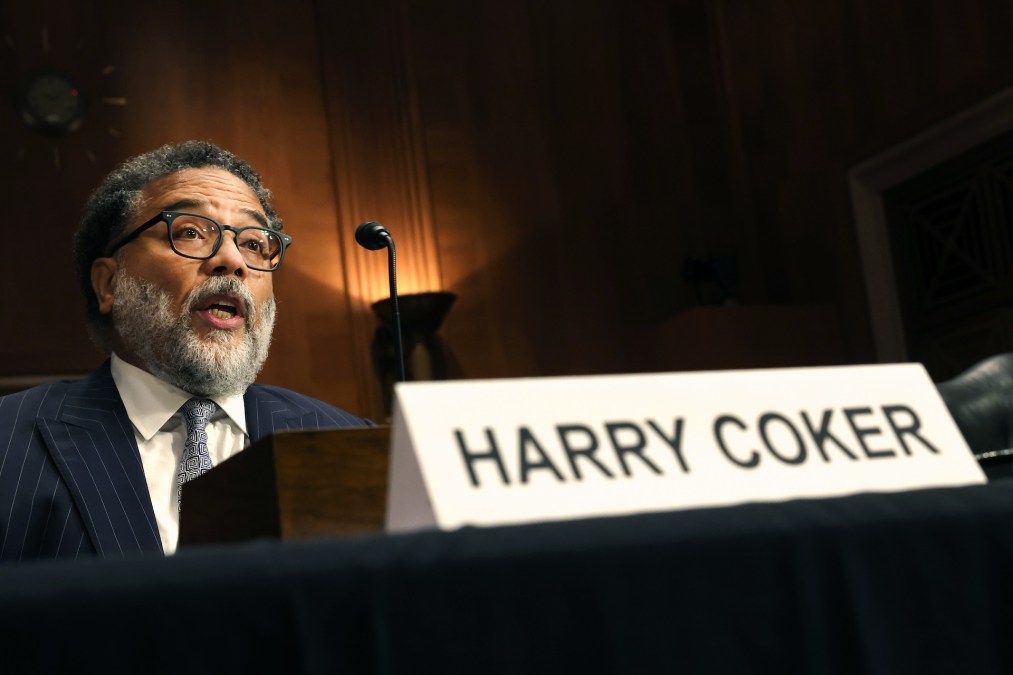
Harry Coker is the nation’s newest national cyber director, following a Senate confirmation vote Tuesday.
Coker will soon take on the role as the next “coach” to oversee and coordinate cybersecurity policy across the federal government. The Senate passed his nomination by a 59-40 vote. Coker, most recently the executive director at the National Security Agency, continues the trend of NSA alums serving as the nation’s top cybersecurity official.
The Office of the National Cyber Director has gone without a Senate-confirmed director for 10 months following the resignation of the inaugural director Chris Inglis in late February. Kemba Walden took the mantle as acting director until November, when Drenan Dudley assumed the role during the transition.
Coker spent 17 years at the CIA in various leadership positions, including the directorate of digital innovation, directorate of science and technology, and the director’s area, according to a bio at Auburn University’s McCrary Institute for Cyber and Critical Infrastructure Security, where he is also a senior fellow.
During his nomination testimony, Coker expressed his appreciation for the existing work ONCD has laid out in its strategy, implementation plan and national cyber workforce and education strategy. Coker told the Senate Homeland Security and Governmental Affairs Committee that he would, “frankly, continue the good work that ONCD has done with its partners.”
That work includes a long to-do list for Coker right off the bat. The ONCD released an implementation guide that serves as the North star for U.S. cybersecurity policy and includes more than 65 initiatives to carry out the national cybersecurity strategy. The breadth of topics covers everything from critical infrastructure regulations to cyber diplomacy to workforce issues, and is considered a “living document” that is expected to be updated next year.
Coker is also stepping into a crowded ring amid reports of friction among the top echelon of cybersecurity officials. Inglis reportedly left the office shortly before the national cyber strategy was released due to the tense relationship and seemingly overlapping authorities with Anne Neuberger, the deputy national security adviser for cyber and emerging technology, who has has the more direct line to the Oval Office, and Jen Easterly, director of the Cybersecurity and Infrastructure Security Agency, which is more of an operational role.
The NCD position was first recommended by the congressionally mandated Cyberspace Solarium Commission to lead the nation’s cybersecurity policy as cybersecurity crosses multiple domains and agencies.
While Coker did receive approval from cyber-focused lawmakers, Walden was thought by many to be the natural replacement for Inglis. However, the administration decided not to nominate Walden because of her personal debt, according to reports from the Washington Post, a motive that many experts doubted.
More Scoops

‘Watershed 250’ test program in Texas looks to private sector for water cybersecurity help
The six-month program will be overseen by the Office of the National Cyber Director and Texas Cyber Command to “find out what works.”

National cyber director lays out White House plans to secure AI without writing new rules

Most federal cybersecurity reporting rules are duplicative, study finds
Latest Podcasts
Government
FBI officials say AI is bolstering adversaries, emphasizing need to focus on cyber basics, patching
Feds accuse China of ‘systematic’ distillation of U.S. AI models
CIA’s Michael Ellis says cyber intelligence is changing how the agency operates
The G7 tells industry to hurry up and prep for post-quantum encryption
Technology
Threats
Chinese espionage groups swarm to exploit triple-link chain of zero-days
Microsoft discloses two actively exploited zero-days among 974 vulnerabilities
Russian national extradited to US for alleged involvement in bank-account takeover scheme
Attackers exploit zero-days in consistently besieged SonicWall product
Policy
Whistleblower says USPS deploying new, ‘untested’ IT systems governing mail-in ballots
Former sexual abuse victims say Grok used their images, videos to train deepfake capabilities
Cyber threats nudge Trump to sign executive order on foreign equipment in U.S. energy infrastructure
Election official says Tina Peters would be consultant, won’t have access to election systems
Text extracted automatically; images, tables and formatting may be missing. Original: https://cyberscoop.com/harry-coker-national-cyber-director-confirmed/