U.S. robotics companies want federal help to keep Chinese robots out of America’s networks
Full article1,188 words · extracted from cyberscoop.com · click to collapse
Get our latest cybersecurity news first on Google.
Executives pressed Congress for a strategy as the market – and attack surface – continues to expand.
Listen to this article
0:00
Learn more.
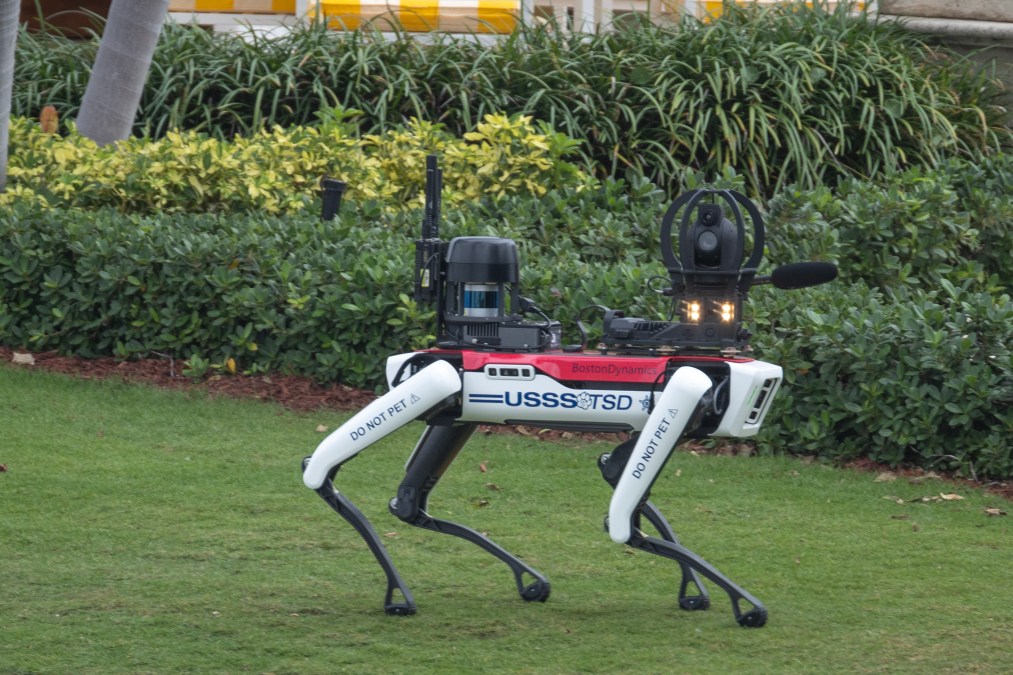
Executives at top U.S. robotics companies asked Congress for federal dollars, new legislation and a simpler regulatory field, arguing the support is necessary to adapt to the AI era and compete with their well-oiled, state-funded Chinese competitors.
The U.S. robotics sector, estimated at $50 billion in value, includes world famous companies like Boston Dynamics. The industry is projected to sell millions of robots across the country over the next four years.
According to a 2025 report from the International Federation of Robotics, the market has sold and installed an average of 500,000 robots between 2020 and 2024. China alone accounted for 54% of those installations, compared to just 9% for America.
Matthew Malchano, vice president of software at Boston Dynamics, told lawmakers in the House Homeland Security cyber subcommittee hearing Tuesday that robotics represent the necessary physical infrastructure to support the country’s efforts to dominate the global AI race, with robots, drones and other machines more fully integrating AI systems in the coming years.
He pointed to Chinese companies like Unitree, which are capturing market share with police departments and universities across the United States, despite contracting ties to the Chinese military and cybersecurity vulnerabilities like a wormable exploit found in 2025 that would allow an attacker to takeover fleets of Unitree robots.
Malchano said Unitree is one of “dozens” of Chinese companies propped up by China’s national AI and robotics plan, which “envisions transforming virtually every major industry in China by integrating AI powered robots” through funding and favorable policies.
He pressed U.S. lawmakers for a similar national strategy, and stumped for the passage of the National Commission on Robotics Act, sponsored by Rep. Jay Olbernolte, R-Calif., that would develop a bipartisan commission to drive it.
Max Fenkell, global head of policy and government relations at ScaleAI, said while the U.S. is winning the AI race on its chosen metrics – model quality and chips – it is “losing” on data and implementation.
Unlike large language models, which download training data straight from the internet, AI systems for robots will require unique training data gathered, categorized and labeled through thousands of hours of bespoke testing.
While China has pursued an “industrialized” training strategy in tandem with industry, funding mile-long stretches of warehouses dedicated to gathering training data for Chinese companies, the U.S. has no similar strategy.
“We’re seeing two different races play out and I fear right now the United States may be winning the wrong one,” he said.
Executives at the hearing were unanimous in suggesting Congress block U.S. federal agencies from purchasing Chinese-made robots and create a single federal regulatory standard for the industry, while Fenkell and Malchado asked for the Cybersecurity and Infrastructure Security Agency to conduct a security review of foreign-made robots.
At the hearing, Rep. James Walkinshaw, D-Va., noted a long history of bipartisan cooperation to help U.S. companies compete against state-subsidized Chinese firms.
“With extensive state investment in technology companies and laws that enlist private companies to serve the interest of the government, the PRC’s military-civil fusion is a serious threat to our own national security,” said Walkinshaw.
AI-powered robots collide with the Trump administration’s thirst for data
As lawmakers weigh how best to position U.S. companies to compete with China, they must also grapple with the possibility that AI-powered robots could be hacked, manipulated or intentionally turned against the public.
Privacy and civil liberties experts have long expressed concerns about the use of robots in areas like policing, in certain military contexts and against American citizens.
The requests for more help from Washington comes at the same time the U.S. government, including the military and Department of Homeland Security, has become markedly more aggressive under the Trump administration about tracking data on Americans and using force against U.S. citizens involved in immigration operations.
Companies like Boston Dynamics sell their robots to manufacturing facilities, semiconductor fabricators, energy plants, first responders, and the U.S. Secret Service. But they also sell them to police departments and the U.S. military, and an early version of the company’s viral “BigDog” quadruped model was created through the Defense Advanced Research Projects Agency at the Department of Defense.
Last year, Immigrations and Customs Enforcement spent $78,000 for a Canadian robot that could perform similar tasks as Spot, another Boston Dynamics robot model, including deploying smoke bombs, according to Governing.
Last month, DHS finalized a $1 billion contract with Palantir to expand AI data analytics across the department to support immigration enforcement. The Coast Guard alone is investing $350 million in robotics and autonomous systems by 2028.
Congressional Democrats are currently blocking funding for DHS over its immigration and data collection policies.
More Scoops

The push to designate AI as the next critical infrastructure sector
The designation would unlock a range of federal services, tools and resources for an industry that policymakers view as increasingly tied to national and economic security.
AI-fueled attacks pose ‘active threat’ to water, other sectors, U.S. agencies warn

Dem senators criticize Trump administration decisionmaking on AI security risks
Latest Podcasts
Government
Technology
Threats
Chinese espionage groups swarm to exploit triple-link chain of zero-days
Microsoft discloses two actively exploited zero-days among 974 vulnerabilities
Russian national extradited to US for alleged involvement in bank-account takeover scheme
Attackers exploit zero-days in consistently besieged SonicWall product
Policy
Whistleblower says USPS deploying new, ‘untested’ IT systems governing mail-in ballots
‘Watershed 250’ test program in Texas looks to private sector for water cybersecurity help
Former sexual abuse victims say Grok used their images, videos to train deepfake capabilities
Cyber threats nudge Trump to sign executive order on foreign equipment in U.S. energy infrastructure
Text extracted automatically; images, tables and formatting may be missing. Original: https://cyberscoop.com/us-robotics-industry-congress-china-competition/