Research: Russia seeks to discredit, not hack election results #ElectionDay
Full article1,038 words · extracted from cyberscoop.com · click to collapse
Get our latest cybersecurity news first on Google.
The sentiments echo consensus view among experts in both cyber intelligence and Russian hybrid warfare that Tuesday could see a widespread misinformation campaign.
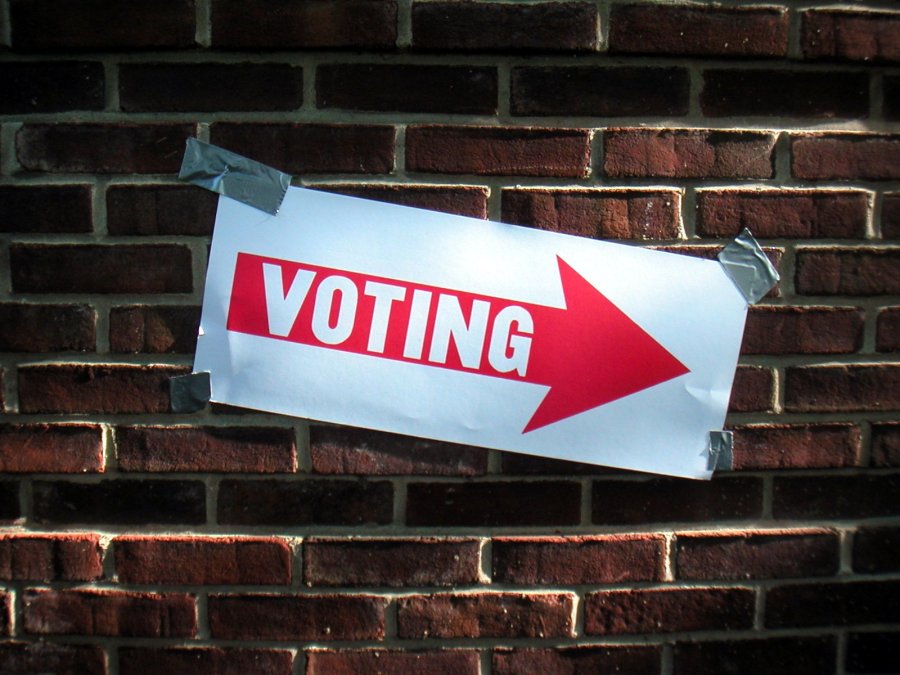
Russian state-sponsored hackers are likely to spend polling day trying to spread disinformation to undermine U.S. and global public confidence in the election result, rather than in pointless efforts to hack the results themselves, according to new cyber intelligence analysis.
“Russia can most likely achieve a more reliable outcome with fewer resources not by attacking the election infrastructure directly, but rather by organizing a disinformation campaign attacking confidence in the election itself,” wrote Ian Gray, an analyst at dark web intelligence specialists Flashpoint.
The sentiments echo consensus view among experts in both cyber intelligence and Russian hybrid warfare.
Last week, the man who fingered the Kremlin for the hacks of Democratic party emails warned that Russian intelligence agencies were running a “psychological warfare operation” to try and discredit the election result.
“The battlefield is not the voting machines, the battlefield is the minds of the American electorate and [the goal is] trying to convince them — or at least a portion [of them] — that the vote is not legitimate,” said Dmitri Alperovitch, co-founder and CTO of CrowdStrike.
He said it was “highly likely” that there would be social media claims that the vote was hacked somehow. He noted that Russian intelligence runs “Troll farms” of young hackers who cultivate fake identities on social media to spread Russian disinformation.
The likelihood of actual online interference with election counts “is zero,” he said.
Gray suggests that a disinformation approach underlies the Friday claims by the hacker calling himself Guccifer 2.0 — that he had somehow infiltrated the network of the Federal Election Commission in order to “monitor” alleged efforts by “Democrats [to] rig the elections.” Despite the fact that the FEC only regulates political fundraising and has no role whatsoever in the conduct of the voting.
“Hackers may not even need to actually compromise voting computers or systems to undermine the people’s trust in the election results,” noted the Atlantic Council’s Daniel Chiu at a recent event staged by the think tank. “Merely a credible claim of doing so could [impel] voters to cry foul, undermining the legitimacy of the vote, at home in the U.S. and abroad,” he added.
Gray adds that eschewing direct efforts to hack election infrastructure (which are technically highly difficult and may in fact be impossible), in favor of misinformation campaigns designed to undermine public confidence in the result “is more consistent with Russian tactics employed in Eastern Europe.”
In Ukraine’s 2014 presidential elections, for example, suspected Russian hackers attempted to spoof the results by installing malware on computers at the Central Election Commission. If the malware hadn’t been found before the election, the commission’s website would have shown far-right extremist Dmytro Yarosh as the winner with 37 percent of the vote — instead of the 1 percent he actually received.
“This wasn’t an effort to steal the election outcome, so much as to steal the election itself – by entirely discrediting it in the eyes of key segments of the population in Ukraine and in Russia, too,” Peter Ordeshook, a California Institute of Technology political scientist said at the time.
He added that while “the cyber fakery looks incredibly clumsy from the outside because no one [in western Ukraine] would have believed it,” in fact the operation was aimed at “a specific audience [Russian-speakers in Ukraine and Russians at home] in order to feed the Russian narrative that has claimed from the start that ultra-nationalists and Nazis were behind the revolution in Ukraine.”
Gray closes his blog post by noting that sunlight is the best disinfectant and that widespread discussion about and knowledge of a possible misinformation should help inoculate Americans against it.
“The knowledge of possible state-sponsored disinformation campaigns helps to dispel their influence over the outcome of the vote,” he wrote.
More Scoops

Tina Peters, through attorney, backs off formal role in Shasta County elections
Peters still left the door open to working with Shasta County on elections and doubled down on her statements that electronic voting machines should be discontinued.

Election official says Tina Peters would be consultant, won’t have access to election systems
State officials, election experts pan Trump speech: ‘This is what desperation looks like’
Latest Podcasts
Government
FBI officials say AI is bolstering adversaries, emphasizing need to focus on cyber basics, patching
Feds accuse China of ‘systematic’ distillation of U.S. AI models
CIA’s Michael Ellis says cyber intelligence is changing how the agency operates
The G7 tells industry to hurry up and prep for post-quantum encryption
Technology
Threats
Chinese espionage groups swarm to exploit triple-link chain of zero-days
Microsoft discloses two actively exploited zero-days among 974 vulnerabilities
Russian national extradited to US for alleged involvement in bank-account takeover scheme
Attackers exploit zero-days in consistently besieged SonicWall product
Policy
Whistleblower says USPS deploying new, ‘untested’ IT systems governing mail-in ballots
‘Watershed 250’ test program in Texas looks to private sector for water cybersecurity help
Former sexual abuse victims say Grok used their images, videos to train deepfake capabilities
Cyber threats nudge Trump to sign executive order on foreign equipment in U.S. energy infrastructure
Text extracted automatically; images, tables and formatting may be missing. Original: https://cyberscoop.com/russia-hacking-2016-election-flashpoint/