U.S. CISA adds a Ray-Project Ray flaw to its Known Exploited Vulnerabilities catalog
CISA added actively exploited Ray RCE flaw CVE-2025-62593 (CVSS 9.4) to its KEV catalog, ordering federal agencies to patch by August 20, 2026.
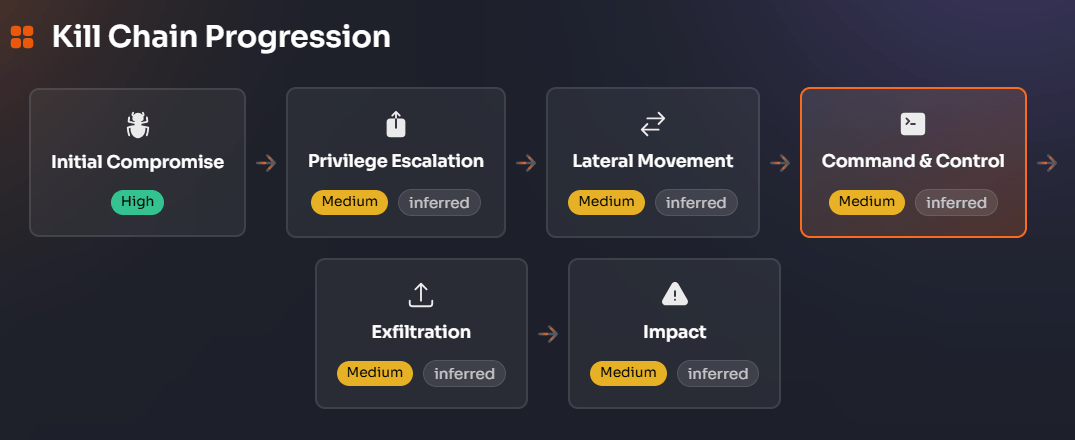
CISA added CVE-2025-62593 (CVSS 9.4), a critical remote code execution flaw in the Ray AI compute engine, to its Known Exploited Vulnerabilities catalog with a due date of August 20, 2026. Versions before 2.52.0 relied on a User-Agent header check to guard the dashboard/API, which combined with DNS rebinding allows arbitrary code execution on developers' machines via malicious websites or ads. Aviatrix's analysis describes privilege escalation, lateral movement, command and control, and data exfiltration following exploitation. Federal civilian agencies must remediate under BOD 22-01; the flaw affects Firefox and Safari.
- Ray versions before 2.52.0 lack effective protection against browser-based attacks on the dashboard/API
- Attack chain combines modified User-Agent headers with DNS rebinding to achieve RCE
- FCEB agencies must remediate by August 20, 2026 under BOD 22-01
- Aviatrix reports attackers escalated privileges, moved laterally, and exfiltrated data after exploitation
Vulnerabilities mentionedAll →
| CVE | Vulnerability | CVSS | EPSS | Flags | Affected | Exposure | Published |
|---|---|---|---|---|---|---|---|
| CVE-2025-62593 | Actively Exploited Browser-Based RCE in Ray AI Compute Engine Ray, the open-source AI compute engine, is vulnerable to a critical remote code execution flaw (CVE-2025-62593, CWE-94/CWE-352) in versions prior to 2.52.0, caused by an insufficient guard against browser-based attacks: the software distinguishes browser traffic only by checking that the User-Agent header starts with 'Mozilla', but the fetch specification allows that header to be modified. An attacker can combine DNS rebinding with a crafted User-Agent so that a developer's Firefox or Safari browser silently sends malicious requests to locally running Ray services after the developer visits an attacker-controlled website or is served a malicious advertisement (malvertising). Successful exploitation yields full remote code execution on the machine running Ray, with high confidentiality, integrity and availability impact reflected in the CVSS 4.0 score of 9.4. Affected users are developers running Ray as a development tool on any version before 2.52.0, which is the fixed release. The flaw is being actively exploited in the wild: CISA added it to the Known Exploited Vulnerabilities catalog on 2026-08-17, a public proof of concept is available in the project's GitHub security advisory (GHSA-q279-jhrf-cc6v), and EPSS estimates a 16.9% probability of exploitation in the next 30 days. Do: Upgrade Ray to version 2.52.0 or later immediately, in line with CISA KEV and BOD 26-04 patching requirements. Until patched, avoid browsing untrusted websites (including ad-serving pages) while Ray development services are running, and restrict network access to locally running Ray services. Focus triage on machines where developers use Firefox or Safari alongside Ray, and hunt for signs of compromise since the flaw is actively exploited. | 9.4 | 17% | KEV PoC |
| largeTens of thousands of developer machines/environments running vulnerable Ray (estimate) |
Full article364 words · extracted from securityaffairs.com · click to collapse

U.S. Cybersecurity and Infrastructure Security Agency (CISA) adds a Ray-Project Ray vulnerability to its Known Exploited Vulnerabilities catalog.
The U.S. Cybersecurity and Infrastructure Security Agency (CISA) added a Progress LoadMaster vulnerability, tracked as CVE-2025-62593 (CVSS score of 9.4), to its Known Exploited Vulnerabilities (KEV) catalog.
CVE-2025-62593 is a critical remote code execution (RCE) vulnerability in Ray, an AI compute engine. Versions before 2.52.0 insufficiently protected the Ray dashboard/API against browser-based attacks. Its defense relied on checking whether the HTTP User-Agent header started with “Mozilla”, but browsers can modify this header.
By combining this weakness with DNS rebinding, an attacker could potentially execute arbitrary code on a developer’s machine simply by getting them to visit a malicious website or view a malicious advertisement while running Ray. The vulnerability affects Firefox and Safari. Ray 2.52.0 fixes the issue.
“This vulnerability is due to an insufficient guard against browser-based attacks, as the current defense uses the User-Agent header starting with the string “Mozilla” as a defense mechanism. This defense is insufficient as the fetch specification allows the User-Agent header to be modified.” reads the advisory. “Combined with a DNS rebinding attack against the browser, and this vulnerability is exploitable against a developer running Ray who inadvertently visits a malicious website, or is served a malicious advertisement (malvertising).”
“An attacker exploited a code injection vulnerability in Ray AI Compute Engine via a DNS rebinding attack, leading to remote code execution. This allowed the attacker to escalate privileges within the system, move laterally across the network, establish command and control channels, exfiltrate sensitive data, and ultimately disrupt operations.” reads the analysis published by Aviatrix.
According to Binding Operational Directive (BOD) 22-01: Reducing the Significant Risk of Known Exploited Vulnerabilities, FCEB agencies have to address the identified vulnerabilities by the due date to protect their networks against attacks exploiting the flaws in the catalog.
Experts also recommend that private organizations review the Catalog and address the vulnerabilities in their infrastructure.
CISA orders federal agencies to fix the vulnerability by the end of this week, on August 20, 2026.
Follow me on Twitter: @securityaffairs and Facebook and Mastodon
(SecurityAffairs – hacking, CISA)
Text extracted automatically; images, tables and formatting may be missing. Original: https://securityaffairs.com/197419/security/u-s-cisa-adds-a-ray-project-ray-flaw-to-its-known-exploited-vulnerabilities-catalog.html