Microsoft Patches a Record 570 Security Flaws
Vulnerabilities mentionedAll →
| CVE | Vulnerability | CVSS | EPSS | Flags | Affected | Exposure | Published |
|---|---|---|---|---|---|---|---|
| CVE-2026-48561 | Improper neutralization of special elements used in a command ('command injection') in Copilot Chat (Microsoft Edge) allows an unauthorized attacker to execute Improper neutralization of special elements used in a command ('command injection') in Copilot Chat (Microsoft Edge) allows an unauthorized attacker to execute code over a network. NVD description · AI analysis pending | 9.6 | <1% |
| — | ||
| CVE-2026-50661 | Protection mechanism failure in Windows BitLocker allows an unauthorized attacker to bypass a security feature with a physical attack. Protection mechanism failure in Windows BitLocker allows an unauthorized attacker to bypass a security feature with a physical attack. NVD description · AI analysis pending | 4.6 | <1% |
| — | ||
| CVE-2026-56155 | Local Privilege Escalation in Microsoft Active Directory Federation Services CVE-2026-56155 is a high-severity (CVSS 3.1: 7.8) access-control flaw (CWE-1220) in Microsoft Active Directory Federation Services (AD FS), in which insufficient granularity of access control lets an authorized attacker elevate privileges locally. Exploitation requires only low local privileges and no user interaction, so any locally authenticated user or process on a system with the AD FS role can trigger it. Successful exploitation yields full local privilege escalation with high impact on confidentiality, integrity, and availability. It affects organizations running AD FS on Windows Server 2012, 2016, 2019, 2022, and 2025, and on Windows 10 versions 1607 and 1809, per CISA's affected-products list. CISA added the flaw to the Known Exploited Vulnerabilities catalog on 2026-07-14, confirming in-the-wild exploitation despite a modest EPSS of 0.3%; it was fixed as part of Microsoft's record-breaking July 2026 Patch Tuesday. Do: Apply Microsoft's July 2026 security updates to all affected Windows 10 and Windows Server systems, prioritizing servers hosting the AD FS role, especially federation servers tied to Microsoft 365 or hybrid identity. Per CISA KEV and BOD 26-04, federal agencies must apply vendor mitigations promptly or discontinue use, and all defenders should inventory AD FS servers, restrict local logon to them, and triage for signs of local privilege-escalation activity. No public PoC or workaround beyond patching is currently known. | 7.8 | <1% | KEV |
| largetens of thousands of internet-exposed AD FS servers; likely six figures of total AD FS deployments affected | |
| CVE-2026-56164 | Missing Authentication in Microsoft SharePoint Server Allows Privilege Escalation Microsoft SharePoint Server contains a missing authentication for critical function vulnerability (CWE-306) that lets an unauthenticated attacker elevate privileges over a network without valid credentials. The flaw is triggered when the affected SharePoint function is accessed remotely without any authentication check, allowing an attacker to gain higher privileges than intended. Successful exploitation could enable an attacker to take elevated actions within the SharePoint environment, potentially leading to further compromise of the server and its data. All organizations running on-premises Microsoft SharePoint Server are potentially affected, though specific versions have not yet been enumerated by Microsoft or CISA. The vulnerability was added to CISA's Known Exploited Vulnerabilities catalog on 2026-07-14, indicating it is being actively exploited, and its EPSS score of 26.6% (98th percentile) reflects a high near-term exploitation risk. Do: Apply Microsoft's security updates for SharePoint Server as soon as they are available, and check Microsoft's advisory for the specific affected version ranges once published. In the meantime, restrict network access to SharePoint servers, especially for internet-facing instances, and verify whether your environment falls under CISA BOD 26-04 requirements given the KEV listing. Monitor for updated guidance from Microsoft and CISA, as exploitation is confirmed and patching urgency is high. | 9.8 | 27% | KEV |
| masspotentially millions of users and well over 100,000 exposed installations worldwide |
Full article708 words · extracted from krebsonsecurity.com · click to collapse
Microsoft Corp. today released software updates to plug at least 570 security holes in its Windows operating systems and other software, almost triple the number of vulnerabilities the software giant fixed in its record-smashing Patch Tuesday release last month. Microsoft attributed the burgeoning patch counts to vulnerability discoveries aided by artificial intelligence.
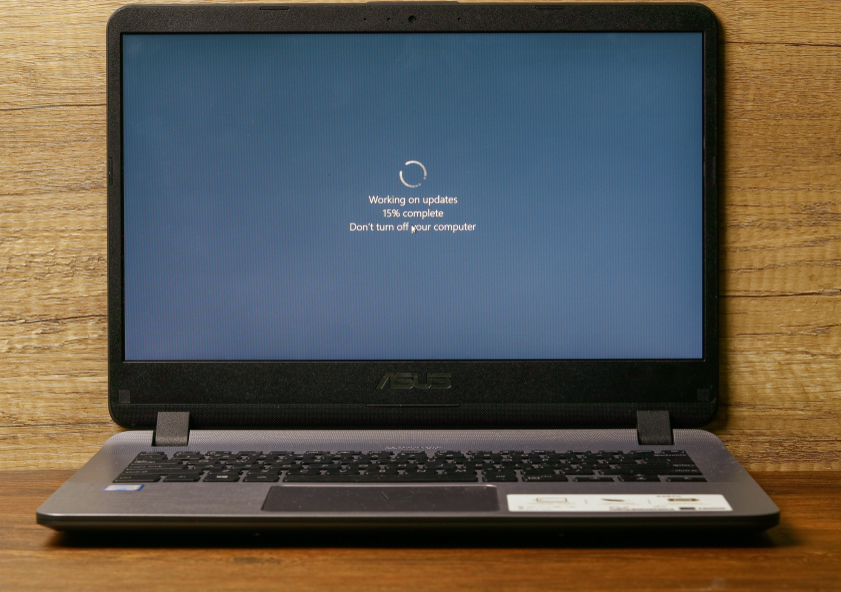
Nearly 60 of the bugs quashed in July’s Patch Tuesday earned a “critical” severity rating, meaning miscreants or malware could use them to seize remote control over a Windows device with little or no help from the user. Microsoft also addressed three zero-day flaws, including two that are already being exploited in the wild.
Two of the zero-day weaknesses allow an attacker to elevate their user rights on a Windows system, as do approximately 250 other elevation of privilege flaws fixed this month; they include CVE-2026-56155 — an Active Directory Federation Services bug — and CVE-2026-56164, a Microsoft Sharepoint vulnerability.
CVE-2026-50661 is a security feature bypass in Windows BitLocker that could allow attackers to gain access to encrypted data if they have physical access to the device. Microsoft said this bug has been detailed publicly, but that it is not aware of any active exploitation.
In a blog post on July 9, Microsoft Executive Vice President Pavan Davuluri wrote that Windows users will notice “a higher volume of security updates included in each security release” as a result of AI aiding in the discovery of vulnerabilities.
“The pace of vulnerability discovery is changing with advances in AI making it possible to find more issues, faster, across more code, with new mechanisms that can accelerate both discovery and analysis,” Davuluri wrote.
Jack Bicer, director of vulnerability research at Action1, called attention to CVE-2026-48561, a remote code execution flaw in Microsoft Copilot (with a 9.6 CVSS threat score) that allows an unauthorized attacker to execute code over the network. Microsoft says an attacker could exploit this bug by hosting a malicious website that causes Microsoft Edge for Android to automatically send crafted prompts to Copilot when a user visits the site.
As AI advances the state of vulnerability discovery and remediation, it is also making it easier for attackers to quickly devise working exploits for known software flaws. Microsoft has long labeled security bugs using its “exploitability index,” which is Redmond’s best guess as to how likely it is that attackers will be able to figure out a reliable way to exploit a given vulnerability.
But Satnam Narang, senior staff research engineer at Tenable, argues that Microsoft’s exploitability index needs to do a better job of shifting with the machine speed of discovery. For example, Microsoft originally gave this month’s SharePoint zero-day an exploitability rating of “less likely,” although the flaw was added to CISA’s Known Exploited Vulnerabilities list on July 1.
“Anthropic’s Red Team’s own findings for known vulnerabilities (n-days) revealed how fragile this system has become, with its Mythos Preview model being able to produce proof-of-concept exploits for 13 of 14 vulnerabilities that were rated ‘Exploitation Less Likely’ or ‘Exploitation Unlikely,'” Narang said. “What this means is that our way of looking at Patch Tuesday has changed, because the exploitability index is centered around humans, not AI tools, and as these tools continue to improve, defense needs to improve alongside it.”
Chris Goettl at Ivanti observed that the record patch numbers from Microsoft come as a number of other major software makers are increasing their patch cadence, including Adobe which announced today it is moving to twice-monthly security bulletins published on the 2nd and 4th Tuesday of each month (Adobe also cited AI for accelerating their patch cycles). Cisco, Mozilla and Oracle also are shipping updates more frequently, while Google’s patch batches in June 2026 totaled more than 900 security fixes, Goettl noted.
Backing up your Windows system and/or data is always a good idea before applying operating system updates. Given the volume of patches addressed this month it may be wise for end users to wait a few days before applying these fixes. It’s not uncommon for security patches to introduce system stability issues, and those chances probably increase quite a bit with the gigantic patch count released today.
Further reading:
Text extracted automatically; images, tables and formatting may be missing. Original: https://krebsonsecurity.com/2026/07/microsoft-patches-a-record-570-security-flaws/