Microsoft Patch Tuesday, July 2021 Edition
Vulnerabilities mentionedAll →
| CVE | Vulnerability | CVSS | EPSS | Flags | Affected | Exposure | Published |
|---|---|---|---|---|---|---|---|
| CVE-2021-33771 +1 in the same advisory: …31979 | Privilege Escalation in Microsoft Windows Kernel Exploited in the Wild (CVE-2021-33771) CVE-2021-33771 is a high-severity (CVSS 3.1: 7.8) elevation-of-privilege flaw in the Windows kernel that allows a low-privileged user who can already execute code on a local machine to escalate to kernel-level (SYSTEM) privileges, with high impact on confidentiality, integrity and availability and no user interaction required. It is triggered locally, for example by running a malicious process or planted component on an affected system, and because it grants full SYSTEM rights it is typically chained with another flaw (such as a browser or document exploit) to escape a sandbox or complete an intrusion. Affected products span every mainstream Windows release current at disclosure: Windows 10 versions 1507, 1607, 1809, 1909, 2004, 20H2 and 21H1, Windows 8.1 and Windows RT 8.1, and Windows Server 2004, 2012 and 2016. The flaw was exploited before a patch existed; it was fixed in Microsoft's July 2021 Patch Tuesday (reported as 117 flaws including 9 zero-days, 4 actively exploited) and was added to CISA's Known Exploited Vulnerabilities catalog on 2021-11-03, with EPSS in the 95th percentile (~10% probability of exploitation within 30 days). Related coverage links the Windows zero-days patched in July 2021 to spyware operations by the Israeli surveillance vendor Candiru targeting journalists and activists, indicating targeted in-the-wild use rather than mass commodity exploitation. Do: Apply Microsoft's July 2021 (or later) cumulative security updates to all affected Windows 10, 8.1, RT 8.1 and Windows Server hosts and verify the kernel update is installed, prioritizing KEV-driven remediation. Given the reported use in targeted spyware campaigns against journalists and activists, hunt on systems that ran unpatched builds for signs of compromise, such as unexpected process creation by low-privileged users, novel persistence, or unusual outbound traffic. | 7.8 | 10% | KEV |
| masshundreds of millions to 1 billion+ Windows devices and servers | |
| CVE-2021-34448 | Memory Corruption in Microsoft Windows Scripting Engine (In-the-Wild Exploitation) CVE-2021-34448 is a memory corruption flaw (out-of-bounds write, CWE-787) in Microsoft's Windows Scripting Engine, the component that executes scripts such as JScript and VBScript on Windows. It is triggered when the engine mishandles objects in memory while processing crafted script content, typically through user interaction such as viewing a malicious web page or opening a document containing crafted script. Successful exploitation can corrupt memory in a way that lets an attacker execute code in the context of the current user, giving the attacker the victim's privileges on the machine. Essentially every Windows client and server ships the scripting engine, so the affected population is effectively all unpatched Microsoft Windows systems; exploitation is confirmed in the wild, with CISA adding the flaw to its KEV catalog on 2021-11-03 and an unusually high EPSS of 40.1% (99th percentile) indicating elevated near-term exploitation risk, though no ransomware association is confirmed and no public proof-of-concept is known. Remediation is through the vendor's Windows security updates addressing this CVE. Do: Apply the Microsoft Windows security updates that fix CVE-2021-34448 (delivered via Windows Update in Microsoft's November 2021 release cycle) to all Windows clients and servers, prioritizing endpoints used interactively for web browsing and document handling, as CISA KEV requires prompt federal remediation. Verify each system's installed cumulative update includes the fix for this CVE before treating it as remediated. Until patched, reduce risk by limiting exposure to untrusted web content and documents (e.g., minimizing use of legacy Internet Explorer and scripting hosts) and monitor for suspicious activity involving Windows scripting components. | 6.8 | 40% | KEV |
| mass≈1 billion+ Windows devices worldwide (scripting engine present on essentially every Windows installation) | |
| CVE-2021-34458 | Windows Kernel Remote Code Execution Vulnerability Windows Kernel Remote Code Execution Vulnerability NVD description · AI analysis pending | 9.9 | 3% |
| — | ||
| CVE-2021-34473 +1 in the same advisory: …34523 | SSRF (CWE-918) in Microsoft Exchange Server Enabling RCE (ProxyShell) Microsoft Exchange Server contains a server-side request forgery (SSRF, CWE-918) in the Autodiscover service that unauthenticated remote attackers can reach over HTTP. This flaw is the first stage of the widely documented 'ProxyShell' chain, in which the SSRF is combined with privilege escalation and an arbitrary file write in the Exchange PowerShell backend to achieve unauthenticated remote code execution on the server. An attacker who successfully exploits it gains the ability to run code on the Exchange server, and ransomware operators (e.g., Cuba ransomware) leveraged this chain to deploy payloads. Organizations running on-premises Microsoft Exchange Server (2013, 2016, and 2019 per the vendor's advisories) are affected; hosted Exchange Online is a separately managed cloud service. Exploitation is confirmed in the wild: CISA added the flaw to the KEV catalog on 2021-11-03 with known ransomware use, and EPSS assigns it a 100% probability of exploitation within 30 days (100th percentile). Do: Apply Microsoft's July 2021 (or later) Exchange Server security updates, which include the ProxyShell fixes, to all on-premises servers. If patching is delayed, restrict internet access to the Autodiscover/EWS frontend endpoints and consider the URL Rewrite mitigation Microsoft published for ProxyShell. Given the KEV listing and known ransomware use, treat internet-facing, unpatched Exchange servers as potentially compromised and hunt for webshells, unusual Exchange processes, and suspicious account or mailbox activity. | 9.1 group max | 100% | KEV ransomware PoC |
| masshundreds of thousands of on-prem Exchange servers; public internet scans at the time of disclosure showed roughly 400,000+ internet-exposed Exchange instances,… | |
| CVE-2021-34494 | Windows DNS Server Remote Code Execution Vulnerability Windows DNS Server Remote Code Execution Vulnerability NVD description · AI analysis pending | 8.8 | 4% |
| — | ||
| CVE-2021-34527 | PrintNightmare: Remote Code Execution in Microsoft Windows Print Spooler CVE-2021-34527, widely known as 'PrintNightmare', is a remote code execution flaw in the Microsoft Windows Print Spooler service, which improperly performs privileged file operations such as loading printer driver DLLs. An attacker with low-level access who can reach a machine's spooler, for example a domain user able to add a printer connection via Point and Print, can induce the SYSTEM-privileged service to load an attacker-controlled DLL with no user interaction required (CVSS:3.1 vector AV:N/AC:L/PR:L/UI:N). Successful exploitation yields arbitrary code execution as SYSTEM, letting the attacker install programs, view, change or delete data, and create new accounts with full user rights, effectively achieving complete host compromise. The flaw affects all supported Windows client and server releases in the CISA data, Windows 10 from 1507 through 22H2, Windows 11, Windows RT 8.1, and Windows Server 2008, 2012 and 2016, wherever the Print Spooler service is running. Exploitation is confirmed in the wild: the bug was added to CISA's Known Exploited Vulnerabilities catalog on 2021-11-03 with known ransomware use, the FBI and CISA have warned of Russian actors exploiting it, and EPSS places the 30-day exploitation probability at 99.8%. Do: Install the July 2021 security updates immediately, released July 6, 2021 with additional updates on July 7 for Windows Server 2012, Windows Server 2016 and Windows 10 version 1607, and review KB5005010 for restricting installation of new printer drivers after applying the July 6 updates. Where patching is delayed, disable the Print Spooler service on hosts that do not need printing or restrict Point and Print, and verify that NoWarningNoElevationOnInstall and UpdatePromptSettings under HKLM\SOFTWARE\Policies\Microsoft\Windows NT\Printers\PointAndPrint are set to 0 or not defined (these keys do not exist by default, which is the secure state; NoWarningNoElevationOnInstall = 1 makes the system vulnerable by design). Prioritize domain controllers and servers with exposed spoolers, and hunt… | 8.8 | 100% | KEV ransomware PoC ×3 |
| masshundreds of millions of Windows systems (order of magnitude 10^8) |
Full article786 words · extracted from krebsonsecurity.com · click to collapse
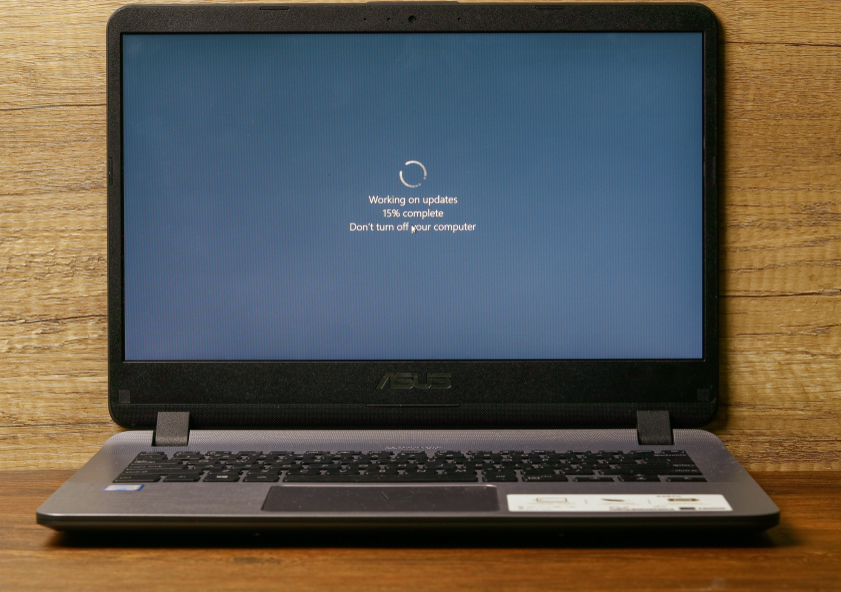
Microsoft today released updates to patch at least 116 security holes in its Windows operating systems and related software. At least four of the vulnerabilities addressed today are under active attack, according to Microsoft.
Thirteen of the security bugs quashed in this month’s release earned Microsoft’s most-dire “critical” rating, meaning they can be exploited by malware or miscreants to seize remote control over a vulnerable system without any help from users.
Another 103 of the security holes patched this month were flagged as “important,” which Microsoft assigns to vulnerabilities “whose exploitation could result in compromise of the confidentiality, integrity, or availability of user data, or of the integrity or availability of processing resources.”
Among the critical bugs is of course the official fix for the PrintNightmare print spooler flaw in most versions of Windows (CVE-2021-34527) that prompted Microsoft to rush out a patch for a week ago in response to exploit code for the flaw that got accidentally published online. That patch seems to have caused a number of problems for Windows users. Here’s hoping the updated fix resolves some of those issues for readers who’ve been holding out.
CVE-2021-34448 is a critical remote code execution vulnerability in the scripting engine built into every supported version of Windows — including server versions. Microsoft says this flaw is being exploited in the wild.
Both CVE-2021-33771 and CVE-2021-31979 are elevation of privilege flaws in the Windows kernel. Both are seeing active exploitation, according to Microsoft.
Chad McNaughton, technical community manager at Automox, called attention to CVE-2021-34458, a remote code execution flaw in the deepest areas of the operating system. McNaughton said this vulnerability is likely to be exploited because it is a “low-complexity vulnerability requiring low privileges and no user interaction.”
Another concerning critical vulnerability in the July batch is CVE-2021-34494, a dangerous bug in the Windows DNS Server.
“Both core and full installations are affected back to Windows Server 2008, including versions 2004 and 20H2,” said Aleks Haugom, also with Automox.
“DNS is used to translate IP addresses to more human-friendly names, so you don’t have to remember the jumble of numbers that represents your favorite social media site,” Haugom said. “In a Windows Domain environment, Windows DNS Server is critical to business operations and often installed on the domain controller. This vulnerability could be particularly dangerous if not patched promptly.”
Microsoft also patched six vulnerabilities in Exchange Server, an email product that has been under siege all year from attackers. Satnam Narang, staff research engineer at Tenable, noted that while Microsoft says two of the Exchange bugs tackled this month (CVE-2021-34473 and CVE-2021-34523) were addressed as part of its security updates from April 2021, both CVEs were somehow omitted from that April release. Translation: If you already applied the bevy of Exchange updates Microsoft made available in April, your Exchange systems have protection against these flaws.
Other products that got patches today include Microsoft Office, Bing, SharePoint Server, Internet Explorer, and Visual Studio. The SANS Internet Storm Center as always has a nice visual breakdown of all the patches by severity.
Adobe also issued security updates today for Adobe Acrobat and Reader, as well as Dimension, Illustrator, Framemaker and Adobe Bridge.
Chrome and Firefox also recently have shipped important security updates, so if you haven’t done so recently take a moment to save your tabs/work, completely close out and restart the browser, which should apply any pending updates.
The usual disclaimer:
Before you update with this month’s patch batch, please make sure you have backed up your system and/or important files. It’s not uncommon for Windows updates to hose one’s system or prevent it from booting properly, and some updates even have been known to erase or corrupt files.
So do yourself a favor and backup before installing any patches. Windows 10 even has some built-in tools to help you do that, either on a per-file/folder basis or by making a complete and bootable copy of your hard drive all at once.
And if you wish to ensure Windows has been set to pause updating so you can back up your files and/or system before the operating system decides to reboot and install patches on its own schedule, see this guide.
As always, if you experience glitches or problems installing any of these patches this month, please consider leaving a comment about it below; there’s a better-than-even chance other readers have experienced the same and may chime in here with some helpful tips. Also, check out AskWoody, which keeps a close eye out for specific patches that may be causing problems for users.
Text extracted automatically; images, tables and formatting may be missing. Original: https://krebsonsecurity.com/2021/07/microsoft-patch-tuesday-july-2021-edition/