Whistleblower says USPS deploying new, ‘untested’ IT systems governing mail
A whistleblower alleges USPS is rushing untested IT systems that could reject thousands of mail-in ballots ahead of the 2026 midterm elections.
A whistleblower complaint released by Sen. Richard Blumenthal says USPS is deploying three new, largely untested IT systems — including the Federal Ballot Mail Portal — that could reject entire ballot batches over single scan errors. The systems were developed in weeks without standard testing or interoperability checks, and USPS allegedly continued work despite court injunctions against its rule changes. House Oversight Democrats demanded USPS halt implementation, and election experts warn the design could lead to new lawsuits and mass ballot denials.
- Whistleblower calls development of three ballot-governing IT systems secretive, rushed and flawed
- Federal Ballot Mail Portal stores voter names and ballot barcodes for federal mail ballots
- A single barcode scan error can reject batches of up to 10,000 ballots
- USPS allegedly started implementation in June 2026 despite multiple court injunctions
- House Oversight Democrats demanded USPS immediately cease implementation
Full article1,309 words · extracted from cyberscoop.com · click to collapse
Get our latest cybersecurity news first on Google.
The Federal Ballot Mail Portal is described by a federal official as one of several IT systems that will be used to potentially deny thousands of mail-in ballots or more to states.
Listen to this article
0:00
Learn more.
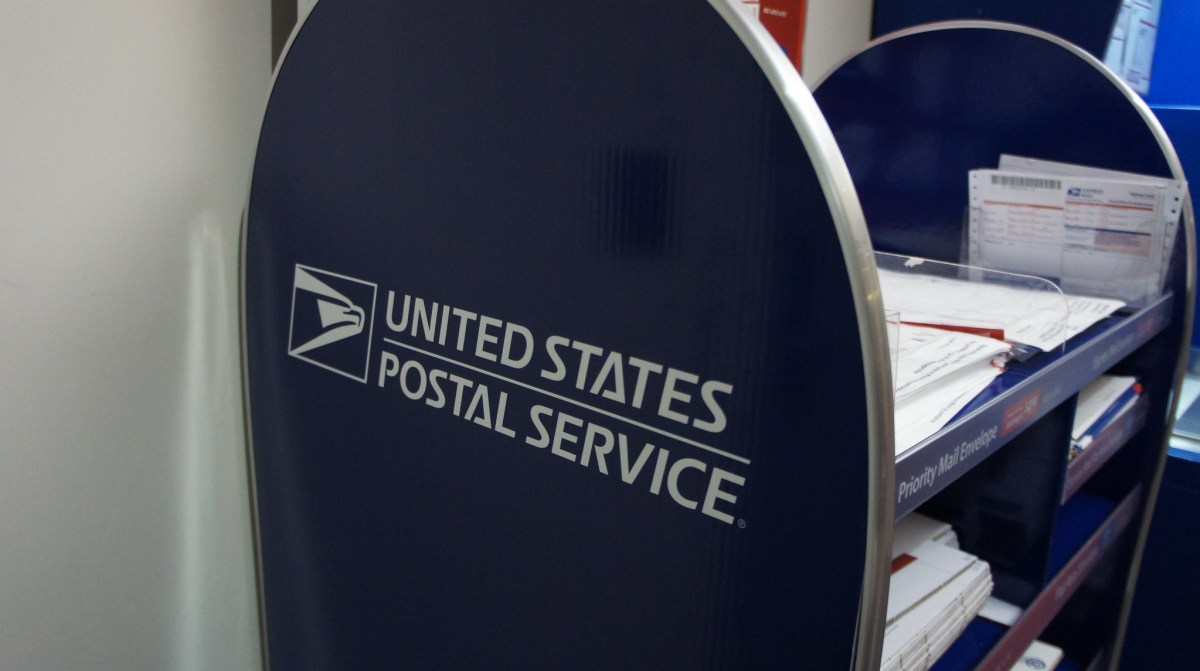
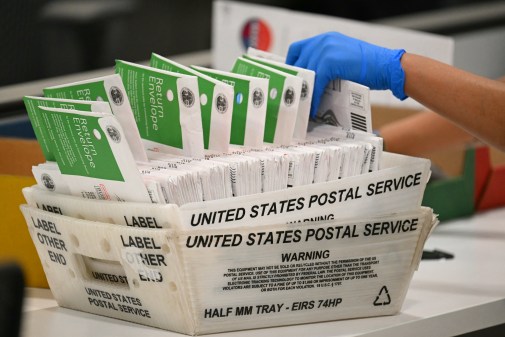
A newly released whistleblower complaint reveals details about the “rushed” effort by the Trump administration and U.S. Postal Service to install three new restrictive IT systems that would potentially deny thousands of mail-in ballots, if the federal government disagrees on their eligibility.
According to the complaint, written by attorneys at the nonprofit Whistleblower Aid and released by Sen. Richard Blumenthal, D-Conn., the individual is a federal employee with “direct knowledge of potentially catastrophic problems” related to USPS’ handling of mail-in ballots for the upcoming 2026 midterm elections.
The person claims that USPS is deploying entirely “new and untested” IT systems, including a new Federal Ballot Mail Portal that would potentially give USPS more control over whether and when voters receive federal mail ballots.
The disclosure describes the portal and other systems as “new IT systems and corresponding protocols [that] will govern the delivery of ballots to voters as soon as the 2026 mid-term federal elections and beyond.” It calls the development process “secretive, rushed, chaotic and fundamentally flawed,” and part of a larger effort by agency leaders to rush implementation of the system ahead of the 2026 elections.
That rush has forced USPS to forgo much of the pre-release testing of those systems to ensure they work as intended and can safely interoperate with other federal systems. As a result, the whistleblower says the portal is so restrictive it can potentially reject large batches of mail-in ballots based on a single identified ballot error.
According to the letter, there are three primary new IT systems USPS is rolling out this election cycle. The Federal Ballot Mail Portal stores both voter names and newly placed ballot barcodes, while a new verification system will compare ballot batch manifests with information in the portal. A third system is described as a new physical barcode sampling verification standard “with a zero percent failure rate.”
“The Whistleblower paints a dire picture of a slapdash software development process as the USPS attempted to create this complex IT system, with multiple points of ballot review, in a matter of weeks,” the letter said. “The very manner in which the project is being developed deviates dangerously from even the most basic software development best practices.”
In all three cases, the onus is explicitly placed on state election officials to resolve discrepancies between federal and state systems.
For example, when the federal government and election officials have different data on batch manifests, which can include tens of thousands of ballots, “election officials will be responsible for resolving any errors purportedly identified in the scan, and for resubmitting the batch manifest – USPS will refuse to accept the ballot batch until the errors are resolved.”
A similarly restrictive approach is described for verifying ballot bar codes.
“As presently designed, if even one bar code on one single ballot in a bulk-mailing of 10,000 ballots fails to properly scan during the verification process, the entire batch is rejected and sent back to the state – effectively stopping the ballots from being mailed to voters,” the letter stated.
But the whistleblower said those kinds of small errors are likely to happen in any process that relies on scanning barcodes. In this case, the rushed development and specific location of the barcodes on federal mail ballots means the portal “will almost certainly have significant operating problems.”
The letter says the whistleblower is aware of concerns “among those whose job it is to build this software” that the project is not subject to standard testing and debugging work, and that the systems were escalated to other testing environments before they were even finished. It also claims that the systems’ development was siloed across different teams, with no time to test different software components individually or the system as a whole.
The whistleblower also claims that the USPS rule changes, which have been subject to multiple court injunctions, have continued throughout, in violation of federal court orders. Despite those orders, the agency is believed to have started work on the IT systems in June 2026.
In response, Democrats on the House Committee on Oversight and Reform led by Robert Garcia, D-Calif., wrote to Postmaster General David Steiner saying the disclosures indicate the new IT systems are “faulty” and demanding USPS “immediately cease implementation of this irresponsible and illegal scheme.”
“To be clear, any actions taken by the Postal Service that prevent any registered voter, let alone millions, from voting are unacceptable, a violation of Americans’ voting rights, and likely illegal,” the members wrote.
David Becker, executive director of the Center for Election Innovation and Research, said the disclosures could potentially lead to new lawsuits against USPS and the federal government.
“This seems to confirm that the USPS is totally unprepared and unqualified to take on this vast responsibility interjecting itself into state’s mail voting processes,” said Becker on Bluesky. “And could incur liability if USPS truly plans to reject thousands of ballots if there’s even one error.”
More Scoops
SCOTUS tosses one of two injunctions against Trump USPS mail-in ballot rules
The 6-3 decision dismisses one lawsuit brought by states, saying they have no standing to sue because the disputed sections “neither requires nor forbids anything of anyone outside…

Postal Service moves to finalize mail ballot regs before SCOTUS ruling
Federal judge issues second order blocking Trump mail-in voting directive
Latest Podcasts
Government
FBI officials say AI is bolstering adversaries, emphasizing need to focus on cyber basics, patching
Feds accuse China of ‘systematic’ distillation of U.S. AI models
CIA’s Michael Ellis says cyber intelligence is changing how the agency operates
The G7 tells industry to hurry up and prep for post-quantum encryption
Technology
Threats
Chinese espionage groups swarm to exploit triple-link chain of zero-days
Microsoft discloses two actively exploited zero-days among 974 vulnerabilities
Russian national extradited to US for alleged involvement in bank-account takeover scheme
Attackers exploit zero-days in consistently besieged SonicWall product
Policy
‘Watershed 250’ test program in Texas looks to private sector for water cybersecurity help
Former sexual abuse victims say Grok used their images, videos to train deepfake capabilities
Cyber threats nudge Trump to sign executive order on foreign equipment in U.S. energy infrastructure
Bipartisan Senate bill aims to prepare energy sector for Q-Day
Text extracted automatically; images, tables and formatting may be missing. Original: https://cyberscoop.com/usps-whistleblower-ballot-system-2026-midterms/