Microsoft (& Apple) Patch Tuesday, April 2023 Edition
Vulnerabilities mentionedAll →
| CVE | Vulnerability | CVSS | EPSS | Flags | Affected | Exposure | Published |
|---|---|---|---|---|---|---|---|
| CVE-2022-37969 | Out-of-bounds write flaw in Microsoft Windows CLFS driver enables privilege escalation The Windows Common Log File System (CLFS) driver contains an input-validation flaw (CWE-20) that leads to an out-of-bounds write (CWE-787), allowing an attacker who already has a foothold or local access on a system to escalate privileges. It is triggered when the driver processes malformed or specially crafted common log file data, rather than via a remote network request on its own. Successful exploitation yields elevated (typically SYSTEM-level) privileges, giving the attacker full control of the host and making the bug a common post-exploitation link in ransomware chains. CISA lists the affected product broadly as 'Microsoft Windows', so essentially all Windows installations current at the time of disclosure were in scope. The flaw is confirmed exploited in the wild: CISA added it to the KEV catalog on 2022-09-14 with known ransomware use, EPSS puts 30-day exploitation probability at 28.3% (98th percentile), and no public PoC is known. Do: Apply Microsoft's September 2022 (or later) cumulative updates to every Windows host per vendor instructions, prioritizing endpoints and servers exposed for user or remote access. Because this is a local privilege escalation, treat it as a post-exploitation risk: also harden and patch initial-access surfaces (RDP, VPN, other exposed services) and hunt for signs of compromise such as unexpected SYSTEM-spawned processes or anomalous activity involving clfs.sys. Ransomware operators are known to use this bug, so remediation should be treated as urgent. | 7.8 | 28% | KEV ransomware |
| mass>1 billion Windows devices (essentially all Windows installations at the time of disclosure; exploitation requires an existing local foothold) | |
| CVE-2023-28205 | Use-After-Free in Apple WebKit (iOS, iPadOS, macOS, Safari) Enables Code Execution CVE-2023-28205 is a use-after-free flaw (CWE-416) in the WebKit engine shipped with Apple iOS, iPadOS, macOS, and the Safari browser, where memory is freed and then incorrectly reused while processing HTML. It is triggered when a device processes maliciously crafted web content, meaning simply loading an attacker-controlled page in Safari or any WebKit-based HTML renderer can trigger the bug. Successful exploitation allows the attacker to achieve code execution in the context of the WebKit process on the victim device. All users of iOS, iPadOS, macOS, and Safari are potentially affected, as are non-Apple products that rely on WebKit for HTML processing. The flaw is being actively exploited in the wild — it was added to CISA's Known Exploited Vulnerabilities catalog on 2023-04-10, with the required action to apply updates per vendor instructions — and EPSS assigns a 27.1% probability of exploitation within 30 days (98th percentile). Do: Apply Apple's current security updates for iOS, iPadOS, macOS, and Safari as soon as possible, per the vendor instructions cited in the CISA KEV listing. Because this is a browser/HTML-engine flaw exploited in the wild, prioritize patching internet-facing and high-risk user fleets; users of non-Apple WebKit-based HTML parsers should check with their software vendors for updated WebKit components. Until patched, exercise caution with untrusted web content. | 8.8 | 27% | KEV |
| mass≈ hundreds of millions of devices (WebKit is the HTML engine in every iOS, iPadOS, and macOS install and in Safari) | |
| CVE-2023-28206 | Out-of-Bounds Write in Apple IOSurfaceAccelerator Allows Kernel-Level Code Execution Apple's IOSurfaceAccelerator component in iOS, iPadOS, and macOS contains an out-of-bounds write flaw (CWE-787). The bug is triggered by an application running locally on the device, which can corrupt memory in the component during a write past a buffer boundary. A successful exploit allows the app to execute arbitrary code with kernel privileges, giving it full control of the device beyond the normal app sandbox. Any user of an Apple iOS, iPadOS, or macOS device running an affected, unpatched version is exposed. The flaw was added to CISA KEV on 2023-04-10, confirming known in-the-wild exploitation; ransomware use is unknown, no public PoC is available, and EPSS assigns a 24.5% probability of exploitation within 30 days (98th percentile). Do: Update all iPhones, iPads, and Macs to the latest iOS/iPadOS/macOS versions available as of April 2023, per CISA's required action and Apple's security advisories. Use MDM or patch-reporting tooling to inventory endpoints and confirm no devices remain on pre-patch builds. Because exploitation is confirmed in the wild and any local app can act as the trigger, patching is the primary mitigation and there is no dependable configuration workaround. | 8.6 | 23% | KEV |
| masshundreds of millions of devices (Apple's active iPhone/iPad/Mac installed base exceeds 1 billion) | |
| CVE-2023-28219 +1 in the same advisory: …28220 | Layer 2 Tunneling Protocol Remote Code Execution Vulnerability Layer 2 Tunneling Protocol Remote Code Execution Vulnerability NVD description · AI analysis pending | 8.1 | 15% |
| — | ||
| CVE-2023-28231 | DHCP Server Service Remote Code Execution Vulnerability DHCP Server Service Remote Code Execution Vulnerability NVD description · AI analysis pending | 8.8 | 37% |
| — | ||
| CVE-2023-28252 | Heap Overflow in Microsoft Windows CLFS Driver Enables Local Privilege Escalation CVE-2023-28252 is a heap-based buffer overflow (CWE-122) in the Microsoft Windows Common Log File System (CLFS) driver that allows privilege escalation. The flaw is triggered when the kernel's CLFS driver processes malformed or maliciously crafted log file data, corrupting heap memory; an attacker who can already run code on a target system (e.g., a low-privileged user or an attacker chained with another flaw such as a remote code execution bug) can leverage it to gain SYSTEM-level privileges. Because the CLFS driver ships with supported Windows client and server releases, essentially the entire Windows installed base is potentially exposed. The vulnerability is being actively exploited: CISA added it to the KEV catalog on 2023-04-11 with known ransomware use, and EPSS estimates a 49.0% probability of exploitation within 30 days (99th percentile). It was addressed in Microsoft's April 2023 security updates, and the required remediation action is to apply the vendor updates. Do: Apply Microsoft's April 2023 (or later) cumulative security updates to all Windows clients and servers per vendor instructions, prioritizing high-value and domain infrastructure systems given the known ransomware use; there is no public PoC or known workaround, so patching is the primary mitigation. Note that this is a local elevation-of-privilege flaw, so also hunt for prior low-privilege access or exploitation chains on hosts, and confirm remediation by checking installed update levels across the estate. | 7.8 | 49% | KEV ransomware PoC |
| masshundreds of millions of Windows devices (the CLFS driver is present across essentially all modern Windows 10/11 and Windows Server installations) |
Full article802 words · extracted from krebsonsecurity.com · click to collapse
Microsoft today released software updates to plug 100 security holes in its Windows operating systems and other software, including a zero-day vulnerability that is already being used in active attacks. Not to be outdone, Apple has released a set of important updates addressing two zero-day vulnerabilities that are being used to attack iPhones, iPads and Macs.
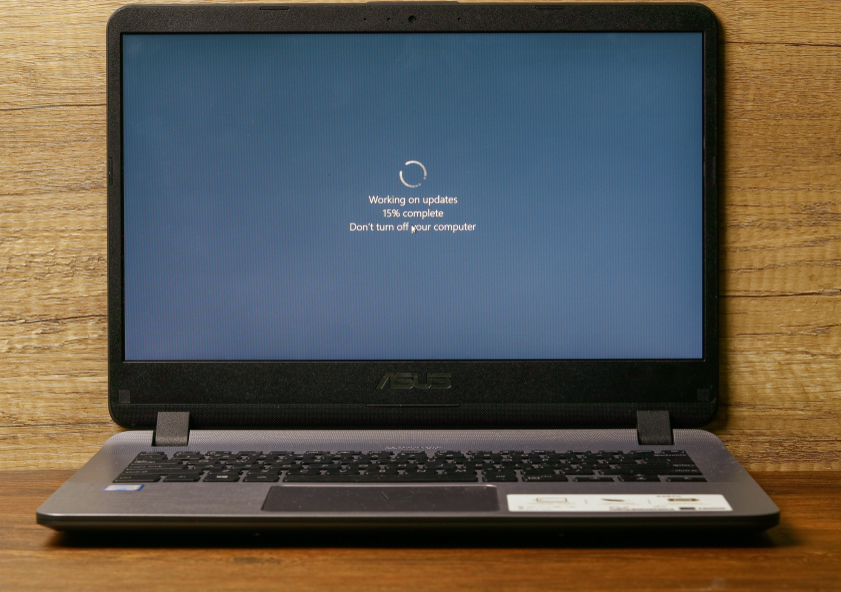
On April 7, Apple issued emergency security updates to fix two weaknesses that are being actively exploited, including CVE-2023-28206, which can be exploited by apps to seize control over a device. CVE-2023-28205 can be used by a malicious or hacked website to install code.
Both vulnerabilities are addressed in iOS/iPadOS 16.4.1, iOS 15.7.5, and macOS 12.6.5 and 11.7.6. If you use Apple devices and you don’t have automatic updates enabled (they are on by default), you should probably take care of that soon as detailed instructions on how to attack CVE-2023-28206 are now public.
Microsoft’s bevy of 100 security updates released today include CVE-2023-28252, which is a weakness in Windows that Redmond says is under active attack. The vulnerability is in the Windows Common Log System File System (CLFS) driver, a core Windows component that was the source of attacks targeting a different zero-day vulnerability in February 2023.
“If it seems familiar, that’s because there was a similar 0-day patched in the same component just two months ago,” said Dustin Childs at the Trend Micro Zero Day Initiative. “To me, that implies the original fix was insufficient and attackers have found a method to bypass that fix. As in February, there is no information about how widespread these attacks may be. This type of exploit is typically paired with a code execution bug to spread malware or ransomware.”
According to the security firm Qualys, this vulnerability has been leveraged by cyber criminals to deploy Nokoyawa ransomware.
“This is a relatively new strain for which there is some open source intel to suggest that it is possibly related to Hive ransomware – one of the most notable ransomware families of 2021 and linked to breaches of over 300+ organizations in a matter of just a few months,” said Bharat Jogi, director of vulnerability and threat research at Qualys.
Jogi said while it is still unclear which exact threat actor is targeting CVE-2023-28252, targets have been observed in South and North America, regions across Asia and at organizations in the Middle East.
Satnam Narang at Tenable notes that CVE-2023-28252 is also the second CLFS zero-day disclosed to Microsoft by researchers from Mandiant and DBAPPSecurity (CVE-2022-37969), though it is unclear if both of these discoveries are related to the same attacker.
Seven of the 100 vulnerabilities Microsoft fixed today are rated “Critical,” meaning they can be used to install malicious code with no help from the user. Ninety of the flaws earned Redmond’s slightly less-dire “Important” label, which refers to weaknesses that can be used to undermine the security of the system but which may require some amount of user interaction.
Narang said Microsoft has rated nearly 90% of this month’s vulnerabilities as “Exploitation Less Likely,” while just 9.3% of flaws were rated as “Exploitation More Likely.” Kevin Breen at Immersive Labs zeroed in on several notable flaws in that 9.3%, including CVE-2023-28231, a remote code execution vulnerability in a core Windows network process (DHCP) with a CVSS score of 8.8.
“‘Exploitation more likely’ means it’s not being actively exploited but adversaries may look to try and weaponize this one,” Breen said. “Micorosft does note that successful exploitation requires an attacker to have already gained initial access to the network. This could be via social engineering, spear phishing attacks, or exploitation of other services.”
Breen also called attention to CVE-2023-28220 and CVE-2023-28219 — a pair of remote code execution vulnerabilities affecting Windows Remote Access Servers (RAS) that also earned Microsoft’s “exploitation more likely” label.
“An attacker can exploit this vulnerability by sending a specially crafted connection request to a RAS server, which could lead to remote code execution,” Breen said. While not standard in all organizations, RAS servers typically have direct access from the Internet where most users and services are connected. This makes it extremely enticing for attackers as they don’t need to socially engineer their way into an organization. They can simply scan the internet for RAS servers and automate the exploitation of vulnerable devices.”
For more details on the updates released today, see the SANS Internet Storm Center roundup. If today’s updates cause any stability or usability issues in Windows, AskWoody.com will likely have the lowdown on that.
Please consider backing up your data and/or imaging your system before applying any updates. And feel free to sound off in the comments if you experience any problems as a result of these patches.
Text extracted automatically; images, tables and formatting may be missing. Original: https://krebsonsecurity.com/2023/04/microsoft-apple-patch-tuesday-april-2023-edition/