Cl0p Targets 40+ Organizations Through PTC Windchill Flaw
Cl0p claims over 40 organizations including Shell and Philips were breached by exploiting critical RCE CVE-2026-12569 in PTC Windchill and FlexPLM.
Cl0p claims more than 40 organizations were victimized via CVE-2026-12569 (CVSS 9.3), a critical deserialization-based remote code execution flaw in PTC Windchill PDMlink and FlexPLM, affecting releases prior to 11.0 M030; CISA added the flaw to its KEV catalog in June. ReliaQuest found the group deployed a custom web shell that maps vault data, decrypts all credentials in the Windchill keystore, and includes a Java class loader enabling arbitrary code execution, lateral movement, persistence, and large-scale data exfiltration without extra tooling. Named victims include Shell, Philips, Fiserv, Zebra Technologies, Ingersoll Rand, Toast, Mindray, and Apple lens supplier Largan Precision, with stolen data ranging from one gigabyte to multiple terabytes per target. The campaign mirrors Cl0p's earlier mass-exploitation extortion operations against MOVEit, Cleo, GoAnywhere, and Oracle E-Business Suite.
- Cl0p exploited CVE-2026-12569 (CVSS 9.3), a deserialization RCE in Windchill PDMlink and FlexPLM, added to CISA KEV in June.
- ReliaQuest identified a custom web shell that decrypts keystore credentials and loads arbitrary Java classes, acting as a full backdoor.
- Victims include Shell, Philips, Fiserv, Zebra Technologies, Ingersoll Rand, Toast, Mindray, and Largan Precision; GE was briefly listed.
- Stolen data spans databases, blueprints, backups, and engineering files, ranging from one gigabyte to multiple terabytes per victim.
- Organizations running Windchill or FlexPLM should verify patch status and hunt for indicators of this campaign.
Vulnerabilities mentionedAll →
| CVE | Vulnerability | CVSS | EPSS | Flags | Affected | Exposure | Published |
|---|---|---|---|---|---|---|---|
| CVE-2026-12569 | Unauthenticated RCE in PTC Windchill and FlexPLM PTC Windchill and FlexPLM contain an improper input validation flaw (CWE-20) with an associated deserialization of untrusted data weakness (CWE-502) that allows an unauthenticated, remote attacker to execute arbitrary code by sending a malicious request over the network. An attacker who can reach a vulnerable Windchill or FlexPLM server can run arbitrary code on it, potentially gaining a foothold for lateral movement; CISA notes the flaw is being used in ransomware campaigns. All organizations running PTC Windchill or FlexPLM are affected, and the available data does not specify affected version ranges. The vulnerability was added to CISA's Known Exploited Vulnerabilities catalog on 2026-06-25 with known ransomware use, and EPSS assigns a 40.6% probability of exploitation within 30 days (99th percentile). No CVSS score or public proof-of-concept is available yet, but the KEV listing confirms exploitation in the wild. Do: Apply the fixes in PTC's security advisory for CVE-2026-12569 to both Windchill and FlexPLM as soon as possible, prioritizing internet-facing instances, and comply with the CISA KEV required action under BOD 26-04 (patch within the required window or discontinue use if mitigations are unavailable). Until patched, restrict network exposure of Windchill/FlexPLM servers and hunt for signs of exploitation or ransomware precursor activity; the available data does not list specific patched versions, so defer to PTC's advisory. | 9.3 | 41% | KEV ransomware |
| moderatelikely on the order of thousands of enterprise deployments (a few thousand Windchill/FlexPLM servers, with only a subset internet-exposed) |
Full article626 words · extracted from securityaffairs.com · click to collapse

Cl0p claims over 40 organizations fell victim to attacks exploiting a PTC Windchill and FlexPLM vulnerability.
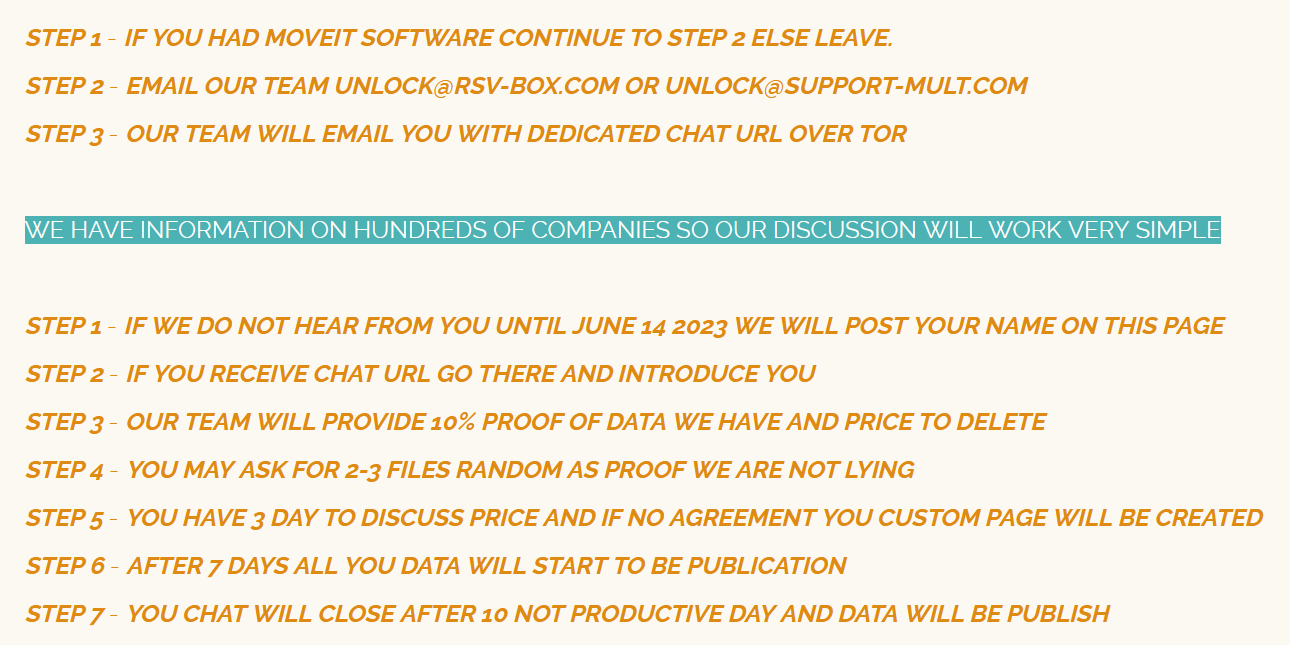
Cl0p is using a familiar strategy again: exploit one flaw in enterprise software to attack many companies, then publish the victims’ names if they refuse to pay. The group claims it has targeted more than 40 organizations through a vulnerability in PTC’s Windchill and FlexPLM platforms, which manufacturers and engineering companies use to manage product and design data.
CVE-2026-12569 (CVSS score of 9.3) is a critical remote code execution (RCE) vulnerability in PTC Windchill PDMlink and PTC FlexPLM. An attacker can exploit this vulnerability through the deserialization of untrusted data. The flaw impacts all CPS versions and Windchill and FlexPLM releases prior to 11.0 M030.
In June, the U.S. Cybersecurity and Infrastructure Security Agency (CISA) added the flaw to its Known Exploited Vulnerabilities (KEV) catalog.
German police reportedly warned organizations directly that attacks were coming, which tells you the exploitation window here wasn’t exactly subtle to security researchers watching it unfold.
Cl0p group’s tooling for this campaign goes well beyond a basic web shell. Security firm ReliaQuest found the group deployed a custom implant built for full data theft on its own, no additional tools required to actually pull data out once inside.
A class loader like that turns a single web shell into an open-ended backdoor, useful for lateral movement, ransomware deployment, or just quietly sitting there for months.
“ReliaQuest identified the web shell as a fully equipped extortion platform: it maps sensitive vault data, decrypts every credential in the Windchill keystore, and includes a custom Java class loader that lets Clop execute any additional code inside the application process, extending the shell into an unlimited backdoor for follow-on activity such as lateral movement, ransomware, or persistence.” reads the report published by ReliaQuest. “The web shell gives attackers a direct path to credential theft and large-scale data exfiltration, with no additional tooling required. Unlike generic command shells, this implant decrypts credentials, delivers malware, and maps stored files for exfiltration.”
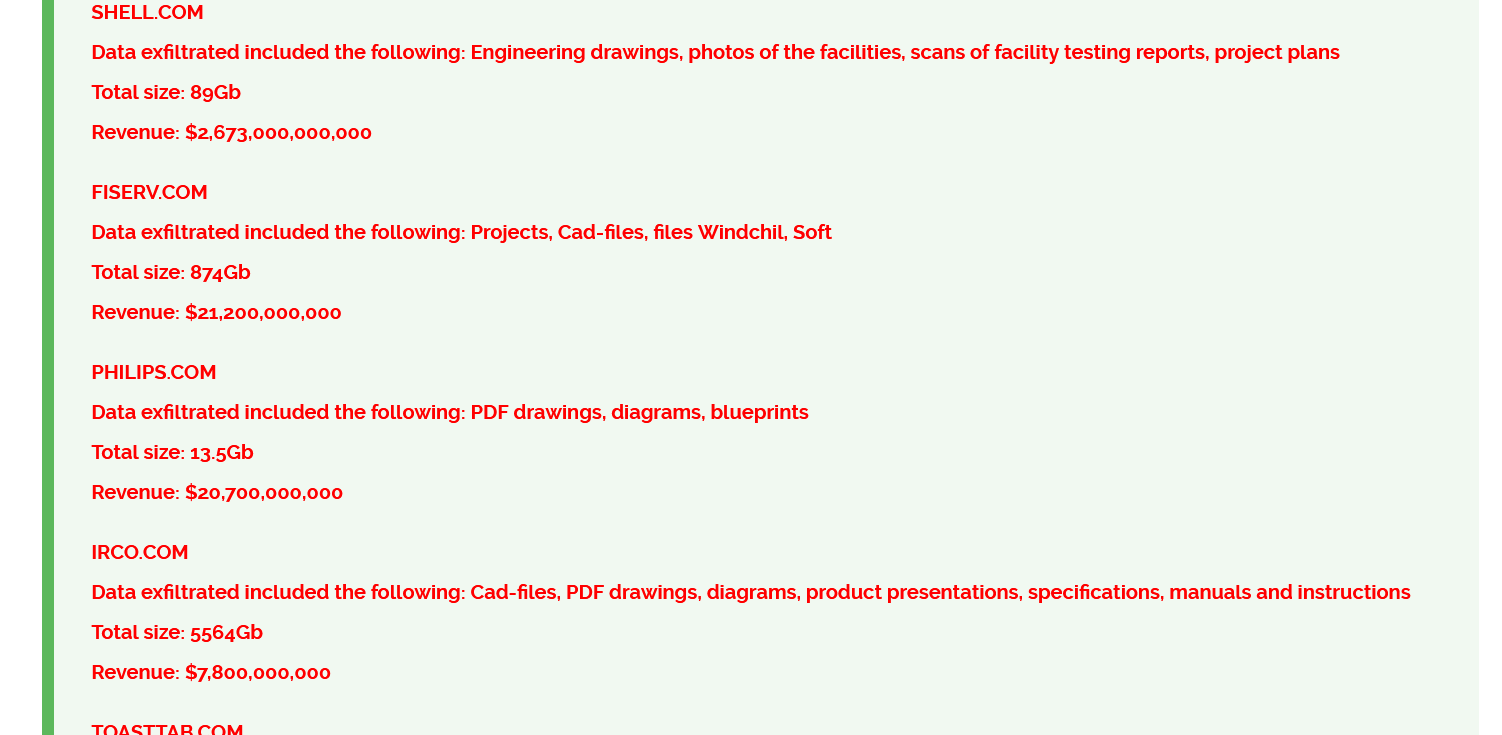
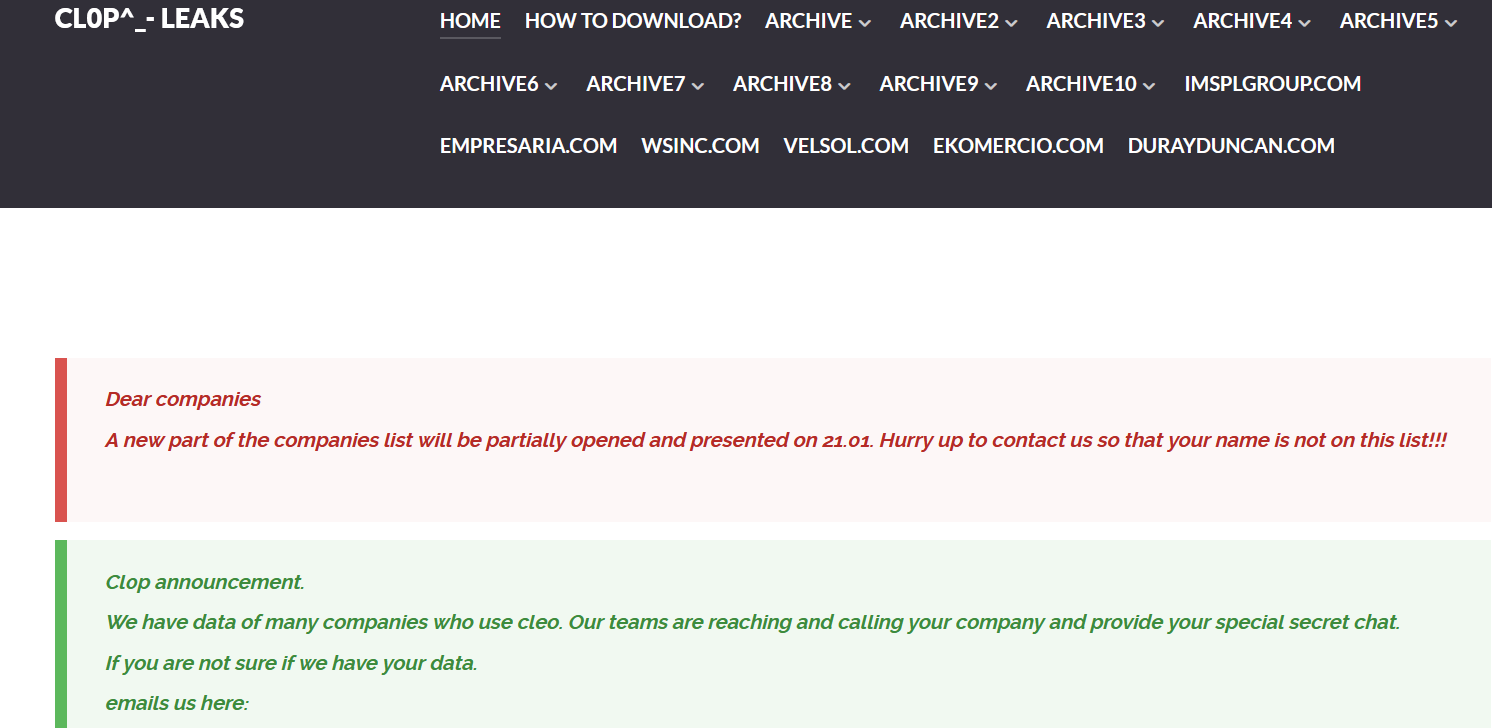
Cl0p’s naming strategy followed its usual slow build. The group initially posted partial company names on its leak site, then switched to full names starting August 12, and the victim count has climbed steadily since. For each organization, the listing includes what type of data got stolen and roughly how much, ranging anywhere from a single gigabyte up to multiple terabytes depending on the target.
The stolen data includes databases, project files, backups, engineering documents, blueprints, diagrams and corporate files, as well as images.
The victim list reads like a cross-section of major manufacturing and industrial names: Shell, Philips, Fiserv, Zebra Technologies, Ingersoll Rand, Toast, Mindray, and Largan Precision, the company that supplies camera lenses for Apple’s devices. Researchers noticed that GE was on the list briefly before quietly disappearing from Cl0p’s site, a move that usually signals either a ransom payment or at least resumed negotiations behind closed doors. Shell, Philips, Fiserv, and GE have all publicly acknowledged awareness of the claims and said they’re investigating, though none has confirmed a significant breach so far.
None of this is a new pattern for Cl0p specifically; it’s the same mass-exploitation-then-extortion model the group has run repeatedly against Oracle E-Business Suite, MOVEit, Cleo, and GoAnywhere over the past few years. What’s different this time is the target: enterprise PLM software sits deep inside manufacturing supply chains, holding the exact kind of engineering data that competitors and nation-states alike would pay real money to see.
If your organization runs Windchill or FlexPLM and hasn’t checked for this specific CVE yet, that’s the item to move to the top of today’s list.
Follow me on Twitter: @securityaffairs and Facebook and Mastodon
(SecurityAffairs – hacking, Cl0p )
Text extracted automatically; images, tables and formatting may be missing. Original: https://securityaffairs.com/197587/cyber-crime/cl0p-targets-40-organizations-through-ptc-windchill-flaw.html