Microsoft Patch Tuesday, November 2021 Edition
Vulnerabilities mentionedAll →
| CVE | Vulnerability | CVSS | EPSS | Flags | Affected | Exposure | Published |
|---|---|---|---|---|---|---|---|
| CVE-2021-38666 | Remote Desktop Client Remote Code Execution Vulnerability Remote Desktop Client Remote Code Execution Vulnerability NVD description · AI analysis pending | 8.8 group max | 15% |
| — | ||
| CVE-2021-42292 | Security Feature Bypass in Microsoft Excel Enables Arbitrary Code Execution Microsoft Excel, a component of Microsoft Office, contains a security feature bypass (CWE-357, insufficient verification of data authenticity) that would allow a local user to achieve arbitrary code execution. The flaw is triggered when Excel fails to properly verify data authenticity, allowing a file handled by Excel to bypass one of its security features rather than being processed safely. Successful exploitation lets an attacker run arbitrary code in the context of the local user, typically requiring the user to open Excel content on their machine. Anyone running the affected Microsoft Office/Excel software is exposed; the source data does not specify affected version ranges or fixed builds. The vulnerability was added to CISA's Known Exploited Vulnerabilities catalog on 2021-11-17, confirming in-the-wild exploitation, and it carries a high 43% EPSS probability of exploitation within 30 days (99th percentile), though no public proof-of-concept is known and ransomware use is unknown. Do: Apply Microsoft's security updates for Office/Excel addressing CVE-2021-42292 per vendor instructions (the November 2021 Patch Tuesday release; the source data does not list specific fixed versions, so check Microsoft's advisory for affected builds). Federal agencies must patch by the CISA KEV required deadline. Until patched, exercise caution opening Excel files from untrusted or internet-sourced locations, since exploitation requires local user interaction. | 7.8 | 43% | KEV |
| masshundreds of millions of users (Excel is deployed on the vast majority of Windows endpoints worldwide) | |
| CVE-2021-42321 | Authenticated RCE via Insecure Deserialization in Microsoft Exchange Server CVE-2021-42321 is an insecure deserialization remote code execution flaw in on-premises Microsoft Exchange Server, tied to insufficient validation by Exchange's ChainedSerializationBinder. Per the CVSS vector, it is triggered over the network by an authenticated user with low privileges and no user interaction, by submitting crafted serialized data that Exchange fails to safely deserialize. A successful attacker gains arbitrary code execution on the Exchange server with high impact to confidentiality, integrity, and availability, giving a foothold in the mail environment. Organizations running affected on-premises Exchange deployments are in scope. The flaw was actively exploited before patches shipped in November 2021, has public PoC exploits, was added to CISA's KEV on 2021-11-17 with known ransomware use, and carries an EPSS of 91.7% (99.9+ percentile). Do: Apply the November 2021 Microsoft Exchange Server security updates per vendor instructions to affected on-premises Exchange 2016/2019 deployments. Given confirmed in-the-wild exploitation and known ransomware use, check Exchange servers for signs of compromise, verify backups, and review accounts holding privileged Exchange roles, since exploitation requires authenticated access — enforce MFA and audit impersonation/admin role assignments while patching. | 8.8 | 92% | KEV ransomware PoC ×2 |
| masshundreds of thousands of internet-facing on-premises Exchange servers (on the order of 10^5 endpoints, supporting millions of mailbox users) |
Full article702 words · extracted from krebsonsecurity.com · click to collapse
Microsoft Corp. today released updates to quash at least 55 security bugs in its Windows operating systems and other software. Two of the patches address vulnerabilities that are already being used in active attacks online, and four of the flaws were disclosed publicly before today — potentially giving adversaries a head start in figuring out how to exploit them.
Among the zero-day bugs is CVE-2021-42292, a “security feature bypass” problem with Microsoft Excel versions 2013-2021 that could allow attackers to install malicious code just by convincing someone to open a booby-trapped Excel file (Microsoft says Mac versions of Office are also affected, but several places are reporting that Office for Mac security updates aren’t available yet).
Microsoft’s revised, more sparse security advisories don’t offer much detail on what exactly is being bypassed in Excel with this flaw. But Dustin Childs over at Trend Micro’s Zero Day Initiative says the vulnerability is likely due to loading code that should be limited by a user prompt — such as a warning about external content or scripts — but for whatever reason that prompt does not appear, thus bypassing the security feature.
The other critical flaw patched today that’s already being exploited in the wild is CVE-2021-42321, yet another zero-day in Microsoft Exchange Server. You may recall that earlier this year a majority of the world’s organizations running Microsoft Exchange Servers were hit with four zero-day attacks that let thieves install backdoors and siphon email.
As Exchange zero-days go, CVE-2021-42321 appears somewhat mild by comparison. Unlike the four zero-days involved in the mass compromise of Exchange Server systems earlier this year, CVE-2021-42321 requires the attacker to be already authenticated to the target’s system. Microsoft has published a blog post/FAQ about the Exchange zero-day here.
Two of the vulnerabilities that were disclosed prior to today’s patches are CVE-2021-38631 and CVE-2021-41371. Both involve weaknesses in Microsoft’s Remote Desktop Protocol (RDP, Windows’ built-in remote administration tool) running on Windows 7 through Windows 11 systems, and on Windows Server 2008-2019 systems. The flaws let an attacker view the RDP password for the vulnerable system.
“Given the interest that cybercriminals — especially ransomware initial access brokers — have in RDP, it is likely that it will be exploited at some point,” said Allan Liska, senior security architect at Recorded Future.
Liska notes this month’s patch batch also brings us CVE-2021-38666, which is a Remote Code Execution vulnerability in the Windows RDP Client.
“This is a serious vulnerability, labeled critical by Microsoft,” Liska added. “In its Exploitability Assessment section Microsoft has labelled this vulnerability ‘Exploitation More Likely.’ This vulnerability affects Windows 7 – 11 and Windows Server 2008 – 2019 and should be a high priority for patching.”
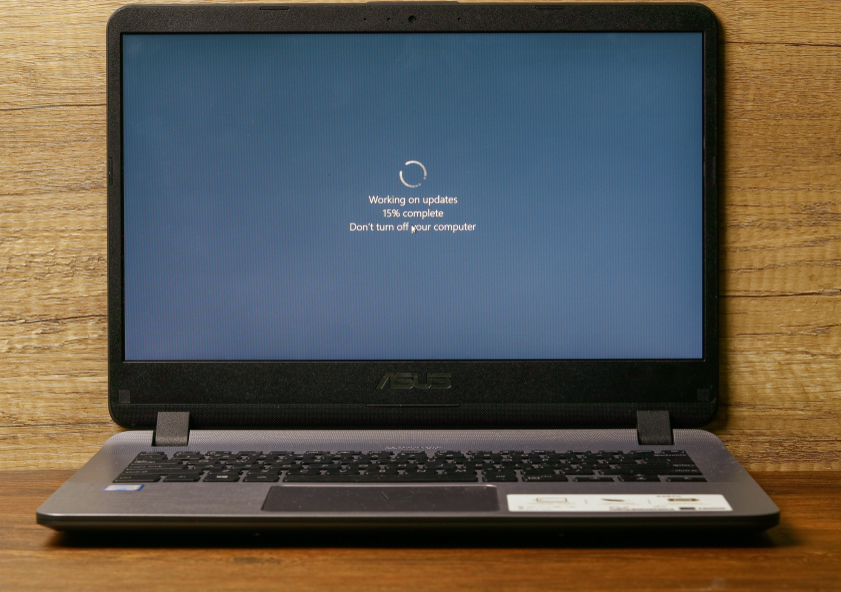
For most Windows home users, applying security updates is not a big deal. By default, Windows checks for available updates and is fairly persistent in asking you to install them and reboot, etc. It’s a good idea to get in the habit of patching on a monthly basis, ideally within a few days of patches being released.
But please do not neglect to backup your important files — before patching if possible. Windows 10 has some built-in tools to help you do that, either on a per-file/folder basis or by making a complete and bootable copy of your hard drive all at once. There are also a number of excellent third-party products that make it easy to duplicate your entire hard drive on a regular basis, so that a recent, working image of the system is always available for restore.
And if you wish to ensure Windows has been set to pause updating so you can back up your files and/or system before the operating system decides to reboot and install patches on its own schedule, see this guide.
If you experience any glitches or problems installing patches this month, please consider leaving a comment about it below; there’s a better-than-even chance other readers have experienced the same and may offer useful tips or suggestions.
Further reading:
SANS Internet Storm Center has a rundown on each of the 55 patches released today, indexed by exploitability and severity, with links to each advisory.
Text extracted automatically; images, tables and formatting may be missing. Original: https://krebsonsecurity.com/2021/11/microsoft-patch-tuesday-november-2021-edition/