Supreme Court denies Trump request to allow USPS mail ballot changes
Supreme Court denied the Trump administration's emergency request to implement USPS mail ballot changes before the 2026 midterms, calling it arbitrary and capricious.
The U.S. Supreme Court rejected 7-2 the Trump administration's petition to change how the U.S. Postal Service handles mail-in ballots for the 2026 midterm elections. Justice Ketanji Brown Jackson wrote the administration was unlikely to succeed, while Justice Brett Kavanaugh cited unreasonably short timelines for state election officials. The blocked executive order would have required USPS citizenship verification, barcode tracking of ballot envelopes, and DHS-compiled "State Citizenship Lists"; a whistleblower alleged a rushed effort to install three restrictive IT verification systems. Justices Alito and Thomas dissented, arguing states and organizations lacked standing.
- 7-2 Supreme Court decision blocked USPS mail ballot rule changes for 2026 elections.
- Kavanaugh concurred, citing insufficient time for states to implement the rules.
- Order mandated citizenship verification, ballot barcodes, and DHS State Citizenship Lists.
- Whistleblower alleged rushed rollout of three restrictive IT citizenship-verification systems.
- Alito and Thomas dissented, claiming states and organizations lacked standing.
Full article1,105 words · extracted from cyberscoop.com · click to collapse
Get our latest cybersecurity news first on Google.
One justice said the attempt to change the rules ahead of the 2026 elections would be "arbitrary and capricious” and violated the Administrative Procedures Act.
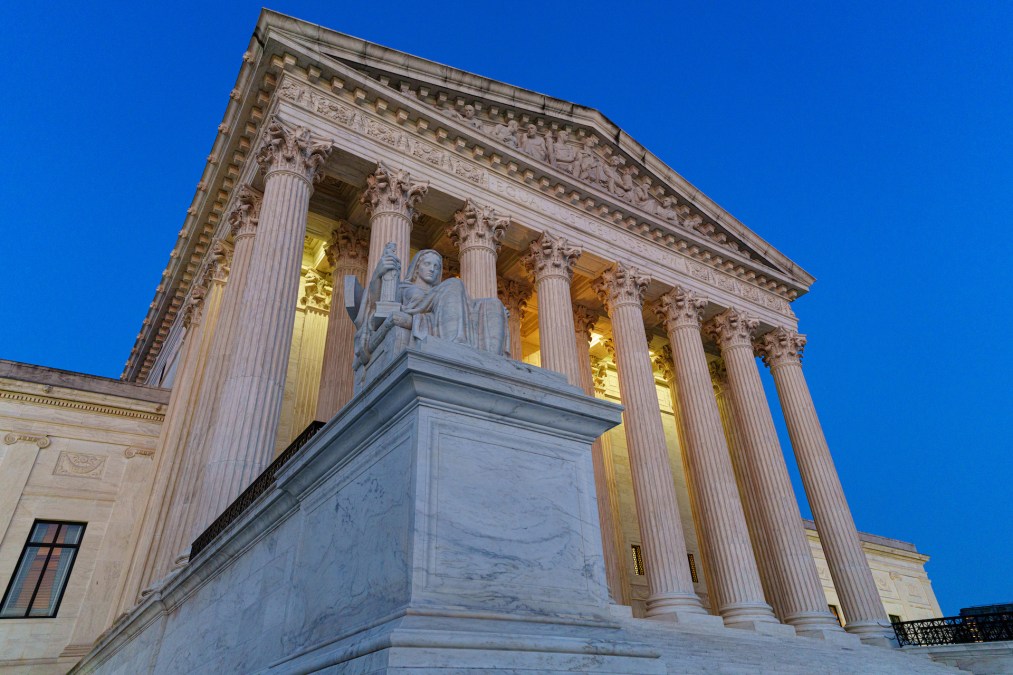
The Supreme Court has rejected a petition by the Trump administration to implement changes to the way the U.S. Postal Service handles mail-in ballots for the upcoming 2026 midterm elections, calling it “arbitrary and capricious.”
The 7-2 decision was handed down Monday with little explanation by the court. Writing for the majority, Justice Kentaji Brown Jackson said the administration “is unlikely to succeed on the merits of its challenge to the District Court’s preliminary injunction” and had failed to articulate a valid reason for seeking emergency relief from the court.
However, in a concurring statement, Justice Brett Kavanaugh said he believed there was “a fair prospect” that the final USPS final regulation would be within their legal authority and appeared to cite unreasonably short timelines imposed on states and his primary reason for denying the stay.
“But applying the rule in the 2026 elections would be arbitrary and capricious and in violation of the Administrative Procedures Act because state and local election officials do not have sufficient time to reasonably implement the rule before the elections,” wrote Kavanaugh.
The executive order would have tasked the USPS with verifying voter citizenship and the validating ballot materials. The order would have created a barcode tracking system for mail ballot envelopes and “State Citizenship Lists” compiled by the Department of Homeland Security.
The order was quickly challenged by states and voting rights organizations, who argued the executive branch had no constitutional authority to dictate how they maintained their voter rolls.
The White House has justified the order by claiming the federal government has “an unavoidable duty” under Article II of the Constitution to maintain confidence in election outcomes by preventing violations of criminal law, including noncitizen voting.
Lower courts disagreed, blocking the executive order from being put in place before November. The petition to the Supreme Court represented the administration’s best and final hope for judicial relief.
As the administration fought the matter in courts, it moved ahead finalizing the USPS rule. A whistleblower complaint alleged that a “rushed” effort by the White House and U.S. Postal Service to install three new restrictive IT systems meant to verify citizenship that could potentially deny thousands of mail-in ballots if the federal government disagrees with states on a voter or ballot’s eligibility.
While Jackson and Kavanaugh’s rationale took up less than half a page, a dissenting opinion written by Justice Samuel Alito and signed by Justice Clarence Thomas was more than 7 pages long.
Alito wrote that he would have granted the Trump administration their request for a stay, allowing the order to be implemented in time for the 2026 elections. He said states and organizations suing the government lacked standing, and dismissed their concerns that implementing the USPS order ahead of the 2026 elections would thwart their ability to educate voters about mail-in voting, calling them “abstract social interests.”
Ahead of the decision, David Becker, executive director of the nonprofit Center for Election Integrity and Research, told reporters that he doubted members of the Supreme Court majority “want to own the chaos that would ensure” as the USPS, states and voters attempt to navigate changes put in place just months before elections and after many states have begun sending out ballots that do not comply with the proposed rules.
He also said that it would be in line with previous Supreme Court decisions that have recognized state supremacy when it comes to specific election administration authorities, like where and how their citizens vote.
“When they consider issues related to the administration of elections, the casting and counting of ballots, they have sided with the states every time,” said Becker.
More Scoops
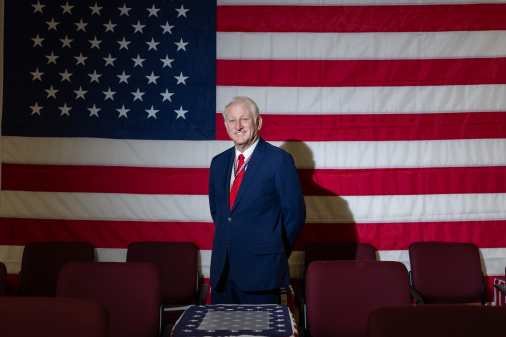
Election official says Tina Peters would be consultant, won’t have access to election systems
Shasta County registrar Clint Curtis told CyberScoop he needs Peters to help manage the county’s 2026 elections and he’s not concerned about her past conviction.
SCOTUS tosses one of two injunctions against Trump USPS mail-in ballot rules
Postal Service moves to finalize mail ballot regs before SCOTUS ruling
Latest Podcasts
Government
Technology
Threats
Policy
Wyden seeks upgraded NSA security guidance on commercial VPN use
‘Watershed 250’ test program in Texas looks to private sector for water cybersecurity help
Former sexual abuse victims say Grok used their images, videos to train deepfake capabilities
Cyber threats nudge Trump to sign executive order on foreign equipment in U.S. energy infrastructure
Text extracted automatically; images, tables and formatting may be missing. Original: https://cyberscoop.com/supreme-court-denies-trump-usps-mail-ballot-changes/