Clop Ransomware group claims the hack of Harvard University
Vulnerabilities mentionedAll →
| CVE | Vulnerability | CVSS | EPSS | Flags | Affected | Exposure | Published |
|---|---|---|---|---|---|---|---|
| CVE-2023-0669 | Pre-Authentication Deserialization RCE in Fortra GoAnywhere MFT Fortra (formerly HelpSystems) GoAnywhere MFT is vulnerable to pre-authentication remote code execution (CWE-502) in the License Response Servlet, which deserializes an attacker-controlled object without validating it. An unauthenticated attacker who can reach the exposed administrative interface can send a crafted serialized object to the servlet and trigger code execution on the server. Successful exploitation gives the attacker the ability to run arbitrary code in the context of the application, which has been leveraged for ransomware operations. All organizations running GoAnywhere MFT with the affected component reachable by untrusted networks are in scope. The flaw is being actively exploited: CISA added it to the Known Exploited Vulnerabilities catalog on 2023-02-10, ransomware use is confirmed, and EPSS puts the 30-day exploitation probability at 100%. Do: Apply the vendor's updates for GoAnywhere MFT immediately, per Fortra's instructions, as required by the CISA KEV catalog. Until patched, restrict or block untrusted/internet access to the administrative interface hosting the License Response Servlet, and review logs for signs of exploitation given confirmed in-the-wild and ransomware use. | 7.2 | 100% | KEV ransomware PoC ×3 |
| moderate≈1,000–10,000 internet-exposed GoAnywhere MFT instances (public internet scans of the exposed administrative interface) | |
| CVE-2023-34362 | Unauthenticated SQL Injection in Progress MOVEit Transfer CVE-2023-34362 is an unauthenticated SQL injection flaw (CWE-89) in Progress MOVEit Transfer that allows an attacker with no credentials to gain unauthorized access to the product's database. It is triggered remotely via crafted input submitted to the MOVEit Transfer web application, with the impact varying by the backend database engine in use (MySQL, Microsoft SQL Server, or Azure SQL). A successful attacker can infer the structure and contents of the database and, depending on the engine, execute SQL statements that alter or delete database elements, exposing data handled by the file-transfer service. Any organization running an internet-reachable MOVEit Transfer instance is affected; public internet-exposure scans around disclosure identified on the order of a few thousand servers, each typically serving enterprise or government user bases. Exploitation is confirmed in the wild: the flaw was added to CISA KEV on 2023-06-02 with known ransomware use and an EPSS exploitation probability of 99.9% (100th percentile), while no public PoC is known. Do: Apply the vendor's updates immediately, per Progress instructions and CISA's required action. Until patched, restrict internet exposure of MOVEit Transfer and check the backend database for unexpected structure or content changes and deletions. Because in-the-wild exploitation and ransomware use are confirmed, treat any unpatched, internet-facing instance as potentially compromised and review stored transfer data and access logs for anomalies. | 9.8 | 100% | KEV ransomware PoC |
| large≈2,000-3,000 internet-exposed MOVEit Transfer servers (public internet-exposure scans) |
Full article307 words · extracted from securityaffairs.com · click to collapse

The notorious Clop Ransomware group claims the hack of Harvard University and added the prestigious institute to its Tor data leak site.
The Clop Ransomware group announced the hack of the prestigious Harvard University. The cybercrime group created a page for the university on its Tor data leak site and announced it will leak the stolen data soon.
“PAGE CREATED, DATA ARCHIVING IS IN PROGRESS… A TORRENT LINK WILL BE AVAILABLE SOON … !!!” reads the announcement on its leak site.
“The company doesn’t care about its customers, it ignored their security!!!”

Clop (aka Cl0p) is a prolific Russian-speaking ransomware-as-a-service group specializing in big-game hunting and double-extortion.
The Clop ransomware group first appeared on the threat landscape around February 2019, emerging from the TA505 cybercrime group, a financially motivated gang active since at least 2014.
Like other Russia-based threat actors, Clop avoids targets in former Soviet countries and its malware can’t be activated on a computer that operates primarily in Russian.
Operators and affiliates identify high-value targets, steal sensitive data, encrypt networks, then publish stolen files on data-leak sites to pressure victims into paying. Clop exploits zero-days and vulnerable third-party software (e.g., MOVEit, GoAnywhere, Oracle EBS), leverages initial-access brokers and automation, and uses sophisticated evasion and lateral-movement techniques to maximize impact and monetization.
Clop’s victims include Shell, British Airways, Bombardier, University of Colorado, PwC, and the BBC.
The group conducted major campaigns including:
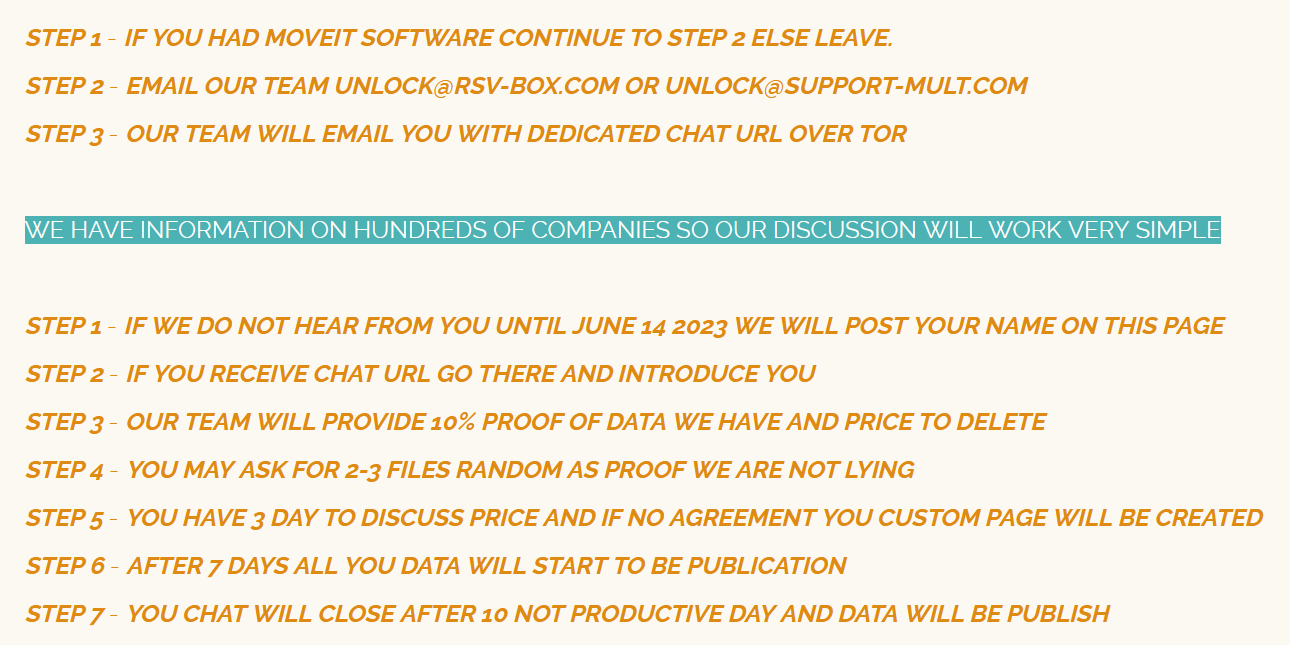
- MOVEit Transfer (2023): One of the largest ransomware campaigns in history, impacting hundreds of companies worldwide, including US and European firms, through an SQL injection zero-day (CVE-2023-34362).
- Accellion FTA (2020–2021): Exploited a zero-day in the file-transfer appliance to steal data from ~100 organizations.
- GoAnywhere MFT (2023): Targeted a flaw (CVE-2023-0669) to compromise over 130 organizations.
Follow me on Twitter: @securityaffairs and Facebook and Mastodon
(SecurityAffairs – hacking, Harward)
Text extracted automatically; images, tables and formatting may be missing. Original: https://securityaffairs.com/183282/cyber-crime/clop-ransomware-group-claims-the-hack-of-harvard-university.html