Senator Chides FBI for Weak Advice on Mobile Security
Vulnerabilities mentionedAll →
| CVE | Vulnerability | CVSS | EPSS | Flags | Affected | Exposure | Published |
|---|---|---|---|---|---|---|---|
| CVE-2025-24200 | Incorrect Authorization in Apple iOS/iPadOS Lets Attackers Disable USB Restricted Mode CVE-2025-24200 is an incorrect authorization flaw (CWE-863) in Apple iOS and iPadOS, caused by an authorization issue in state management that Apple resolved with improved state handling. An attacker with brief physical access to a locked device can exploit the flaw to disable USB Restricted Mode, the feature that locks down a locked iPhone or iPad's USB data port against accessories after a set period. This allows USB accessories, including data-extraction and attack peripherals, to communicate with the device while it remains locked, with a high confidentiality and integrity impact (CVSS 6.1, physical attack vector). Any iPhone or iPad user running a version prior to the applicable fixed release is affected, with fixes shipped in iOS 15.8.4, iOS 16.7.11, iOS 18.3.1, iPadOS 15.8.4, iPadOS 16.7.11, iPadOS 17.7.5, and iPadOS 18.3.1. Apple reports the flaw may have been exploited in an extremely sophisticated attack against specific targeted individuals, and CISA added it to the Known Exploited Vulnerabilities catalog on 2025-02-12. Do: Update iPhones to iOS 15.8.4, iOS 16.7.11, or iOS 18.3.1 and iPads to iPadOS 15.8.4, 16.7.11, 17.7.5, or 18.3.1 as applicable to each device's branch, checking Settings > General > Software Update for unmanaged devices. Because exploitation requires physical access, prioritize high-risk users (executives, journalists, government personnel), confirm no fleet devices remain on unpatched builds, and avoid untrusted USB accessories and charging ports until updated. CISA's KEV listing requires federal agencies to apply the vendor patch per the required action or discontinue use of the product. | 6.1 | 4% | KEV |
| mass≈1 billion+ devices (Apple's active installed base; every iPhone/iPad running a pre-patch iOS/iPadOS release at the time of disclosure) | |
| CVE-2025-43200 | Apple iCloud Link media-processing logic flaw exploited in targeted attacks CVE-2025-43200 is a logic issue in Apple's operating systems that occurs when processing a maliciously crafted photo or video shared via an iCloud Link (CISA catalogs it as an unspecified vulnerability across Apple iOS, iPadOS, macOS, visionOS, and watchOS). An attacker must get a user to open the crafted shared-media link, and the CVSS 4.2 score indicates network delivery with high attack complexity, user interaction, and low-severity confidentiality and integrity impact, making the flaw most useful as a step in a larger attack chain. Apple states the issue was exploited in an "extremely sophisticated attack against specific targeted individuals," and related reporting links the February 2025 updates to actively exploited WebKit flaws and a Paragon spyware campaign against European journalists. The vulnerability was added to CISA's Known Exploited Vulnerabilities catalog on 2025-06-16; no public proof-of-concept is known, and EPSS estimates roughly a 1.0% chance of further exploitation in the next 30 days (62nd percentile). Anyone running iOS/iPadOS 15-18, macOS Ventura through Sequoia, visionOS, or watchOS on versions older than the listed fixes is affected. Do: Update iOS to 15.8.4, 16.7.11, or 18.3.1; iPadOS to 15.8.4, 16.7.11, 17.7.5, or 18.3.1 as applicable; macOS to Sequoia 15.3.1, Sonoma 14.7.4, or Ventura 13.7.4; visionOS to 2.3.1; and watchOS to 11.3.1. Until patched, treat iCloud Links (shared photo/video links) from unknown senders with caution and use MDM to identify fleets still running pre-fix versions. US federal agencies must apply the vendor fixes per BOD 22-01 requirements given the KEV listing, and organizations at risk of targeted spyware should hunt for signs of post-exploitation on affected devices. | 4.2 | 1% | KEV |
| masshundreds of millions to ~2 billion active Apple devices on affected OS versions |
Full article1,180 words · extracted from krebsonsecurity.com · click to collapse
Agents with the Federal Bureau of Investigation (FBI) briefed Capitol Hill staff recently on hardening the security of their mobile devices, after a contacts list stolen from the personal phone of the White House Chief of Staff Susie Wiles was reportedly used to fuel a series of text messages and phone calls impersonating her to U.S. lawmakers. But in a letter this week to the FBI, one of the Senate’s most tech-savvy lawmakers says the feds aren’t doing enough to recommend more appropriate security protections that are already built into most consumer mobile devices.
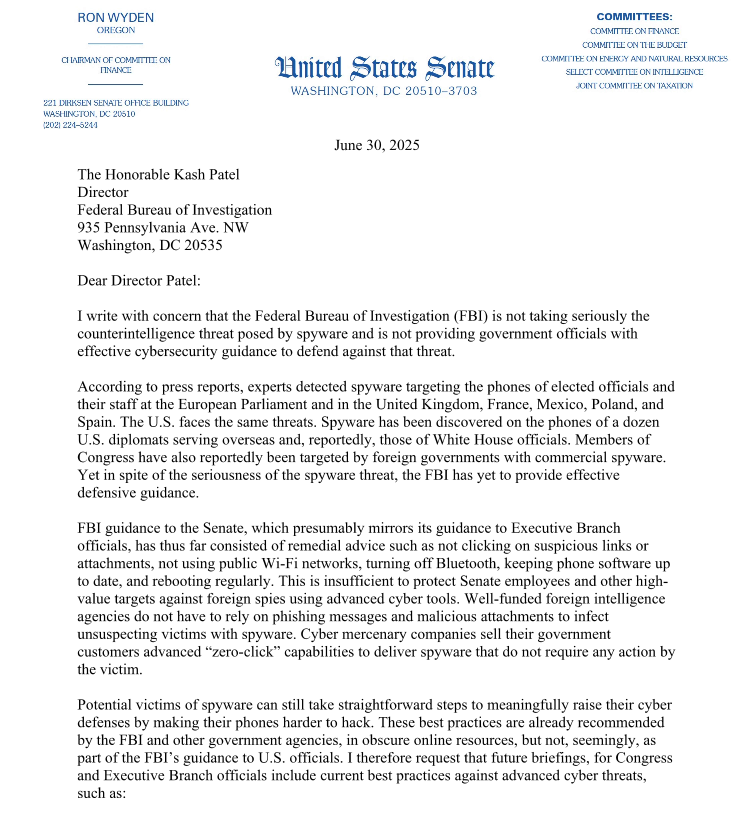
A screenshot of the first page from Sen. Wyden’s letter to FBI Director Kash Patel.
On May 29, The Wall Street Journal reported that federal authorities were investigating a clandestine effort to impersonate Ms. Wiles via text messages and in phone calls that may have used AI to spoof her voice. According to The Journal, Wiles told associates her cellphone contacts were hacked, giving the impersonator access to the private phone numbers of some of the country’s most influential people.
The execution of this phishing and impersonation campaign — whatever its goals may have been — suggested the attackers were financially motivated, and not particularly sophisticated.
“It became clear to some of the lawmakers that the requests were suspicious when the impersonator began asking questions about Trump that Wiles should have known the answers to—and in one case, when the impersonator asked for a cash transfer, some of the people said,” the Journal wrote. “In many cases, the impersonator’s grammar was broken and the messages were more formal than the way Wiles typically communicates, people who have received the messages said. The calls and text messages also didn’t come from Wiles’s phone number.”
Sophisticated or not, the impersonation campaign was soon punctuated by the murder of Minnesota House of Representatives Speaker Emerita Melissa Hortman and her husband, and the shooting of Minnesota State Senator John Hoffman and his wife. So when FBI agents offered in mid-June to brief U.S. Senate staff on mobile threats, more than 140 staffers took them up on that invitation (a remarkably high number considering that no food was offered at the event).
But according to Sen. Ron Wyden (D-Ore.), the advice the FBI provided to Senate staffers was largely limited to remedial tips, such as not clicking on suspicious links or attachments, not using public wifi networks, turning off bluetooth, keeping phone software up to date, and rebooting regularly.
“This is insufficient to protect Senate employees and other high-value targets against foreign spies using advanced cyber tools,” Wyden wrote in a letter sent today to FBI Director Kash Patel. “Well-funded foreign intelligence agencies do not have to rely on phishing messages and malicious attachments to infect unsuspecting victims with spyware. Cyber mercenary companies sell their government customers advanced ‘zero-click’ capabilities to deliver spyware that do not require any action by the victim.”
Wyden stressed that to help counter sophisticated attacks, the FBI should be encouraging lawmakers and their staff to enable anti-spyware defenses that are built into Apple’s iOS and Google’s Android phone software.
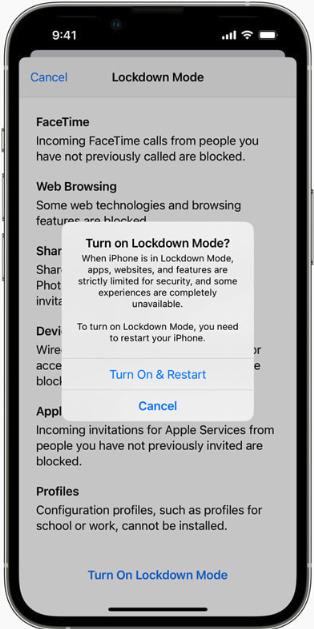
These include Apple’s Lockdown Mode, which is designed for users who are worried they may be subject to targeted attacks. Lockdown Mode restricts non-essential iOS features to reduce the device’s overall attack surface. Google Android devices carry a similar feature called Advanced Protection Mode.
Wyden also urged the FBI to update its training to recommend a number of other steps that people can take to make their mobile devices less trackable, including the use of ad blockers to guard against malicious advertisements, disabling ad tracking IDs in mobile devices, and opting out of commercial data brokers (the suspect charged in the Minnesota shootings reportedly used multiple people-search services to find the home addresses of his targets).
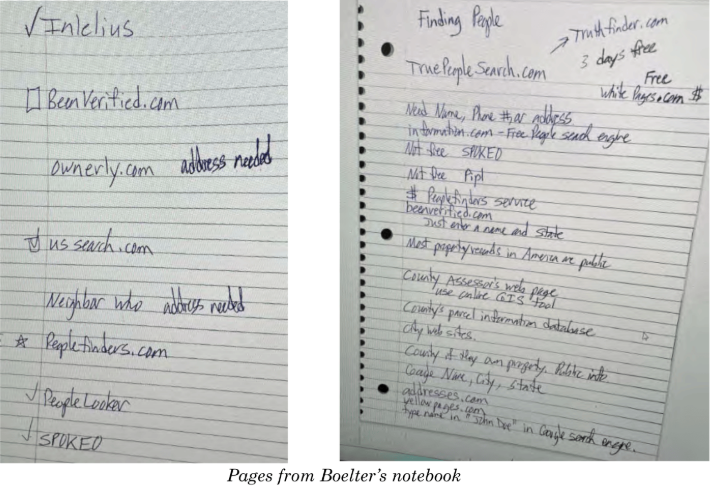
The senator’s letter notes that while the FBI has recommended all of the above precautions in various advisories issued over the years, the advice the agency is giving now to the nation’s leaders needs to be more comprehensive, actionable and urgent.
“In spite of the seriousness of the threat, the FBI has yet to provide effective defensive guidance,” Wyden said.
Nicholas Weaver is a researcher with the International Computer Science Institute, a nonprofit in Berkeley, Calif. Weaver said Lockdown Mode or Advanced Protection will mitigate many vulnerabilities, and should be the default setting for all members of Congress and their staff.
“Lawmakers are at exceptional risk and need to be exceptionally protected,” Weaver said. “Their computers should be locked down and well administered, etc. And the same applies to staffers.”
Weaver noted that Apple’s Lockdown Mode has a track record of blocking zero-day attacks on iOS applications; in September 2023, Citizen Lab documented how Lockdown Mode foiled a zero-click flaw capable of installing spyware on iOS devices without any interaction from the victim.
Earlier this month, Citizen Lab researchers documented a zero-click attack used to infect the iOS devices of two journalists with Paragon’s Graphite spyware. The vulnerability could be exploited merely by sending the target a booby-trapped media file delivered via iMessage. Apple also recently updated its advisory for the zero-click flaw (CVE-2025-43200), noting that it was mitigated as of iOS 18.3.1, which was released in February 2025.
Apple has not commented on whether CVE-2025-43200 could be exploited on devices with Lockdown Mode turned on. But HelpNetSecurity observed that at the same time Apple addressed CVE-2025-43200 back in February, the company fixed another vulnerability flagged by Citizen Lab researcher Bill Marczak: CVE-2025-24200, which Apple said was used in an extremely sophisticated physical attack against specific targeted individuals that allowed attackers to disable USB Restricted Mode on a locked device.
In other words, the flaw could apparently be exploited only if the attacker had physical access to the targeted vulnerable device. And as the old infosec industry adage goes, if an adversary has physical access to your device, it’s most likely not your device anymore.
I can’t speak to Google’s Advanced Protection Mode personally, because I don’t use Google or Android devices. But I have had Apple’s Lockdown Mode enabled on all of my Apple devices since it was first made available in September 2022. I can only think of a single occasion when one of my apps failed to work properly with Lockdown Mode turned on, and in that case I was able to add a temporary exception for that app in Lockdown Mode’s settings.
My main gripe with Lockdown Mode was captured in a March 2025 column by TechCrunch’s Lorenzo Francheschi-Bicchierai, who wrote about its penchant for periodically sending mystifying notifications that someone has been blocked from contacting you, even though nothing then prevents you from contacting that person directly. This has happened to me at least twice, and in both cases the person in question was already an approved contact, and said they had not attempted to reach out.
Although it would be nice if Apple’s Lockdown Mode sent fewer, less alarming and more informative alerts, the occasional baffling warning message is hardly enough to make me turn it off.
Text extracted automatically; images, tables and formatting may be missing. Original: https://krebsonsecurity.com/2025/06/senator-chides-fbi-for-weak-advice-on-mobile-security/