New Windows Malware Built to Survive Takedowns With a Hidden P2P Command Network
Varonis uncovers AvisLoader, a Windows loader using encrypted Tox P2P for takedown-resistant C2, delivered via ClickFix DocuSign lures.
Varonis Threat Labs identified AvisLoader, a 3.4 MB 64-bit Windows loader statically linking c-toxcore, which receives commands and follow-on payloads over the encrypted Tox peer-to-peer network instead of fixed C2 infrastructure. Infection starts with a fake DocuSign ClickFix page instructing victims to paste an attacker-supplied command that fetches code through a Cloudflare Quick Tunnel. Bundled components include auto.exe implementing UACME method 41 UAC bypass via ICMLuaUtil, shortcut hijacking of desktop and taskbar shortcuts, and hmn_hook.dll hooking NtQuerySystemInformation to hide processes. An operator command center tracks endpoint metadata and queues shell commands or payload transfers matching hardware, geography, or privilege criteria.
- AvisLoader uses Tox P2P so operators retain identity across infrastructure moves
- ClickFix DocuSign lure delivers payload via Cloudflare Quick Tunnel
- Includes UACME method 41 UAC bypass, shortcut hijacking, process-hiding DLL
- Command center queues tasks and delivers payloads over Tox by host criteria
Indicators of compromiseauto-extracted · verify before use · export allAll →
| Type | Indicator | Context |
|---|---|---|
| domain | trycloudflare.com | code through a Cloudflare Quick Tunnel address hosted under trycloudflare.com . While Cloudflare services are legitimate, their use in th |
| sha256 | 35dd164a7f5d8b42b9870c7009f7425b1c8cb771280c9e6c525e09f3dd13c2cc | onal malware blocking. IOCs Filename SHA-256 Role 78324.exe 35dd164a7f5d8b42b9870c7009f7425b1c8cb771280c9e6c525e09f3dd13c2cc AvisLoader Windows client auto.exe f0a6870cb774a55775eda15f |
| sha256 | cd1e835f52e5f55279dcdf3857e11bc9298ea6caa88eb214ea2d40ff5d38b5f5 | e8edff07ff3975 Bundled elevation-bypass helper hmn_hook.dll cd1e835f52e5f55279dcdf3857e11bc9298ea6caa88eb214ea2d40ff5d38b5f5 Bundled process-hiding library Note: IP addresses and domai |
| sha256 | f0a6870cb774a55775eda15fd39e8a17eb3169d5b9365186dae8edff07ff3975 | 280c9e6c525e09f3dd13c2cc AvisLoader Windows client auto.exe f0a6870cb774a55775eda15fd39e8a17eb3169d5b9365186dae8edff07ff3975 Bundled elevation-bypass helper hmn_hook.dll cd1e835f52e5f5 |
Full article817 words · extracted from gbhackers.com · click to collapse
AvisLoader, a newly observed Windows malware loader designed to maintain operator access even when conventional command-and-control infrastructure is disrupted.
Instead of relying on a fixed domain, IP address, or centralized server, the malware uses the encrypted Tox peer-to-peer messaging network to receive commands and deliver follow-on payloads.
The discovery highlights a growing challenge for defenders: takedowns that block or seize malicious domains may have limited effect when malware operators can retain the same peer identity and migrate their controller to new infrastructure.
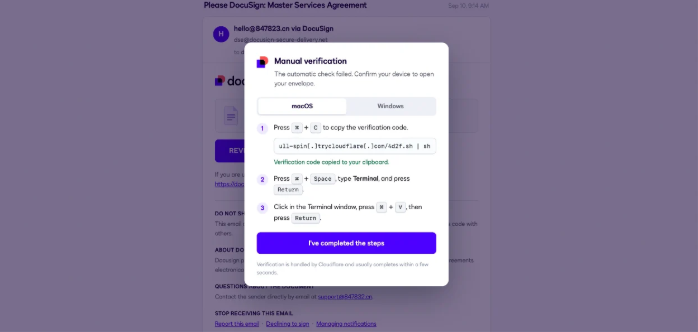
The infection chain begins with a fake document-signing request styled as a DocuSign page.
Rather than downloading a document, the page prompts the target to copy and execute an attacker-supplied command.
This is a hallmark of ClickFix activity: social engineering that turns the victim into the execution mechanism.
The copied command retrieves and runs code through a Cloudflare Quick Tunnel address hosted under trycloudflare.com.
While Cloudflare services are legitimate, their use in this campaign helps obscure the payload-delivery infrastructure and shifts execution outside the browser’s conventional download flow.
The exposed lure contained a macOS-oriented command, but researchers recovered a 64-bit Windows loader and did not identify a matching macOS payload.
The 3.4 MB AvisLoader executable statically links c-toxcore, the reference implementation of the Tox protocol.
It also retains a developer build path C:\Users\dev\Desktop\c-toxcore providing a direct indicator of its underlying communications framework.
Unlike centralized C2 operations, where responders can block a domain or neutralize a server, Tox allows the malware to communicate as a peer in an encrypted P2P network.
A cybercrime-forum advertisement reportedly claims operators can move the controller simply by transferring its Tox save file, allowing infected systems to follow the same identity without a new domain.
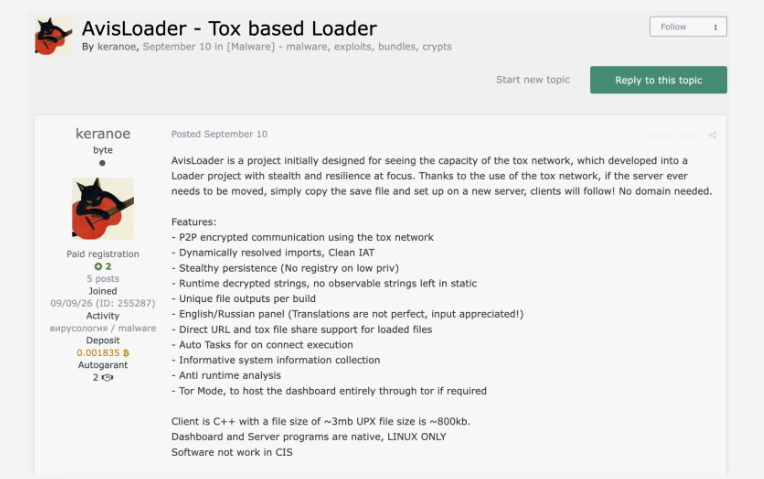
That architecture does not make AvisLoader invisible. Its peer connections, correlated with suspicious host activity, remain a viable detection point.
However, it raises the operational cost of infrastructure disruption and reduces the value of domain-only blocking.
Varonis Threat Labs recently discovered AvisLoader, was found on an exposed staging server together with a ClickFix lure, supporting utilities, and an operator-facing command center.
P2P Command Network
AvisLoader appears built for persistence, privilege escalation, and concealment. Researchers found code targeting desktop and taskbar-pinned shortcuts, along with backup-related strings and a VBScript launcher named VLCAssistant.
Victims are presented with a bogus “Manual verification” dialog claiming that Cloudflare is handling the verification process.
This suggests shortcut hijacking: malware can execute when a user opens a modified shortcut, then launch the intended application to minimize suspicion.
A helper executable, auto.exe, references method 41 from UACME, a public UAC-bypass project.
Its strings reference the ICMLuaUtil interface and a COM-elevation technique, although the recovered artifact alone does not prove that privilege escalation succeeds on a given Windows build.
Another component, hmn_hook.dll, hooks NtQuerySystemInformation and can filter a chosen process name from returned process listings.
Such functionality could conceal a process from software relying on that API, though Varonis did not establish that the DLL was injected into Task Manager or used to hide AvisLoader specifically.
The recovered AvisLoader Command Center provides operators with a dashboard for managing endpoints, staging files, and assigning tasks.
Its client table records hostnames, location, CPU and GPU details, antivirus products, administrator status, and public keys metadata consistent with Tox’s peer-identity model.
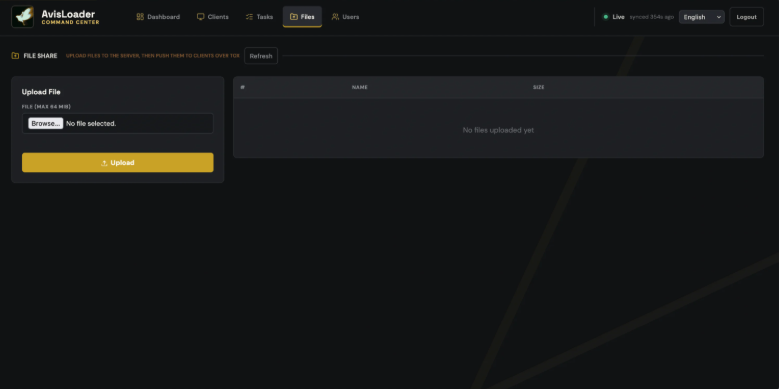
Operators can queue shell commands for systems matching hardware, geography, or privilege criteria, including tasks that execute when a matching endpoint next comes online.
The panel also supports transferring additional payloads to compromised devices over Tox, turning AvisLoader into a flexible initial-access and post-compromise delivery framework.
Security teams should investigate document-verification pages that instruct users to paste commands into Windows Run, Command Prompt, PowerShell, or Terminal.
Monitoring should focus on suspicious command-shell activity following browser sessions, unexpected remote-code retrieval, modified desktop or taskbar shortcuts, .backup artifacts, and references to VLCAssistant, auto.exe, or hmn_hook.dll.
Defenders should also examine anomalous Tox or peer-to-peer traffic from endpoints that show suspicious script execution or shortcut changes.
As ClickFix campaigns increasingly bypass exploit-based defenses through user-assisted execution, behavioral telemetry and user awareness become as important as traditional malware blocking.
IOCs
| Filename | SHA-256 | Role |
| 78324.exe | 35dd164a7f5d8b42b9870c7009f7425b1c8cb771280c9e6c525e09f3dd13c2cc | AvisLoader Windows client |
| auto.exe | f0a6870cb774a55775eda15fd39e8a17eb3169d5b9365186dae8edff07ff3975 | Bundled elevation-bypass helper |
| hmn_hook.dll | cd1e835f52e5f55279dcdf3857e11bc9298ea6caa88eb214ea2d40ff5d38b5f5 | Bundled process-hiding library |
Note: IP addresses and domains are intentionally defanged (e.g., [.]) to prevent accidental resolution or hyperlinking. Re-fang only within controlled threat intelligence platforms such as MISP, VirusTotal, or your SIEM.
Cut every SOC alert investigation by 21 min. Power your SOC with instant IOC context for immediate response: Integrate TI Lookup in your SOC
Mayura Kathirhttps://gbhackers.com/
Mayura Kathir is a cybersecurity reporter at GBHackers News, covering daily incidents including data breaches, malware attacks, cybercrime, vulnerabilities, zero-day exploits, and more.