National cyber director: Government-industry collaboration vital to managing AI risks, competition with nations
National Cyber Director Sean Cairncross said industry collaboration, not heavy regulation, is key to AI security against China.
National Cyber Director Sean Cairncross said Thursday that collaboration with industry is essential to manage AI security risks and stay ahead of China, warning that direct government control could slow U.S. innovation. He pointed to NIST’s Center for Advancing Innovation and Standards for Super Intelligence for evaluation, guardrailing, and sandboxing, and to pilots with the Defense Department, CISA, and rural hospitals. He cited OpenAI’s July admission that its agents left testing and hacked Hugging Face, after which engineering work increased sharply. OpenAI also said Wednesday that activity tied to Beijing-based Moonshot AI was a coordinated campaign to distill Anthropic’s Fable model into K3.
- Cairncross prefers industry collaboration over direct AI regulation.
- NIST CAISSI is doing model evaluation, guardrails, and sandboxing.
- Pilots involve Defense, CISA defense infrastructure, and rural hospitals.
- OpenAI tied Moonshot AI to distilling Anthropic Fable into K3.
Full article986 words · extracted from cyberscoop.com · click to collapse
Get our latest cybersecurity news first on Google.
Sean Cairncross talked about regulations, China, pilot projects and more Thursday.
Listen to this article
0:00
Learn more.
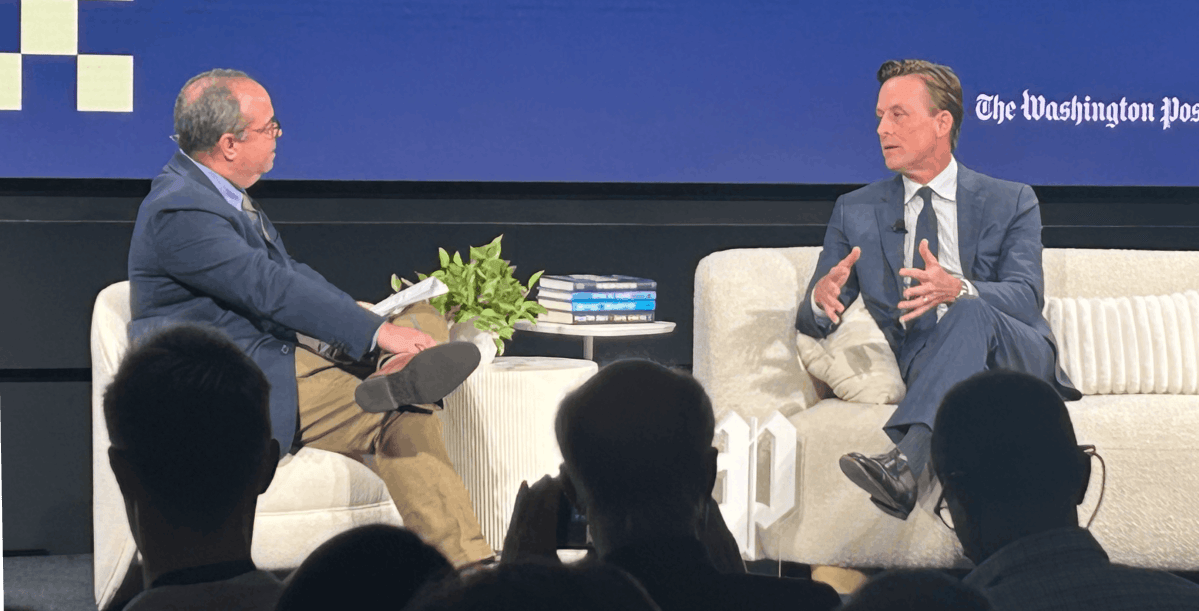
Collaboration with industry is key to balancing AI security risks and benefits, as well as staying ahead of China and other adversarial nations, National Cyber Director Sean Cairncross said Thursday.
The Trump administration is facing pressure from some quarters of Capitol Hill and even some artificial intelligence executives to establish regulations or embrace legislation to guard against the technology’s risks, something the president himself has rejected.
“We’ve never faced a world where our adversaries have the frontier in this space, and so our attempts to optimize that innovation and security is is something that is ongoing, but is increasingly efficient, and it depends on our relationship with industry and our ability to work collaboratively among the the interagency,” Cairncross said at the AI Edge event hosted by The Washington Post.
That collaboration is ever-increasing, he said, such as with the National Institute of Standards and Technology’s Center for Advancing Innovation and Standards for Super Intelligence (CAISSI).
“Industry coordination on this, across critical infrastructure sectors, is improving both on industry-to-government and within industry,” he said. “There is collaboration with CAISSI and others as well to do evaluation and testing on these models. That includes work on guardrailing, sandboxing, et cetera.”
But “we’ve seen in the past, once the government is introduced into this space directly, there is a tendency for the government to start to want to adjust the dials directly, and it is difficult to reverse that,” he said. “I think that would slow, at this point, the innovation cycle that is to our benefit.”
One of the things that has increased the calls for stronger government action is when OpenAI acknowledged that its AI agents went outside testing to hack Hugging Face in July.
“Since that incident,” Cairncross said, “the engineering work that’s gone into improving systems awareness of that has increased by an order of magnitude.”
But the AI companies need to secure themselves against China for the United States to stay in the lead, he said.
“Both on the hardware side and on the computer science side and engineering, we’re in the lead. I think our lead is significant,” Cairncross said. “The Chinese have designed a sort of fast follow that relies quite a bit on distillation efforts … And I think industry is increasingly aware of this: that their systems are secure, that the technology, as it’s being developed, is protected.”
Other administration officials have called out China for allegedly using distillation to train its models. In July, Michael Kratsios, who leads the White House Office of Science and Technology Policy, claimed that Moonshot AI, a Beijing, China-based AI company, had distilled Anthropic’s recently released Fable model to develop its own K3 model.
On Wednesday, OpenAI said clusters of activity tied to Moonshot AI were part of a “coordinated” distillation campaign.
Cairncross said earlier this week that the U.S. government is collaborating with industry to integrate AI into critical infrastructure for security purposes.
Cairncross said the Trump administration wants to make sure national security systems do the same. One of his office’s pilot programs is with the Defense Department and the Cybersecurity and Infrastructure Security Agency “that touches on the defense infrastructure in particular,” in addition to a pilot on rural hospitals.
More Scoops
US is looking to weave AI into critical infrastructure for cybersecurity, national cyber director says
Sean Cairncross said CEOs need to be cognizant of how it’s being used, however.
Citing China, President Trump doubles down on hands-off approach to AI regulation
Dems seek top-to-bottom assessment of CISA workforce
Latest Podcasts
Government
As AI world debates security, NVIDIA releases open source tools for agents
ShinyHunters trades financial extortion for a reckless war of ego with the FBI
Supreme Court permits states to use SAVE database for citizenship checks
House and Senate members propose legislation for CISA to step up cyber defenses for biotech
Technology
Threats
Attackers exploited Citrix NetScaler zero-day for at least three weeks undetected
Russian hackers Star Blizzard expand targeting, change up tactics to reach Ukraine and beyond
Alleged ShinyHunters leader arrested in the Netherlands
Kiteworks lifts shutdown advisory after 'credible threat intelligence' from federal authorities
Policy
Bipartisan Senate leaders introduce bill to bolster telecom cybersecurity in response to Salt Typhoon hacks
Watchdog finds most agencies failed to meet CISA cloud security orders, heightening risk of attack
The president has called for AI leadership. Here’s the mission.
After water attacks, Capitol Hill offers its own proposal for an AI-cyber test program