11 Best API Security Tools Compared (2026): Features & Pricing
A 2026 roundup compares 11 API security tools, with Salt Security and Traceable rated highest.
A 2026 buyer's roundup compares 11 API security products across runtime defense, design-time controls, testing, and edge platforms. Salt Security and Traceable receive the highest editorial rating of 4.5 out of 5 for behavioral baselining and request-trace context. 42Crunch is positioned for OpenAPI contract security, while Escape and APIsec cover schema-aware and logic testing. Akamai with Noname, Cloudflare, and Imperva are described as bundling API security into existing edge or WAAP platforms, and the publisher says the scores are not based on lab tests.
- Salt Security and Traceable lead dedicated runtime API defense.
- 42Crunch is ranked best for design-time OpenAPI contract security.
- Akamai, Cloudflare, and Imperva are presented as edge-bundled options.
- Ratings are editorial, with no laboratory testing claimed.
Full article1,551 words · extracted from gbhackers.com · click to collapse
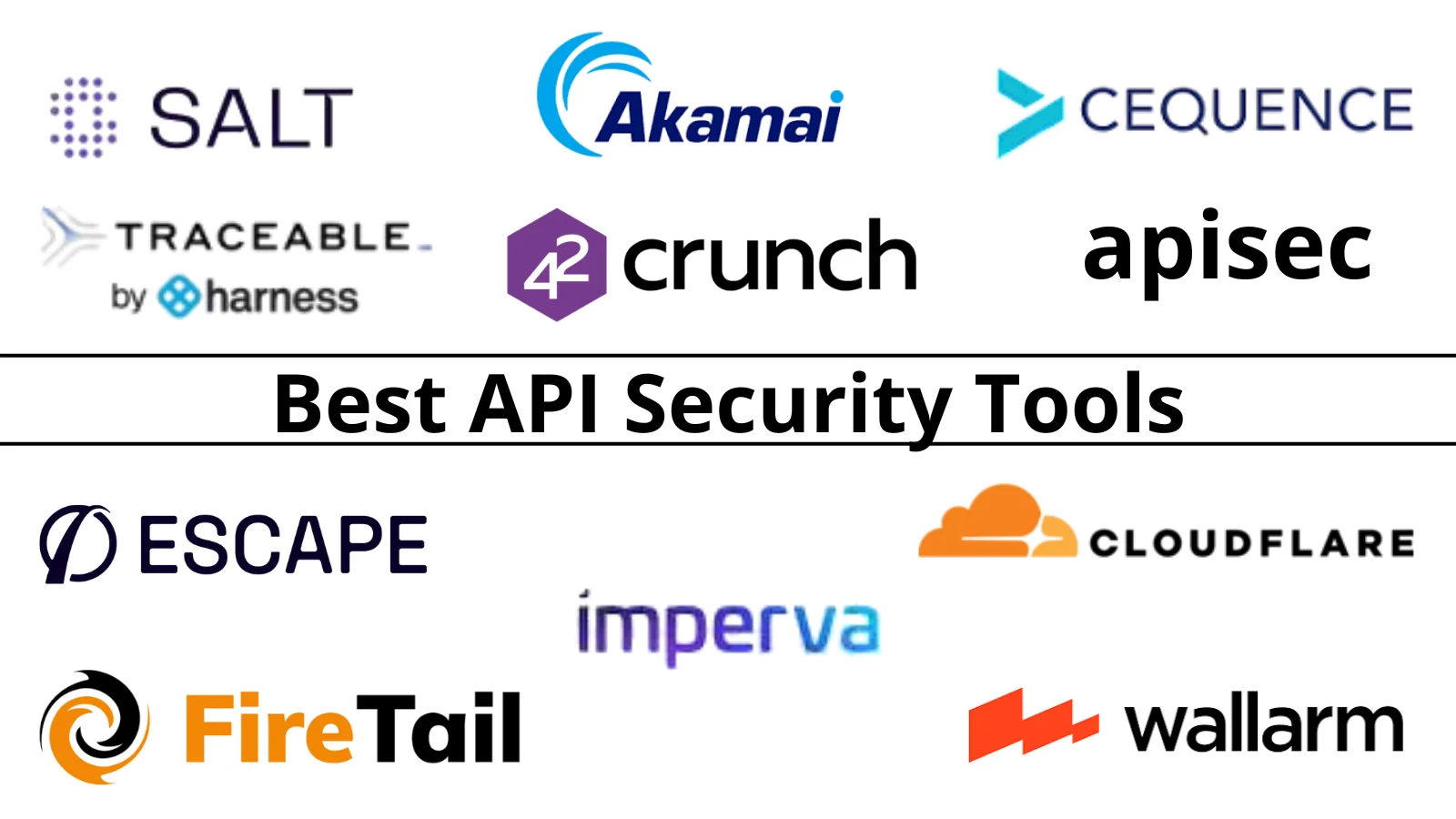
Salt Security and Traceable anchor dedicated discovery-plus-runtime defense, 42Crunch owns design-time contract security, and the edge giants (Akamai with Noname inside, Cloudflare, Imperva) bundle the category into platforms you may already run.
Eleven distinct options (Akamai’s two sheet rows are one vendor) priced across five lanes.
Quick Verdict: Best API Security at a Glance
• Best dedicated runtime: Salt Security (behavioral baselining) | Traceable (trace-context depth)
• Best design-time: 42Crunch OpenAPI contract security in CI
• Best API-native testing: Escape (schema-aware DAST) | APIsec (automated logic testing)
• Best bot-fused defense: Cequence | Best cloud-logs discovery: Firetail
• Best edge-bundled: Akamai (Noname) | Cloudflare | Imperva | WAAP-unified: Wallarm
| Product | Lane | Standout | Pricing structure | Editor’s rating* |
| Salt Security | Dedicated runtime | Behavioral baselines | Quote | 4.5/5 |
| Traceable | Dedicated runtime | Trace-level context | Quote | 4.5/5 |
| Akamai (Noname) | Edge-integrated | Leader engine at edge | Quote | 4.4/5 |
| 42Crunch | Design-time | Contract security | Published tiers | 4.3/5 |
| Cequence | API + bot | Native mitigation | Quote | 4.3/5 |
| Escape | API DAST | GraphQL/REST schema tests | Tiered | 4.3/5 |
| APIsec | Testing | Automated logic tests | Tiered | 4.1/5 |
| Firetail | Cloud-logs | Log-based discovery | Free tier + tiers | 4.1/5 |
| Cloudflare | Edge-bundled | API Shield on the CDN | Published/bundled | 4.2/5 |
| Imperva | WAAP estate | API security in WAF | Quote | 4.1/5 |
| Wallarm | WAAP-unified | API-deep filtering | Tiered | 4.2/5 |
Editorial, research-based; no lab testing or paid placement.
How We Evaluated
Research-based: discovery depth, behavioral detection, testing integration, edge economics, pricing transparency, consolidation clarity. No lab claims; no vendor influence. Priority: lane-fit before brand, and the bundled-edge reality check.
The 11 Distinct Options in 2026
1. Salt Security — Best Behavioral Runtime

Best for: Enterprises making APIs a first-class program.
Big-data baselining of each API’s normal catching low-and-slow logic abuse with strong shadow-API discovery and attacker timelines.
Key features: Discovery; behavioral detection; posture; timelines; remediation insights.
Pros: Behavioral depth; category leadership.
Cons: Dedicated budget; quotes.
Pricing: Quote.
Differentiator: Learns your APIs well enough to spot the quiet thief.
2. Traceable — Best Trace-Context Depth

Best for: Microservice estates wanting full request context.
Distributed-tracing roots give detection what the API did, plus traffic-based testing closing the loop through dedicated API security testing tools.
Key features: Trace-context detection; discovery; data-flow maps; testing; fraud signals.
Pros: Context richness.
Cons: Platform gravity.
Pricing: Quote.
Differentiator: Sees the whole request story, not just the doorway.
3. Akamai (Noname) — Best Edge-Integrated Leader

Best for: Akamai-fronted enterprises consolidating at the edge.
Noname’s leader-grade discovery and runtime engine, sold inside Akamai since 2024 one vendor despite two sheet rows. Leverages edge security integration across existing CDN and edge layers.
Key features: Discovery; posture; runtime detection; edge integration.
Pros: Edge synergy; engine pedigree.
Cons: Acquisition packaging.
Pricing: Quote/with edge.
Differentiator: Category-leading engine where your traffic already flows.
4. 42Crunch — Best Design-Time Contract Security

Best for: Teams securing OpenAPI contracts before code ships.
Audit, scan, and protect from the API contract itself security-as-code in CI with published tiers, closing the loop from design to gateway policy through proactive OpenAPI vulnerability scanning.
Key features: OpenAPI audit; conformance scanning; micro-firewall policies; IDE/CI integration.
Pros: Shift-left rigor; published pricing.
Cons: Contract-centric scope pair for runtime.
Pricing: Published tiers.
Differentiator: The API contract as the security source of truth.
5. Cequence — Best API + Bot Fusion

Best for: Estates where API abuse and automation blur.
Unified discovery, compliance, and native mitigation with bot defense mechanisms ATO, scraping, and hoarding fought in one plane.
Key features: Discovery; bot mitigation; native blocking; agentless.
Pros: Fusion; mitigation built in.
Cons: Bot-tool overlap decisions.
Pricing: Quote.
Differentiator: One defense for APIs and the bots that farm them.
6. Escape — Best Schema-Aware API DAST

Best for: GraphQL/REST estates testing business logic.
Schema-driven dynamic testing built for API meshes, offering modern GraphQL vulnerability scanning with developer-friendly onboarding.
Key features: GraphQL/REST scanning; logic checks; CI; inventory.
Pros: API-native depth.
Cons: Young vendor.
Pricing: Tiered.
Differentiator: DAST rebuilt for the API era.
7. APIsec — Best Automated Logic Testing

Best for: Continuous pentest-style API testing.
Automated attack playbooks against business logic BOLA, privilege paths run continuously as part of an automated API penetration test rather than annually.
Key features: Automated logic tests; CI integration; coverage reports.
Pros: Logic focus; automation.
Cons: Runtime lane separate.
Pricing: Tiered.
Differentiator: The pentest playbook that never sleeps.
8. Firetail — Best Cloud-Logs Discovery

Best for: Fast API inventory from cloud-provider logs.
Log-based discovery and posture across AWS/Azure/GCP with code-library protection options, complementing comprehensive cloud security controls with a free entry tier.
Key features: Log-based discovery; posture; inline libraries; free entry.
Pros: Deploy-light; free floor.
Cons: Behavioral depth vs anchors.
Pricing: Free tier; published tiers.
Differentiator: Inventory from logs you already have.
9. Cloudflare — Best Bundled Edge Security

Best for: Cloudflare-fronted estates activating API Shield.
Schema validation, discovery, abuse detection, and runtime capabilities riding the CDN and WAF platform you already pay for using established web application firewall protections with published bundle economics.
Key features: API Shield; schema validation; discovery; bot management ties.
Pros: Bundle economics; deploy-free.
Cons: Dedicated-platform depth.
Pricing: Published/bundled.
Differentiator: API security as a toggle on your existing edge.
10. Imperva — Best WAAP-Estate Integration

Best for: Imperva WAF estates adding API depth.
API discovery and protection inside the veteran WAAP one console for web application security and API defense (Thales family).
Key features: Discovery; WAAP integration; DDoS ties; policy.
Pros: Estate synergy.
Cons: Dedicated-lane depth.
Pricing: Quote.
Differentiator: API defense in the WAF you’ve tuned for years.
11. Wallarm — Best WAAP-Unified Depth

Best for: Cloud-native teams consolidating WAF + API security.
API-first filtering, discovery, and abuse detection for REST, GraphQL, and gRPC in one deployment, following strict web application penetration testing principles.
Key features: API discovery; WAAP; abuse detection; spec enforcement.
Pros: Unified engineering-friendly stack.
Cons: Dedicated-platform contests.
Pricing: Tiered.
Differentiator: The WAAP that treats APIs as the main event.
Consolidated: Akamai standalone row — merged into #3
The sheet’s separate “Akamai” entry duplicates the Noname-powered platform above; one vendor, one entry.
Full Comparison Table
| Product | Lane | Discovery | Blocking | Pricing |
| Salt | Runtime | Deep | Integrations | Quote |
| Traceable | Runtime | Deep | Yes | Quote |
| Akamai | Edge | Deep | Edge-native | Quote |
| 42Crunch | Design-time | Contract | Micro-firewall | Published |
| Cequence | API+bot | Deep | Native | Quote |
| Escape | Testing | Schema | N/A | Tiered |
| APIsec | Testing | Spec | N/A | Tiered |
| Firetail | Cloud-logs | Log-based | Libraries | Free+tiers |
| Cloudflare | Edge | Good | Edge-native | Bundled |
| Imperva | WAAP | Good | Native | Quote |
| Wallarm | WAAP | Good | Native | Tiered |
How to Choose
Check the edge first: Cloudflare/Akamai/Imperva estates may own real capability unactivated price the bundle before the dedicated platform.
Then lane by gap: discovery/runtime (Salt/Traceable), design-time (42Crunch), testing (Escape/APIsec), bot fusion (Cequence), fast inventory (Firetail).
Common mistakes: trusting gateway inventories; runtime spend before discovery; annual testing of weekly-shipped APIs; counting Akamai twice; WAF signatures mistaken for logic defense.
Conducting regular API security testing remains essential for uncovering logical authorization vulnerabilities.
What is the best API security tool in 2026?
Salt and Traceable for dedicated runtime defense, Akamai (Noname) for edge-integrated leadership, 42Crunch for design-time contracts, Escape/APIsec for testing, Cequence for bot fusion with Cloudflare and Imperva bundling serious capability into edges you may already run.
Check out the comprehensive guide to the top API security providers to evaluate leading enterprise solutions.
How is API security priced?
Dedicated platforms quote; 42Crunch and Firetail publish tiers (Firetail with a free floor); edge capability rides existing bundles. Price the bundle you own before the platform you don’t.
What are shadow APIs and why do they matter?
Endpoints running outside gateway inventories discovered only by traffic/log observation. They’re the breach entry nobody was watching; discovery-first is the category’s honest starting point.
Can WAFs handle API security?
Signatures catch known patterns; business-logic abuse (BOLA, excessive data exposure) rides valid requests past them.
Integrating a robust web application firewall helps mitigate standard injection vectors, though behavioral logic protection is required for deeper inspection.
What’s the consolidation story?
Akamai bought Noname (2024); Cloudflare absorbed Impart-class runtime tech; edges keep bundling. Standalone shortlists should check acquirer roadmaps before betting on independents.
Conclusion
Salt and Traceable hold the dedicated crown, 42Crunch the design-time lane, and the edge giants own distribution check what your CDN already includes, discover before defending, and test logic continuously.
Next step: run traffic-based discovery this month; your API count is wrong, and that’s the finding.
Implementing continuous API assessment or hiring dedicated teams for API penetration testing helps developers maintain compliance and protect customer data.
Trust Block
About the author: [AUTHOR NAME], [credential]. Reviewed by: [REVIEWER NAME]. Last updated: September 2026.
Disclosure: GBHackers editorial is independent; vendors do not pay for inclusion or ranking.
More on GBHackers:
• Best DAST Tools, Compared and Priced
• Best WAF Solutions, Compared and Priced
• Best ASPM Platforms, Compared and Priced
• Best Bot Management, Compared and Priced
• Best Fine-Grained Authorization, Compared and Priced
• Best SAST Tools, Compared and Priced
• Best CI/CD Security, Compared and Priced
• Best Fraud Prevention Platforms
• Best CDN Security, Compared and Priced
• Best Supply Chain Security, Compared and Priced