Hackers Pose as Domain Controllers to Steal Active Directory Password Hashes
Attackers abuse Active Directory replication (DCSync) via the DRSUAPI protocol to steal password hashes and forge Golden Tickets for persistent domain compromise.
Security reporting citing Trellix details how threat actors impersonate domain controllers to request replication data and obtain NTLM password hashes without dumping LSASS on the domain controller. With Domain Admin or replication rights, attackers can steal the KRBTGT hash and forge long-lived Golden Tickets that survive password resets. Defenders should monitor DRSUAPI requests from non-DC systems, restrict replication permissions, and enforce MFA and tiered administrative access.
- DCSync abuses legitimate AD replication (DRSUAPI) to dump NTLM hashes remotely
- KRBTGT hash theft enables Golden Ticket forging and long-term persistence
- Avoids LSASS dumping, making malicious traffic resemble normal replication
- Mitigations: restrict replication rights, MFA, tiered admin, non-DC replication alerts
Full article535 words · extracted from cybersecuritynews.com · click to collapse
Threat actors are increasingly abusing Active Directory replication to impersonate domain controllers and steal password hashes from enterprise networks.
This technique, known as a DCSync attack, can let attackers obtain credential data for privileged accounts without deploying malware directly on a legitimate domain controller.
Active Directory domain controllers manage authentication across Windows enterprise environments. They store account information, password hashes, group memberships, and other identity data.
In organizations with multiple domain controllers, this information is replicated between servers so users can authenticate from different offices and network locations.
Attackers exploit this normal replication process by impersonating a legitimate domain controller. After compromising an account with Domain Admin privileges or replication-related permissions, they can send replication requests to a real domain controller.
Hackers Impersonate Domain Controllers to Steal AD Hashes
The target server may then provide password hash data, believing it is synchronizing information with another authorized server. The attack is commonly associated with the Microsoft Directory Replication Service Remote Protocol, also known as DRSUAPI.
Threat actors can use this protocol to request credential information from Active Directory, including NTLM password hashes. Attackers can crack these hashes offline, reuse them in pass-the-hash attacks, or use them to support further identity compromise.
DCSync activity is especially dangerous because it does not require attackers to dump credentials from the domain controller’s memory. Traditional credential theft often involves tools that access the Local Security Authority Subsystem Service process, or LSASS.
According to Trellix reports, a DCSync attack abuses a built-in Active Directory function, making it harder to distinguish malicious activity from legitimate domain replication traffic.
Once attackers obtain the KRBTGT password hash, the risk becomes significantly more severe. KRBTGT is the account the Kerberos Key Distribution Center uses to sign ticket-granting tickets.
With its hash, attackers may generate forged Kerberos tickets known as Golden Tickets. A Golden Ticket can provide long-term access to an Active Directory environment.
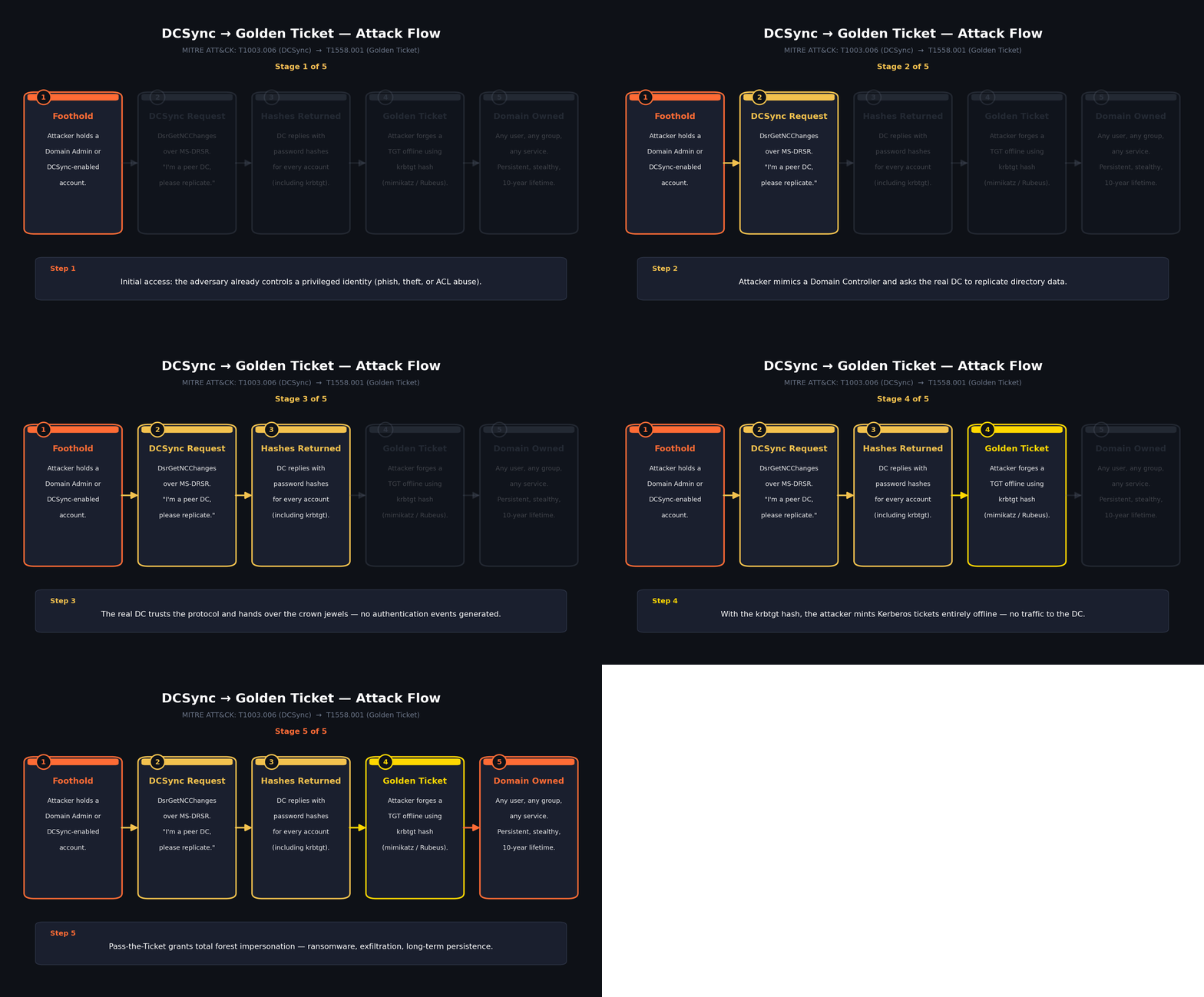
Attackers can forge tickets for highly privileged accounts, access sensitive systems, impersonate users, and maintain persistence even after some passwords are reset.
If an incident is not properly handled, the KRBTGT account may not be reset twice, leaving forged Kerberos tickets valid. Security teams should monitor for Directory Replication Service requests originating from systems that are not approved domain controllers.
Treat a workstation, application server, or user device requesting large volumes of replication data as a high-priority alert. Network Detection and Response platforms can help identify these abnormal communications by analyzing behavior rather than relying only on known malware signatures.
Organizations should also restrict replication rights to required accounts only, review privileged group memberships, and regularly audit accounts assigned replication permissions.
Multi-factor authentication, tiered administrative access, and dedicated privileged access workstations can reduce the chance that attackers obtain domain-level credentials.
DCSync attacks demonstrate why identity infrastructure remains a primary target for cybercriminals. By posing as trusted domain controllers, attackers can turn legitimate Active Directory functions into a pathway for enterprise-wide credential theft and long-term compromise.
Learn 7 Metric-Gated AI SOC Deployment Phases – Download Free AI SOC Deployment Playbook 2026.
Abinayahttps://cybersecuritynews.com/
Abi is a Security Editor and fellow reporter with Cyber Security News. She is covering various cyber security incidents happening in the Cyber Space.
Text extracted automatically; images, tables and formatting may be missing. Original: https://cybersecuritynews.com/active-directory-password-hashes/