Hackers Steal Active Directory Password Hashes Without Attacking Domain Controllers Directly
Attackers use the DCSync technique to impersonate domain controllers and harvest AD password hashes and Kerberos keys without directly compromising domain controllers, Trellix warns.
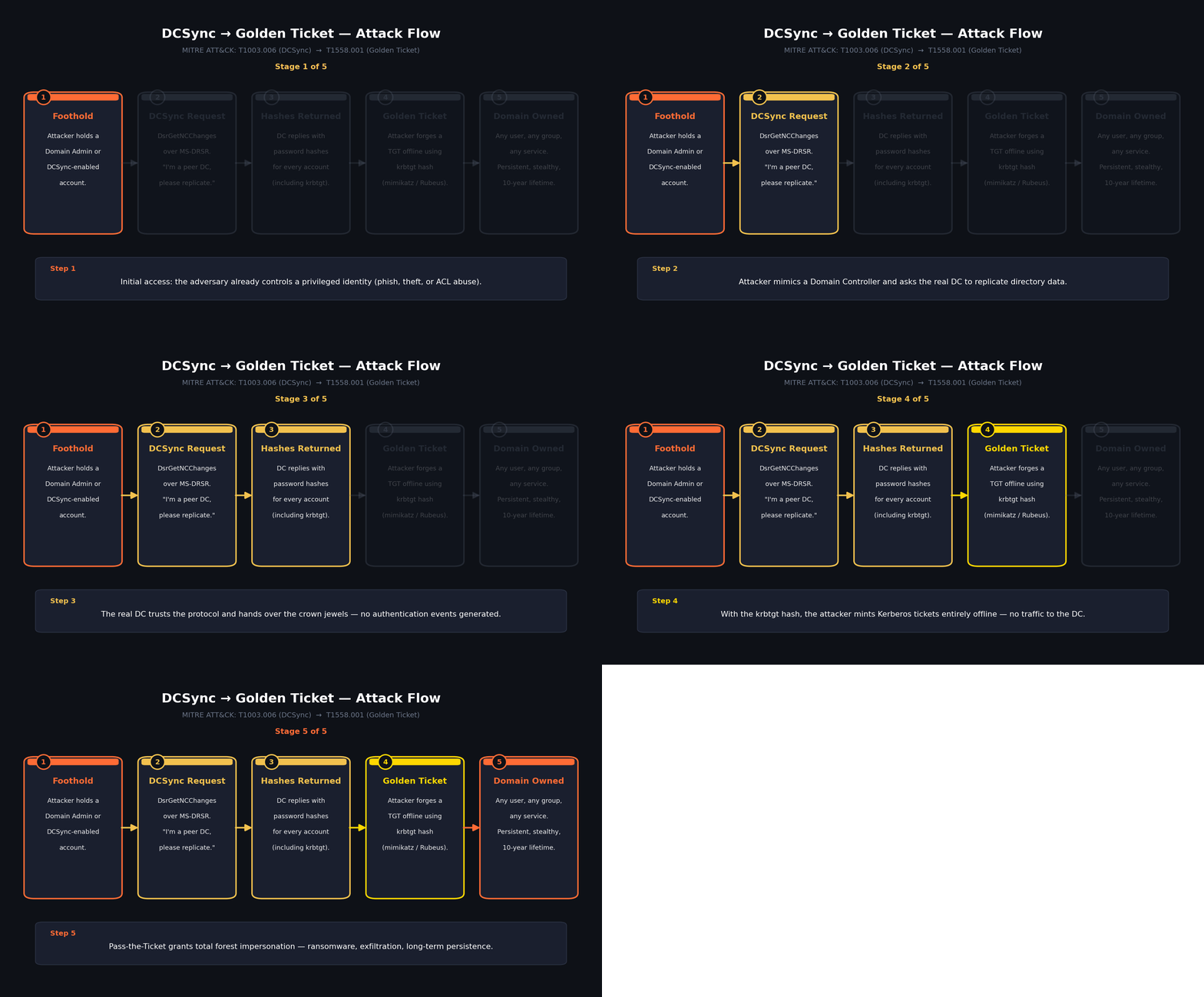
Per Trellix, threat actors increasingly abuse Active Directory replication via DCSync, using privileged credentials to invoke DRSGetNCChanges and retrieve NTLM password hashes and Kerberos key material without running code on domain controllers. Capturing the krbtgt account hash enables forging Golden Tickets for persistent, highly privileged domain access. Because malicious replication traffic mimics legitimate DRS/RPC activity, defenders should monitor Windows Security Event ID 4662, restrict replication permissions, and investigate replication requests from non-domain-controller systems.
- DCSync needs replication-privileged credentials, not code execution on domain controllers.
- Attackers invoke DRSGetNCChanges to harvest NTLM hashes and Kerberos key material.
- Compromising krbtgt enables Golden Tickets for persistent privileged domain access.
- Detection: Event ID 4662, DRS/RPC telemetry, and non-DC hosts issuing replication requests.
- Limit and audit directory replication rights, especially delegated service accounts.
Full article556 words · extracted from gbhackers.com · click to collapse
Threat actors are increasingly exploiting Active Directory replication mechanisms to steal password hashes without directly compromising a domain controller.
This technique, known as DCSync, allows attackers with privileged domain credentials to impersonate a legitimate domain controller and request sensitive directory replication data.
Unlike noisy attacks that use malware on servers or attempt to extract credentials from a domain controller’s memory, DCSync integrates seamlessly into a crucial Windows enterprise process: Active Directory replication.
In a typical Active Directory environment, multiple domain controllers synchronize identity information so users can authenticate across different locations and services.
When an employee changes a password, modifies group membership, or updates an account attribute, the domain controllers replicate that information through Microsoft’s Directory Replication Service Remote Protocol (DRS/RPC).
According to Trellix, attackers exploit this trusted process by sending replication requests to a legitimate domain controller from another system on the network.
How DCSync Works
A DCSync attack does not require the adversary to run code on a domain controller. Instead, the attacker needs credentials for an account with directory replication permissions.
These permissions are typically associated with highly privileged groups, such as Domain Admins, Enterprise Admins, and Administrators, but can also be explicitly delegated to service accounts or other identities.
Using tools like Mimikatz, Impacket, or custom implementations of the replication protocol, an attacker can invoke replication operations, including DRSGetNCChanges.
The targeted domain controller then returns credential-related data associated with selected accounts, which may include NTLM password hashes and Kerberos key material.
High-value targets often include:
- The krbtgt account, which is used to sign Kerberos Ticket Granting Tickets.
- Domain administrator accounts.
- Privileged service accounts.
- Accounts with access to backup systems, cloud infrastructure, or security tools.
Once attackers obtain the krbtgt account’s hash, they can forge Kerberos authentication tickets known as Golden Tickets. These forged tickets enable an intruder to gain persistent, highly privileged access to the Windows domain, even after the original compromised user account has been reset or disabled.
DCSync is particularly dangerous because the malicious traffic resembles ordinary domain controller replication. Traditional endpoint security products often focus on detecting known credential-dumping tools, suspicious binaries, or malicious memory activities.
This approach can fail when attackers use renamed tools, built-in capabilities, remote execution, or custom code that doesn’t match known signatures.
A more relevant detection signal is behavioral: a system that is not a recognized domain controller attempting to perform directory replication.
Security teams should investigate replication requests originating from workstations, application servers, jump hosts, or unusual administrative systems.
Useful monitoring sources include Active Directory auditing, Windows Security Event ID 4662, network telemetry for DRS/RPC activity, privileged account logs, and identity detection and response platforms.
Organizations should limit replication permissions to only those identities that genuinely require them and regularly audit access control lists for the domain naming context. Service accounts with delegated replication rights deserve particular scrutiny, as they can become attractive targets for credential theft.
DCSync shows that attackers don’t always need to break into the “boss” server. By impersonating one, they can persuade Active Directory to hand over the keys to the entire enterprise.
Keep your SOC up to date on active malware & phishing within 24h of their emergence. Try ANYRUN to prevent incidents with early detection.
Divya is a Senior Journalist at GBhackers covering Cyber Attacks, Threats, Breaches, Vulnerabilities and other happenings in the cyber world.
Text extracted automatically; images, tables and formatting may be missing. Original: https://gbhackers.com/hackers-steal-active-directory-password-hashes/