EU Chief Warns of AI-Powered Hacking, Moves to Rein In Social Media
EU Commission President von der Leyen warned AI will enable unprecedented hacking and announced Kids Act and Digital Fairness Act proposals regulating social media.
In her State of the European Union 2026 speech, Ursula von der Leyen warned that upcoming AI models 'will allow hacking on a level we never thought possible' and cited dangers of self-improving models, referencing a Hugging Face incident. She reaffirmed the AI Act as the core guardrail framework and pledged cooperation with Canada, the UK, and other partners. She also proposed a Kids Act banning social media under age 13 and personal accounts under 15, plus a Digital Fairness Act to be proposed in autumn.
- Von der Leyen warned AI models will enable hacking never thought possible
- AI Act positioned as core guardrail; cooperation with Canada and UK
- Kids Act proposal: no social media under 13, no personal accounts under 15
- Digital Fairness Act to be proposed in autumn
- Cited self-improving model dangers and a Hugging Face incident
Full article1,140 words · extracted from securityweek.com · click to collapse
Ursula von der Leyen, the current President of the European Commission, delivered the State of the European Union 2026 speech on September 16, 2026, at 9:00 am CEST.
It was naturally heavy on European political theory (center left freedom protected by strength), the economy (need for energy independence, reducing the trade imbalance with China and increasing the effect of sanctions on Russia), and current crises (severe effect of climate change – where this year’s European wildfires and disappearing rivers will be considered mild against future summers: “Europe is warming at double the global rate.”)
She also digressed into the promise and threat of AI, and the danger to youngsters posed by social media. It is these digressions we discuss here.
Artificial Intelligence
“I am an optimist that AI has the potential to benefit humanity if we get it right,” she said; but then warned that the potential benefit comes with “massive risks”. The risks must be tackled before the potential benefit can be achieved.
“These risks have become sharper and come sharper into focus. Models being developed will allow hacking on a level we never thought possible, and they will soon be in the hands of adversaries who see the world very differently than us. At the same time, the dangers of self-improving models are becoming ever more apparent,” using the Hugging Face incident as an example.
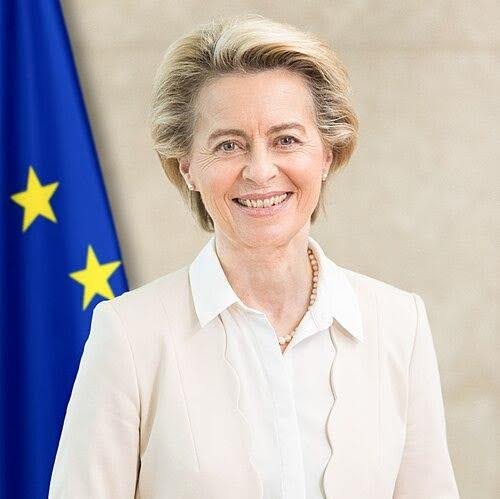
“The AI Act is, of course, a crucial piece to put in place guardrails, and it puts Europe in a position to shape global efforts on how to tackle this — so we will step up together with our like-minded partners like Canada, the UK, and others.”
She stressed that controlling the risk is not the same as inhibiting the potential; and that Europe does not need to develop new frontier models to draw benefit from them. “The key is creating the value that AI has not yet delivered: such as moving AI from the screen to the real economy and the real society, on the factory floor, on the hospital ward, in precision agriculture, in our energy grids, smart grids, for autonomous driving, for defense. That is where the real value is hidden.”
Advertisement. Scroll to continue reading.
She gave mammography as an example. “AI-supported mammography can identify earlier and more cancers during screening, and as a result, more women can survive.” But her point is that AI should assist healthcare, not replace doctors with robots.
“Do I want my doctor to have instant AI access to all the data needed to make the best diagnostic treatment and choice? Yes, of course. But do I want my doctor to be a robot, AI-assisted? No, of course not. I do not want a robot to tell me whether I have cancer or not. The point is, AI needs to empower our doctors, not to replace them.”
This is the key to her view on AI. It can unlock massive benefits; but it must always be humans controlling AI, not AI controlling humans. Nevertheless, Europe must be, and is, ready to support the societal detriment of AI. She mentioned the upcoming EU Quality Jobs Act, which will be delivered “before the end of the year”.
There is little doubt that von der Leyen sees a threat to democracy itself in social media. Democracy is based on the power of people to choose the society they want to live in. Traditionally, this is a concept instilled into offspring by parents, but today’s children spend more time on social media than talking to their parents.
“Young Europeans now spend four to six hours a day on screens. Children are pulled ever deeper into feeds designed to keep them scrolling. What we are witnessing is a great capture of our children – a capture of their attention, their focus, their minds. This is depriving children of their childhood.” Childhood is the period when children learn how to be responsible adults, and this is being stolen from them.
Give a child a smartphone and it is all taken away, leading to “loss of sleep, anxiety, even self-harm, and in a growing number of cases, even fatal tragedies.” She quoted the recent example of Olea Orban, a 14-year-old girl from Flemalle (near Liege), who killed herself following social media cyberbullying. Olea’s mother said, “I am convinced that had it not been for these omnipresent networks, my daughter would still be with us. Enough is enough.”
Von der Leyen added, “She’s right. C’est trop. Enough is enough… Now it’s time for Europe to act.” How to act is complicated, but the EC is proposing a new Kids Act.
“We will take a gradual and differentiated approach,” she explained. “Each age has its own sensitivities, and therefore each will have its own tailored protection level. In sum, no social media under the age of 13. No personal account under the age of 15. That means, from 13 to under 15, only mini accounts set up and supervised by parents or guardians, with limited features and time restriction to one hour a day between 15 and 18. Safe design will be an obligation for the platforms.”
Legislation is one thing; enforcement against the Big Tech suppliers from third countries is something else; so, we’ll have to see how this plays out. But von der Leyen is not backing down.
“I am aware that many perceive the power of Big Tech as overwhelming and impossible to roll back. I disagree. We do not have to accept addictive features. We do not have to accept children being drawn into ever more extreme content, we do not have to accept that girls have their photos used for AI-generated sexualized images. So, we are reversing the burden of proof,” she explained.
“Now, platforms will have to prove to us that they are safe, because this is not about our minors accessing social media. It is about when and how do we allow social media to access our minors. Europe has the power to act. It is us who decide the rules, not Big Tech. We also know that not only minors are at risk. Addictive design, for example, is harming everyone. This is why we need a wider framework too: the Digital Fairness Act that we will propose in autumn.”
Standing up to Big Tech while protecting economic alliances and global fair trade is like walking a high wire on ice skates. It’s going to be an interesting few years.
Related: Senate Passes Bill to Protect Kids Online and Make Tech Companies Accountable for Harmful Content
Related: Microsoft Commits to Sweeping AI Privacy Rules for Students. Will Other Tech Giants Follow?
Related: New Warnings About the Risks of AI to Humanity Revive a Long-Running Debate
Related: TikTok Reaches $400 Million Settlement With US Justice Department Over Children’s Privacy
Text extracted automatically; images, tables and formatting may be missing. Original: https://www.securityweek.com/eu-chief-warns-of-ai-powered-hacking-moves-to-rein-in-social-media/