Network Security Trends: August
Vulnerabilities mentionedAll →
| CVE | Vulnerability | CVSS | EPSS | Flags | Affected | Exposure | Published |
|---|---|---|---|---|---|---|---|
| CVE-2021-24499 | The Workreap WordPress theme before 2.2.2 AJAX actions workreap_award_temp_file_uploader and workreap_temp_file_uploader did not perform nonce checks, or valida The Workreap WordPress theme before 2.2.2 AJAX actions workreap_award_temp_file_uploader and workreap_temp_file_uploader did not perform nonce checks, or validate that the request is from a valid user in any other way. The endpoints allowed for uploading arbitrary files to the uploads/workreap-temp directory. Uploaded files were neither sanitized nor validated, allowing an unauthenticated visitor to upload executable code such as php scripts. NVD description · AI analysis pending | 9.8 | 60% | PoC ×2 |
| — | |
| CVE-2021-26084 | Atlassian Confluence Server and Data Center Object-Graph Navigation Language (OGNL) Injection Vulnerability CVE-2021-26084 is an OGNL injection vulnerability (CWE-917) in Atlassian Confluence Server and Data Center that may allow an unauthenticated attacker to execute arbitrary code. Any organization running Confluence Server or Data Center is potentially affected. It is significant because it is listed in CISA's Known Exploited Vulnerabilities catalog with known ransomware use, and EPSS assigns a 100.0% probability of exploitation within 30 days (100th percentile). Do: Apply updates to Confluence Server and Data Center per Atlassian's instructions, which is the required action in the CISA KEV listing. Prioritize remediation given confirmed in-the-wild exploitation and known ransomware use. | 9.8 | 100% | KEV ransomware PoC |
| — | |
| CVE-2021-32789 | woocommerce-gutenberg-products-block is a feature plugin for WooCommerce Gutenberg Blocks. woocommerce-gutenberg-products-block is a feature plugin for WooCommerce Gutenberg Blocks. An SQL injection vulnerability impacts all WooCommerce sites running the WooCommerce Blocks feature plugin between version 2.5.0 and prior to version 2.5.16. Via a carefully crafted URL, an exploit can be executed against the `wc/store/products/collection-data?calculate_attribute_counts[][taxonomy]` endpoint that allows the execution of a read only sql query. There are patches for many versions of this package, starting with version 2.5.16. There are no known workarounds aside from upgrading. NVD description · AI analysis pending | 7.5 | 17% |
| — | ||
| CVE-2021-33357 | A vulnerability exists in RaspAP 2.6 to 2.6.5 in the "iface" GET parameter in /ajax/networking/get_netcfg.php, when the "iface" parameter value contains special A vulnerability exists in RaspAP 2.6 to 2.6.5 in the "iface" GET parameter in /ajax/networking/get_netcfg.php, when the "iface" parameter value contains special characters such as ";" which enables an unauthenticated attacker to execute arbitrary OS commands. NVD description · AI analysis pending | 9.8 | 17% | PoC |
| — | |
| CVE-2021-34473 +1 in the same advisory: …33766 | SSRF (CWE-918) in Microsoft Exchange Server Enabling RCE (ProxyShell) Microsoft Exchange Server contains a server-side request forgery (SSRF, CWE-918) in the Autodiscover service that unauthenticated remote attackers can reach over HTTP. This flaw is the first stage of the widely documented 'ProxyShell' chain, in which the SSRF is combined with privilege escalation and an arbitrary file write in the Exchange PowerShell backend to achieve unauthenticated remote code execution on the server. An attacker who successfully exploits it gains the ability to run code on the Exchange server, and ransomware operators (e.g., Cuba ransomware) leveraged this chain to deploy payloads. Organizations running on-premises Microsoft Exchange Server (2013, 2016, and 2019 per the vendor's advisories) are affected; hosted Exchange Online is a separately managed cloud service. Exploitation is confirmed in the wild: CISA added the flaw to the KEV catalog on 2021-11-03 with known ransomware use, and EPSS assigns it a 100% probability of exploitation within 30 days (100th percentile). Do: Apply Microsoft's July 2021 (or later) Exchange Server security updates, which include the ProxyShell fixes, to all on-premises servers. If patching is delayed, restrict internet access to the Autodiscover/EWS frontend endpoints and consider the URL Rewrite mitigation Microsoft published for ProxyShell. Given the KEV listing and known ransomware use, treat internet-facing, unpatched Exchange servers as potentially compromised and hunt for webshells, unusual Exchange processes, and suspicious account or mailbox activity. | 9.1 group max | 100% | KEV ransomware PoC |
| masshundreds of thousands of on-prem Exchange servers; public internet scans at the time of disclosure showed roughly 400,000+ internet-exposed Exchange instances,… | |
| CVE-2021-35395 | Multiple Stack Buffer Overflows and Command Injection in Realtek Jungle SDK Web Server The Realtek Jungle SDK (v2.x up to v3.4.14B) ships an HTTP management web server, in both Go-Ahead ('webs') and Boa ('boa') variants, containing multiple stack buffer overflows in form handlers such as formRebootCheck, formWsc, formWlanMultipleAP, formWlSiteSurvey and formStaticDHCP, plus arbitrary command execution/injection flaws in formSysCmd and formWsc. An unauthenticated attacker triggers these by sending crafted HTTP requests with oversized submit-url, ifname, hostname or peerPin parameters, or by injecting commands via the sysCmd or peerPin parameters. Successful exploitation yields arbitrary code execution on the device, typically giving the attacker full control of the affected router, access point or IoT device. Any device whose vendor embedded the affected SDK is exposed, with public reporting linking the flaws to roughly 65 downstream vendors and nearly a million internet-visible devices. Exploitation is confirmed in the wild: the issue is in CISA's Known Exploited Vulnerabilities catalog (added 2021-11-03), and researchers observed Mirai botnet variants and other attackers compromising Realtek-based devices; ransomware use is unknown. Do: Apply firmware updates from your device vendor incorporating a patched Realtek SDK (newer than v3.4.14B), per CISA's required action; since vendors ship modified builds, confirm with the manufacturer that your model is fixed. Until patched, disable remote/web-based administration or restrict the management interface (WAN-facing HTTP) with a firewall so it is not internet-exposed. Defenders should also monitor Realtek-based devices for botnet-style activity (e.g., Mirai-variant traffic), as a public PoC/advisory from IoT Inspector is available and exploitation is ongoing. | 9.8 | 98% | KEV PoC |
| mass≈1,000,000 internet-exposed devices (public scans reported nearly a million Realtek-based devices) | |
| CVE-2021-38647 | Unauthenticated RCE in Microsoft Open Management Infrastructure (OMI) CVE-2021-38647 is an unauthenticated remote code execution flaw (CWE-1390, missing authentication) in Microsoft's Open Management Infrastructure (OMI), the open-source Linux management agent Microsoft bundles into Azure VM management extensions and System Center Operations Manager (SCOM) agents. When OMI is deployed through these extensions (for example the Log Analytics/OMS agent, Azure Monitor, or Azure Automation), its root-privileged server component listens for management traffic on the network (by default ports 5985/5986), and an attacker who can reach that port can send specially crafted, unauthenticated management requests that execute commands as root. Successful exploitation gives an attacker full root-level control of the affected Linux VM, turning network reachability into complete host compromise and a foothold for lateral movement. Any Azure Linux VM with an OMI-based management extension, plus standalone OMI or SCOM-agent deployments on Linux, is affected; CISA added the bug to the KEV on 2021-11-03 with known ransomware use, so exploitation is confirmed in the wild even though no public proof-of-concept is catalogued, and EPSS estimates a ~99.9% near-term exploitation probability. Do: Upgrade OMI to version 1.6.8-1 or later on all Linux VMs, including updating the bundled OMI inside Azure management extensions (Log Analytics/OMS agent, Azure Monitor, Azure Automation) and applying patched SCOM agent builds. Restrict network access to OMI's listener ports (5985/5986) with NSGs or host firewalls and check whether omiserver runs as root while binding beyond localhost. Because the flaw is in CISA KEV with known ransomware use, prioritize patching hosts whose OMI listener is reachable from untrusted networks and hunt for unexplained root-level activity. | 9.8 | 100% | KEV ransomware PoC |
| mass≈ millions of Linux VMs with OMI-based Azure management extensions | |
| CVE-2021-40438 | Server-Side Request Forgery (SSRF) in Apache HTTP Server mod_proxy CVE-2021-40438 is a server-side request forgery flaw (CWE-918) in the mod_proxy module of Apache HTTP Server 2.4.48 and earlier. By sending a crafted request URI path, a remote attacker can cause the server to forward the request to an origin server chosen by the attacker instead of the intended backend. This lets the attacker use the web server as a proxy to reach internal network services, probe internal hosts, and bypass network access controls. Anyone running an affected Apache HTTP Server version with mod_proxy enabled in a proxying configuration is affected. The flaw is being actively exploited in the wild - it was added to CISA's Known Exploited Vulnerabilities catalog on 2021-12-01 with known ransomware use - and EPSS assigns it the highest probability of near-term exploitation. Do: Upgrade Apache HTTP Server to a release newer than 2.4.48 per vendor instructions. As an interim mitigation, restrict mod_proxy so it forwards only to explicitly configured backends (avoiding attacker-controlled origin selection) or disable mod_proxy where it is not required, and audit internet-facing Apache servers for proxy configurations. Because this flaw is on the CISA KEV list with known ransomware use, prioritize patching internet-facing systems immediately. | 9.0 | 100% | KEV ransomware |
| masshundreds of thousands of internet-facing Apache HTTP Server instances (only the mod_proxy-enabled subset is vulnerable) | |
| CVE-2021-40870 | Unauthenticated File-Upload RCE via Path Traversal in Aviatrix Controller 6.x CVE-2021-40870 is an unrestricted file-upload flaw (CWE-23) in the Aviatrix Controller, affecting 6.x releases before 6.5-1804.1922, which scores a critical 9.8 because it requires no authentication, no user interaction, and is reachable over the network. An unauthenticated attacker sends a crafted upload request whose filename or path includes directory-traversal sequences and a dangerous file type, letting them write files outside the intended directory — including executable content — onto the controller host. Successful exploitation yields arbitrary code execution on the controller, the central management component of Aviatrix's cloud networking platform, which could give an attacker control of network orchestration and a foothold to pivot into connected cloud and on-premises environments. Any organization running an affected Aviatrix Controller version is at risk, with the highest exposure where the controller's management interface is reachable from the internet. Exploitation is confirmed: CISA added the flaw to the Known Exploited Vulnerabilities catalog on 2022-01-18, public proof-of-concept code exists, and EPSS estimates a 93% probability of exploitation within 30 days. Do: Upgrade the Aviatrix Controller to 6.5-1804.1922 or later per the vendor's instructions, as required by CISA's KEV catalog. Until patched, restrict access to the controller's management interface (firewall/allow-list, VPN, or keep it off the public internet) and review the host for signs of compromise such as unexpected uploaded files, web shells, or unfamiliar processes, since ransomware use remains unknown. | 9.8 | 93% | KEV PoC ×2 |
| moderate≈ a few thousand internet-exposed Aviatrix Controllers (public scans in early 2022 showed thousands of exposed controller web interfaces) | |
| CVE-2021-41773 | Path Traversal to RCE in Apache HTTP Server 2.4.49 Apache HTTP Server contains a path traversal flaw (CWE-22) that lets crafted HTTP requests reach files outside directories configured via Alias-like directives. When files outside those aliased directories are not protected by the default 'require all denied' policy, attackers can read arbitrary files outside the intended root, and if CGI scripts are enabled the traversal can be escalated to remote code execution under the web server account. Anyone running an affected Apache HTTP Server release with such a configuration is exposed; the initial 2.4.50 patch was incomplete, so the flaw's full remediation is tracked under CVE-2021-42013. Exploitation is confirmed in the wild: CISA added the vulnerability to the KEV catalog on 2021-11-03 with known ransomware use, and EPSS assigns a ~100% probability of exploitation within 30 days (100th percentile). Do: Upgrade to Apache HTTP Server 2.4.51 or later; do not stop at 2.4.50, since its fix was incomplete (see CVE-2021-42013). As an interim mitigation, ensure directories referenced by Alias-like directives are covered by 'require all denied' and disable or restrict CGI (mod_cgi/mod_cgid) on traversable paths. Review access logs for traversal patterns such as /icons/../ and unexpected CGI invocations, and hunt for webshells or ransomware staging given the known ransomware use. | 9.8 | 100% | KEV ransomware PoC ×6 |
| masson the order of 100,000+ internet-exposed Apache servers | |
| CVE-2021-42013 | Path Traversal and RCE in Apache HTTP Server (follow-up to CVE-2021-41773) Apache HTTP Server contains a path traversal flaw (CWE-22) that can lead to remote code execution; CVE-2021-42013 resolves an incomplete patch previously issued for CVE-2021-41773. The flaw is triggered when files outside directories mapped by Alias-like directives are not protected by the default 'require all denied' configuration, or when CGI scripts are enabled, allowing an attacker to traverse outside the intended directory roots. An attacker can read files outside the configured paths, and where CGI script execution is enabled, achieve remote code execution on the server. The affected product per CISA is Apache HTTP Server; the source data does not specify exact version ranges, so defenders should consult the vendor advisory for fixed releases. Exploitation is confirmed in the wild: the vulnerability was added to CISA KEV on 2021-11-03 with known ransomware use, EPSS estimates a 100% probability of exploitation within 30 days, and no public PoC is listed. Do: Apply the Apache HTTP Server update per vendor instructions immediately, since this is a CISA KEV item with known ransomware use and near-certain near-term exploitation. Until patched, ensure directories targeted by Alias-like directives are covered by 'require all denied' defaults and disable CGI script execution where it is not required. Review access logs for path traversal probes and confirm no replaced version retains the incomplete earlier patch. | 9.8 | 100% | KEV ransomware PoC ×6 |
| massorder of 100,000+ internet-exposed Apache HTTP Server instances at disclosure time |
Full article2,182 words · extracted from unit42.paloaltonetworks.com · click to collapse
Executive Summary
Unit 42 researchers continually observe network attacks and search for insights that can assist defenders. Here, we summarize key trends from August-October 2021. In the following sections, we present our analysis of the most recently published vulnerabilities, including the severity distribution. We also classify vulnerabilities to provide a clear view of the prevalence of, say, cross-site scripting or denial of service.
Additionally, we provide insight into how the vulnerabilities are actively exploited in the wild based on real-world data collected from Palo Alto Networks Next-Generation Firewalls. For example, we chart a timeframe showing how frequently the most commonly exploited vulnerabilities were attacked through networks and the locations from which the attacks appeared to originate. We then draw conclusions about the most commonly exploited vulnerabilities the attackers are using, as well as the severity, category and origin of each attack.
Cross-site scripting stood out as a commonly used technique. Among around 7,000 newly published vulnerabilities, we found that a large portion (almost 15%) still involve this technique. However, by evaluating around 3.8 million attack sessions and focusing on the latest exploits in the wild, we conclude that code execution is still a great concern, while directory traversal is ranking more highly when we categorize those attacks. Defenders should pay attention to the trends and adjust mitigation methodology accordingly.
Palo Alto Networks Next Generation Firewall customers are protected from the vulnerabilities discussed here by cloud-delivered security subscriptions, including Threat Prevention and Advanced URL Filtering.
| CVEs Discussed | CVE-2021-40438, CVE-2021-34473, CVE-2021-38647, CVE-2021-26084, CVE-2021-40870, CVE-2021-33357, CVE-2021-35395, CVE-2021-24499, CVE-2021-33766, CVE-2021-32789, CVE-2021-41773, CVE-2021-42013 |
| Types of Attacks and Vulnerabilities Covered | Cross-site scripting, denial of service, information disclosure, buffer overflow, privilege escalation, memory corruption, code execution, SQL injection, out-of-bounds read, cross-site request forgery, directory traversal, command injection, improper authentication, security feature bypass |
| Affected Software | Apache HTTP Server, Microsoft Exchange Server, Microsoft OMI, Confluence Server and Data Center, Aviatrix Controller, RaspAP, Realtek Jungle SDK, Workreap WordPress theme, WooCommerce Gutenberg Blocks |
| Related Unit 42 Topics | Network Security Trends, exploits in the wild, attack analysis |
Analysis of Published Vulnerabilities, August-October 2021
From August-October 2021, a total of 7,064 new Common Vulnerabilities and Exposures (CVE) numbers were registered. To better understand the potential impact these newly published vulnerabilities could have on network security, we provide our observations based on the severity, proof-of-concept code feasibility and vulnerability categories.
How Severe Are the Latest Vulnerabilities?
To estimate the potential impact of vulnerabilities, we consider their severity and examine any reliable proofs-of-concept (PoCs) that are available. Some of the public sources we use to find PoCs are Exploit-DB, GitHub and Metasploit. Distribution for the 5,101 CVEs that have an assigned severity score of medium or higher can be seen in the following table:
| Severity | Count | Ratio | PoC Availability |
| Critical | 594 | 13.6% | 6.2% |
| High | 1965 | 45.1% | 5.8% |
| Medium | 2542 | 41.3% | 6.1% |
Table 1. Severity distribution for CVEs registered in August-October 2021.
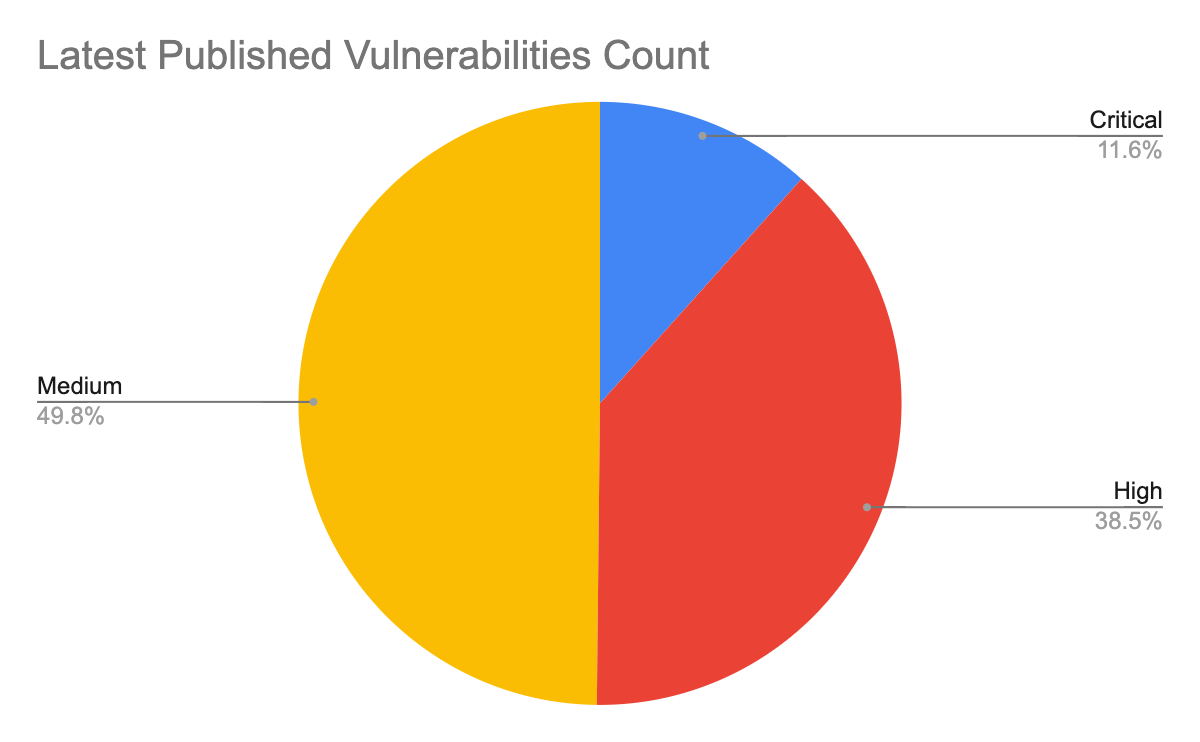
Vulnerabilities classified as critical are the least common, but they are also more likely to have PoCs available. The data suggests that there is a correlation between the availability of a PoC and the severity of a vulnerability. This could be influenced by the amount of attention a vulnerability receives when it is more severe, as it is more interesting to both security researchers and attackers. Palo Alto Networks continues to leverage threat intelligence information on the latest vulnerabilities and real-time monitoring of exploits in the wild to provide protections for our customers.
Vulnerability Category Distribution
The type of vulnerability is also crucial to understanding its consequences. Out of the newly published CVEs that were analyzed, only 25.6% are classified as local vulnerabilities, requiring prior access to a compromised system, while the remaining 74.4% are remote vulnerabilities, which can be exploited over a network. This means that the majority of the newly published vulnerabilities introduce the potential for threat actors to attack vulnerable organizations anywhere in the world.
The most common vulnerability types are shown below, ranked by how prevalent they were among the most recent set of published vulnerabilities:
| Ranking | Vulnerability Category |
| 1 | Cross-Site Scripting |
| 2 | Denial of Service |
| 3 | Information Disclosure |
| 4 | Buffer Overflow |
| 5 | Privilege Escalation |
| 6 | Memory Corruption |
| 7 | Code Execution |
| 8 | SQL Injection |
| 9 | Out-of-Bounds Read |
| 10 | Cross-Site Request Forgery |
Table 2. CVEs registered in August-October 2021, organized by category and ranked in terms of which categories contain the most vulnerabilities.
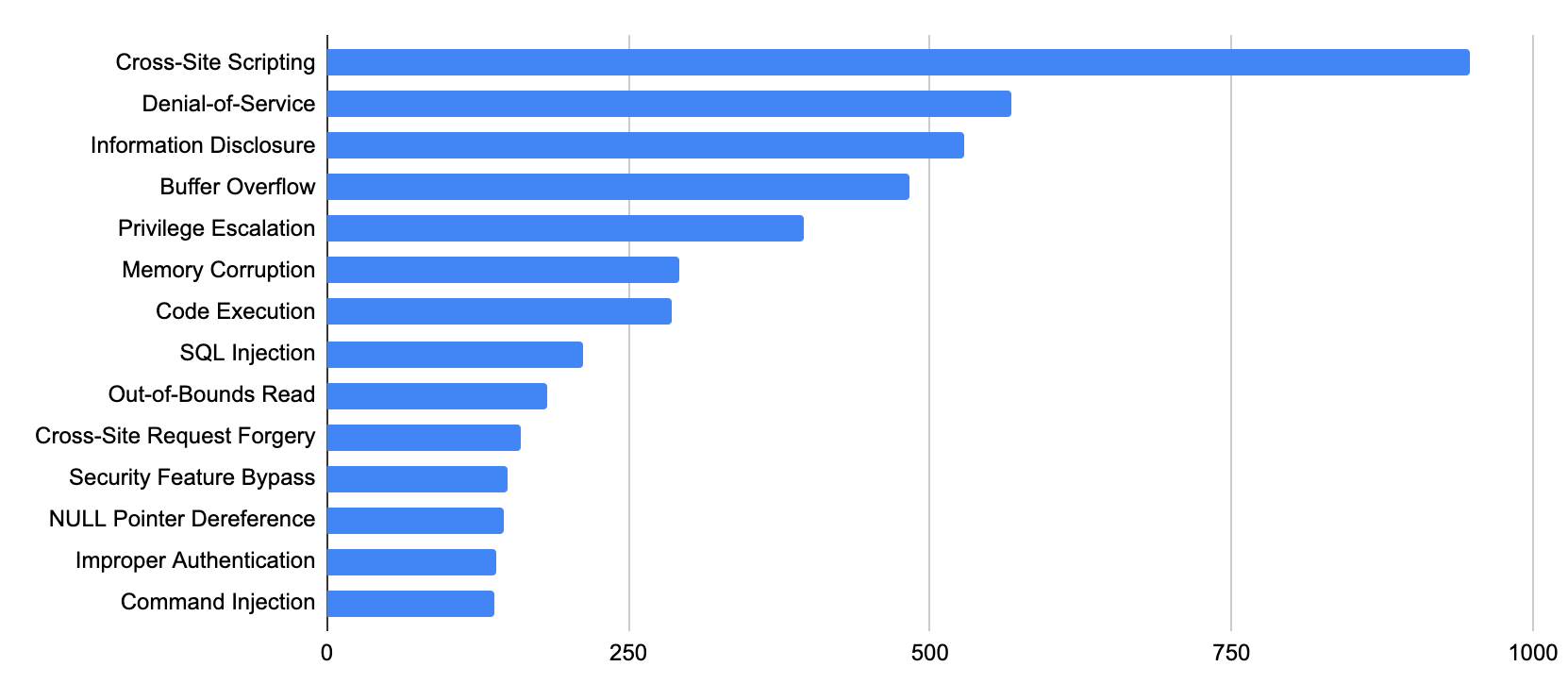
Cross-site scripting remains ranked first, and more denial-of-service vulnerabilities were published this quarter than last quarter. At the same time, the prevalence of code execution vulnerabilities increased in August-October 2021.
Network Security Trends: Analysis of Exploits in the Wild, August-October 2021
Data Collection
By leveraging Palo Alto Networks Next-Generation Firewalls as sensors on the perimeter, Unit 42 researchers observed malicious activities from August-October 2021. We analyzed more than 10 million sessions in total for this quarter. The malicious traffic we identify is further processed based on metrics such as IP addresses, port numbers and timestamps. This ensures the uniqueness of each attack session and thus eliminates potential data skews. We filtered out and finalized 3.79 million valid malicious sessions. We researchers then correlated the refined data with other attributes to infer attack trends over time to get a picture of the threat landscape.
How Severe Were the Attacks Exploited in the Wild?
To arrive at 3.79 million valid malicious sessions, we exclude from the original set of more than 10 million the low-severity signature triggers that are used to detect scanning and brute-force attacks. Therefore, we consider exploitable vulnerabilities with a severity ranking of medium and higher (based on the CVSS v3 Score) as a verified attack.
| Severity | Count | Ratio |
| Critical | 1,050,661 | 27.7% |
| High | 2,060,187 | 54.4% |
| Medium | 678,426 | 17.9% |
Table 3. Attack severity distribution ratio in August-October 2021.
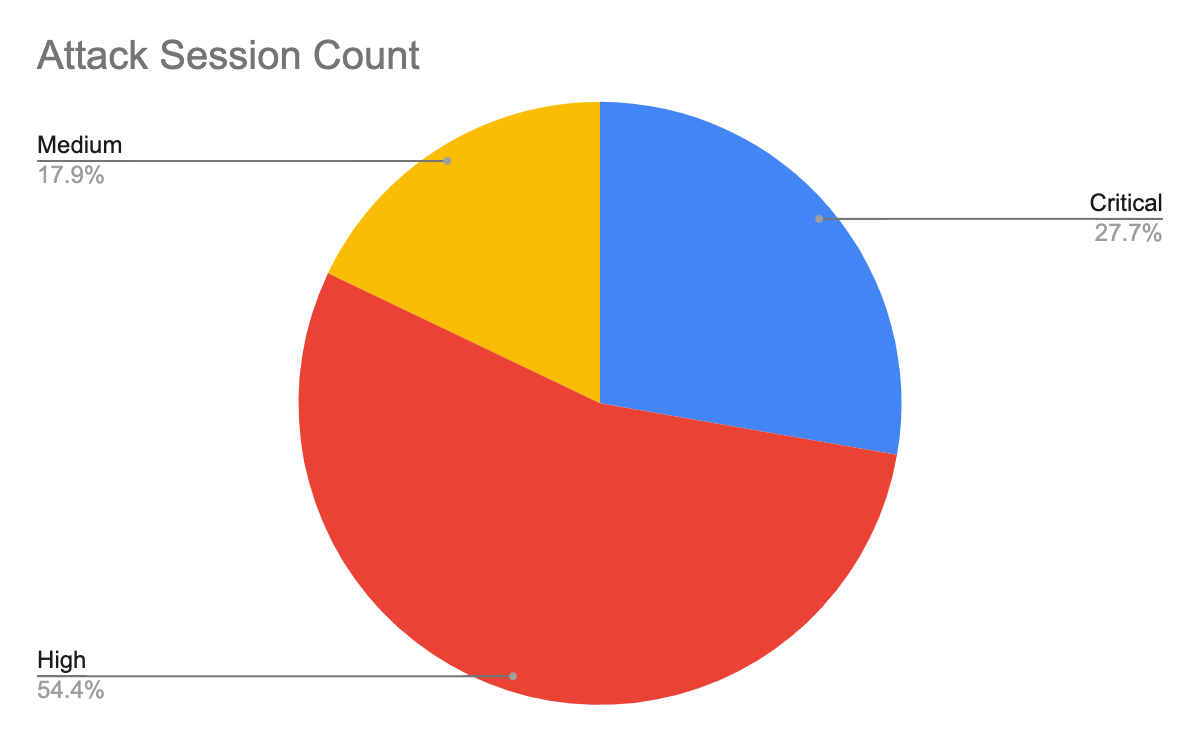
Table 3 shows the session count and ratio of attacks grouped by the severity of each vulnerability. Compared with the previous quarters’ severity distribution, this quarter shows a noticeable increase in the prevalence of high-security attacks and a decrease in medium-severity attacks. High-severity attacks represent more than half of the observed attacks for the first time. However, we still focus most closely on critical severity attacks because of their greater potential impact. Even though many published vulnerabilities are medium severity, attackers leverage more severe vulnerabilities for exploits. Defenders should pay attention to prevention and mitigation of high- and critical-severity network attacks.
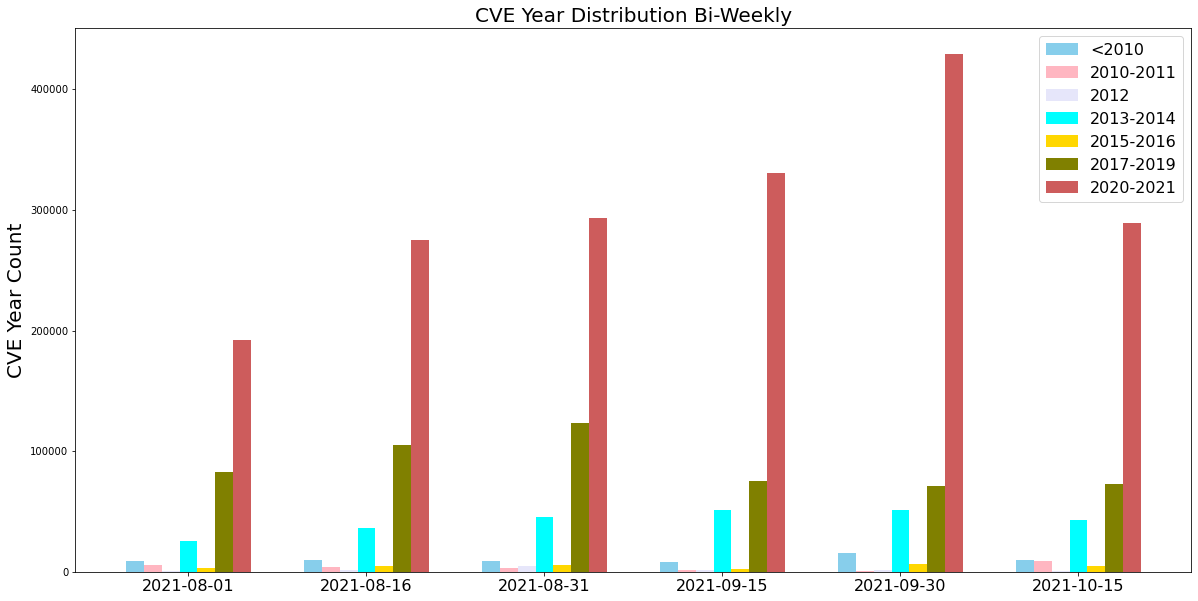
When Did the Network Attacks Occur?
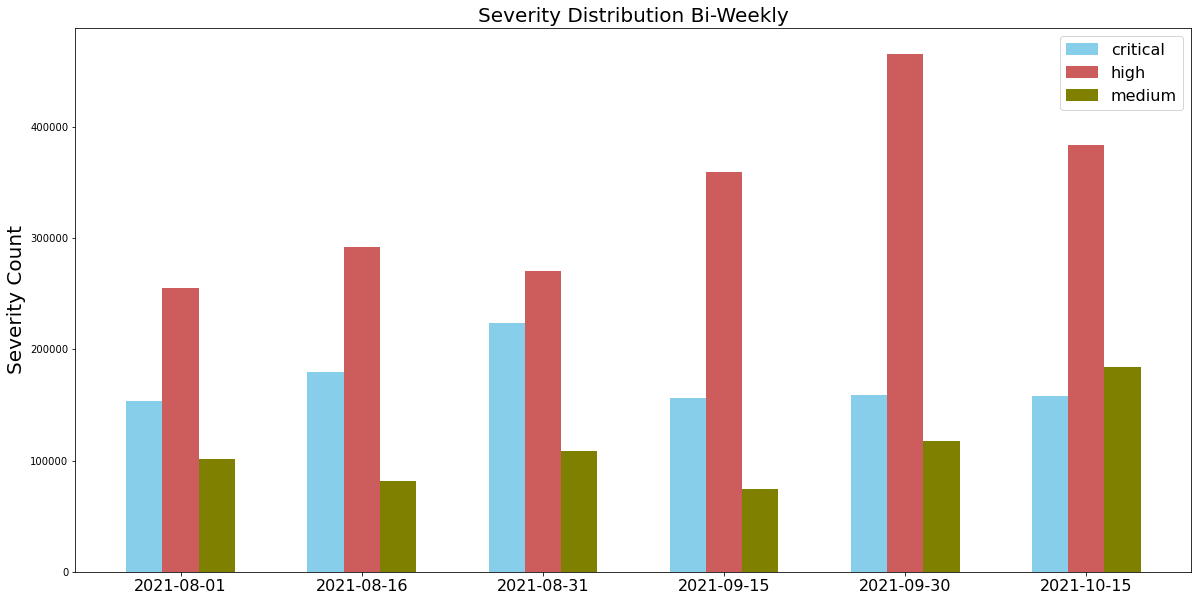
For this installment of our network security trends analysis, we collected data from August-October 2021. Attackers steadily leveraged high-severity exploits throughout this period.
As we normally observe, attackers frequently used vulnerabilities disclosed recently, especially those from 2020-21. Attacks exploiting newly revealed vulnerabilities could be severe because of a late or improper patch. This highlights the importance of updating security products and applying software patches as soon as they become available to protect against the most recently discovered vulnerabilities.
Exploits in the Wild, August-October 2021: A Detailed View
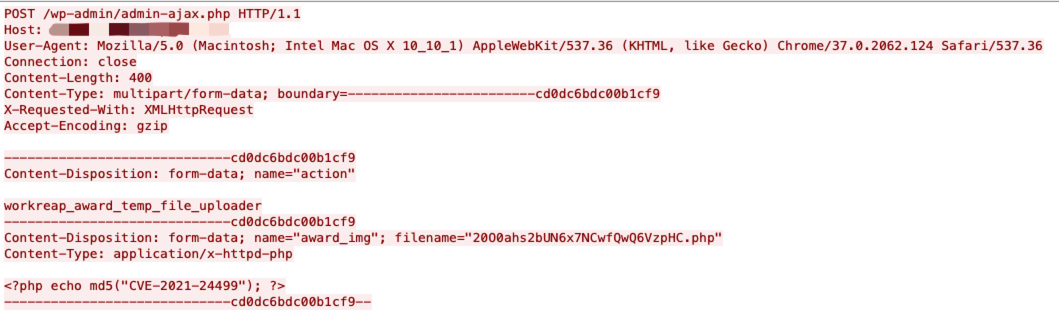
We paid attention to the latest published attacks, and the following exploits stood out due to their PoC availability, severity and ease of exploitation. We have provided snippets showing how attackers used open-source tools to compromise the different targets to allow defenders to better understand how the exploit operates.
Apache HTTP Server 2.4.48 and earlier has a server-side request forgery (SSRF) vulnerability via a crafted request URI-path which can cause mod_proxy to forward the request to an origin server chosen by the remote user.

Microsoft Exchange Server has an SSRF execution vulnerability that allows an attacker to bypass the authentication, impersonate an arbitrary user and write an arbitrary file to achieve remote code execution. By taking advantage of this vulnerability, the attacker can execute arbitrary commands on a remote Microsoft Exchange Server.



By removing the authentication header, an attacker can issue an HTTP request to the Microsoft Open Management Infrastructure (OMI) management endpoint that will cause it to execute an operating system command as the root user.
In affected versions of Confluence Server and Data Center, an Object-Graph Navigation Language (OGNL) injection vulnerability exists that would allow an unauthenticated attacker to execute arbitrary code on a Confluence Server or Data Center instance.

An issue was discovered in Aviatrix Controller 6.x before 6.5-1804.1922. Unrestricted upload of a file with a dangerous type is possible, which allows an unauthenticated user to execute arbitrary code via directory traversal.

A vulnerability exists in RaspAP 2.6 to 2.6.5 in the iface GET parameter in /ajax/networking/get_netcfg.php, when the iface parameter value contains special characters such as ; which enables an unauthenticated attacker to execute arbitrary OS commands.

Realtek Jungle SDK version v2.x up to v3.4.14B provides an HTTP web server exposing a management interface that can be used to configure the access point.

The Workreap WordPress theme before 2.2.2 AJAX actions workreap_award_temp_file_uploader and workreap_temp_file_uploader did not perform nonce checks or validate that the request is from a valid user in any other way. The endpoints allowed for uploading arbitrary files to the uploads/workreap-temp directory. Uploaded files were neither sanitized nor validated, allowing an unauthenticated visitor to upload executable code such as php scripts.
This vulnerability allows remote attackers to disclose sensitive information on affected installations of Microsoft Exchange Server. By issuing a crafted request, an attacker can bypass authentication.


woocommerce-gutenberg-products-block is a feature plugin for WooCommerce Gutenberg Blocks. An SQL injection vulnerability impacts all WooCommerce sites running the WooCommerce Blocks feature plugin between version 2.5.0 and version 2.5.16. Via a carefully crafted URL, an exploit can be executed against the wc/store/products/collection-data?calculate_attribute_counts[][taxonomy] endpoint that allows the execution of a read-only SQL query.
CVE-2021-41773, CVE-2021-42013
A flaw was found in a change made to path normalization in Apache HTTP Server 2.4.49. An attacker could use a path traversal attack to map URLs to files outside the directories configured by Alias-like directives.

Attack Category Distribution
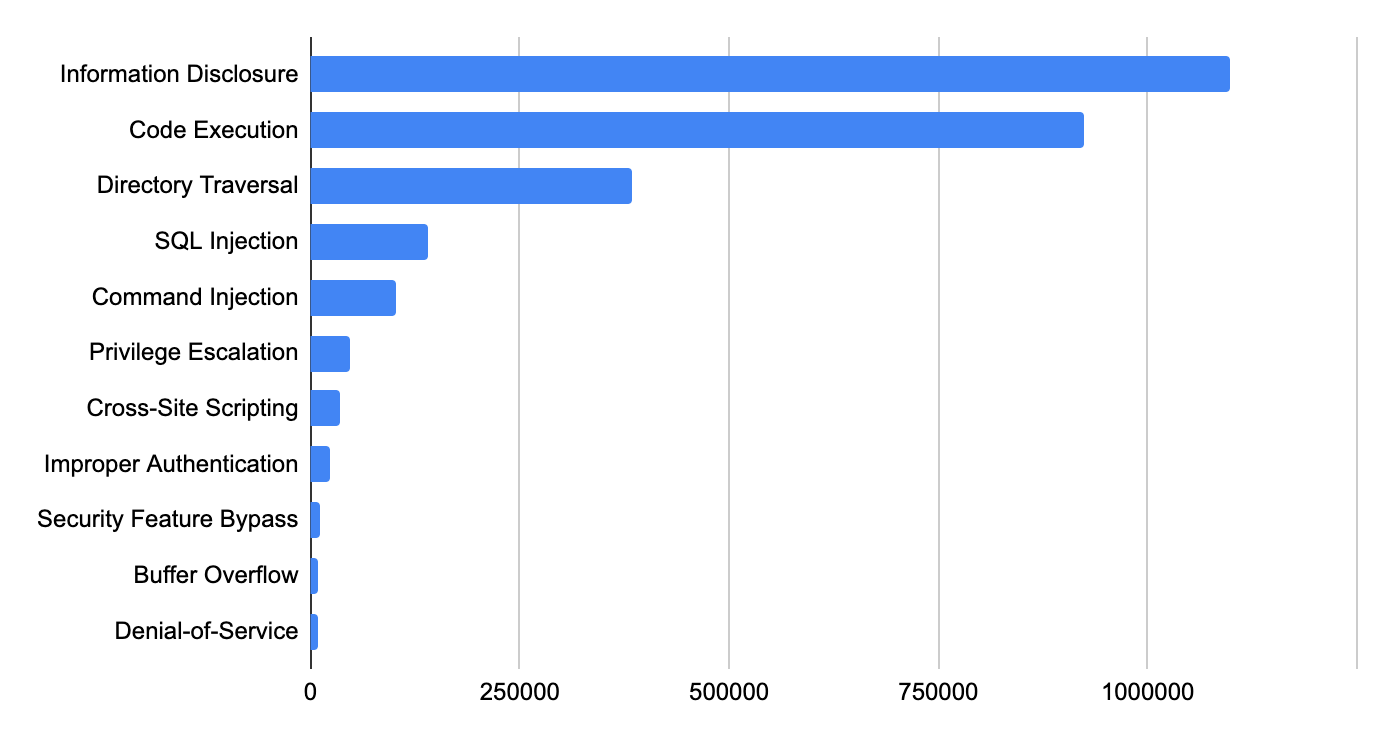
We classified each network attack by category and ranked them in Table 4 in order of prevalence. Information disclosure ranks first in this quarter, followed by code execution. Attackers typically want to gain as much information as they can and as much control as possible over the systems they target. Directory traversal attacks increased this quarter – mature attack services and tools make it relatively simple for attackers to succeed with these types of exploits.
| Ranking | Vulnerability Category |
| 1 | Information Disclosure |
| 2 | Code Execution |
| 3 | Directory Traversal |
| 4 | SQL Injection |
| 5 | Command Injection |
| 6 | Privilege Escalation |
| 7 | Cross-Site Scripting |
| 8 | Improper Authentication |
| 9 | Security Feature Bypass |
| 10 | Buffer Overflow |
Table 4. Attack category ranking, August-October 2021.
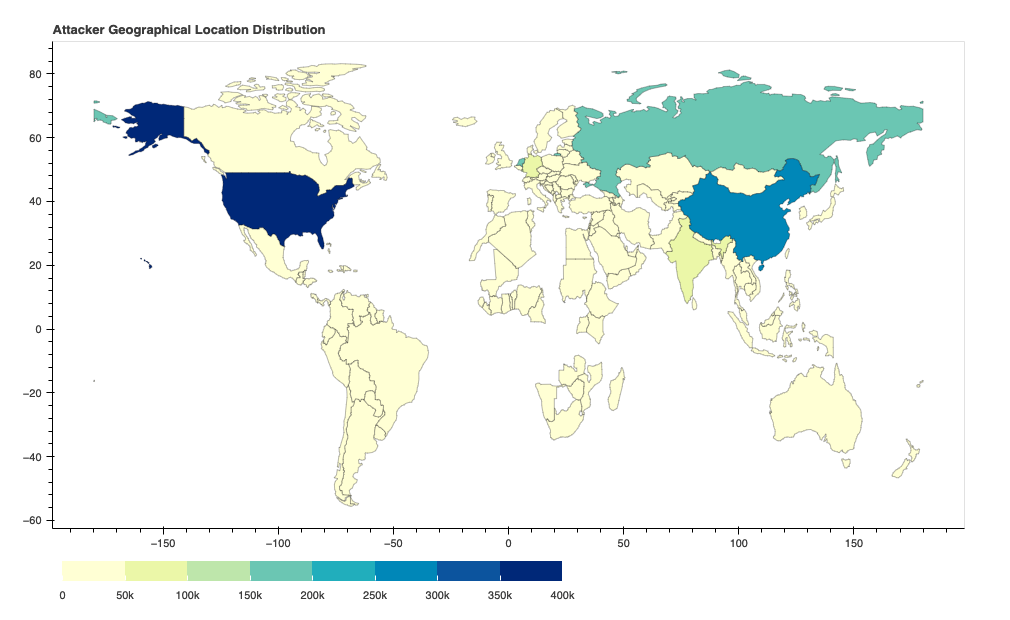
Where Did the Attacks Originate?
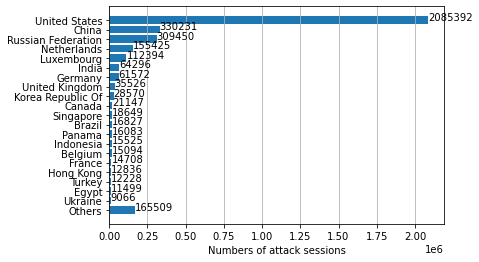
After identifying the region from which each network attack originated, we discovered that the largest number of them seem to originate from the United States, followed by China and Russia. However, we recognize that the attackers might leverage proxy servers and VPNs located in those countries to hide their actual physical locations.
Conclusion
The vulnerabilities published in August-October 2021 indicate that web applications remain popular targets for attackers, and that critical vulnerabilities are more likely to have PoCs publicly available. In the meantime, we continue to capture newly published vulnerabilities that are exploited in the wild. This emphasizes the need for organizations to promptly patch their systems and implement security best practices – attackers will make a concerted effort to expand their arsenal of exploits whenever possible.
While cybercriminals will never cease their malicious activities, Palo Alto Networks customers are fully protected from the attacks discussed here by Next-Generation Firewalls. Additional mitigations include:
- Run a Best Practice Assessment to identify where your configuration could be altered to improve your security posture.
- Continuously update your Next-Generation Firewalls with the latest Palo Alto Networks Threat Prevention content (e.g. versions 8487 and above).
Additional Resources
Text extracted automatically; images, tables and formatting may be missing. Original: https://unit42.paloaltonetworks.com/network-attacks-trends-august-october-2021/