Dems seek top-to-bottom assessment of CISA workforce
House Democrats filed a bill ordering CISA to assess its workforce after roughly 1,000 staff departures.
Three House Democrats introduced the CISA Force Structure Assessment Act, requiring the agency to review whether it still has needed personnel, training, and certifications after about 1,000 employees left during President Trump’s second term. The review would cover federal IT security, state and local support, AI and quantum risks, threat hunting and incident response, critical infrastructure and operational technology, the Joint Cyber Defense Collaborative, and international cooperation. Sponsors are Reps. James Walkinshaw, Bennie Thompson, and Delia Ramirez. CISA is separately seeking to hire hundreds of staff even as its latest budget blueprint calls for further funding cuts.
- About 1,000 CISA employees left during Trump’s second term.
- Bill would review skills, training, certifications, and mission capacity.
- Scope includes AI, quantum, OT, JCDC, and critical infrastructure.
- CISA is hiring hundreds while its budget plan seeks more cuts.
Full article789 words · extracted from cyberscoop.com · click to collapse
Get our latest cybersecurity news first on Google.
After the exit of around 1,000 CISA workers, legislation from three top House Democrats orders a force structure assessment like that more common to military branches.
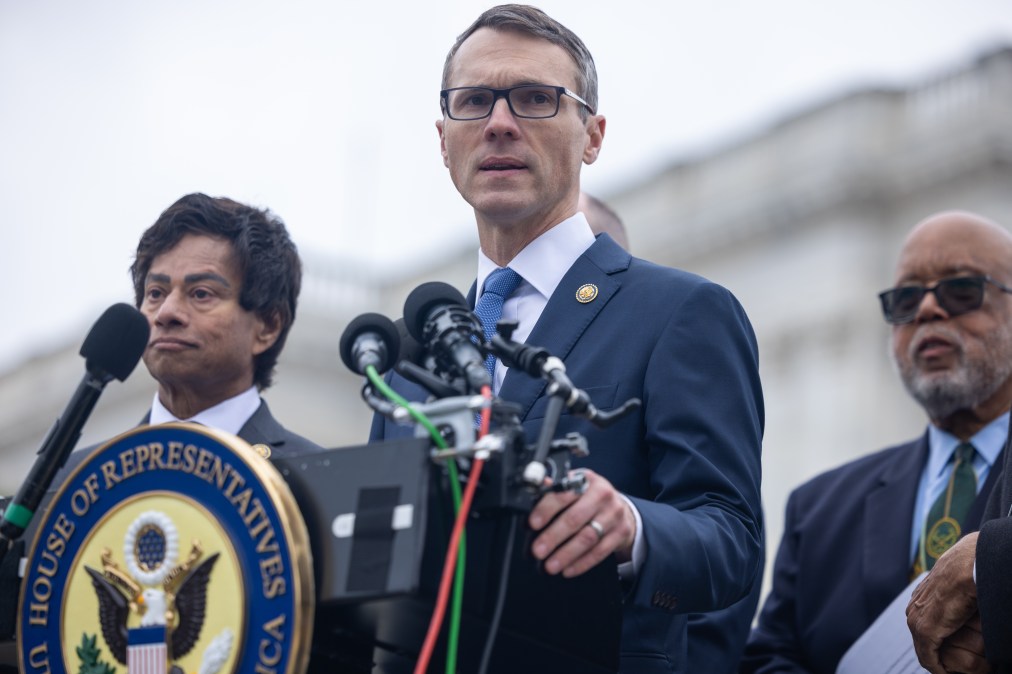
A group of leading House Democrats introduced legislation Monday requiring the Cybersecurity and Infrastructure Security Agency to conduct an assessment of its workforce to determine whether it’s up to the task after the exit of around 1,000 employees during President Donald Trump’s second term.
The concept of a force structure assessment is more common in military branches, including one that Congress previously ordered for Cyber Command. The CISA Force Structure Assessment Act would order the agency to carry out a review of whether the agency still has the necessary personnel, training and certifications after budget cuts and other Trump-era departures.
“America’s cyber defenses are only as strong as the people behind them,” Rep. James Walkinshaw, the Virginia Democrat serving as lead sponsor of the bill, said in a news release. “As cyber threats grow more sophisticated and technologies like artificial intelligence and quantum computing reshape the threat landscape, Congress needs a clear accounting of whether CISA has the workforce, skills, and resources required to keep Americans safe and enable mission delivery. This legislation will identify critical gaps and give Congress concrete information to address them.”
Also sponsoring the bill are the top Democrat on the House Homeland Security Committee, Bennie Thompson of Mississippi, and the top Democrat on its cybersecurity subcommittee, Delia Ramirez, D-Ill.
Additional elements of the force structure assessmewould include a review of the security of federal IT systems and support for state and local governments; the risks posed by AI, quantum computing and other cutting edge technologies; CISA’s threat-hunting and incident response capabilities; support for critical infrastructure and operating technology, including CISA’s role as a sector risk management agency for a number of industry sectors; the operation of the Joint Cyber Defense Collaborative; and international cooperation.
Some lawmakers and other observers have worried those areas have been greatly impacted by staffing cuts, ultimately hurting CISA’s ability to carry out its core functions.
Ramirez dinged GOP lawmakers for “a lack of interest in safeguarding our nation’s cybersecurity and our residents’ civil rights and privacy” in going along with the CISA cuts and other developments at the Department of Homeland Security.
Lawmakers on both sides of the aisle have voiced concern about the scope of cuts at CISA, but Republicans have approved some of them while pushing back on others. CISA itself is currently seeking to hire hundreds of new personnel, even as its latest budget blueprint calls for yet more funding reductions.
“With Iran targeting our critical infrastructure and frontier AI models creating new cyber risks, we must ensure we have a cybersecurity workforce to counter these growing threats,” Thompson said. “After Trump has spent the past two years targeting and slashing CISA’s workforce, we need the agency to assess if it has [the] right personnel in place to fulfill its mission.”
National Cyber Director Sean Cairncross has discussed White House plans to develop a cybersecurity academy meant to consolidate and enhance existing federal cyber training and education programs, with the aim of addressing cyber workforce shortages. His office has reportedly drafted an executive order that would establish that academy.
Latest Podcasts
Government
Technology
What’s next for CISA's CDM program that gives cybersecurity tools to federal agencies
Researchers say OpenAI agents were behind May hacking campaign targeting RubyGems
European parliament members call for slowdown of Serbia’s EU entry over spyware use
The G7 tells industry to hurry up and prep for post-quantum encryption