Hackers Use Hundreds of AI Agents to Exploit PaperCut Servers and Steal Windows Credentials
A threat actor used AI agents to exploit PaperCut, compromising about 440 servers and stealing Windows credentials.
GreyNoise, Hunt.io, and Blackpoint Cyber reported a likely Russian-speaking actor using hundreds of AI agents to exploit internet-facing PaperCut NG/MF servers. The campaign chained authentication-bypass CVE-2026-81578 (CVSS 8.8) with unsafe dynamic class-loading CVE-2026-82078 (CVSS 9.4) to execute arbitrary Java in the PaperCut process. Researchers identified at least 440 compromised instances across 395 organizations in 48 countries, including domain-administrator access at 12 organizations and credential harvesting from 280 instances. The operator used an OpenAI Codex harness with a DeepSeek model, stole Windows registry secrets and passwords from configuration files, and deployed reverse SOCKS and chisel pivots. PaperCut's fixed maintenance releases are 26.0.5, 25.0.13, and 24.1.10.
- CVE-2026-81578 and CVE-2026-82078 were chained for unauthenticated PaperCut code execution.
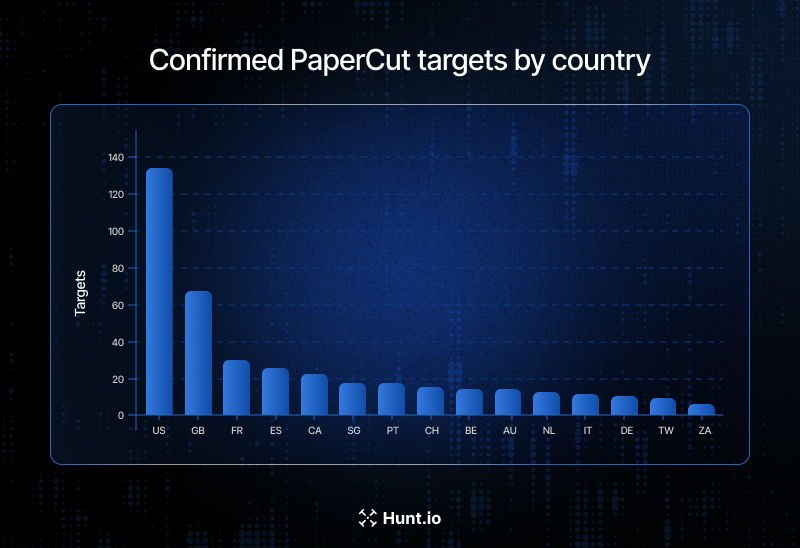
- GreyNoise found at least 440 compromised instances at 395 organizations in 48 countries.
- The actor used an OpenAI Codex harness with a DeepSeek model and public tools.
- Post-exploitation collected Windows secrets and deployed reverse SOCKS and chisel pivots.
- Fixed PaperCut NG/MF maintenance releases are 26.0.5, 25.0.13, and 24.1.10.
Vulnerabilities mentionedAll →
- CVE-2026-820789.464%Unsafe Reflection RCE in PaperCut NG/MF, Chained with Auth Bypass in Attackspublished · PaperCut NG KEV+1 related
| CVE | Vulnerability | CVSS | EPSS | Flags | Affected | Exposure | Published |
|---|---|---|---|---|---|---|---|
CVE-2026-82078+1 related CVE |
Indicators of compromiseauto-extracted · verify before use · export allAll →
| Type | Indicator | Context |
|---|---|---|
| domain | hunt.io | ocations within the workbench on 45.142.193[.]132 (Source : Hunt.io). The operator packaged credentials, domain information and |
Full article687 words · extracted from gbhackers.com · click to collapse
A likely Russian-speaking threat actor used hundreds of AI agents to exploit PaperCut NG/MF servers, steal Windows credentials and establish reusable access to internal networks.
GreyNoise identified at least 440 compromised instances belonging to 395 organizations across 48 countries, demonstrating how agent-assisted workflows can accelerate exploitation of enterprise infrastructure.
The operator combined OpenAI’s Codex harness with a DeepSeek model, not an OpenAI model, and publicly available offensive tools.
Hunt.io’s investigation, detailed in the supplied research, identified exposed directories on ports 8000, 18080 and 18081 of 45.142.193[.]132.
Their contents included exploit scripts, AI-agent instructions, vulnerability assessments, credential collectors, Metasploit logs and packaged victim environments.
The largest directory contained 1,924 files across 97 subdirectories, totaling approximately 3.9 GB.
Blackpoint Cyber’s analysis independently documented an iterative development workflow in the exposed tooling. Timestamped state files preserved failures, code changes, unfinished tasks and retry decisions.
Rather than generating isolated exploits, AI assistance helped maintain an operational loop spanning research, debugging, target classification and repeated execution.
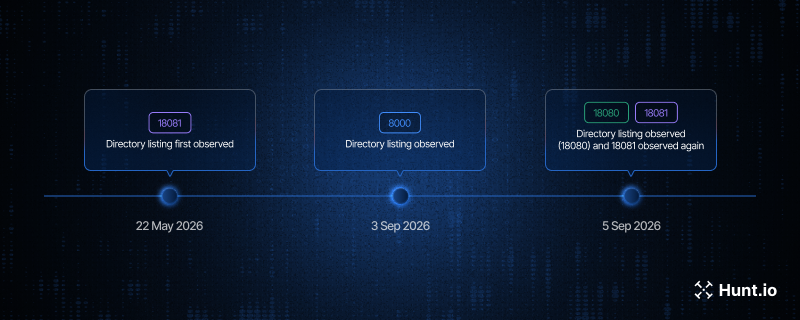
The primary attack chained CVE-2026-81578, an authentication bypass rated CVSS 8.8, with CVE-2026-82078, an unsafe dynamic class-loading vulnerability rated 9.4.
Together, the flaws allowed unauthenticated configuration manipulation followed by arbitrary Java bytecode execution within the PaperCut service process.
Hunt.io observed the campaign, progress from an empty workspace to real-world remote code execution in under four hours. During a subsequent wave, the actor compromised 11 organizations in 26 seconds.
Recovered scripts modified external user-lookup settings and selected execution techniques according to the installed version.
AI Agents Target PaperCut
PaperCut 26.x targets faced H2/Groovy-based execution, while earlier versions were targeted through Apache Derby mechanisms.
Another variant retrieved command output through temporary files beneath PaperCut’s web directory, avoiding dependence on outbound callbacks.
The supplied research also describes an independent XML-RPC attack path.
Where API network restrictions or authentication controls were weak, configuration-writing and card-lookup methods could enable execution without the original Tapestry bypass. API reachability alone, however, did not establish successful exploitation.
Post-exploitation utilities collected Windows SECURITY and SYSTEM registry data, enabling offline recovery of machine-account secrets.
Additional scripts searched configuration files and logs for LDAP bind passwords, database credentials and service-account secrets.
Reverse SOCKS tooling converted compromised servers into internal network pivots, while Linux deployments used chisel and cron for persistence.
![The reverse SOCKS5 deployment script live_reverse_socks5.py staged in multiple locations within the workbench on 45.142.193[.]132 (Source : Hunt.io).](https://public-hunt-static-blog-assets.s3.us-east-1.amazonaws.com/10-2026/PaperCut+Attackers+Left+Their+AI+Exploitation+Workbench+Exposed+-+figure+9.png)
The operator packaged credentials, domain information and proxy configurations into victim-specific archives. According to the recovered artifacts, 45 targets had working reverse SOCKS5 pivots at capture.
Separate Metasploit logs contained 2,165 attempts and five confirmed interactive sessions; these figures describe that dataset, not the campaign’s total compromises.
GreyNoise’s investigation documented domain-administrator access at 12 organizations and credential harvesting from 280 affected instances.
The researchers emphasized that conventional hardening still disrupted attacks, including one instance where a web application firewall blocked exploitation.
Patching remains urgent. PaperCut’s security bulletin identifies NG/MF 26.0.5, 25.0.13 and 24.1.10 as maintenance releases replacing emergency patches.
Defenders should restrict internet exposure, review XML-RPC controls, investigate suspicious PaperCut child processes and inspect unexpected administrator accounts, registry exports and outbound tunnels.
Suspected compromise requires broader incident response, credential review and clean rebuilding not simply installing an update.
Indicators of Compromise
| Indicator | Type | Notes |
|---|---|---|
| 45.142.193[.]132 | IPv4 | Primary orchestration host. Open directories on ports 8000, 18080, and 18081. |
| 45.158.196[.]75 | IPv4 | Secondary build and execution VPS, reached over SSH. |
| 45.142.193[.]132:8000 | HTTP | Bulk post-exploitation staging directory |
| 45.142.193[.]132:18080 | HTTP | AI agent workbench (pupercut/) |
| 45.142.193[.]132:18081 | HTTP | chisel implant staging, not previously published |
Note: IP addresses and domains are intentionally defanged (e.g., [.]) to prevent accidental resolution or hyperlinking. Re-fang only within controlled threat intelligence platforms such as MISP, VirusTotal, or your SIEM.
Stops Cyber threats before impact with 21 min faster MTTR. Integrate ANYRUN’s Sandbox in your SOC.
Mayura Kathirhttps://gbhackers.com/
Mayura Kathir is a cybersecurity reporter at GBHackers News, covering daily incidents including data breaches, malware attacks, cybercrime, vulnerabilities, zero-day exploits, and more.