Microsoft Patch Tuesday, February 2025 Edition
Vulnerabilities mentionedAll →
| CVE | Vulnerability | CVSS | EPSS | Flags | Affected | Exposure | Published |
|---|---|---|---|---|---|---|---|
| CVE-2024-38193 | Use-After-Free Privilege Escalation in Microsoft Windows WinSock Driver (afd.sys) The Windows Ancillary Function Driver for WinSock (afd.sys) contains a use-after-free flaw (CWE-416) that allows a local attacker to escalate privileges. An attacker who can already execute code on a Windows host — typically after gaining initial access via phishing, malware, or chaining with another vulnerability — triggers the bug to gain SYSTEM-level privileges, giving them near-full control of the machine. Any Windows host running an affected build is exposed to the flaw, though it requires local code execution and is not remotely exploitable on its own. Exploitation is confirmed in the wild: CISA added the CVE to the KEV catalog on 2024-08-13 and Microsoft shipped fixes in its August 2024 security updates, while the ransomware association is currently listed as unknown. EPSS is elevated at 28.5% (98th percentile), indicating a high likelihood of continued exploitation over the next 30 days. Do: Apply Microsoft's August 2024 Windows cumulative security updates (released 2024-08-13) across all Windows clients and servers, prioritizing multi-user hosts such as RDS/VDI servers and jump boxes where local code execution by low-privileged users is more likely. After patching, verify installed build numbers and hunt for signs of local privilege escalation, per CISA's KEV required action to apply vendor mitigations or discontinue use. Keep the host within your KEV remediation SLA, as listing in the catalog signals active exploitation. | 7.8 | 29% | KEV PoC |
| mass>1 billion Windows endpoints worldwide, i.e., effectively every unpatched Windows client or server | |
| CVE-2025-21377 | NTLM Hash Disclosure Spoofing Vulnerability in Windows and Windows Server CVE-2025-21377 is an NTLM hash disclosure (spoofing) vulnerability in Microsoft Windows, tracked as CWE-73 (external control of file name or path). An attacker who can get a user to interact with attacker-influenced content, such as a crafted file or path reference, can cause Windows to authenticate or respond in a way that leaks the user's NTLM hash to an endpoint the attacker controls, consistent with the CVSS vector's network vector and required user interaction. The attacker gains the user's NTLM hash, which can be cracked offline or replayed to authenticate as (spoof) that user; the flaw affects confidentiality only, with no direct integrity or availability impact. Any user or server running the affected Windows releases is exposed, with the risk highest where users handle untrusted files or where NTLM authentication is permitted. As of the February 2025 Patch Tuesday coverage, this flaw is not reported as actively exploited and is not on the CISA KEV, with no public proof-of-concept known, though its high EPSS percentile (98th, ~24.5% chance of exploitation within 30 days) indicates elevated exploitation risk. Do: Apply the February 2025 (or later) Windows security updates from Windows Update or the Microsoft Update Catalog on all affected Windows 10/11 clients and Windows Server 2008/2012/2016/2019 hosts. As interim hardening, restrict outbound NTLM authentication where feasible (e.g., limiting NTLM via group policy or blocking legacy NTLM traffic), since the flaw leaks NTLM hashes that can be cracked or replayed. Because this is not yet in CISA KEV and no public PoC is known, it can be prioritized within normal patch cycles, but the high EPSS score argues for patching internet-facing and file-handling systems first. | 6.5 | 24% |
| mass≈1 billion+ Windows installations (affected versions span nearly the entire supported Windows client and server installed base) | ||
| CVE-2025-21418 +1 in the same advisory: …21391 | Local Privilege Escalation via Heap Overflow in Windows WinSock AFD Driver CVE-2025-21418 is a heap-based buffer overflow (CWE-122) in the Windows Ancillary Function Driver for WinSock (AFD.sys), a kernel-mode driver that services Winsock auxiliary socket operations. A local attacker with limited user privileges can trigger the overflow by issuing crafted Winsock requests to the AFD driver, requiring no user interaction. Successful exploitation elevates the attacker's privileges on the local machine (confidentiality, integrity, and availability all impacted), which is typically used to gain SYSTEM-level control as part of a broader intrusion or ransomware chain. Any system running the affected Windows 10, Windows 11, or Windows Server releases is exposed, since the AFD driver is a core component present on all of them. The flaw was a zero-day exploited in the wild before Microsoft patched it in the February 2025 Patch Tuesday release, and CISA added it to the Known Exploited Vulnerabilities catalog on 2025-02-11. Do: Deploy Microsoft's February 2025 Patch Tuesday security updates for the affected Windows 10/11 and Windows Server releases immediately, prioritizing multi-user servers, jump hosts, and endpoints in ransomware-prone environments since exploitation was already active before patching. Verify deployment through your patch management/SCCM update history; there is no public PoC or known standalone mitigation, so patching is the required action per the CISA KEV entry. | 7.8 group max | 2% | KEV |
| masson the order of 1 billion+ Windows devices (all listed Windows 10/11 client and Windows Server releases) | |
| CVE-2025-24200 | Incorrect Authorization in Apple iOS/iPadOS Lets Attackers Disable USB Restricted Mode CVE-2025-24200 is an incorrect authorization flaw (CWE-863) in Apple iOS and iPadOS, caused by an authorization issue in state management that Apple resolved with improved state handling. An attacker with brief physical access to a locked device can exploit the flaw to disable USB Restricted Mode, the feature that locks down a locked iPhone or iPad's USB data port against accessories after a set period. This allows USB accessories, including data-extraction and attack peripherals, to communicate with the device while it remains locked, with a high confidentiality and integrity impact (CVSS 6.1, physical attack vector). Any iPhone or iPad user running a version prior to the applicable fixed release is affected, with fixes shipped in iOS 15.8.4, iOS 16.7.11, iOS 18.3.1, iPadOS 15.8.4, iPadOS 16.7.11, iPadOS 17.7.5, and iPadOS 18.3.1. Apple reports the flaw may have been exploited in an extremely sophisticated attack against specific targeted individuals, and CISA added it to the Known Exploited Vulnerabilities catalog on 2025-02-12. Do: Update iPhones to iOS 15.8.4, iOS 16.7.11, or iOS 18.3.1 and iPads to iPadOS 15.8.4, 16.7.11, 17.7.5, or 18.3.1 as applicable to each device's branch, checking Settings > General > Software Update for unmanaged devices. Because exploitation requires physical access, prioritize high-risk users (executives, journalists, government personnel), confirm no fleet devices remain on unpatched builds, and avoid untrusted USB accessories and charging ports until updated. CISA's KEV listing requires federal agencies to apply the vendor patch per the required action or discontinue use of the product. | 6.1 | 4% | KEV |
| mass≈1 billion+ devices (Apple's active installed base; every iPhone/iPad running a pre-patch iOS/iPadOS release at the time of disclosure) |
Full article688 words · extracted from krebsonsecurity.com · click to collapse
Microsoft today issued security updates to fix at least 56 vulnerabilities in its Windows operating systems and supported software, including two zero-day flaws that are being actively exploited.
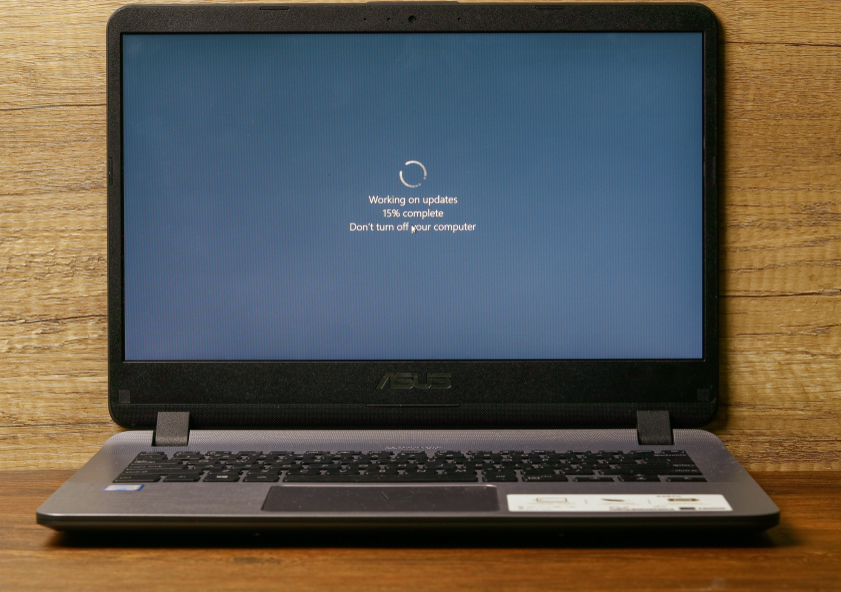
All supported Windows operating systems will receive an update this month for a buffer overflow vulnerability that carries the catchy name CVE-2025-21418. This patch should be a priority for enterprises, as Microsoft says it is being exploited, has low attack complexity, and no requirements for user interaction.
Tenable senior staff research engineer Satnam Narang noted that since 2022, there have been nine elevation of privilege vulnerabilities in this same Windows component — three each year — including one in 2024 that was exploited in the wild as a zero day (CVE-2024-38193).
“CVE-2024-38193 was exploited by the North Korean APT group known as Lazarus Group to implant a new version of the FudModule rootkit in order to maintain persistence and stealth on compromised systems,” Narang said. “At this time, it is unclear if CVE-2025-21418 was also exploited by Lazarus Group.”
The other zero-day, CVE-2025-21391, is an elevation of privilege vulnerability in Windows Storage that could be used to delete files on a targeted system. Microsoft’s advisory on this bug references something called “CWE-59: Improper Link Resolution Before File Access,” says no user interaction is required, and that the attack complexity is low.
Adam Barnett, lead software engineer at Rapid7, said although the advisory provides scant detail, and even offers some vague reassurance that ‘an attacker would only be able to delete targeted files on a system,’ it would be a mistake to assume that the impact of deleting arbitrary files would be limited to data loss or denial of service.
“As long ago as 2022, ZDI researchers set out how a motivated attacker could parlay arbitrary file deletion into full SYSTEM access using techniques which also involve creative misuse of symbolic links,”Barnett wrote.
One vulnerability patched today that was publicly disclosed earlier is CVE-2025-21377, another weakness that could allow an attacker to elevate their privileges on a vulnerable Windows system. Specifically, this is yet another Windows flaw that can be used to steal NTLMv2 hashes — essentially allowing an attacker to authenticate as the targeted user without having to log in.
According to Microsoft, minimal user interaction with a malicious file is needed to exploit CVE-2025-21377, including selecting, inspecting or “performing an action other than opening or executing the file.”
“This trademark linguistic ducking and weaving may be Microsoft’s way of saying ‘if we told you any more, we’d give the game away,'” Barnett said. “Accordingly, Microsoft assesses exploitation as more likely.”
The SANS Internet Storm Center has a handy list of all the Microsoft patches released today, indexed by severity. Windows enterprise administrators would do well to keep an eye on askwoody.com, which often has the scoop on any patches causing problems.
It’s getting harder to buy Windows software that isn’t also bundled with Microsoft’s flagship Copilot artificial intelligence (AI) feature. Last month Microsoft started bundling Copilot with Microsoft Office 365, which Redmond has since rebranded as “Microsoft 365 Copilot.” Ostensibly to offset the costs of its substantial AI investments, Microsoft also jacked up prices from 22 percent to 30 percent for upcoming license renewals and new subscribers.
Office-watch.com writes that existing Office 365 users who are paying an annual cloud license do have the option of “Microsoft 365 Classic,” an AI-free subscription at a lower price, but that many customers are not offered the option until they attempt to cancel their existing Office subscription.
In other security patch news, Apple has shipped iOS 18.3.1, which fixes a zero day vulnerability (CVE-2025-24200) that is showing up in attacks.
Adobe has issued security updates that fix a total of 45 vulnerabilities across InDesign, Commerce, Substance 3D Stager, InCopy, Illustrator, Substance 3D Designer and Photoshop Elements.
Chris Goettl at Ivanti notes that Google Chrome is shipping an update today which will trigger updates for Chromium based browsers including Microsoft Edge, so be on the lookout for Chrome and Edge updates as we proceed through the week.
Text extracted automatically; images, tables and formatting may be missing. Original: https://krebsonsecurity.com/2025/02/microsoft-patch-tuesday-february-2025-edition/