McKesson copes with fallout from data theft extortion attack
McKesson discloses a data theft extortion attack by ShinyHunters affecting oncology and medical-surgical customers, with a reported $55 million demand.
McKesson disclosed that attackers gained access to some of its third-party applications and stole data associated with a subset of customers in its oncology, multispecialty, and medical-surgical business units; the intrusion ran for four days from August 21 and was discovered August 25. ShinyHunters claimed responsibility and listed McKesson on its data-leak site, reportedly demanding more than $55 million with a September 1 deadline. Flashpoint analysts say the group typically uses social engineering and identity weaknesses with valid credentials to access cloud-hosted environments, making the intrusion hard to detect. McKesson, which distributes about one-third of pharmaceuticals used in North America with $403.4 billion in annual revenue, says operations continue and it has reasonable assurance of no ongoing unauthorized activity.
- Intrusion spanned August 21-25 via third-party applications; discovered August 25
- ShinyHunters reportedly demands over $55 million with a September 1 deadline
- Group uses social engineering and valid credentials to access cloud-hosted data stores
- Health-ISAC warned the sector of rising ShinyHunters attacks less than a month prior
- McKesson distributes about one-third of pharmaceuticals used in North America
Full article873 words · extracted from cyberscoop.com · click to collapse
Get our latest cybersecurity news first on Google.
The major healthcare sector vendor did not identify the attackers, but ShinyHunters, a prolific group increasingly targeting the sector, claimed responsibility.
Listen to this article
0:00
Learn more.
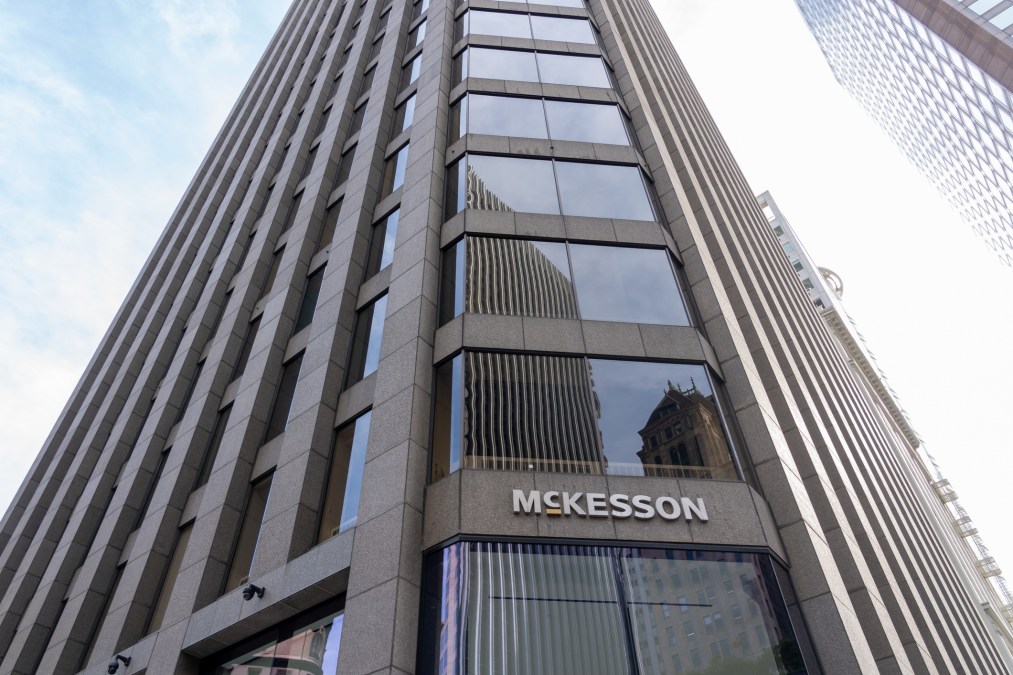
McKesson said its business and distribution centers remain operational in the wake of a cyberattack it disclosed Friday that resulted in data theft and temporary service interruptions.
Attackers gained access to some of the health care vendor’s third-party applications and stole data associated with a subset of customers in the company’s oncology, multispecialty and medical-surgical business units, Francisco Fraga, chief information and technology officer at McKesson, said in a statement Saturday.
McKesson is a major player in the healthcare sector, claiming it distributes about one-third of all pharmaceuticals used throughout North America. It reported $403.4 billion in revenue for the one-year period ending in March.
The company’s size and critical role it serves also makes it a high-profile target for cybercriminals. McKesson did not identify the group behind the attack, but ShinyHunters, a cybercrime group known for targeting large organizations with extortion demands after stealing massive amounts of sensitive data, claimed responsibility.
The company declined to answer questions about ShinyHunter’s claims. Yet, on Friday, McKesson disclosed the attack in a regulatory filing while ShinyHunters added the company to its data-leak site.
McKesson said it discovered the attack Aug. 25. A period of widespread data theft was over by then, following a four-day intrusion beginning Aug. 21, according to researchers.
“Upon discovery, we immediately activated our incident response protocols, launched an investigation, and engaged leading cybersecurity industry experts to support our response,” Fraga said in a statement.
“We have reasonable assurance of no ongoing unauthorized activity in our systems. Customers can continue to connect to and use our systems and services as intended,” he added.
While McKesson’s investigation continues, it faces a more urgent deadline of Sept. 1 from ShinyHunters, which is reportedly seeking a ransom demand in excess of $55 million.
The company did not answer questions about any ransom demand or whether it responded to the alleged attackers.
The circumstances of the attack against McKesson are similar to other recent victims of ShinyHunters. The threat group typically uses social engineering or abuses weaknesses in identity to gain access to cloud-hosted environments containing troves of sensitive or proprietary data, which it threatens to leak if the victim doesn’t pay a ransom.
“Opportunistic data extortionists have been able to identify weaknesses within identity and access management, making these campaigns both cheap and scalable,” said Ian Gray, vice president of cyber threat intelligence at Flashpoint.
“These attacks are particularly difficult to detect early because they often occur entirely within vendor-hosted environments using valid, socially-engineered credentials,” he added. “Since this activity mimics normal support or data-warehouse tasks, it typically doesn’t trip traditional malware alerts or show anomalies, meaning organizations often remain unaware of the breach until the extortionists make contact.”
Researchers have linked ShinyHunters to multiple attack sprees targeting major cloud platforms, including Oracle, Salesforce and Snowflake. The decentralized crew of cybercriminals was also linked to an expansive compromise last summer impacting hundreds of Salesloft Drift customers that put any platform integrated with the AI chat agent at risk as well.
In April, ShinyHunters broke into the systems of Canvas — a central hub for K-12 and university coursework, exams, grades and communication — causing widespread outages and data theft. When an early deadline passed without payment, ShinyHunters escalated its pressure on Instructure, the company behind Canvas, by defacing the platform’s login pages with an extortion message that was visible to hundreds of schools.
Instructure ultimately relented and said it reached an agreement with the cybercriminals, insisting the stolen data was returned with assurances that other copies were destroyed.
The FBI issued a public service announcement about ShinyHunters days later, warning potential downstream victims of the threat group’s pressure tactics and claims.
In late July, less than a month before McKesson was hit, Health-ISAC warned organizations in the sector of an increase in successful attacks by ShinyHunters.
Latest Podcasts
Government
FBI officials say AI is bolstering adversaries, emphasizing need to focus on cyber basics, patching
Feds accuse China of ‘systematic’ distillation of U.S. AI models
CIA’s Michael Ellis says cyber intelligence is changing how the agency operates
The G7 tells industry to hurry up and prep for post-quantum encryption
Technology
Threats
Policy
Whistleblower says USPS deploying new, ‘untested’ IT systems governing mail-in ballots
‘Watershed 250’ test program in Texas looks to private sector for water cybersecurity help
Former sexual abuse victims say Grok used their images, videos to train deepfake capabilities
Cyber threats nudge Trump to sign executive order on foreign equipment in U.S. energy infrastructure
Text extracted automatically; images, tables and formatting may be missing. Original: https://cyberscoop.com/mckesson-data-theft-extortion-attack-shinyhunters/