12 Best Fine-Grained Authorization Tools Compared (2026): Features & Pricing
A 2026 roundup compares twelve fine-grained authorization tools, led by Auth0 FGA, Oso, and Cerbos.
GBHackers published a 2026 comparison of twelve fine-grained authorization products covering managed ReBAC, developer libraries, and enterprise policy engines. It ranks Auth0 FGA on OpenFGA as the best managed option, Oso for developer experience, and Cerbos as the best self-hosted policy decision point, alongside SpiceDB, Amazon Verified Permissions, OPA, PlainID, and others. The piece notes consolidation, including Warrant's move into WorkOS and Permify's acquisition by FusionAuth. Ratings are described as editorial and research-based, not lab-tested.
- Auth0 FGA is ranked best managed ReBAC, using an OpenFGA core.
- Oso and Cerbos lead developer-service and self-hosted PDP options.
- Warrant moved into WorkOS; Permify was acquired by FusionAuth.
- Ratings are editorial research, with no lab testing claimed.
Full article1,917 words · extracted from gbhackers.com · click to collapse
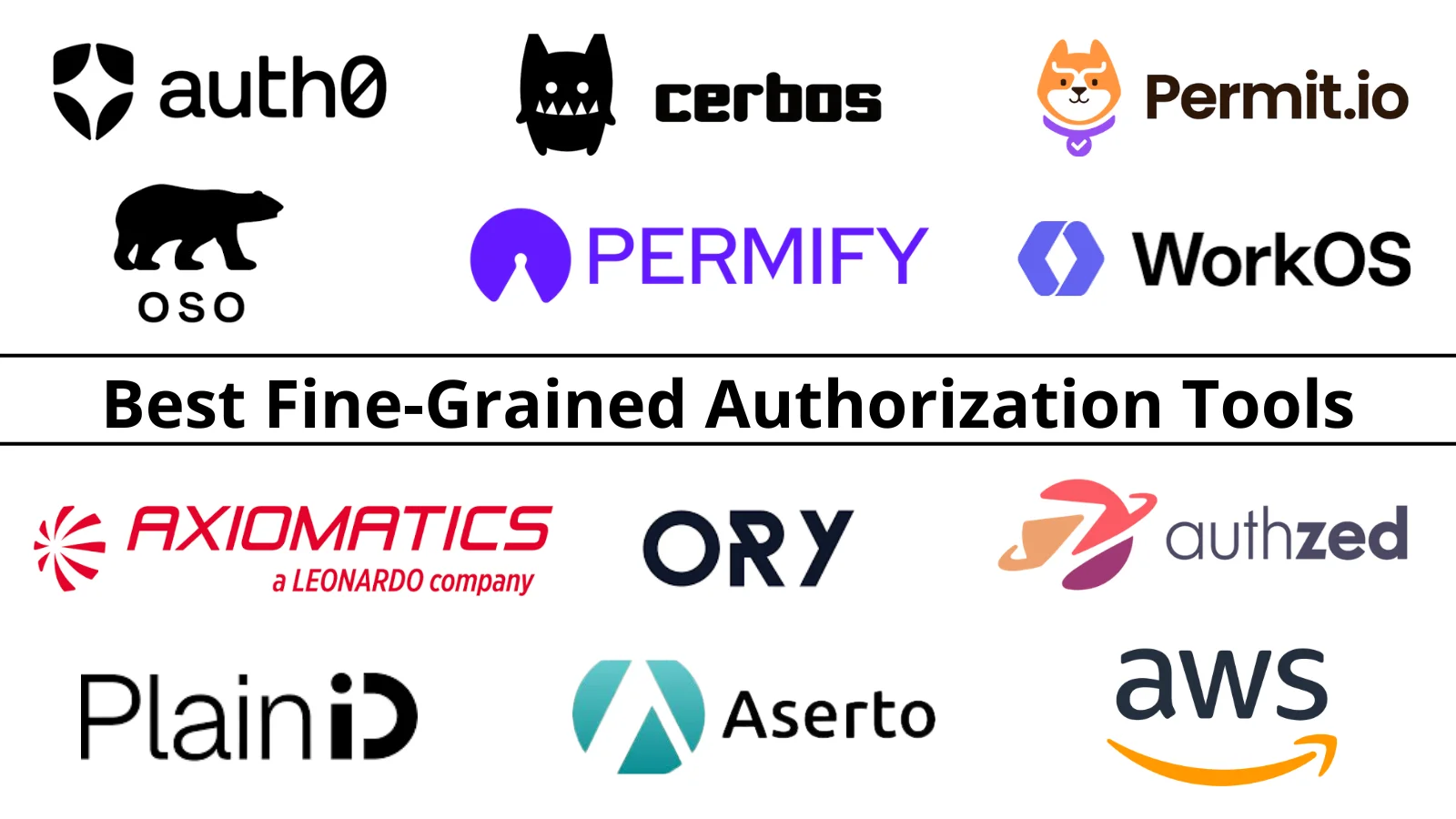
Okta’s Auth0 FGA is the best managed anchor for Zanzibar-style authorization, seamlessly complementing modern CIAM solutions across multi-tenant environments.
Oso and Cerbos lead the developer lanes, and Axiomatics/PlainID/SGNL own enterprise policy orchestration.
Twelve options compared with model, lane, and price decoded plus the stability flags this consolidating market demands (Warrant already folded into WorkOS; Styra and Aserto warrant status checks).
Quick Verdict: Best Fine-Grained Authorization at a Glance
• Best managed ReBAC: Auth0 FGA (OpenFGA core) | B2B-kit ReBAC: WorkOS FGA (Warrant inside)
• Best authorization-as-a-library/service: Oso model in Polar, ship fast
• Best self-hosted PDP: Cerbos | Policy infra standard: OPA (Styra status
• Best enterprise ABAC veteran: Axiomatics | Best policy orchestration: PlainID
• Best identity-context authorization: SGNL continuous access evaluation
• OSS hybrid: Aserto/Topaz | Emerging: Kilo
| Product | Lane | Model | Pricing structure | Editor’s rating* |
| Auth0 FGA | Managed | ReBAC | Free tier + usage | 4.5/5 |
| Oso | Dev service | Polar policies | Free tier + tiers | 4.4/5 |
| Cerbos | Self-host PDP | RBAC/ABAC | OSS + Hub | 4.4/5 |
| Permify | Authorization service | RBAC/ABAC/ReBAC | OSS + commercial [VERIFY] | 4.1/5 |
| WorkOS FGA | B2B kit | ReBAC | Published | 4.2/5 |
| Permit.io | Full-stack | Multi-model | Free tier + tiers | 4.3/5 |
| Axiomatics | Enterprise ABAC | XACML/ALFA | Quote | 4.1/5 |
| PlainID | Orchestration | PBAC | Quote | 4.1/5 |
| Ory Keto | Authorization service | ReBAC | OSS + Ory Cloud [VERIFY] | 4.1/5 |
| Aserto (Topaz) | OSS hybrid | ReBAC+OPA | OSS [VERIFY] | 3.9/5 |
| SpiceDB (AuthZed) | OSS authorization | ReBAC | OSS + usage-based Cloud | 4.4/5 |
| Amazon Verified Permissions | Managed | RBAC/ABAC | Usage-based | 4.3/5 |
Editorial, research-based; no lab testing or paid placement. n/r = not rated (consolidated/status).
How We Evaluated
Research-based: model fit, latency/scale evidence, DX, OSS health, pricing transparency, and corporate stability weighted heavily in a market where consolidation is routine. No lab claims; no vendor influence.
The 12 Options Compared in 2026
1. Okta (Auth0 FGA) — Best Managed ReBAC

Best for: Sharing/hierarchy authorization at product scale.
Zanzibar-patterned relationship checks as a managed service, with the OpenFGA open-source core hedging lock-in.
Operating seamlessly alongside modern CIAM solutions, it provides fine-grained relationship evaluation across large-scale application user bases.
Key features: ReBAC modeling; high-QPS checks; SDKs; OpenFGA OSS; Okta operations.
Pros: Pedigree; OSS hedge; vendor stability.
Cons: ReBAC-first fit.
Pricing: Free tier; usage.
Differentiator: Google-Docs-style sharing, rentable.
2. Oso — Best Developer Authorization Service

Best for: Product teams modeling authz in a purpose-built language.
Polar policy language plus managed Oso Cloud RBAC/ReBAC patterns expressed cleanly, local-first testing, sympathetic docs that teach authorization itself.
By decoupling access decisions from code, Oso helps prevent logic flaws like insecure direct object references (IDOR).
Key features: Polar language; Oso Cloud; modeling patterns; SDKs; local dev.
Pros: DX and education; model expressiveness.
Cons: Language adoption; younger ecosystem.
Pricing: Free tier; published tiers.
Differentiator: The authorization tool that teaches you authorization.
3. Cerbos — Best Self-Hosted PDP

Best for: Teams owning their decision point.
Stateless YAML-policy PDP, GitOps-native, sub-millisecond OSS core with Cerbos Hub for distribution. It deploys efficiently within microservices environments protected by load balancer reverse proxies.
Key features: Stateless PDP; YAML policies; GitOps; SDKs; Hub.
Pros: DX; latency; OSS honesty.
Cons: You run it; graph-ReBAC via patterns.
Pricing: OSS free; Hub tiers.
Differentiator: Clean self-hosted decisions without a platform tax.
4. Permify — Fine-Grained Authorization Service

Best for: Centralized authorization for applications with complex access relationships.
Permify provides fine-grained authorization with support for RBAC, ABAC, and ReBAC, using a Zanzibar-inspired approach to streamline authorization modeling.
Decoupling permission logic from application code effectively protects APIs and microservices from broken object level authorization (BOLA) vulnerabilities.
Key features: Fine-grained authorization; RBAC/ABAC/ReBAC; relationship-based access control; centralized authorization service.
Pros: Flexible authorization modeling; developer-friendly.
Cons: Smaller ecosystem; commercial status has changed following its acquisition by FusionAuth.
Pricing: OSS/free options; commercial.
Differentiator: A flexible authorization layer that combines relationship-based and policy-based access models.
5. WorkOS FGA — B2B-Kit ReBAC (Warrant Inside)

Best for: B2B SaaS adding FGA beside SSO/SCIM.
Warrant’s Zanzibar engine, acquired into WorkOS relationship checks in the same enterprise-readiness kit, published pricing.
It combines fine-grained access with enterprise-grade features alongside standard SSO solutions for rapid upmarket delivery.
Key features: ReBAC checks; WorkOS platform unity; SDKs; published rates.
Pros: Kit synergy; pricing clarity.
Cons: Depth vs dedicated FGA.
Pricing: Published.
Differentiator: FGA as a checkbox in the enterprise-readiness kit.
6. Permit.io — Best Full-Stack Managed

Best for: Shipping the whole authorization lifecycle.
Policy engines plus no-code UI, audit, and embeddable permission widgets engineers, PMs, and end-users each get their surface while reducing developer toil and mitigating broken object level authorization (BOLA) risks.
Key features: UI + as-code; multi-model; widgets; audit.
Pros: Lifecycle breadth; free tier.
Cons: Abstraction preferences.
Pricing: Free tier; tiers.
Differentiator: Authorization for the whole org chart.
7. Axiomatics — Best Enterprise ABAC Veteran

Best for: Attribute-rich regulated enterprises.
The XACML/ALFA standard-bearer dynamic attribute-based decisions for banks and agencies a decade before it was fashionable. It enables fine-grained data-layer filtering that helps mitigate data breach risks.
Key features: ABAC engine; ALFA authoring; enterprise integrations; data-layer filtering.
Pros: ABAC depth; regulated pedigree.
Cons: Modern-DX contrast; quotes.
Pricing: Quote.
Differentiator: Attribute logic at bank-grade depth.
8. PlainID — Best Policy Orchestration

Best for: Centralizing authorization across hundreds of apps.
PBAC management, visualization, and legacy connectors governance-first FGA for the estate, not one service. PlainID unifies entitlements across disparate applications alongside broader IGA tools to prevent privilege creep.
Key features: Central policy; app/API/data integration; visualization; connectors.
Pros: Governance breadth.
Cons: Enterprise motion.
Pricing: Quote.
Differentiator: One policy fabric over the sprawl.
9. Ory Keto — Cloud-Native Relationship Authorization

Best for: Applications requiring scalable relationship-based access control.
Ory Keto is an open-source authorization server inspired by Google’s Zanzibar model, designed to answer fine-grained permission checks based on relationships between users and resources.
Deploying Keto within containerized environments allows engineering teams to enforce relationship-based control alongside Kubernetes security tools to manage service boundaries efficiently.
Key features: ReBAC; Zanzibar-inspired authorization; permission checks; API-based authorization; cloud-native deployment.
Pros: Open source; scalable relationship modeling; Kubernetes-friendly.
Cons: Primarily relationship-oriented; requires additional architecture for some complex policy scenarios.
Pricing: Open source; Ory Cloud commercial options.
Differentiator: A cloud-native Zanzibar-style authorization service for modeling complex resource relationships.
10. Aserto (Topaz) — OSS Hybrid (Status Watch)

Best for: Self-hosted ReBAC + policy blends pending diligence.
Topaz combines a relationship directory with an OPA policy engine, OSS-first. Developers can embed it into microservice architectures and secure endpoints alongside API security testing companies.
Key features: ReBAC directory; OPA integration; self-host; SDKs.
Pros: Hybrid model.
Cons: Vendor-status diligence.
Pricing: OSS; managed.
Differentiator: Relationships and rules in one OSS authorizer.
11. SpiceDB (AuthZed) — Open-Source Zanzibar Standard

Best for: Engineering teams building dedicated fine-grained authorization infrastructure.
SpiceDB is an open-source authorization database inspired by Google’s Zanzibar, providing a purpose-built engine for modeling relationships and evaluating fine-grained access decisions.
By offloading permission decisions to a high-performance gRPC/HTTP API layer, SpiceDB prevents runtime execution flaws and protects internal applications from broken access control issues.
Key features: ReBAC; Zanzibar-inspired model; relationship tuples; gRPC/HTTP APIs; pluggable storage.
Pros: Mature open-source project; strong scalability; excellent ReBAC model.
Cons: Requires infrastructure expertise; relationship modeling can be complex.
Pricing: Open source; managed Cloud and Dedicated options.
Differentiator: A purpose-built authorization database for teams that want direct control over Zanzibar-style authorization infrastructure.
12. Amazon Verified Permissions — Managed Policy Authorization

Best for: Applications needing managed, centralized authorization decisions.
Amazon Verified Permissions is a fully managed authorization service that uses the Cedar policy language to define and evaluate fine-grained access policies without requiring teams to operate their own authorization engine.
Offloading authorization evaluation to a managed policy engine streamlines governance alongside centralized IAM solutions to prevent unauthorized access across identity and resource layers.
Key features: Cedar policies; RBAC/ABAC; centralized authorization; policy validation; API-based authorization decisions.
Pros: Fully managed; scalable; strong policy language; AWS integration.
Cons: Cedar learning curve; AWS ecosystem dependency.
Pricing: Usage-based.
Differentiator: A managed authorization service built around Cedar for centralized, fine-grained policy decisions.
Full Comparison Table
| Product | Lane | Model | Free entry | Ideal buyer |
| Auth0 FGA | Managed | ReBAC | Free tier | Sharing products |
| Oso | Dev service | Polar | Free tier | Product teams |
| Cerbos | Self-host | RBAC/ABAC | OSS | Own-your-PDP |
| Permify | Authorization service | RBAC/ABAC/ReBAC | OSS | Teams needing centralized fine-grained authorization |
| WorkOS FGA | B2B kit | ReBAC | Published | B2B SaaS |
| Permit.io | Full-stack | Multi | Free tier | Lifecycle buyers |
| Axiomatics | Enterprise | ABAC | Demo | Regulated |
| PlainID | Orchestration | PBAC | Demo | App estates |
| Ory Keto | Authorization service | ReBAC | OSS | Cloud-native teams building relationship-based access control |
| Aserto | OSS hybrid | ReBAC+OPA | OSS | [VERIFY] |
| SpiceDB | OSS authorization | ReBAC | OSS | Teams building dedicated Zanzibar-style authorization |
| Amazon Verified Permissions | Managed | RBAC/ABAC | Pay-as-you-go | AWS teams needing managed application authorization |
How to Choose
Model first: sharing graphs → ReBAC (FGA/WorkOS); attribute rules → ABAC/policy (Axiomatics/OPA/Cerbos); estate governance → PBAC (PlainID); context revocation → SGNL.
Then lane: managed for speed, OSS for control, enterprise for legacy reach.
Then stability: this market consolidates check funding, GitHub cadence, and our flags before betting the architecture.
Common mistakes: ReBAC-by-fashion for rule-shaped problems; rebuilding Zanzibar in-house; ignoring PDP latency budgets; pricing OSS at zero while forgetting staffing.
What is the best fine-grained authorization tool in 2026?
Auth0 FGA for managed ReBAC, Oso for developer-service modeling, Cerbos for self-hosted PDPs, OPA for policy infrastructure, Axiomatics/PlainID for enterprise ABAC/orchestration, SGNL for continuous context-driven access.
How are these tools priced?
Free tiers and OSS floors are common (FGA, Oso, Cerbos, OPA, Permit.io); WorkOS publishes; enterprise platforms quote. The hidden costs are modeling time and latency engineering budget both.
What happened to Warrant?
Acquired by WorkOS its Zanzibar engine sells as WorkOS FGA. Standalone listings are dated; one vendor, counted once.
ReBAC or ABAC — which model?
Match the permission shape: relationship walks (folders, teams, ownership) → ReBAC; attribute/context rules (region, clearance, time) → ABAC/policy engines. Most real systems mix both pick tooling that doesn’t fight the mix.
Why does authorization matter for security?
Broken access control consistently tops the OWASP Top 10 risks; insecure direct object references (IDOR) and privilege creep are fundamental authorization failures.
Centralized, testable, auditable decisions replace the scattered if-statements where those bugs breed.
Conclusion
Auth0 FGA anchors the managed lane alongside core CIAM platforms, Oso and Cerbos lead the developer lanes, and the enterprise trio (Axiomatics, PlainID, SGNL) owns the estate enforcing policy orchestration across modern zero trust architectures.
Meanwhile, market consolidation (Warrant→WorkOS) reminds buyers that vendor stability diligence is an essential part of the specification.
Next step: name your permission shape, pick the model, then the lane, then verify the vendor’s pulse.
Trust Block
About the author: [AUTHOR NAME], [credential]. Reviewed by: [REVIEWER NAME]. Last updated: September 2026.
Disclosure: GBHackers editorial is independent; vendors do not pay for inclusion or ranking.
More on GBHackers:
• Best CIAM Solutions, Compared and Priced
• Best AaaS Providers, Compared and Priced
• Best API Security Tools, Compared and Priced
• Best IAM Solutions, Compared and Priced
• Best IGA Tools, Compared and Priced
• Best JIT Access Tools, Compared and Priced
• Best Kubernetes Security, Compared and Priced
• Best SAST Tools, Compared and Priced
• Best CI/CD Security, Compared and Priced