Microsoft Patch Tuesday, September 2021 Edition
Vulnerabilities mentionedAll →
| CVE | Vulnerability | CVSS | EPSS | Flags | Affected | Exposure | Published |
|---|---|---|---|---|---|---|---|
| CVE-2021-28316 | Windows WLAN AutoConfig Service Security Feature Bypass Vulnerability Windows WLAN AutoConfig Service Security Feature Bypass Vulnerability NVD description · AI analysis pending | 4.2 | 1% |
| — | ||
| CVE-2021-30860 | Integer Overflow in Apple PDF Processing Enables Arbitrary Code Execution (CVE-2021-30860) CVE-2021-30860 is an integer overflow (CWE-190) in PDF processing across Apple's platforms that was addressed with improved input validation. It is triggered when a device processes a maliciously crafted PDF — notably when a PDF is rendered after being received via messaging — and successful exploitation allows arbitrary code execution in the context of the PDF renderer. Affected products include iOS/iPadOS, macOS (Big Sur and Catalina), and watchOS, as well as the Xpdf and Poppler PDF libraries, which share lineage with the vulnerable code. Apple confirmed the issue was being actively exploited in the wild, and public reporting ties it to NSO Group's 'ForcedEntry' exploit chain used to deliver Pegasus spyware; CISA added it to the Known Exploited Vulnerabilities catalog on 2021-11-03. Given the very high EPSS score (76%, 99th percentile) and confirmed active exploitation, defenders should treat this as a high-priority patch. Do: Update iPhones/iPads to iOS/iPadOS 14.8, Macs to macOS Big Sur 11.6 (or apply Security Update 2021-005 Catalina), and Apple Watch to watchOS 7.6.2 immediately, and patch Poppler/Xpdf through distribution or vendor updates. Because the flaw was exploited via crafted PDFs delivered through messaging (ForcedEntry/Pegasus), organizations and individuals at risk of targeted spyware should also review devices for signs of compromise. CISA KEV requires applying updates per vendor instructions; prioritize internet-connected and high-value user endpoints. | 7.8 | 76% | KEV |
| mass>1 billion active Apple devices (iPhones, iPads, Macs, Apple Watches), plus Poppler present by default on most Linux desktops and servers | |
| CVE-2021-36965 | Windows WLAN AutoConfig Service Remote Code Execution Vulnerability Windows WLAN AutoConfig Service Remote Code Execution Vulnerability NVD description · AI analysis pending | 8.8 group max | 5% |
| — | ||
| CVE-2021-38647 | Unauthenticated RCE in Microsoft Open Management Infrastructure (OMI) CVE-2021-38647 is an unauthenticated remote code execution flaw (CWE-1390, missing authentication) in Microsoft's Open Management Infrastructure (OMI), the open-source Linux management agent Microsoft bundles into Azure VM management extensions and System Center Operations Manager (SCOM) agents. When OMI is deployed through these extensions (for example the Log Analytics/OMS agent, Azure Monitor, or Azure Automation), its root-privileged server component listens for management traffic on the network (by default ports 5985/5986), and an attacker who can reach that port can send specially crafted, unauthenticated management requests that execute commands as root. Successful exploitation gives an attacker full root-level control of the affected Linux VM, turning network reachability into complete host compromise and a foothold for lateral movement. Any Azure Linux VM with an OMI-based management extension, plus standalone OMI or SCOM-agent deployments on Linux, is affected; CISA added the bug to the KEV on 2021-11-03 with known ransomware use, so exploitation is confirmed in the wild even though no public proof-of-concept is catalogued, and EPSS estimates a ~99.9% near-term exploitation probability. Do: Upgrade OMI to version 1.6.8-1 or later on all Linux VMs, including updating the bundled OMI inside Azure management extensions (Log Analytics/OMS agent, Azure Monitor, Azure Automation) and applying patched SCOM agent builds. Restrict network access to OMI's listener ports (5985/5986) with NSGs or host firewalls and check whether omiserver runs as root while binding beyond localhost. Because the flaw is in CISA KEV with known ransomware use, prioritize patching hosts whose OMI listener is reachable from untrusted networks and hunt for unexplained root-level activity. | 9.8 | 100% | KEV ransomware PoC |
| mass≈ millions of Linux VMs with OMI-based Azure management extensions | |
| CVE-2021-40444 | Remote Code Execution via MSHTML Rendering Engine in Microsoft Windows/Office (CVE-2021-40444) CVE-2021-40444 is a remote code execution vulnerability in the Microsoft MSHTML browser rendering engine, which Microsoft Office documents can load on Windows systems. It is triggered when a user is convinced to open a specially crafted Office document containing a malicious ActiveX control hosted by the MSHTML engine (tracked as a path-traversal-class issue, CWE-22). A successful attacker gains the ability to run arbitrary code in the context of the logged-on user, with greater impact when that user has administrative rights. Any Windows system that can open Office documents is exposed, spanning Windows 7, 8.1, RT 8.1, Windows 10 (1507 through 21H1) and Windows Server 2004/2008. Exploitation is confirmed in the wild: Microsoft observed targeted attacks at disclosure, the flaw is in CISA's KEV with known ransomware use, and Microsoft released security updates on September 14, 2021. Do: Apply Microsoft's security updates released September 14, 2021 for your Windows version immediately; this is a CISA KEV item with known ransomware use, so patching is treated as mandatory. As interim protection, keep Microsoft Defender Antivirus/Defender for Endpoint signatures current (enterprise detection build 1.349.22.0 or newer, with alerts appearing as 'Suspicious Cpl File Execution') and avoid opening untrusted Office documents, since exploitation requires user interaction with a crafted file. | 8.8 | 97% | KEV ransomware PoC ×2 |
| masshundreds of millions of Windows PCs and servers (nearly all Windows desktop/laptop installs on affected versions at disclosure) |
Full article1,005 words · extracted from krebsonsecurity.com · click to collapse
Microsoft today pushed software updates to plug dozens of security holes in Windows and related products, including a vulnerability that is already being exploited in active attacks. Also, Apple has issued an emergency update to fix a flaw that’s reportedly been abused to install spyware on iOS products, and Google‘s got a new version of Chrome that tackles two zero-day flaws. Finally, Adobe has released critical security updates for Acrobat, Reader and a slew of other software.
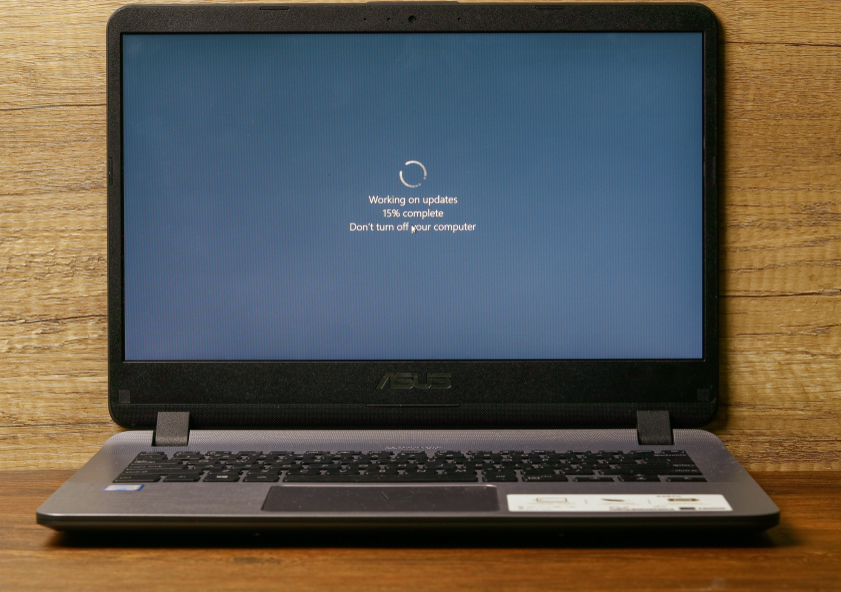
Four of the flaws fixed in this patch batch earned Microsoft’s most-dire “critical” rating, meaning they could be exploited by miscreants or malware to remotely compromise a Windows PC with little or no help from the user.
Top of the critical heap is CVE-2021-40444, which affects the “MSHTML” component of Internet Explorer (IE) on Windows 10 and many Windows Server versions. In a security advisory last week, Microsoft warned attackers already are exploiting the flaw through Microsoft Office applications as well as IE.
The critical bug CVE-2021-36965 is interesting, as it involves a remote code execution flaw in “WLAN AutoConfig,” the component in Windows 10 and many Server versions that handles auto-connections to Wi-Fi networks. One mitigating factor here is that the attacker and target would have to be on the same network, although many systems are configured to auto-connect to Wi-Fi network names with which they have previously connected.
Allan Liska, senior security architect at Recorded Future, said a similar vulnerability — CVE-2021-28316 — was announced in April.
“CVE-2021-28316 was a security bypass vulnerability, not remote code execution, and it has never been reported as publicly exploited,” Liska said. “That being said, the ubiquity of systems deployed with WLAN AutoConfig enabled could make it an attractive target for exploitation.”
Another critical weakness that enterprises using Azure should prioritize is CVE-2021-38647, which is a remote code execution bug in Azure Open Management Infrastructure (OMI) that has a CVSS Score of 9.8 (10 is the worst). It was reported and detailed by researchers at Wiz.io, who said CVE-2021-38647 was one of four bugs in Azure OMI they found that Microsoft patched this week.
“We conservatively estimate that thousands of Azure customers and millions of endpoints are affected,” Wiz.io’s Nir Ohfeld wrote. “In a small sample of Azure tenants we analyzed, over 65% were unknowingly at risk.”
Kevin Breen of Immersive Labs calls attention to several “privilege escalation” flaws fixed by Microsoft this month, noting that while these bugs carry lesser severity ratings, Microsoft considers them more likely to be exploited by bad guys and malware.
“CVE-2021-38639 and CVE-2021-36975 have also been listed as ‘exploitation more likely’ and together cover the full range of supported Windows versions,” Breem wrote. “I am starting to feel like a broken record when talking about privilege escalation vulnerabilities. They typically have a lower CVSS score than something like Remote Code Execution, but these local exploits can be the linchpin in the post-exploitation phases of an experienced attacker. If you can block them here you have the potential to significantly limit their damage. If we assume a determined attacker will be able to infect a victim’s device through social engineering or other techniques, I would argue that patching these is even more important than patching some other Remote Code execution vulnerabilities.”
Apple on Monday pushed out an urgent security update to fix a “zero-click” iOS vulnerability (CVE-2021-30860) reported by researchers at Citizen Lab that allows commands to be run when files are opened on certain Apple devices. Citizen Lab found that an exploit for CVE-2021-30860 was being used by the NSO Group, an Israeli tech company whose spyware enables the remote surveillance of smartphones.
Google also released a new version of its Chrome browser on Monday to fix nine vulnerabilities, including two that are under active attack. If you’re running Chrome, keep a lookout for when you see an “Update” tab appear to the right of the address bar. If it’s been a while since you closed the browser, you might see the Update button turn from green to orange and then red. Green means an update has been available for two days; orange means four days have elapsed, and red means your browser is a week or more behind on important updates. Completely close and restart the browser to install any pending updates.
As it usually does on Patch Tuesday, Adobe also released new versions of Reader, Acrobat and a large number of other products. Adobe says it is not aware of any exploits in the wild for any of the issues addressed in its updates today.
For a complete rundown of all patches released today and indexed by severity, check out the always-useful Patch Tuesday roundup from the SANS Internet Storm Center. And it’s not a bad idea to hold off updating for a few days until Microsoft works out any kinks in the updates: AskWoody.com usually has the lowdown on any patches that are causing problems for Windows users.
On that note, before you update please make sure you have backed up your system and/or important files. It’s not uncommon for a Windows update package to hose one’s system or prevent it from booting properly, and some updates have been known to erase or corrupt files.
So do yourself a favor and backup before installing any patches. Windows 10 even has some built-in tools to help you do that, either on a per-file/folder basis or by making a complete and bootable copy of your hard drive all at once.
And if you wish to ensure Windows has been set to pause updating so you can back up your files and/or system before the operating system decides to reboot and install patches on its own schedule, see this guide.
If you experience glitches or problems installing any of these patches this month, please consider leaving a comment about it below; there’s a decent chance other readers have experienced the same and may chime in here with useful tips.
Text extracted automatically; images, tables and formatting may be missing. Original: https://krebsonsecurity.com/2021/09/microsoft-patch-tuesday-september-2021-edition/