Postal Service moves to finalize mail ballot regs before SCOTUS ruling
USPS finalizes regulations giving the federal government control over mail-in ballot eligibility ahead of a Supreme Court ruling on the election order.
The U.S. Postal Service finalized regulations giving the federal government authority over mail-in ballot eligibility under a March executive order. Federal courts have twice enjoined the rules as unconstitutional, but USPS set an immediate effective date to be ready for the November 2026 midterms pending a Supreme Court decision. The rule drew roughly 200,000 public comments, and implementation will wait for the court's ruling.
- USPS rules would define federally controlled mail-ballot eligibility standards with immediate effect
- Two federal courts, including the District of Massachusetts, have blocked the rules
- Implementation awaits a Supreme Court decision before the November 2026 general election
Full article1,216 words · extracted from cyberscoop.com · click to collapse
Get our latest cybersecurity news first on Google.
The rules have already been rejected by multiple state courts, but the Trump administration said it’s preparing in case of a favorable Supreme Court decision.
Listen to this article
0:00
Learn more.
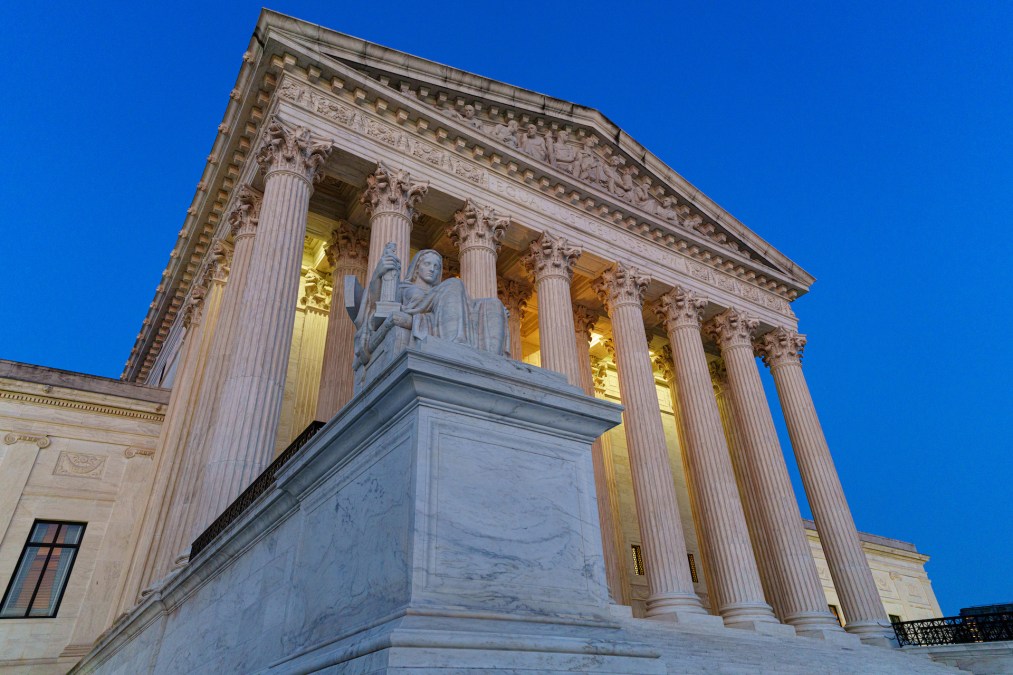
In a late Friday night posting to the Federal Register, the U.S. Postal Service said it is finalizing new regulations that would give the federal government potentially vast powers to control mail-in ballots for voters.
The changes are part of an executive order signed by President Donald Trump in March, which directed USPS to develop lists of residents “eligible” for mail-in voting — standards that would be defined by the federal government.
The U.S. Constitution vests states and Congress with the power to regulate elections, and the USPS rules have already been struck down by multiple lower courts. But as the White House appeals to the Supreme Court to reverse those decisions, it is still moving ahead in finalizing the regulations, though USPS says it will not move to implement them until after the Supreme Court rules.
But USPS said it must begin moving forward now in order to ensure the changes are in place by the mid-term elections.
“To ensure the faithful execution of federal law in connection with federal elections, this rule has an immediate effective date,” USPS wrote. “Delaying the effective date would jeopardize implementation of this rule in time for the 2026 general election, which will be held on November 3, 2026.”
According to the notice, USPS has received an astonishing 200,000 comments from the public in response to the proposed rule. It doesn’t provide a breakdown of how many comments were in support or opposition.
By the agency’s own admission, the vast majority of supportive comments appear to argue that the rules would help with the perception among voters that fraud is a “significant problem.” Phrases like “strengthens confidence” and “reduce uncertainty” are peppered throughout the descriptions.
But no credible evidence of coordinated mail-in voter fraud is presented, and Trump and his allies have been the primary force in American politics spreading the perception that voter fraud by noncitizens, dead people and Democrats is rampant. Courts, post-election audits and independent experts have repeatedly debunked these arguments.
“Whether or not voter fraud is common or uncommon, the Postal Service has the legal authority to take the measures in this rule to facilitate enforcement of federal law, reduce the risk of fraud, and help protect the integrity of federal elections,” the notice stated.
According to the notice, the comments in opposition pointed out that two courts have already blocked the White House’s USPS rules, finding them unconstitutional. Others expressed concerns that the Postal Service “would refuse to accept certain ballots for federal elections that states tender without satisfying the data-entry obligations that the rule would impose,” echoing concerns that election experts have conveyed to CyberScoop in interviews.
The notice also dismisses comments “influenced by partisan political speculation,” that include “conjecture about the underlying intent” of the order, its impact on voter turnout and elections.
“Such remarks are speculative and exceed the scope of this proceeding,” USPS wrote in its notice. “In any event … this rule does not—nor is it intended to—facilitate any form of voter suppression, affect election outcomes, or target particular demographics, districts, or states.”
Last week the U.S. District Court of Massachusetts, which ruled against the administration’s USPS order in an ongoing lawsuit brought by states and voter groups, took the unusual step of issuing a second, separate injunction against the USPS rules. It’s not clear whether the Supreme Court will address both injunctions in the same ruling or separately ahead of election day in November.
“The court has already answered and will again resolve the question clearly and affirmatively,” Judge Indira Talwani wrote when issuing the second injunction. “The executive branch has no authority to regulate elections.”
Some voting groups quickly moved to condemn the Friday night posting, saying it will confuse voters about a state-led voting process that is, as of today, still the law of the land.
“For the 2026 election, voters can continue to rely on the voting rules established by their state unless and until a court orders otherwise,” said Michael McNulty, senior policy director at the nonprofit Issue One. “Yet, because the Trump administration continues its attempts to undermine trust in an effort to centralize control of elections, we all must remain vigilant and continue to build trust in our election system.”
More Scoops

Election official says Tina Peters would be consultant, won’t have access to election systems
Shasta County registrar Clint Curtis told CyberScoop he needs Peters to help manage the county’s 2026 elections and he’s not concerned about her past conviction.
SCOTUS tosses one of two injunctions against Trump USPS mail-in ballot rules
Federal judge issues second order blocking Trump mail-in voting directive
Latest Podcasts
Government
FBI officials say AI is bolstering adversaries, emphasizing need to focus on cyber basics, patching
Feds accuse China of ‘systematic’ distillation of U.S. AI models
CIA’s Michael Ellis says cyber intelligence is changing how the agency operates
The G7 tells industry to hurry up and prep for post-quantum encryption
Technology
Threats
Microsoft discloses two actively exploited zero-days among 974 vulnerabilities
Russian national extradited to US for alleged involvement in bank-account takeover scheme
Attackers exploit zero-days in consistently besieged SonicWall product
Jail time for Maine child in 764 marks turning point in federal law enforcement
Policy
‘Watershed 250’ test program in Texas looks to private sector for water cybersecurity help
Former sexual abuse victims say Grok used their images, videos to train deepfake capabilities
Cyber threats nudge Trump to sign executive order on foreign equipment in U.S. energy infrastructure
Bipartisan Senate bill aims to prepare energy sector for Q-Day