ConnectWise warns of new ScreenConnect flaw without patch
ConnectWise warns of an unpatched ScreenConnect flaw affecting file transfer in support sessions and shares interim mitigations for MSPs.
ConnectWise disclosed a new ScreenConnect Remote Access vulnerability affecting file transfer behavior in both cloud and on-premises deployments; no CVE ID or patch is available yet, with a fix planned later this week. The vendor published temporary mitigation steps that remove TransferFiles permissions from session groups across all roles. Shadowserver tracks nearly 6,000 internet-exposed ScreenConnect instances. Previous ScreenConnect flaws, including CVE-2024-1709, were exploited by ransomware gangs and North Korea's Kimsuky, and three ScreenConnect vulnerabilities are on CISA's actively exploited catalog.
- New flaw affects file transfer in ScreenConnect Support and Access sessions; no CVE assigned yet
- Temporary mitigation: deselect TransferFiles permission for all session groups across roles
- Shadowserver tracks nearly 6,000 exposed ScreenConnect instances online
- Prior ScreenConnect bugs (CVE-2024-1709, CVE-2025-3935, CVE-2026-3564) drew ransomware, APT and state-sponsored attacks
Vulnerabilities mentionedAll →
| CVE | Vulnerability | CVSS | EPSS | Flags | Affected | Exposure | Published |
|---|---|---|---|---|---|---|---|
| CVE-2024-1709 | Authentication Bypass in ConnectWise ScreenConnect Creates Rogue Admin Accounts ConnectWise ScreenConnect (ConnectWise Control), a widely used remote-access and remote-monitoring tool, contains an authentication bypass (CWE-288) in its management interface. An attacker needs only network access to the management interface to trigger the flaw, with no valid credentials or user interaction required. A successful attacker gains administrative control of the ScreenConnect server by creating a new administrator-level account, providing a foothold that has already been used in ransomware campaigns against downstream managed environments. Any organization running ConnectWise ScreenConnect is affected, especially managed service providers and IT teams whose management interface is reachable from the internet; the source data specifies affected products but no version ranges. Exploitation is confirmed and urgent: CISA added the flaw to the KEV on 2024-02-22 with known ransomware use, EPSS assigns a 100% probability of exploitation within 30 days, and ConnectWise warned that no patch was available at the time of disclosure. Do: Follow ConnectWise's instructions immediately: no patch existed at disclosure, so apply the vendor's mitigations or, per the CISA KEV required action, restrict internet exposure of the management interface or discontinue use until mitigations are available, then upgrade to the vendor's patched release as soon as it ships. Audit ScreenConnect servers for unexpectedly created administrator-level accounts and unusual remote sessions, which are the attack's artifacts. Prioritize any instance whose management interface is reachable from the internet, given confirmed in-the-wild exploitation and known ransomware use. | 10.0 | 100% | KEV ransomware PoC ×3 |
| masstens of thousands of internet-exposed ScreenConnect servers (on the order of 10,000-30,000 instances in public internet scans at disclosure), managing millions… | |
| CVE-2025-3935 | ViewState Code Injection in ConnectWise ScreenConnect May Lead to RCE ConnectWise ScreenConnect versions 25.2.3 and earlier rely on ASP.NET Web Forms ViewState, whose integrity depends on machine keys; if an attacker with privileged system-level access obtains those keys, they can craft and send a malicious ViewState that the server deserializes, potentially resulting in remote code execution. The risk stems from platform-level ASP.NET behavior rather than a defect introduced by ScreenConnect, and the ScreenConnect Client is not directly impacted, though the CVSS vector (PR:H) confirms exploitation requires already having high privileges on the host. An attacker who achieves this gains code execution on the server with the confidentiality, integrity, and availability impact reflected in the 7.2 High score. ScreenConnect 2025.4 mitigates the issue by disabling ViewState entirely and removing any dependency on it. The flaw was added to CISA's Known Exploited Vulnerabilities catalog on 2025-06-02, indicating confirmed exploitation in the wild, with EPSS estimating a 3.4% chance of exploitation in the next 30 days (88th percentile). Do: Upgrade to ScreenConnect 2025.4, which disables ViewState and removes any dependency on it, per vendor instructions and CISA BOD 22-01 requirements; if an upgrade is not immediately possible, apply vendor mitigations or discontinue use of the affected product. Because exploitation requires compromised machine keys, administrators who suspect prior privileged compromise should also review and rotate ASP.NET machine keys and investigate for signs of system-level access. Note ConnectWise is separately rotating ScreenConnect code signing certificates following a nation-state intrusion, so check vendor advisories for related hardening steps. | 7.2 | 3% | KEV |
| largetens of thousands of internet-exposed ScreenConnect servers (≈40,000+ in public scans), serving millions of managed endpoints | |
| CVE-2026-3564 | A condition in the ScreenConnect server component may allow an actor with access to server-level cryptographic material used for authentication to obtain unauth A condition in the ScreenConnect server component may allow an actor with access to server-level cryptographic material used for authentication to obtain unauthorized access, including elevated privileges, in certain scenarios. ScreenConnect host and guest client agents are not independently affected by this CVE. NVD description · AI analysis pending | 9.0 | <1% | — | — |
Full article402 words · extracted from bleepingcomputer.com · click to collapse

ConnectWise has shared temporary mitigation measures for a new ScreenConnect Remote Access vulnerability that it plans to patch later this week.
ScreenConnect is an on-premises or cloud-hosted remote access platform typically used by managed service providers (MSPs), IT departments, and support teams for troubleshooting, patching, and system maintenance.
The security flaw affects both cloud and on-premises deployments, and it has not yet received a CVE ID for easy tracking.
"ConnectWise has identified an issue affecting file transfer behavior in ScreenConnect® Remote Access Support and Access sessions," the company said in a security advisory issued on Thursday.
While ConnectWise is still working on a permanent fix for this security issue, it provided temporary mitigation steps designed to help block potential attacks.
This requires IT administrators to go through the following steps:
- Log in to the ScreenConnect Administration page.
- Go to Administration > Security > Roles.
- Edit user roles and check session groups (in bold)with permissions assigned to them.
- In the Scoped Permissions window, deselect the TransferFiles permission (or TransferFilesInSession for legacy) for each session group.
- Save changes and repeat for all roles.
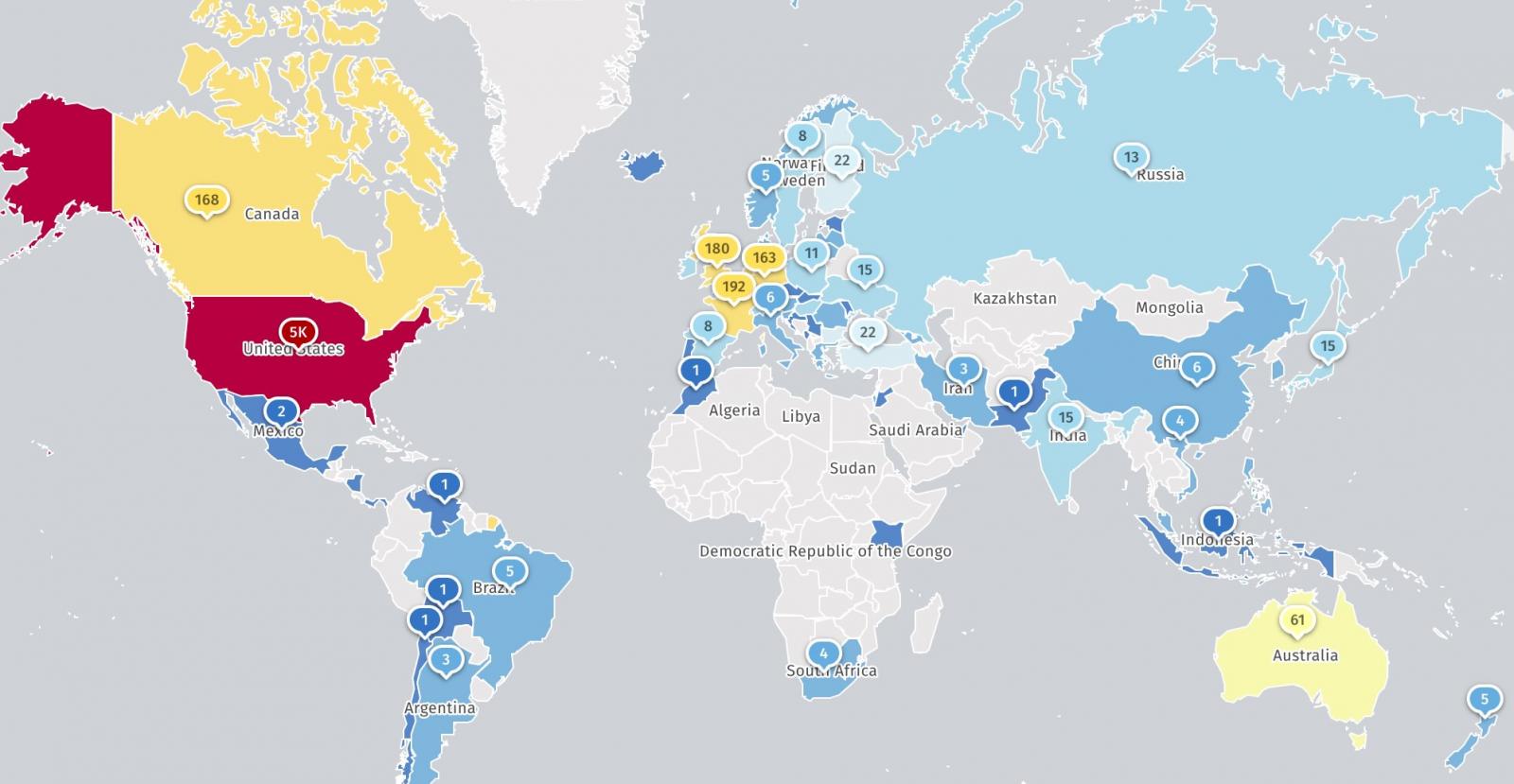
Internet security watchdog Shadowserver currently tracks nearly 6,000 ScreenConnect instances exposed online. However, there is no information regarding how many of these systems are honeyposts or have already been secured.
ScreenConnect vulnerabilities are often targeted in the wild by both financially-motivated and state-backed hacking groups.
For instance, in 2024, ransomware gangs and the Kimsuky North Korean APT hacking group exploited another ScreenConnect flaw (tracked as CVE-2024-1709) to drop malware on vulnerable systems.
Last year, ConnectWise disclosed that suspected state-sponsored hackers breached its systems via a high-severity ViewState code injection bug (CVE-2025-3935) and gained access to the cloud-based instances of a limited number of customers.
Earlier this year, in March, ConnectWise also addressed a ScreenConnect cryptographic signature verification vulnerability (tracked as CVE-2026-3564) that could allow attackers to hijack unpatched instances.
Since February 2024, the U.S. Cybersecurity and Infrastructure Security Agency (CISA) has added three ScreenConnect vulnerabilities to its catalog of actively exploited flaws, two of which were also abused in ransomware attacks.
Once attackers have valid credentials, only 37% of their actions are blocked
Overall prevention scores can hide what happens after initial access. Once attackers are using valid credentials, prevention drops sharply.
The Blue Report 2026 measures defenses technique by technique across 338 million simulations run in customer production environments.
Text extracted automatically; images, tables and formatting may be missing. Original: https://www.bleepingcomputer.com/news/security/connectwise-warns-of-new-screenconnect-flaw-without-patch/