Akira ransomware continues to evolve
Vulnerabilities mentionedAll →
| CVE | Vulnerability | CVSS | EPSS | Flags | Affected | Exposure | Published |
|---|---|---|---|---|---|---|---|
| CVE-2020-3259 | Unauthenticated Memory-Disclosure Flaw in Cisco ASA and FTD Web Services CVE-2020-3259 is an information-disclosure vulnerability in the web services interface of Cisco Adaptive Security Appliance (ASA) Software and Firepower Threat Defense (FTD) Software, caused by a buffer-tracking error when the device parses invalid URLs. An unauthenticated, remote attacker can trigger it by sending a crafted GET request to the web services interface, which allows retrieval of the device's memory contents and disclosure of confidential information. Only devices with specific AnyConnect and WebVPN configurations are affected, but those configurations are common on ASA/FTD firewalls deployed as enterprise edge and remote-access VPN gateways. Exploitation is confirmed in the wild: CISA added the bug to its Known Exploited Vulnerabilities catalog on 2024-02-15 with known ransomware use, and the Akira ransomware group (which the FBI says has extorted $42 million across roughly 250 attacks since March 2023) is actively exploiting it, with LockBit also scanning for vulnerable Cisco ASA devices. EPSS assigns a 71.8% probability of exploitation within 30 days, and no public proof-of-concept code is known. Do: Upgrade affected ASA and FTD devices to the fixed releases listed in Cisco's security advisory for CVE-2020-3259; if patching is delayed, disable or restrict the web services interface (WebVPN/AnyConnect) to trusted source networks. Per the CISA KEV required action, apply vendor mitigations or discontinue use where mitigations are unavailable. Prioritize internet-facing VPN gateways and hunt for exploitation indicators (anomalous GET requests to the web services interface) given active Akira and LockBit targeting. | 7.5 | 72% | KEV ransomware |
| mass~100,000+ internet-exposed ASA/FTD devices with the web services (WebVPN/AnyConnect) interface enabled | |
| CVE-2023-20263 | A vulnerability in the web-based management interface of Cisco HyperFlex HX Data Platform could allow an unauthenticated, remote attacker to redirect a user to A vulnerability in the web-based management interface of Cisco HyperFlex HX Data Platform could allow an unauthenticated, remote attacker to redirect a user to a malicious web page. This vulnerability is due to improper input validation of the parameters in an HTTP request. An attacker could exploit this vulnerability by persuading a user to click a crafted link. A successful exploit could allow the attacker to redirect a user to a malicious website. NVD description · AI analysis pending | 6.1 | <1% |
| — | ||
| CVE-2023-20269 | Unauthenticated Brute-Force VPN Access in Cisco ASA and Firepower Threat Defense Cisco Adaptive Security Appliance (ASA) and Firepower Threat Defense (FTD) contain an authentication weakness (CWE-288) that allows an unauthenticated, remote attacker to conduct brute-force attacks against the SSL VPN login interface to guess valid username and password combinations, and to establish a clientless SSL VPN session as an unauthorized user under certain configurations. The attack is triggered simply by sending repeated or crafted authentication attempts to an internet-facing remote-access VPN endpoint, and vendor guidance centers on the group-lock and vpn-simultaneous-logins settings. A successful attempt gives the attacker VPN access, typically allowing them to reach the internal network as a legitimate user, which makes the flaw a common foothold for follow-on attacks including ransomware. Any organization operating a Cisco ASA or FTD with remote-access/clientless SSL VPN exposed to the internet is affected. The vulnerability was added to CISA's Known Exploited Vulnerabilities catalog on 2023-09-13 with known ransomware use, and EPSS assigns it a 25.6% probability of exploitation within 30 days (98th percentile). Do: Apply the mitigations in the Cisco advisory: configure group-lock and per-user vpn-simultaneous-logins restrictions as directed, and update ASA/FTD to the fixed releases listed there; if the device is end-of-support/unsupported, discontinue or isolate it. Prioritize internet-facing VPN concentrators given the KEV listing and known ransomware use, and review VPN logs for unusual failed-login bursts and unexpected clientless SSL VPN sessions. | 9.1 | 25% | KEV ransomware |
| masshundreds of thousands of internet-exposed ASA/FTD VPN devices | |
| CVE-2023-27532 | Missing Authentication in Veeam Backup & Replication Exposes Stored Credentials Veeam Backup & Replication (VBR) contains a missing-authentication flaw (CWE-306) in its Cloud Connect component that lets an unauthenticated network attacker obtain encrypted credentials stored in VBR's configuration database. It is triggered simply by connecting to the exposed service, because the function that serves credential material performs no authentication check; no privileges or user interaction are required (CVSS 3.1: 7.5, network vector). With the recovered credentials, an attacker can gain access to backup infrastructure hosts, which has been used as an entry point and pivot for ransomware operations. Any organization running Veeam Backup & Replication is potentially affected, with the greatest risk where the VBR/Cloud Connect service is reachable from the internet. Exploitation is confirmed: CISA added the bug to its KEV catalog on 2023-08-22 with known ransomware use, the Cuba ransomware group has been observed stealing credentials through this exploit, and EPSS assigns a 77.6% near-term exploitation probability (100th percentile). Do: Apply the fixes Veeam provides in its security advisory immediately — per CISA's KEV listing, patch per vendor instructions or discontinue use — prioritizing internet-facing Cloud Connect servers. After patching, rotate all credentials stored in the configuration database, since they should be considered exposed, and review those accounts for signs of misuse. Restrict network access to the VBR service from untrusted networks and check servers for exploitation indicators such as unexpected connections to the service or anomalous logins with stored credentials. | 7.5 | 78% | KEV ransomware |
| largetens of thousands of deployments, of which thousands are internet-exposed (estimate) | |
| CVE-2023-48788 | Unauthenticated SQL Injection in Fortinet FortiClient EMS Fortinet FortiClient EMS — the central management server for FortiClient endpoint deployments — contains a SQL injection flaw (CWE-89) in versions 7.0.1 through 7.0.10 and 7.2.0 through 7.2.2. The CVSS 3.1 vector (AV:N/AC:L/PR:N/UI:N) shows it can be triggered remotely with no credentials and no user interaction: an unauthenticated attacker sends specially crafted packets to the vulnerable management server and can execute unauthorized code or commands. Successful exploitation effectively yields remote code execution on the EMS server and access to its database, enabling follow-on actions such as credential theft, abuse of endpoint management functions, and ransomware deployment. Any organization running the affected EMS versions is exposed, especially where the management server is reachable from the internet. Exploitation is confirmed in the wild: CISA added the bug to the KEV catalog on 2024-03-25 with known ransomware use, and EPSS assigns a ~98.4% probability of exploitation within 30 days (100th percentile). Do: Upgrade FortiClient EMS to the fixed releases per Fortinet's advisory for this CVE (7.2.3 and 7.0.11 or later, i.e., beyond the 7.2.2 and 7.0.10 affected ranges); the CISA KEV required action is to apply vendor mitigations or discontinue use if mitigations are unavailable. Until patched, limit exposure of the EMS web interface to untrusted networks and hunt for signs of compromise — anomalous requests to the management console, unexpected database or admin activity, and follow-on ransomware behavior — since exploitation with known ransomware use is confirmed. | 9.8 | 98% | KEV ransomware |
| largetens of thousands of EMS deployments worldwide, with a smaller subset (likely thousands) internet-exposed | |
| CVE-2024-37085 | Authentication Bypass in VMware ESXi via AD Group Recreation VMware ESXi is vulnerable to an authentication bypass (CWE-305) when the host is configured to use Active Directory for user management. An attacker who has sufficient Active Directory permissions can delete the AD group tied to ESXi administration (typically the default 'ESXi Admins' group) and then re-create it, causing ESXi to treat the re-created group as the original administrator group. This grants the actor full access to the ESXi host without needing ESXi credentials themselves. Only ESXi hosts that were joined to and configured with Active Directory for user management are affected; hosts using local authentication are not. Exploitation is confirmed in the wild: the flaw was added to CISA's Known Exploited Vulnerabilities catalog on 2024-07-30 with known ransomware use, and EPSS assigns a high 26.8% probability of exploitation in the next 30 days (98th percentile). Do: Apply the security updates or mitigations published in the vendor's (VMware/Broadcom) advisory for your ESXi release, per the CISA KEV required action. As interim mitigation, protect the configured AD admin group (default 'ESXi Admins') from deletion or re-create it with the original identity, and restrict AD permissions that allow arbitrary group deletion. Since ransomware use is known, audit AD logs for deletion/re-creation of the 'ESXi Admins' group and verify integrity of any AD-joined ESXi hosts. | 7.2 | 27% | KEV ransomware |
| mass≈100,000+ ESXi hosts (tens of thousands are internet-exposed in public scans, and the installed base is far larger, though only AD-joined hosts are vulnerable) | |
| CVE-2024-40711 | Unauthenticated Deserialization RCE in Veeam Backup & Replication Veeam Backup & Replication contains a deserialization of untrusted data flaw (CWE-502) that allows an unauthenticated attacker to send a maliciously crafted serialized payload to the product's network-facing service and achieve remote code execution, with no privileges or user interaction required (CVSS 3.1: 9.8). Successful exploitation yields full code execution on the backup server with high impact on confidentiality, integrity and availability, and is especially valuable to attackers because backup infrastructure typically stores credentials and ransomware operators seek to destroy or encrypt backups before attacking production systems. Any organization running Veeam Backup & Replication is in scope; the provided data does not specify exact affected version ranges, so consult Veeam's advisory for the affected/fixed builds. Exploitation is confirmed in the wild: the flaw was added to CISA's KEV on 2024-10-17 with known ransomware use, a public proof-of-concept has been published by watchTowr, EPSS estimates a 90.4% probability of exploitation within 30 days (100th percentile), and the exploit has been reused in Frag ransomware attacks. Do: Apply Veeam's security updates immediately (the vendor released fixes for 18 flaws, including 5 critical ones); per the KEV required action, apply mitigations per Veeam's instructions or discontinue use if mitigations are unavailable. Until patched, restrict network access to the backup server from untrusted networks and remove unnecessary internet exposure. Given confirmed ransomware exploitation, also hunt for signs of compromise on backup servers and review backup job integrity and stored credentials. | 9.8 | 90% | KEV ransomware PoC |
| mass≈ hundreds of thousands of on-prem backup server deployments plausibly affected (tens of thousands internet-exposed) | |
| CVE-2024-40766 | Improper Access Control in SonicWall SonicOS Management (Gen 5/6/7 Firewalls) CVE-2024-40766 is an improper access control flaw (CWE-284) in SonicWall SonicOS management access that can allow unauthorized access to protected resources and, under specific conditions, crash the affected firewall. It is network-exploitable without privileges or user interaction per its CVSS 3.1 vector (AV:N/AC:L/PR:N/UI:N) and affects Gen 5 and Gen 6 appliances as well as Gen 7 devices running SonicOS 7.0.1-5035 or older. A successful attacker gains unauthorized access to resources behind or on the appliance and can potentially take the firewall offline, creating opportunities for follow-on attacks such as VPN account compromise and ransomware deployment. The flaw was added to CISA's Known Exploited Vulnerabilities catalog on 2024-09-09 with known ransomware use, and recent reporting ties Akira ransomware activity — including MFA bypass on SonicWall VPNs affecting over 100 accounts — to this legacy bug combined with password reuse. No public PoC is known, but EPSS assigns an ~18.2% probability of exploitation within 30 days (97th percentile). Do: Upgrade Gen 7 appliances to SonicOS 7.0.1-5037 or later (the fixed release beyond the affected 7.0.1-5035) and move Gen 5/6 devices to the latest SonicOS release SonicWall supports for those generations; per CISA KEV guidance, apply vendor mitigations or discontinue use if patching is not possible. Restrict WAN-side management and SSLVPN access to trusted sources, audit VPN accounts for password reuse, rotate credentials and any locally stored recovery codes, and review logs for signs of Akira-related compromise such as MFA bypass or disabled EDR agents. | 9.8 | 18% | KEV ransomware |
| mass≈100,000–500,000 internet-exposed SonicWall firewalls/SSLVPN endpoints (installed base of 1M+ appliances) |
Indicators of compromiseauto-extracted · verify before use · export allAll →
| Type | Indicator | Context |
|---|---|---|
| sha256 | 2c7aeac07ce7f03b74952e0e243bd52f2bfa60fadc92dd71a6a1fee2d14cdd77 | 669390e4177597faf9271ce3ad3a16a3652e145913dbfa9a5951972fcb0 2c7aeac07ce7f03b74952e0e243bd52f2bfa60fadc92dd71a6a1fee2d14cdd77 88da2b1cee373d5f11949c1ade22af0badf16591a871978a9e02f70480e |
| sha256 | 3805f299d33ef43d17a5a1040149f0e5e2d5db57ec6f03c5687ac23db1f77a30 | 906a916f1b3595a31fa44d8e04e563a32557eb42 Linux (The Return) 3805f299d33ef43d17a5a1040149f0e5e2d5db57ec6f03c5687ac23db1f77a30 abba655df92e99a15ddcde1d196ff4393a13dbff293e45f5375a2f61c84 |
| sha256 | 43c5a487329f5d6b4a6d02e2f8ef62744b850312c5cb87c0a414f3830767be72 | cbe15d60293c556f05e98ed9a46d398a82e5ca4d00c91ebec68a209ea84 43c5a487329f5d6b4a6d02e2f8ef62744b850312c5cb87c0a414f3830767be72 8e9a33809b9062c5033928f82e8adacbef6cd7b40e73da9fcf13ec2493b |
| sha256 | 566ef5484da0a93c87dd0cb0a950a7cff4ab013175289cd5fccf9dd7ea430739 | b1cee373d5f11949c1ade22af0badf16591a871978a9e02f70480e547b2 566ef5484da0a93c87dd0cb0a950a7cff4ab013175289cd5fccf9dd7ea430739 ccda8247360a85b6c076527e438a995757b6cdf5530f38e125915d31291 |
| sha256 | 6005dcbe15d60293c556f05e98ed9a46d398a82e5ca4d00c91ebec68a209ea84 | f13e8a71a8b5f0803075382eb0311d0d8dbae3f08bac0b2f4250af8add0 6005dcbe15d60293c556f05e98ed9a46d398a82e5ca4d00c91ebec68a209ea84 43c5a487329f5d6b4a6d02e2f8ef62744b850312c5cb87c0a414f383076 |
| sha256 | 78d75669390e4177597faf9271ce3ad3a16a3652e145913dbfa9a5951972fcb0 | found in our GitHub repository here . Windows (The Return) 78d75669390e4177597faf9271ce3ad3a16a3652e145913dbfa9a5951972fcb0 2c7aeac07ce7f03b74952e0e243bd52f2bfa60fadc92dd71a6a1fee2d14 |
| sha256 | 87b4020bcd3fad1f5711e6801ca269ef5852256eeaf350f4dde2dc46c576262d | 247360a85b6c076527e438a995757b6cdf5530f38e125915d31291c00d5 87b4020bcd3fad1f5711e6801ca269ef5852256eeaf350f4dde2dc46c576262d 988776358d0e45a4907dc1f4906a916f1b3595a31fa44d8e04e563a3255 |
| sha256 | 88da2b1cee373d5f11949c1ade22af0badf16591a871978a9e02f70480e547b2 | ac07ce7f03b74952e0e243bd52f2bfa60fadc92dd71a6a1fee2d14cdd77 88da2b1cee373d5f11949c1ade22af0badf16591a871978a9e02f70480e547b2 566ef5484da0a93c87dd0cb0a950a7cff4ab013175289cd5fccf9dd7ea4 |
| sha256 | 8e9a33809b9062c5033928f82e8adacbef6cd7b40e73da9fcf13ec2493b4544c | 487329f5d6b4a6d02e2f8ef62744b850312c5cb87c0a414f3830767be72 8e9a33809b9062c5033928f82e8adacbef6cd7b40e73da9fcf13ec2493b4544c bcae978c17bcddc0bf6419ae978e3471197801c36f73cff2fc88cecbe3d |
| sha256 | 988776358d0e45a4907dc1f4906a916f1b3595a31fa44d8e04e563a32557eb42 | 20bcd3fad1f5711e6801ca269ef5852256eeaf350f4dde2dc46c576262d 988776358d0e45a4907dc1f4906a916f1b3595a31fa44d8e04e563a32557eb42 Linux (The Return) 3805f299d33ef43d17a5a1040149f0e5e2d5db57 |
| sha256 | a546ef13e8a71a8b5f0803075382eb0311d0d8dbae3f08bac0b2f4250af8add0 | 55df92e99a15ddcde1d196ff4393a13dbff293e45f5375a2f61c84a2c7b a546ef13e8a71a8b5f0803075382eb0311d0d8dbae3f08bac0b2f4250af8add0 6005dcbe15d60293c556f05e98ed9a46d398a82e5ca4d00c91ebec68a20 |
| sha256 | abba655df92e99a15ddcde1d196ff4393a13dbff293e45f5375a2f61c84a2c7b | 299d33ef43d17a5a1040149f0e5e2d5db57ec6f03c5687ac23db1f77a30 abba655df92e99a15ddcde1d196ff4393a13dbff293e45f5375a2f61c84a2c7b a546ef13e8a71a8b5f0803075382eb0311d0d8dbae3f08bac0b2f4250af |
| sha256 | bcae978c17bcddc0bf6419ae978e3471197801c36f73cff2fc88cecbe3d88d1a | 3809b9062c5033928f82e8adacbef6cd7b40e73da9fcf13ec2493b4544c bcae978c17bcddc0bf6419ae978e3471197801c36f73cff2fc88cecbe3d88d1a 3805f299d33ef43d17a5a1040149f0e5e2d5db57ec6f03c5687ac23db1f |
| sha256 | ccda8247360a85b6c076527e438a995757b6cdf5530f38e125915d31291c00d5 | 5484da0a93c87dd0cb0a950a7cff4ab013175289cd5fccf9dd7ea430739 ccda8247360a85b6c076527e438a995757b6cdf5530f38e125915d31291c00d5 87b4020bcd3fad1f5711e6801ca269ef5852256eeaf350f4dde2dc46c57 |
Full article2,498 words · extracted from blog.talosintelligence.com · click to collapse
Akira continues to cement its position as one of the most prevalent ransomware operations in the threat landscape, according to Cisco Talos’ findings and analysis.
Their success is partly due to the fact that they are constantly evolving. For example, after Akira already developed a new version of their ransomware encryptor earlier in the year, we just recently observed another novel iteration of the encryptor targeting Windows and Linux hosts alike.
Previously, Akria typically employed a double-extortion tactic in which critical data is exfiltrated prior to the compromised victim systems becoming encrypted. Beginning in early 2024, Akira appeared to be sidelining the encryption tactics, focusing on data exfiltration only. We assess with low to moderate confidence that this shift was due in part to the developers taking time to further retool their encryptor.
During this period, we began to see Akira ransomware-as-a-service (RaaS) operators developing a Rust variant of their ESXi encryptor, iteratively building on the payload’s functions while moving away from C++ and experimenting with different programming techniques.
Most recently, we have observed a potential shift back to previous encryption methods, in conjunction with data theft extortion tactics.
Returning to this approach leverages the reliability of tested encryption techniques, while simultaneously capitalizing on data theft for additional leverage. Pivoting to a previously effective strategy post-language reimplementation with v2 indicates a refocus on stability and efficiency in affiliate operations.
We anticipate Akira will continue refining its tactics, techniques, and procedures (TTPs), developing its attack chain, adapting to shifts in the threat landscape, and striving for greater effectiveness in its RaaS operations, targeting both Windows and Linux-based enterprise environments.
Members of our team will be delving into this prickly threat actor presenting at the upcoming MITRE ATT&CKCon 5.0 in ‘GoGo Ransom Rangers: Diving into Akira’s Linux Variant with ATT&CK'. Join us as we uncover findings about the TTPs employed by this developing threat actor, dissect their attack chain, and actionable intelligence is vital in the threat protection pipeline.
"The future is not a straight line. It is filled with many crossroads" Kiyoko
2024 attack chain: Leveraging exposed network appliances and vulnerable systems for rapid compromise
As Akira continuously refines its ransomware, affiliates are equally proactive in selecting and exploiting new vulnerabilities for initial access, adapting their tactics in tandem. They leverage newly disclosed CVEs, not only to breach networks but also to escalate privileges and move laterally within compromised environments. This allows them to establish a greater foothold to swiftly deploy encryption and exfiltrate victim data for extortion.
Akira ransomware operators have utilized a variety of common infection vectors to gain initial access to targeted networks, often favoring the use of compromised VPN credentials.
Most recently, Akira ransomware affiliates have been observed targeting network appliances vulnerable to CVE-2024-40766, an exploit in the SonicWall SonicOS facilitating remote code execution on the vulnerable device. Security researchers found that software on the affected systems was vulnerable to this exploit, suggesting affiliates’ swift capitalization on exposed systems.
Additional vulnerabilities leveraged by affiliates throughout 2024 include:
- CVE-2020-3259 and CVE-2023-20263: In similar Cisco security appliance exploits leveraged in early 2024, Akira was observed abusing a flaw in Cisco Adaptive Security Appliance (ASA) with CVE-2020-3259 and CVE-2023-20263 via Firepower Threat Defense (FTD) software that allowed attackers to execute arbitrary code, after initial access was established post Cisco AnyConnect SSL VPN compromise.
- CVE-2023-48788: Exposed and vulnerable FortiClientEMS software abuse by Akira was observed for initial access, enabling lateral movement and privilege escalation.
Once initial access is established, Akira operators utilize PowerShell scripts to conduct credential harvesting and privilege escalation, such as extracting Veeam backup credentials and dumping Kerberos authentication credentials. Additionally, we often see affiliates delete system shadow copies to obstruct file recovery via Windows Management Instrumentation (WMI): “Get-WmiObject Win32_Shadowcopy | Remove-WmiObject”.
Operators typically utilize RDP connections and lateral tool transfers to move through the network and employ a variety of defense evasion techniques, such as binary padding, matching legitimate name or location taxonomy, and disabling or modifying security tools.
In an attack targeting a Latin American airline in June 2024, RaaS operators were able to exploit key vulnerable services and deploy the ransomware payload in a manner that drastically reduced the time to exfiltrate data. Initially gaining access via Secure Shell (SSH), it was reported that the adversary obtained access to the vulnerable Veeam backup server likely via CVE-2023-27532, resulting in the access of encrypted credentials stored in the configuration database. This foothold facilitated the swift deployment of the Akira ransomware variant and exfiltration of sensitive data.
Akira ransomware affiliates have actively exploited several additional critical vulnerabilities in 2024 after achieving initial compromise, capitalizing on unpatched vulnerabilities in widely used network appliances and software to establish persistence and move laterally:
- CVE-2023-20269: Akira affiliates were suspected of targeting this vulnerability in Cisco VPN services. The exploit leverages an unauthorized access vulnerability in the remote access VPN feature of ASA and FTD software due to a misconfiguration of improper separation of authentication, authorization, and accounting (AAA) on the device.
- CVE-2024-37085: VMware ESXi vulnerability enabling unauthorized access to the hypervisor’s management interface, which can lead to full control over virtual machines once the adversary has established sufficient Active Directory Permissions.
- CVE-2024-40711: Akira ransomware was recently seen deployed post exploitation of the Veeam backup and replication service by triggering "Veeam.Backup.MountService.exe" to spawn "net.exe" and create local accounts for privilege escalation and persistence.
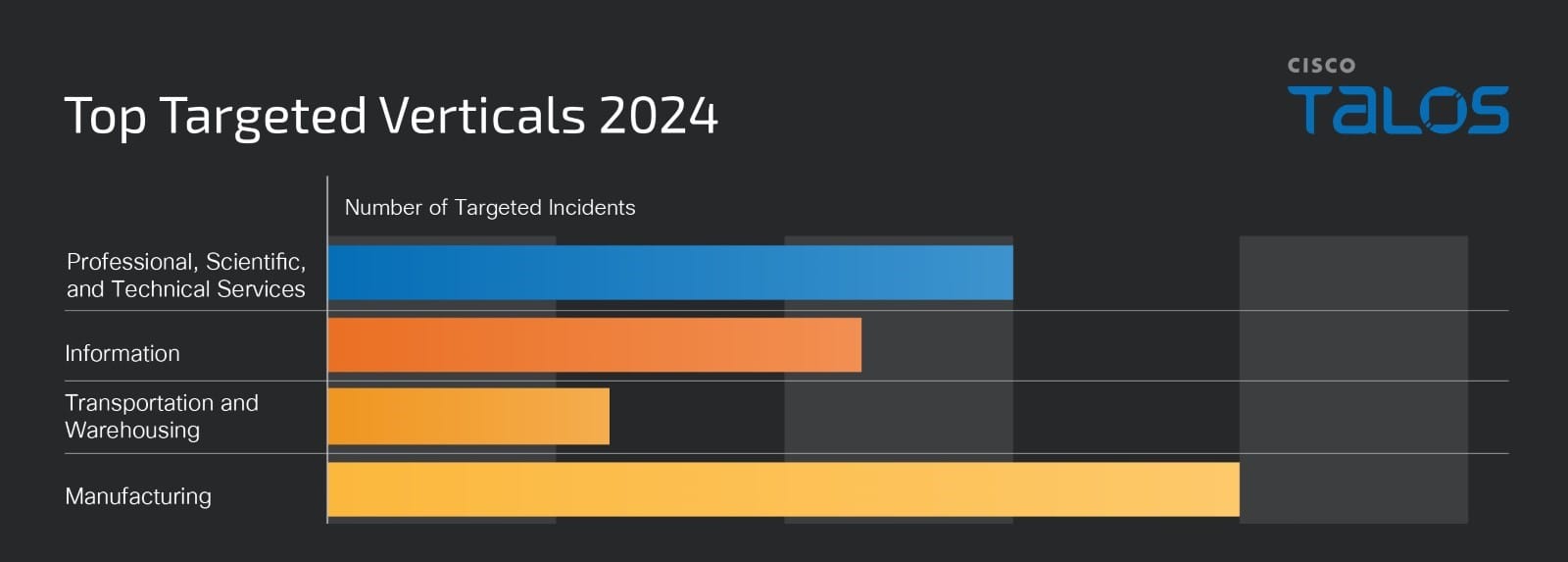
In terms of victimology, we assess that throughout 2024, Akira has targeted a significant number of victims, with a clear preference for organizations in the manufacturing and professional, scientific, and technical services sectors, based on our analysis of Akira’s data leak site.
A look at the previous Akira v2 ESXi encryptor
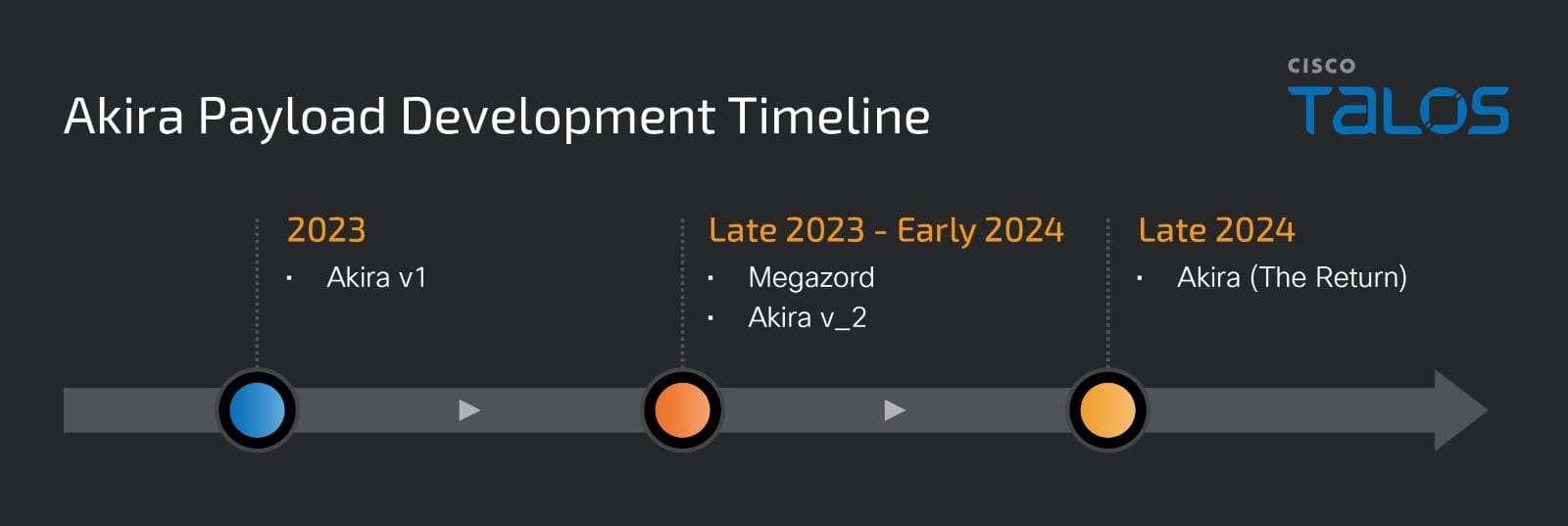
Akira pivoted from their traditional TTPs at the end of 2023 and developed a new Linux encryptor. In March 2024, we shared findings with intelligence partners generated from a Cisco Talos Incident Response (Talos IR) engagement, which documented the newly discovered Akira_v2 and the co-occurring deployment of the adversaries’ Megazord encryptor.
Post-encryption, we witnessed the Linux ESXi variant appended with a novel encrypted storage file extension “akiranew” dropping a ransom note in each of the directories where files were encrypted with a new nomenclature, “akiranew.txt”. We discovered two additional samples of the Akira_v2 variant (version 2024.1.30) on VirusTotal that included additional modifications to extend its command line argument capabilities, highlighting further evolution in the malware's development.
|
Arguments |
Description |
|
--path <string> |
Start path. Default value: /vmfs/volumes |
|
--id <string> |
Build ID |
|
--stopvm |
Stop VMs |
|
--vmonly |
Crypt only .vmdk, .vmem, .vmx, .log, .vswp, .vmsd, .vmsn files |
|
--threads <int> |
Number of threads (1-1000). Default: number of logical CPU cores |
|
--ep <int> |
Percent of crypt. Default - 15% |
|
--fork |
Work in background |
|
--logs <string> |
Print logs. Valid values for: trace, debug, error, info, warn. Default: off |
|
--exclude <string> |
Skip files by "regular" extension. Example: --exclude="startfilename(.*).(.*)" using this regular expression will skip all files starting with startfilename and having any extensions. Multiple regular expressions using "|" can also be processed: --exclude="(win10-3(.*).(.*))|(win10-4(.*).(.*))|(win10-5(.*).(.*))" |
|
-h, --help |
Show help |
The original Linux encryptor was written in C++, with Akira leveraging the Crypto++ library for encryption processes, whereas the v2 Rust variant makes use of rust-crypto 0.2.36 library crate for encryption processes.
The Build ID for the v2 (version 2024.1.30) was found at offset 0x41970 for 10 bytes.
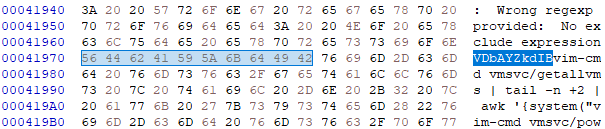
In the v2 version targeting ESXi hosts, by default, the encryptor targets the “/vmfs/volumes/” path and will navigate into subdirectories. If this path does not exist or a path is not specified, the ransomware will fail to execute.
Akira (The Return) to old TTPs
From our recent analysis, we suspect that Akira may be transitioning from the use of the Rust-based Akira v2 variant and returning to previous TTPs using Windows and Linux encryptors written in C++. This could be because of a potential refocus on incremental iterations with stability and reliability in their operations over innovation. The cross-platform consistency indicates the adversaries’ focus on an adaptable payload, enabling the threat actor to target multiple operating systems with minimal changes.
In early September 2024, we identified multiple new ransomware samples written in C++, where encrypted files are given the “.akira” extension and a ransom note named “akira_readme.txt” is dropped on the device, consistent with pre-August 2023 versions of the Akira ransomware group’s encryptor. These findings support our assessment of a tactical pivot, signaling a deliberate return to effective techniques, consistent with public reporting on the threat actors’ initial Linux variant.
We assess with moderate confidence that the Megazord variant, previously used by the threat actor targeting Windows environments, alongside Akira v2 for Linux, has gradually faded away, further supporting a consolidation of tooling by the adversary.
The newly observed Windows variant has been updated and appears to substitute the previously seen -remote argument for -localonly and --exclude and excludes paths, including “$Recycle.Bin” and “System Volume Information”, in the encryption process. Within the Linux variant, the –fork argument, which creates a child process for encryption, is still included along with the --exclude argument.
Analysis of the recent binaries suggests that the threat actor has pivoted to utilizing the ChaCha8 stream cipher. The ChaCha8 algorithm is faster and more efficient than the previously leveraged ChaCha20 in Akira v_2 due to the reduced number of quarter-round operations in the cipher, possibly indicating a further focus on swift encryption and exfiltration operations such as seen in recent Akira attacks.
New extensions targeted in recently observed Linux variants:
|
.4d |
.abd |
.abx |
.ade |
|
.ckp |
.db |
.dd |
dpl |
|
.dx |
.edb |
.fo |
.ib |
|
.idb |
.mdn |
.mud |
.nv |
|
.pdb |
.sq |
.te |
.ud |
|
.vdh |
Both newly observed encryptor variants employ exclusion paths that ignore identical Windows directories before the encryption process, a return to previous TTPs by the adversary.
|
tmp |
wint |
temp |
thumb |
|
$Recycle.Bin |
$RECYCLE.BIN |
System Volume Information |
Boot |
|
Windows |
Trend Micro |
Future developments in Akira’s TTPs
Future campaigns are likely to see Akira continuing to prioritize the exploitation of high-impact CVEs while reinforcing its double extortion model to increase ransom leverage.
The exploration of the Rust programming language in recent Linux encryptors signals the threat actor’s willingness to experiment with different coding frameworks, potentially leading to more developed and resilient ransomware variants. While the return to an earlier variant indicates a potential tactical shift from this code migration, it also demonstrates that the developers remain highly adaptable, willing to reemploy tried-and-tested techniques when necessary to ensure operational stability. Pragmatic adaptability is providing significant advantages for ransomware groups operating in a dynamic threat landscape, as it allows them to maintain a robust and reliable codebase while continually seeking new ways to evade detection and enhance functionality.
It is possible that Akira's pivot to pure data-theft extortion at the end of 2023 and beginning of 2024 was a temporary shift during the codebase refactoring, allowing the group to maintain pressure on victims and generate revenue while developmental resources were allocated to refining the encryptor’s functionality.
We assess that Akira and its affiliates will continue prioritizing attacks against VMWare’s ESXi and Linux environments throughout 2024, echoing a broader trend observed across the ransomware landscape. Adversary targeting of these platforms is driven by their prevalence in enterprise infrastructure, hosting critical infrastructure and high-value data, and their capacity for mass encryption and disruption with minimal lateral movement. Targeting ESXi and Linux hosts allows ransomware operators to compromise multiple virtual machines and critical workloads simultaneously, maximizing operational impact while bypassing traditional endpoint security controls.
- Virtualization is essential to large-scale deployments of cloud computing and storage resources, making ransomware attacks on ESXi hypervisors highly disruptive.
- Encrypting the ESXi file system provides rapid, widespread data encryption, minimizing the need for extensive lateral movement and credential theft, due to the ease of encrypting a single vmdk, rather than all the files.
- ESXi hypervisors often lack comprehensive security protection due to security department overhead, making them attractive targets for ransomware operators seeking fruitful targets.
Recommendations
Conduct regular vulnerability assessments and timely application of security patches to identify outdated software versions and unpatched vulnerabilities on ESXi hosts and implement a formal threat-informed patch management policy that includes a defined prioritization and schedule for routine updates and emergency patching of critical vulnerabilities.
Implement strict password policies that require complex, unique passwords for each account. Additionally, enforce multi-factor authentication (MFA) to add an extra layer of security.
Deploy a Security Information and Event Management (SIEM) system to continuously monitor and analyze security events, in addition to the deployment of EDR/XDR solutions on all clients and servers to provide advanced threat detection, investigation, and response capabilities.
Enable secure configuration and access controls to limit access to ESXi management interfaces such as by restricting them to trusted IPs, enforcing MFA, and ensuring role-based access control (RBAC) is properly configured.
Disable unnecessary WMI access by restricting or disabling WMI access for non-administrative users, and monitor/audit WMI commands, particularly those related to shadow copy deletion.
Credential dumping prevention via implementing Windows Defender Credential Guard to protect Kerberos ticket data and prevent credential dumping from the Local Security Authority (LSA), ensuring to audit and apply necessary configuration changes to applications/plug-ins that aren't compatible due to reliance on direct access to user credentials.
Coverage
Ways our customers can detect and block this threat are listed below.
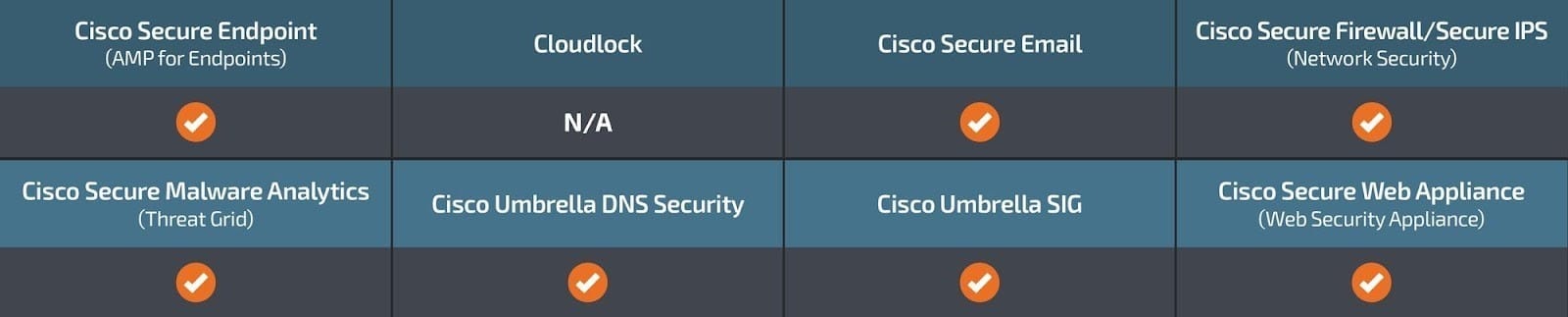
Cisco Secure Endpoint (formerly AMP for Endpoints) is ideally suited to prevent the execution of the malware detailed in this post. Try Secure Endpoint for free here.
Cisco Secure Web Appliance web scanning prevents access to malicious websites and detects malware used in these attacks.
Cisco Secure Email (formerly Cisco Email Security) can block malicious emails sent by threat actors as part of their campaign. You can try Secure Email for free here.
Cisco Secure Firewall (formerly Next-Generation Firewall and Firepower NGFW) appliances such as Threat Defense Virtual, Adaptive Security Appliance and Meraki MX can detect malicious activity associated with this threat.
Cisco Secure Malware Analytics (Threat Grid) identifies malicious binaries and builds protection into all Cisco Secure products.
Umbrella, Cisco's secure internet gateway (SIG), blocks users from connecting to malicious domains, IPs and URLs, whether users are on or off the corporate network. Sign up for a free trial of Umbrella here.
Cisco Secure Web Appliance (formerly Web Security Appliance) automatically blocks potentially dangerous sites and tests suspicious sites before users access them.
Additional protections with context to your specific environment and threat data are available from theFirewall Management Center.
Cisco Duo provides multi-factor authentication for users to ensure only those authorized are accessing your network.
Open-source Snort Subscriber Rule Set customers can stay up to date by downloading the latest rule pack available for purchase on Snort.org. SIDs for this threat:
Snort3: 300924
Snort3 Rules: 1:301007:1:0
Snort2: 63541, 63540
Snort2 Rules: 1:63976:1:0, 1:63977:1:0
ClamAV detections are also available for this threat:
Multios.Ransomware.Akira-10036536-0
Multios.Ransomware.Megazord-10021030-1
IOCs
IOCs for this research can be found in our GitHub repository here.
Windows (The Return)
78d75669390e4177597faf9271ce3ad3a16a3652e145913dbfa9a5951972fcb0
2c7aeac07ce7f03b74952e0e243bd52f2bfa60fadc92dd71a6a1fee2d14cdd77
88da2b1cee373d5f11949c1ade22af0badf16591a871978a9e02f70480e547b2
566ef5484da0a93c87dd0cb0a950a7cff4ab013175289cd5fccf9dd7ea430739
ccda8247360a85b6c076527e438a995757b6cdf5530f38e125915d31291c00d5
87b4020bcd3fad1f5711e6801ca269ef5852256eeaf350f4dde2dc46c576262d
988776358d0e45a4907dc1f4906a916f1b3595a31fa44d8e04e563a32557eb42
Linux (The Return)
3805f299d33ef43d17a5a1040149f0e5e2d5db57ec6f03c5687ac23db1f77a30
abba655df92e99a15ddcde1d196ff4393a13dbff293e45f5375a2f61c84a2c7b
a546ef13e8a71a8b5f0803075382eb0311d0d8dbae3f08bac0b2f4250af8add0
6005dcbe15d60293c556f05e98ed9a46d398a82e5ca4d00c91ebec68a209ea84
43c5a487329f5d6b4a6d02e2f8ef62744b850312c5cb87c0a414f3830767be72
8e9a33809b9062c5033928f82e8adacbef6cd7b40e73da9fcf13ec2493b4544c
bcae978c17bcddc0bf6419ae978e3471197801c36f73cff2fc88cecbe3d88d1a
3805f299d33ef43d17a5a1040149f0e5e2d5db57ec6f03c5687ac23db1f77a30
Windows v1
678ec8734367c7547794a604cc65e74a0f42320d85a6dce20c214e3b4536bb33
6cadab96185dbe6f3a7b95cf2f97d6ac395785607baa6ed7bf363deeb59cc360
3c92bfc71004340ebc00146ced294bc94f49f6a5e212016ac05e7d10fcb3312c
1b6af2fbbc636180dd7bae825486ccc45e42aefbb304d5f83fafca4d637c13cc
5c62626731856fb5e669473b39ac3deb0052b32981863f8cf697ae01c80512e5
Megazord
dfe6fddc67bdc93b9947430b966da2877fda094edf3e21e6f0ba98a84bc53198
28cea00267fa30fb63e80a3c3b193bd9cd2a3d46dd9ae6cede5f932ac15c7e2e
a6b0847cf31ccc3f76538333498f8fef79d444a9d4ecfca0592861cf731ae6cb
b55fbe9358dd4b5825ce459e84cd0823ecdf7b64550fe1af968306047b7de5c9
c9c94ac5e1991a7db42c7973e328fceeb6f163d9f644031bdfd4123c7b3898b0
0c0e0f9b09b80d87ebc88e2870907b6cacb4cd7703584baf8f2be1fd9438696d
95477703e789e6182096a09bc98853e0a70b680a4f19fa2bf86cbb9280e8ec5a
e3fa93dad8fb8c3a6d9b35d02ce97c22035b409e0efc9f04372f4c1d6280a481
68d5944d0419bd123add4e628c985f9cbe5362ee19597773baea565bff1a6f1a
8816caf03438cd45d7559961bf36a26f26464bab7a6339ce655b7fbad68bb439
c0c0b2306d31e8962973a22e50b18dfde852c6ddf99baf849e3384ed9f07a0d6
7f731cc11f8e4d249142e99a44b9da7a48505ce32c4ee4881041beeddb3760be
2f629395fdfa11e713ea8bf11d40f6f240acf2f5fcf9a2ac50b6f7fbc7521c83
9f393516edf6b8e011df6ee991758480c5b99a0efbfd68347786061f0e04426c
9585af44c3ff8fd921c713680b0c2b3bbc9d56add848ed62164f7c9b9f23d065
131da83b521f610819141d5c740313ce46578374abb22ef504a7593955a65f07
Akira_v2:
3298d203c2acb68c474e5fdad8379181890b4403d6491c523c13730129be3f75
0ee1d284ed663073872012c7bde7fac5ca1121403f1a5d2d5411317df282796c
Text extracted automatically; images, tables and formatting may be missing. Original: https://blog.talosintelligence.com/akira-ransomware-continues-to-evolve/