12 Best Secrets Management Tools Compared (2026): Features & Pricing
A 2026 roundup compares 12 secrets-management tools, ranking HashiCorp Vault, cloud vaults, Akeyless, and ephemeral-access brokers.
GBHackers published a research-based comparison of 12 secrets-management products, scoring documentation, dynamic-secret depth, integrations, pricing, and open-source health without lab testing. It names HashiCorp Vault, now under IBM, the best dedicated platform, AWS Secrets Manager, Azure Key Vault, and Google Secret Manager the best single-cloud value, and Akeyless the leading SaaS vault. Teleport and Britive are framed as ephemeral-access specialists that mint short-lived access instead of storing credentials, alongside Infisical, CyberArk Conjur, Delinea, Doppler, 1Password, and Keeper.
- HashiCorp Vault, under IBM, is ranked the deepest dynamic-secrets platform.
- AWS, Azure, and Google native stores win on single-cloud price.
- Akeyless leads the zero-knowledge SaaS-vault alternative lane.
- Teleport and Britive issue ephemeral access instead of storing secrets.
- Scores are editorial and research-based, with no lab testing.
Full article1,909 words · extracted from gbhackers.com · click to collapse
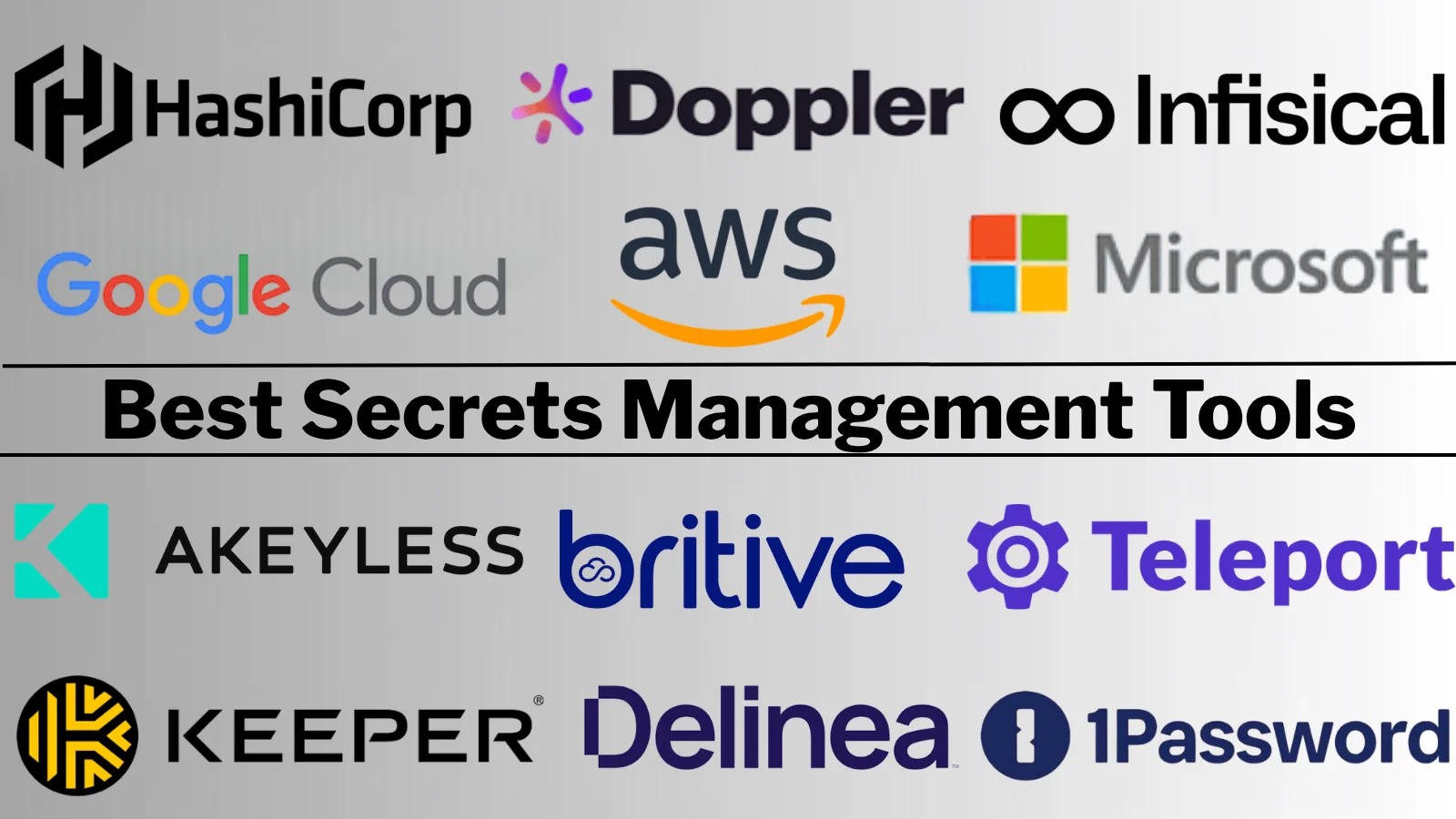
HashiCorp Vault remains the best dedicated secrets platform the dynamic-secrets benchmark, now under IBM while cloud-native stores win single-cloud estates on price and Akeyless leads the SaaS-vault alternative lane.
This comparison decodes 12 tools’ pricing units and lanes, including two ephemeral-access specialists (Teleport, Britive) that solve the secrets problem by minting access instead of storing credentials while managing privileged access risks.
Quick Verdict: Best Secrets Management at a Glance
• Best dedicated platform: HashiCorp Vault dynamic secrets, deepest ecosystem
• Best single-cloud value: AWS Secrets Manager / Azure Key Vault / Google Secret Manager
• Best SaaS-vault alternative: Akeyless zero-knowledge, ops-free
• Best PAM-converged: CyberArk Conjur / Delinea
• Best ephemeral access: Teleport (infrastructure) / Britive (cloud privileges)
• Best team + developer crossover: 1Password / Keeper
• Best developer workflow: Doppler
| Product | Best for | Standout | Pricing structure | Editor’s rating* |
| HashiCorp Vault | Multi-cloud platforms | Dynamic secrets | OSS + tiers | 4.7/5 |
| AWS Secrets Manager | AWS estates | Native rotation | Published/secret | 4.5/5 |
| Azure Key Vault | Azure estates | Keys+secrets+certs | Published usage | 4.5/5 |
| Google Secret Manager | GCP estates | Simplicity | Published usage | 4.4/5 |
| Infisical | Self-hosted + cloud teams | Open-source secrets | Free + paid tiers | 4.3/5 |
| Akeyless | Ops-light multi-cloud | Zero-knowledge SaaS | Published/tiers | 4.4/5 |
| Teleport | Infra access | Ephemeral certs | Published + OSS | 4.4/5 |
| Keeper | Teams + machine basics | Published bundles | Published/user | 4.2/5 |
| 1Password | Staff + dev crossover | Service accounts/CLI | Published/user | 4.2/5 |
| Britive | Cloud privilege JIT | Ephemeral cloud rights | Quote | 4.2/5 |
| Delinea | Mid-enterprise PAM | Usability | Tiered/quote | 4.1/5 |
| Doppler | Dev workflow | Env sync | Published, free tier | 4.1/5 |
Editorial, research-based scores; no lab testing or paid placement.
How We Evaluated
Research-based: documentation, rotation/dynamic depth, integration reach, published pricing units, OSS health, and practitioner reports. No lab claims; no vendor influence.
Priorities: short-lived over stored, pricing-unit clarity, lane honesty (vault vs access broker vs password manager), and NHI coverage.
1. HashiCorp Vault (IBM) — Best Dedicated Platform

Best for: Multi-cloud platform teams with ops capacity.
The category’s defining idea credentials that exist only for a task’s lifetime executed deepest: dynamic DB/cloud secrets, transit encryption, PKI, unmatched plugin ecosystem.
Utilizing dynamic secrets management significantly reduces exposure window during potential compromises.
Key features: – Dynamic secrets benchmark – Encryption-as-a-service – PKI + K8s integration – OSS core (BUSL)
Pros: Depth; ecosystem.
Cons: Real ops burden; IBM-era licensing diligence.
Pricing: OSS free; HCP/enterprise tiers.
Differentiator: The secret that expires before it leaks.
2. AWS Secrets Manager — Best AWS Value

Best for: AWS-majority estates.
Native rotation, IAM governance, CloudTrail audit the shortest path from hardcoded keys to rotated secrets at published per-secret rates. Integrates directly into various AWS security tools to provide scalable visibility.
Key features: – Managed rotation – IAM policies – Cross-account sharing – CloudTrail audit
Pros: Zero-friction; published pricing.
Cons: AWS-centric; sprawl-scale cost accumulation.
Pricing: Published per secret + API calls.
Differentiator: Rotation your platform already knows how to do.
3. Azure Key Vault — Best Azure Value

Best for: Azure estates, regulated keys included.
Secrets, keys, and certificates unified with managed-identity access and HSM-backed tiers credential bootstrapping eliminated for Azure workloads. Securely store keys alongside your broader Azure security tools infrastructure.
Key features: – Secrets/keys/certs in one – Managed-identity access – HSM tiers – RBAC
Pros: Platform depth; key duality.
Cons: Azure-centric; rotation wiring.
Pricing: Published usage.
Differentiator: The vault that’s also your HSM.
4. Google Secret Manager — Best GCP Value

Best for: GCP-first teams.
Versioned secrets, IAM conditions, CMEK the simplest big-three store, priced kindly at moderate scale, providing clean integration with GCP audit controls across cloud workloads.
Key features: – Versioning – IAM conditions – CMEK – Audit logging
Pros: Simplicity; cost.
Cons: GCP-centric; rotation wiring.
Pricing: Published usage.
Differentiator: Eighty percent of the value, twenty percent of the effort.
5. Infisical — Best Open-Source Secrets Platform

Best for: Teams wanting centralized secrets management across cloud, self-hosted, and developer environments.
Open-source secrets management with centralized project/environment controls, machine identities, dynamic secrets, and integrations across CI/CD security pipelines, Kubernetes security environments, and cloud infrastructure.
Key features: – Centralized secrets management – Machine identities – Dynamic secrets – Kubernetes/CI/CD integrations
Pros: Open-source flexibility; developer-friendly; self-hosted option.
Cons: Smaller ecosystem than Vault; advanced enterprise capabilities may require paid tiers.
Pricing: Free/self-hosted entry; paid cloud and enterprise tiers.
Differentiator: Open-source secrets management that connects developer workflows with machine identity and infrastructure access.
6. Akeyless — Best SaaS-Vault Alternative

Best for: Multi-cloud teams without Vault-ops appetite.
Vault-class dynamic secrets and rotation as SaaS, with distributed-fragment cryptography meaning the provider can’t read your secrets across any multi-cloud security environment.
Key features: – Dynamic secrets – Zero-knowledge DFC – PKI/SSH – Multi-cloud targets
Pros: Ops offload; architecture story.
Cons: Ecosystem younger than Vault’s.
Pricing: Published/tiers.
Differentiator: Vault outcomes without running Vault.
7. Teleport — Best Ephemeral Infrastructure Access

Best for: Engineering access to servers, K8s, and databases.
Lane label: an access platform, not a classic vault short-lived certificates replace stored credentials for SSH/K8s/DB/web access, with session recording for auditors. Crucial for locking down Kubernetes security perimeter.
Key features: – Ephemeral certificates – SSH/K8s/DB/web access – Session recording – OSS + cloud
Pros: Eliminates standing credentials; published pricing.
Cons: Infrastructure-access scope, not app-secret storage.
Pricing: OSS free; published tiers.
Differentiator: No credential stored is no credential stolen.
8. Keeper — Best Team Bundles

Best for: SMB-to-enterprise teams wanting passwords + secrets in one bill.
Keeper Secrets Manager rides the password-manager estate: published per-user bundles, CLI/SDK access, and rotation basics without a platform project, incorporating essentials from multi-factor authentication.
Key features: – Secrets Manager add-on – CLI/SDKs – Rotation – Published bundles
Pros: Pricing clarity; adoption ease.
Cons: Platform depth trails dedicated vaults.
Pricing: Published per-user bundles.
Differentiator: The password manager that grew real machine-secret hands.
9. 1Password — Best Staff + Developer Crossover

Best for: Teams covering human and light machine secrets with one loved tool.
Service accounts, secret references in CI, SSH agent developer chops on the workforce manager employees already use, mitigating credential dumping risks across environments.
Key features: – Service accounts – CI/CLI integration – SSH agent – Published pricing
Pros: UX; one tool for both.
Cons: Not a dynamic-secrets platform.
Pricing: Published per-user.
Differentiator: Adoption nobody has to enforce.
10. Britive — Best Cloud Privilege JIT

Best for: Multi-cloud estates killing standing privileges.
Lane label: ephemeral cloud permissions, not secret storage just-in-time elevation across AWS/Azure/GCP/SaaS that expires, shrinking both credential and privilege exposure within a Zero Trust architecture.
Key features: – JIT cloud privileges – Multi-cloud + SaaS – Zero standing privileges – Access analytics
Pros: Attacks the root cause; CPAM depth.
Cons: Complements a vault, not replaces; quotes.
Pricing: Quote.
Differentiator: Privileges that evaporate on schedule.
11. Delinea — Best Mid-Enterprise PAM Convergence

Best for: Pragmatic human + machine credential consolidation.
DevOps Secrets Vault plus Secret Server heritage faster rollout than CyberArk-scale programs, one vendor for mid-enterprise setups implementing identity threat detection.
Key features: – DevOps vault – CLI/API – Rotation – Secret Server ties
Pros: Usability; time-to-value.
Cons: DevOps ecosystem depth trails Vault/Conjur.
Pricing: Tiered/quote.
Differentiator: PAM-plus-secrets without the mega-program.
12. Doppler — Best Developer Workflow

Best for: Teams upgrading from scattered .env files.
Environment sync across projects, CI/CD, and clouds with a UX that makes secrets hygiene the path of least resistance seamlessly integrating into modern CI/CD security tools pipelines.
Key features: – Env management – Sync integrations – Branching configs – Free tier
Pros: DX; adoption speed; published tiers.
Cons: Governance depth trails enterprise vaults.
Pricing: Published; free tier.
Differentiator: The .env file’s dignified retirement.
Full Comparison Table
| Product | Lane | Dynamic/ephemeral | OSS/free entry | Ideal buyer |
| Vault | Dedicated vault | Benchmark | OSS | Multi-cloud |
| AWS SM | Cloud-native | Rotation | Usage floor | AWS |
| Azure KV | Cloud-native | Via wiring | Usage floor | Azure |
| Google SM | Cloud-native | Via wiring | Usage floor | GCP |
| Infisical | Open-source vault | Yes | Free/self-hosted | Self-hosted + cloud teams |
| Akeyless | SaaS vault | Yes | Free tier | Ops-light |
| Teleport | Access platform | Ephemeral certs | OSS | Infra teams |
| Keeper | Team bundle | Basics | Trial | SMB/mid |
| 1Password | Crossover | — | Trial | Teams |
| Britive | Cloud JIT | Ephemeral rights | Demo | Multi-cloud |
| Delinea | PAM-converged | Yes | Trial | Mid-enterprise |
| Doppler | Dev workflow | — | Free tier | Dev teams |
How to Choose the Right Secrets Management
Decode the pricing unit first. Per secret (AWS), usage (Azure/Google), per user (Keeper/1Password/Doppler), tiers (Akeyless/Teleport), quotes (CyberArk/Britive/Delinea) normalize to your estate before comparing.
Prefer short-lived to stored. Dynamic secrets (Vault/Akeyless) and ephemeral access (Teleport/Britive) beat rotation, which beats storage. Buy as far up that ladder as you can operate while ensuring full coverage for container security images.
Match the lane: single-cloud → native store; multi-cloud platform → Vault/Akeyless; infra access → Teleport; cloud privileges → Britive; audit-heavy → CyberArk/Delinea; team pragmatism → Keeper/1Password/Doppler.
Common mistakes: vaulting forward while git history stays unscanned; storage without rotation; five uncoordinated stores; hardcoding the vault’s own token; ignoring machine identities that outnumber staff.
FAQ: Best Secrets Management Tools
What is the best secrets management tool in 2026?
HashiCorp Vault for multi-cloud platform depth; the native AWS/Azure/Google stores for single-cloud value; Akeyless for SaaS-delivered vault capability; CyberArk for audit-heavy convergence; Teleport and Britive for the ephemeral-access lanes.
How are secrets tools priced?
Wildly differently: per secret plus API calls (AWS), usage (Azure/Google), per user (Keeper, 1Password, Doppler), published tiers (Akeyless, Teleport), and quotes (CyberArk, Britive, Delinea). Normalize units to your inventory before comparing.
Are cloud-native secret stores enough?
For single-cloud estates, usually rotation, IAM, and audit at trivial cost. Graduate at multi-cloud sprawl, dynamic-credential requirements, or centralized-governance mandates.
What’s the difference between a vault and ephemeral access?
Vaults store and rotate credentials; ephemeral platforms (Teleport certificates, Britive JIT privileges) mint short-lived access so there’s nothing durable to steal. Mature programs converge on both patterns.
Is Vault still open source under IBM?
The community edition continues under the post-2023 BUSL license with HCP and enterprise tiers above; confirm current licensing and IBM-era packaging in procurement.
What about secrets already leaked in repos?
No store fixes history pair your vault with automated scanning to find, revoke, and rotate exposed credentials, preventing unauthorized access through phishing attack vectors.
Conclusion
HashiCorp Vault wins the dedicated-platform comparison, with the cloud-native stores the value runners-up inside their clouds and Akeyless the strongest ops-light alternative.
Next step: inventory secrets and machine identities, decode each finalist’s pricing unit against that inventory, and buy as far up the short-lived ladder rotation, dynamic, ephemeral as your team can operate to maintain robust cloud encryption policies.
Trust Block
About the author: [AUTHOR NAME], [credential]. Reviewed by: [REVIEWER NAME]. Last updated: September 2026.
Disclosure: GBHackers editorial is independent; vendors do not pay for inclusion or ranking.
More on GBHackers:
• Best PAM Solutions, Compared and Priced
• Best ITDR Tools, Compared and Priced
• Best IAM Solutions, Compared and Priced
• Best Container Security, Compared and Priced
• Best Kubernetes Security, Compared and Priced
• Best CI/CD Security Tools, Compared and Priced
• Best Cloud Encryption, Compared and Priced
• Best AWS Security Tools, Compared and Priced
• Best Azure Security Tools, Compared and Priced
• Best Multi-Cloud Security, Compared and Priced
• Best DevSecOps Tools