The AI Race Just Got Awkward
A commentary says Western labs adopted DeepSeek KV-cache optimizations and cut cache-read prices.
A commentary argues that Chinese labs, particularly DeepSeek, are publishing inference optimizations that Western labs are adopting. It says multi-head latent attention compressed the KV cache by about 15x versus DeepSeek-V1, and that DeepSeek-V4.1-Flash adds CSA2, cross-layer cache reuse, and FP4 caching to reach 890 bytes per token, roughly a 437x reduction for long sessions. The author claims quietly released Claude Opus 5.5 and GPT-6.1 Sol use similar optimizations, citing cache-read price cuts of 60% versus Opus 5 and 80% versus GPT-5.6 Sol.
- The post says DeepSeek published MLA, sparse attention, and CSA2.
- V4.1-Flash is claimed to use 890 bytes of KV cache per token.
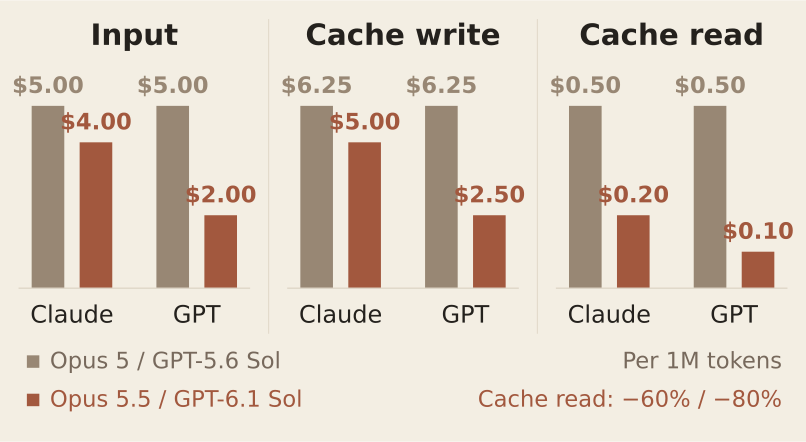
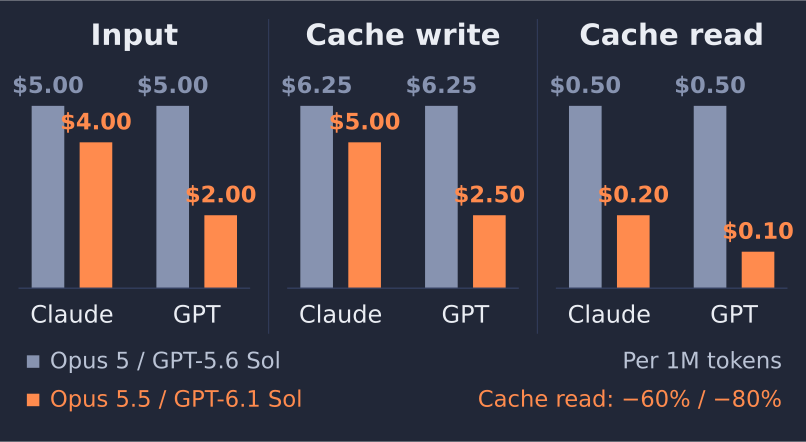
- Opus 5.5 cache-read pricing reportedly fell 60% versus Opus 5.
- GPT-6.1 Sol cache-read pricing reportedly fell 80% versus GPT-5.6 Sol.
Full article505 words · extracted from insufferable.dev · click to collapse
If you read the news headlines these days, you would be forgiven for thinking that the Western labs are getting spawn-camped by Chinese labs en masse.
The Distillation Drama
Not a week goes by when Anthropic doesn’t release another article on how the Chinese are distilling their models, becoming a danger to humanity itself, etc.
It’s beneficial for them to say that because it sets the ground for these models to be restrained legally and regulatorily later on.
But it’s clear that the days of mindless distilling are over.
Not just over. The new game in town is adopting Chinese labs’ advances. Note how I call this adoption instead of the more vitriol-infused “stealing” that Anthropic tends to use.
That’s because, unlike the Western companies, the Chinese are pretty much giving away their recipes.
A Different Game
The latest one shamelessly copied without acknowledgement is the breakthrough in KV cache optimizations that DeepSeek has generously shared with the world.
It is a mind-blowing optimization that basically dropped the KV cache footprint for certain use cases that use a long session context, like coding, by a factor of roughly 437x compared with DeepSeek-V1.
They were the first ones to release the MLA architecture, which compressed the cache by roughly 15x, and then followed it up with ‘Compressed Sparse Attention’ and ‘Heavily Compressed Attention.’ The latest DeepSeek-V4.1-Flash pushes it even further with CSA2, cross-layer cache reuse, a causal encoder-decoder architecture, and FP4 caching, bringing the global KV cache down to 890 bytes per token.
Why do these things matter? Because for serving long-context models, one of the largest costs is the VRAM needed to hold this cache in GPU memory.
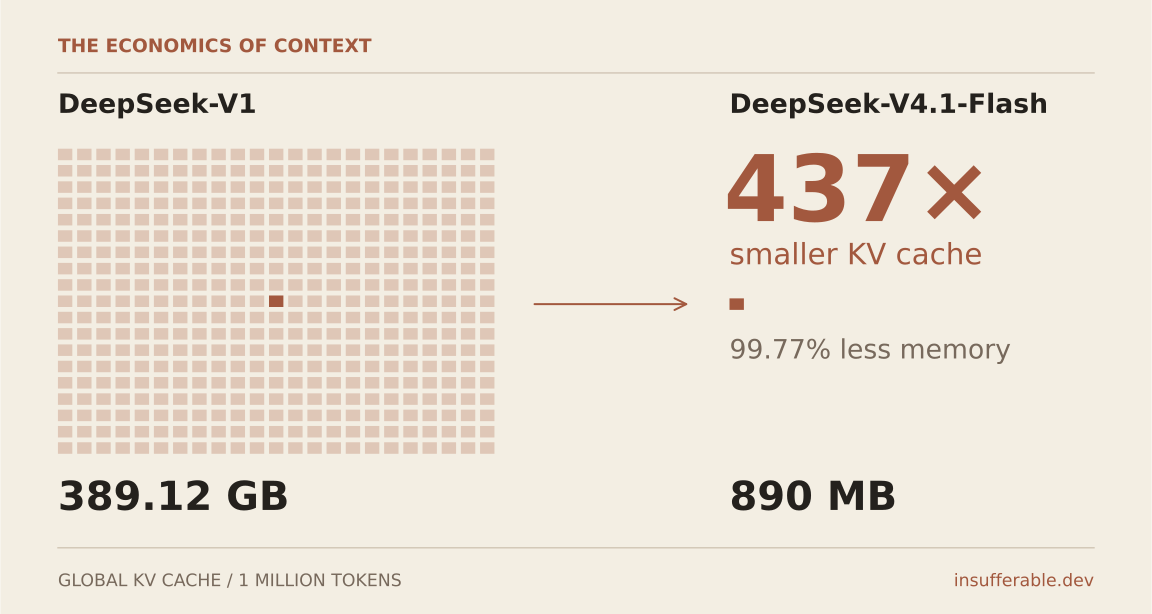
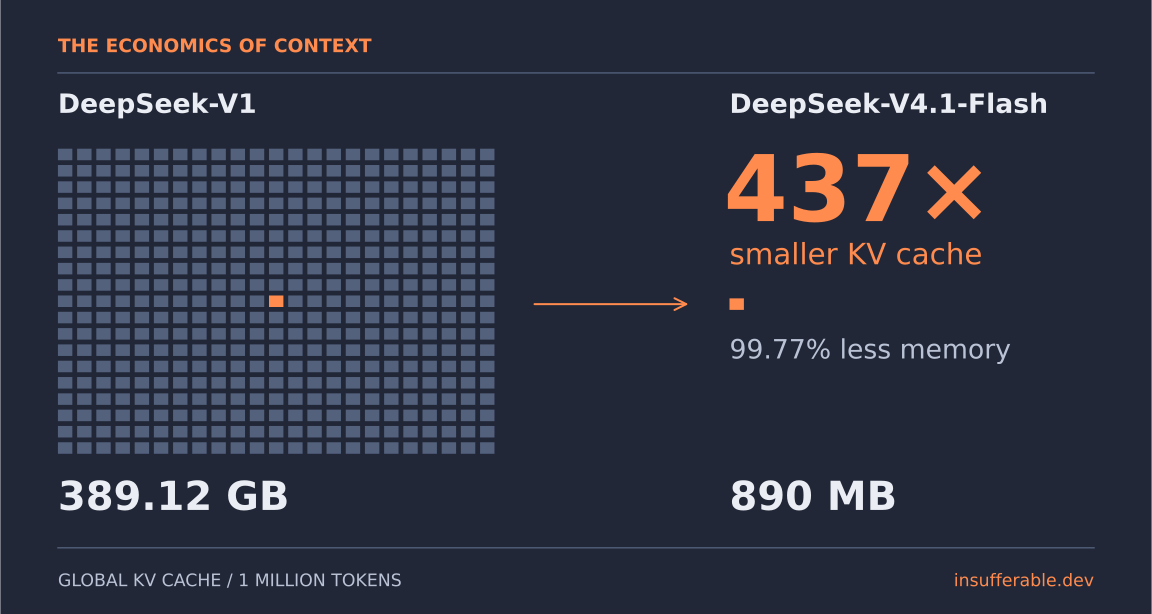
Below is the graph showing just how crazy this whole thing is:
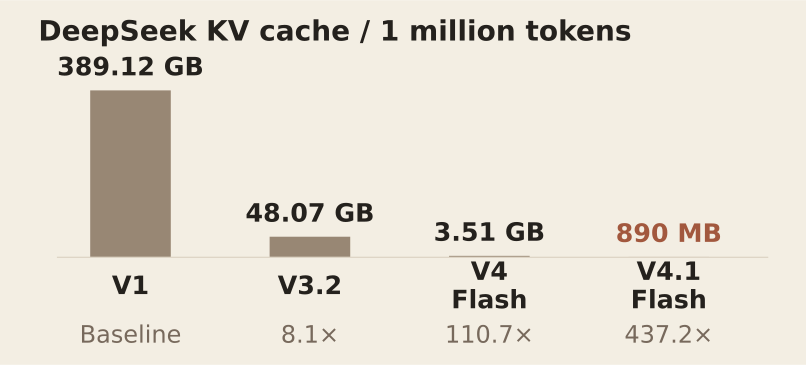
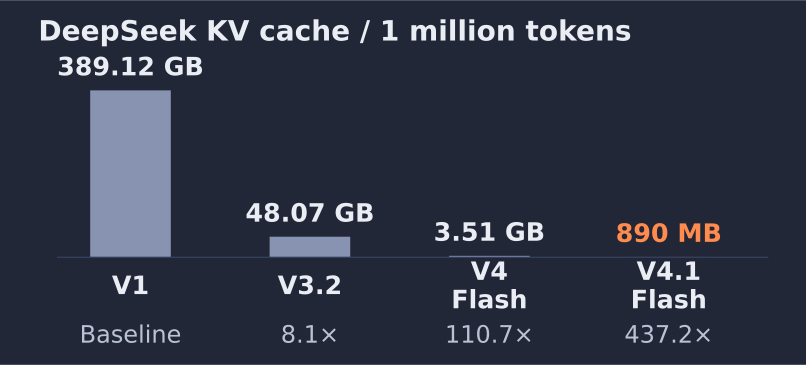
Follow the Cache Money
Compare that with what the same tier cost roughly two months ago. All prices below are per 1 million tokens:
A Very Quiet Thank-You
All this must mean the Western AI companies are now extremely inference-margin positive.
The constraints on access to advanced GPUs forced Chinese labs to make performance optimization a number one goal, and it shows in the results.
Now I don’t know why they would freely give away such a breakthrough, but they just did, and for once both Anthropic and OpenAI released models that are basically top-tier and are using these optimizations.
They do seem to be a little embarrassed by the copying. Hence the silent releases without much pre-announcement for both Claude Opus 5.5 and GPT-6.1 Sol.
The user reviews have been stellar w.r.t. usage, and the quality doesn’t seem to be that far off compared to their flagship models (Claude Fable 5.1 and GPT-6 Astra).
The cache read costs are the proof of the adoption. They dropped sharply: Opus 5.5 cut cache-read pricing by 60% versus Opus 5, while GPT-6.1 Sol cut it by 80% versus GPT-5.6 Sol’s late-July pricing.
So the Chinese labs have thrown a lifeline to the Western loss-making labs, and I just have no clue as to why.