Unidentified attackers breach tens of thousands of Cisco devices
Vulnerabilities mentionedAll →
| CVE | Vulnerability | CVSS | EPSS | Flags | Affected | Exposure | Published |
|---|---|---|---|---|---|---|---|
| CVE-2021-1435 | A vulnerability in the web UI of Cisco IOS XE Software could allow an authenticated, remote attacker to inject arbitrary commands that can be executed as the ro A vulnerability in the web UI of Cisco IOS XE Software could allow an authenticated, remote attacker to inject arbitrary commands that can be executed as the root user. This vulnerability is due to insufficient input validation. An attacker could exploit this vulnerability by sending a crafted request to the web UI of an affected device with arbitrary commands injected into a portion of the request. A successful exploit could allow the attacker to execute arbitrary commands as the root user. NVD description · AI analysis pending | 7.2 | 8% |
| — | ||
| CVE-2023-20198 | Unauthenticated Privilege Escalation in Cisco IOS XE Web UI (Actively Exploited) CVE-2023-20198 is a critical (CVSS 10.0) unauthenticated privilege escalation flaw in the web UI of Cisco IOS XE software, triggered by sending crafted network requests to the exposed web management interface. An attacker with no credentials can use the flaw to gain initial access and issue a privilege 15 command, creating a local user with normal login access; the attacker then chained CVE-2023-20273 (CVSS 7.2) to elevate that account to root and write an implant to the file system. Successful exploitation yields full administrative control of the device, including persistence via the planted implant, on Cisco IOS XE devices with the web UI enabled and reachable from the internet or untrusted networks, including Rockwell Automation Allen-Bradley Stratix 5200 and 5800 switches running IOS XE. Exploitation is confirmed in the wild: the flaw was added to CISA's KEV on 2023-10-16 with a BOD 23-02 directive, EPSS stands at 99.6% (100th percentile), and ongoing campaigns (including the 'BADCANDY' activity flagged by Australia's ASD and Cisco-related telecom intrusions attributed to Salt Typhoon) have been reported. Do: Upgrade affected devices to the fixed releases listed in Cisco's advisory (use Cisco's Software Checker) and, as immediate mitigation, disable the web UI or restrict it to trusted networks/addresses only. Check for compromise by looking for unexpected local user accounts and the implant artifacts Cisco identified (unexpected cisco_tac_alarm.log and cisco_tac.log files in /tmp or /usr/binos/conf), and immediately report positive findings to CISA per BOD 23-02. Keep in mind that patching alone does not remove a root implant, so devices with evidence of compromise should be reimaged or otherwise cleaned per vendor instructions. | 10.0 | 100% | KEV |
| large≈40,000–50,000 internet-exposed IOS XE devices at the time of disclosure (public scan data), within an IOS XE install base in the millions |
Full article828 words · extracted from cyberscoop.com · click to collapse
Get our latest cybersecurity news first on Google.
Attackers are actively exploiting vulnerable Cisco software to primarily target telecommunications companies, researchers say.

Tens of thousands of physical and virtual devices running Cisco networking software have been compromised as the result of a yet-unpatched vulnerability, according to multiple independent researchers.
Cisco issued a security advisory Monday warning of “active exploitation” of its IOS XE software but did not share details on the scale of the issue. Successful exploitation of the vulnerability would grant an attacker “full control of the compromised device” and allow “possible subsequent unauthorized activity,” the Cisco’s Talos threat intelligence group said in the alert.
The previously unknown vulnerability has been designated CVE-2023-20198.
By Tuesday, using indicators shared by Talos, researchers began to quantify the scale of compromised devices. Jacob Baines, the chief technical officer with VulnCheck, wrote that Cisco’s blog post “buried the lede by not mentioning thousands of internet-facing IOS XE web interfaces have been implanted.”
Later in the day, researchers with Censys reported observing 34,140 devices “that appear to have the backdoor installed.” Censys’ data pointed to tens of thousands of compromised devices around the world, the majority of which are in the U.S.
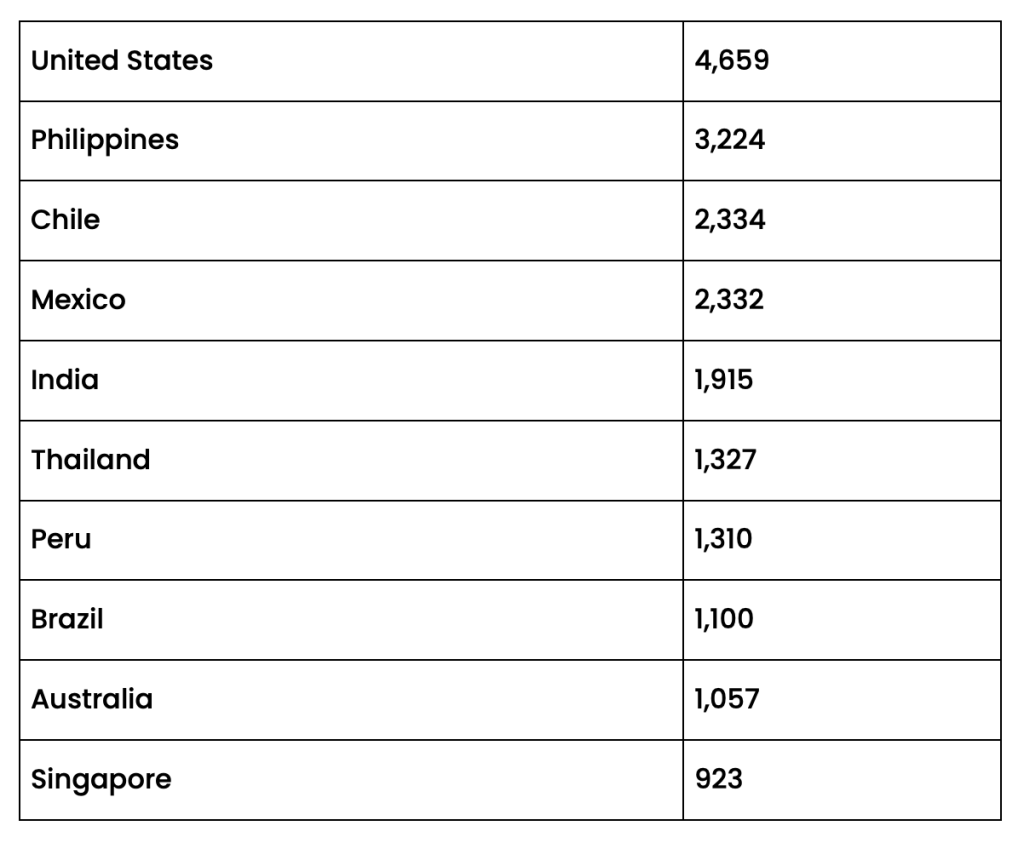
An analysis of the autonomous systems associated with the device IP addresses, which offers indications of the types of organizations involved, suggests “they predominantly represent telecommunications companies offering internet services to both households and businesses,” the Censys researchers reported.
A Cisco spokesperson told CyberScoop late Tuesday that the company is “working non-stop to provide a software fix and we strongly urge customers to take immediate action as outlined in the security advisory.”
Cisco became aware of the issue on Sept. 28, when it was reported to the company’s Technical Assistance Center, according to the Talos blog. An analysis showed that “related activity” began as early as September 18.
It’s not clear who is behind the compromises, but they “were likely carried out by the same actor,” the Talos blog read.
The attackers leveraged a previous vulnerability, CVE-2021-1435, which Cisco patched in 2021, to install the implant after gaining access to the device, according to Talos. “We have also seen devices fully patched against CVE-2021-1435 getting the implant successfully installed through an as of yet undetermined mechanism.”
U.S. government and cybersecurity industry officials have in recent months warned that advanced hacking groups are increasingly targeting so-called edge computing devices, like routers and firewalls. Targeting edge devices allows attackers of all kinds to gain access on systems that defenders have limited visibility into, Francisco Donoso, the chief technical officer of the cybersecurity firm Lodestone, told CyberScoop in an online chat Wednesday.
The vulnerable Cisco IOS XE firmware is used across a “fairly broad range of Cisco products including enterprise switches, wireless controllers, access points, industrial routers, virtual appliances, and other Cisco networking solutions,” Donoso said.
There is no easy way to validate the integrity of such devices, and most organizations likely don’t know their devices are internet-exposed, he added. And while the implant currently does not seem to survive a reboot, “these systems, particularly in telecom, remain online for significant amounts of time (sometimes years),” he said.
Now that this campaign has been exposed, attackers could potentially be mass spraying the exploit and implant in an attempt to gain initial access to as many organizations as possible and “will then triage which orgs are of value for further attack activity once the implant is deployed as widely as possible,” Donoso added.
Updated, Oct. 18, 2023: This article has been updated with additional comment from Francisco Donoso.
Latest Podcasts
Government
FBI officials say AI is bolstering adversaries, emphasizing need to focus on cyber basics, patching
Feds accuse China of ‘systematic’ distillation of U.S. AI models
CIA’s Michael Ellis says cyber intelligence is changing how the agency operates
The G7 tells industry to hurry up and prep for post-quantum encryption
Technology
Threats
Microsoft discloses two actively exploited zero-days among 974 vulnerabilities
Russian national extradited to US for alleged involvement in bank-account takeover scheme
Attackers exploit zero-days in consistently besieged SonicWall product
Jail time for Maine child in 764 marks turning point in federal law enforcement
Policy
Whistleblower says USPS deploying new, ‘untested’ IT systems governing mail-in ballots
‘Watershed 250’ test program in Texas looks to private sector for water cybersecurity help
Former sexual abuse victims say Grok used their images, videos to train deepfake capabilities
Cyber threats nudge Trump to sign executive order on foreign equipment in U.S. energy infrastructure
Text extracted automatically; images, tables and formatting may be missing. Original: https://cyberscoop.com/cisco-devices-breach-ios-xe/