Feral Wolf Hackers Exploit Confluence and 1C to Deploy GenieLocker Ransomware
Feral Wolf exploited Atlassian Confluence and 1C:Enterprise flaws to deploy GenieLocker ransomware across Russian retail, construction, manufacturing and IT firms.
BI.ZONE DFIR tracked Feral Wolf intrusions at Russian retail, construction, manufacturing, and IT organizations from May through August 2026. The actor exploited CVE-2023-22515 on internet-facing Confluence instances, deployed GSocket and Rust-based MQTTDoor/MatrixDoor backdoors using MQTT and Matrix C2, and used PwnKit (CVE-2021-4034) and Copy Fail (CVE-2026-31431) for privilege escalation and container-to-host escape. The group abused exposed 1C:Enterprise cluster managers and weak PostgreSQL credentials to move laterally before deploying GenieLocker ransomware.
- Exploited CVE-2023-22515 on exposed Confluence, created an admin account, installed a malicious plug-in, deployed GSocket.
- Used PwnKit CVE-2021-4034 and Copy Fail CVE-2026-31431 for privilege escalation and Docker container-to-host escape.
- Rust backdoors MQTTDoor and MatrixDoor abuse HiveMQ and Matrix servers for C2; RDPSocksProxy tunnels via RDP channels.
- Stole credentials via Magnet DumpIt memory dumps examined with MemProcFS, avoiding conspicuous tools like Mimikatz.
- GenieLocker final stage encrypts data; defenders urged to patch Confluence and lock down 1C services.
Vulnerabilities mentionedAll →
| CVE | Vulnerability | CVSS | EPSS | Flags | Affected | Exposure | Published |
|---|---|---|---|---|---|---|---|
| CVE-2021-4034 | Out-of-Bounds Read/Write Local Privilege Escalation in polkit pkexec (PwnKit) CVE-2021-4034 ('PwnKit') is an out-of-bounds read and write (CWE-125/CWE-787) in polkit's setuid-root pkexec utility, which mishandles the calling parameter count and ends up trying to execute environment variables as commands. A local attacker who runs pkexec with crafted environment variables can induce it to execute arbitrary code, gaining administrative (root) rights on the target machine. Because polkit is installed by default on mainstream Linux distributions — including Red Hat Enterprise Linux and its many variants, with the flaw also tracked against Canonical, SUSE, Oracle, Siemens, and StarWind Software products — essentially every standard Linux installation was exposed. The flaw is being actively exploited in the wild: CISA added it to the Known Exploited Vulnerabilities catalog on 2022-06-27 with known ransomware use, and EPSS assigns a 94.9% probability of exploitation (100th percentile). Public proof-of-concept exploits are widely available, making exploitation trivial for any user with local access to an unpatched host. Do: Apply the polkit/pkexec updates from each distribution vendor immediately per vendor instructions, as required by the CISA KEV catalog. If patching must be delayed, removing the setuid bit from pkexec (e.g., chmod 0755 /usr/bin/pkexec) is a widely documented interim mitigation, though it may affect functionality that relies on pkexec. Prioritize hosts where untrusted or low-privilege users can log in, and hunt for prior exploitation given known ransomware use. | 7.8 | 95% | KEV ransomware PoC ×4 |
| masstens of millions of Linux servers and workstations (polkit/pkexec ships by default on virtually all mainstream distributions) | |
| CVE-2023-22515 | Unauthenticated Broken Access Control in Atlassian Confluence Data Center/Server Atlassian Confluence Data Center and Server contain a broken access control flaw (CWE-20) in publicly accessible instances that allows unauthenticated remote attackers to create unauthorized Confluence administrator accounts and gain access to the instance; the associated public PoC is titled 'Atlassian Confluence Unauthenticated Remote Code Execution'. The flaw is triggered over the network (CVSS 3.1 9.8, AV:N/AC:L/PR:N/UI:N) against any self-managed Confluence instance reachable from the internet, with no privileges or user interaction required. Attackers who exploit it gain administrator-level control of the Confluence instance, and the public PoC demonstrates this extends to unauthenticated code execution. Only self-managed Confluence Data Center and Server deployments are affected; Atlassian Cloud sites hosted on atlassian.net domains are not vulnerable. Exploitation is confirmed in the wild: CISA added it to the KEV on 2023-10-05 with known ransomware use, EPSS is 99.2%, Atlassian reported a handful of customers were already exploited, and Microsoft warned of nation-state (China-linked) abuse. Do: Patch all internet-facing Confluence Data Center and Server instances to a fixed release per Atlassian's advisory (specific fixed versions are not listed in this data), or restrict public access/discontinue use per CISA's required action. Audit every affected instance for evidence of compromise, especially unauthorized administrator accounts created through this flaw, and report positive findings to CISA. Treat this as urgent given active exploitation by both nation-state actors and ransomware groups. | 9.8 | 99% | KEV ransomware PoC |
| large≈ tens of thousands of internet-exposed Confluence Data Center/Server instances (order of ~30,000-50,000) | |
| CVE-2026-31431 | Local Privilege Escalation (Copy Fail) in Linux Kernel algif_aead Interface CVE-2026-31431 ('Copy Fail') is an incorrect resource transfer between spheres (CWE-669/CWE-1288) in the Linux kernel's algif_aead implementation of the AF_ALG userspace crypto interface, introduced roughly nine years ago (around 2017, per public reporting) when commit 72548b093ee3 switched AEAD operations to in-place handling even though the source and destination buffers come from different mappings. A local, unprivileged user can trigger the flaw by performing AEAD operations through the AF_ALG socket interface, causing the kernel to mishandle the copy of ciphertext and associated data. Successful exploitation provides a reliable local privilege escalation to root (C:H/I:H/A:H per the CVSS vector). Nearly every major Linux distribution and enterprise platform is exposed, including the kernel itself, Red Hat Enterprise Linux (including AUS, EUS, TUS and Update Services for SAP Solutions), OpenShift Container Platform, Amazon Linux, Ubuntu, Debian, openSUSE Leap, SUSE CaaS Platform, NixOS, and Linux-based products from Arista and Siemens. The flaw has public proof-of-concept code, a 99.9% EPSS score, and was added to CISA's Known Exploited Vulnerabilities catalog on 2026-05-01, indicating exploitation in the wild (ransomware use is unknown). Do: Patch by installing the kernel update for CVE-2026-31431 through your distribution's security channel (Red Hat Enterprise Linux including AUS/EUS/TUS/SAP channels, OpenShift, Amazon Linux, Ubuntu, Debian, openSUSE Leap, SUSE CaaS Platform, NixOS, and Arista/Siemens firmware/software as applicable) and reboot into the patched kernel; the data provides no fixed version numbers, so defer to vendor advisories. Because the flaw is in CISA's KEV catalog (added 2026-05-01) with a 99.9% EPSS score, prioritize internet-reachable and multi-user systems first and follow BOD 22-01 guidance for cloud services. Check running kernel versions ('uname -r') and distribution advisory status to confirm you are on a fixed build. | 7.8 | 100% | KEV PoC ×5 |
| masshundreds of millions to billions of installations (servers, cloud instances, desktops, and Android/embedded devices running affected kernel generations) |
Indicators of compromiseauto-extracted · verify before use · export allAll →
| Type | Indicator | Context |
|---|---|---|
| domain | bi.zone | d outbound traffic to public MQTT or Matrix infrastructure. BI.ZONE notes that effective incident response should include ident |
| domain | element.tw | r used the public HiveMQ broker, while MatrixDoor used meet.element[.]tw as its Matrix homeserver. Both can masquerade as legitima |
| sha256 | 1e2e08a36b6126f2363c24b5fe7a6dbd755c35b1cb6f15cdea13fc93274019f3 | 307d154b2935703422d44f02e403d2e78 exploit_cve_2026_31431.py 1e2e08a36b6126f2363c24b5fe7a6dbd755c35b1cb6f15cdea13fc93274019f3 Note: IP addresses and domains are intentionally defanged ( |
| sha256 | 2539170c4c1ffeeb17e87917687b5f86104cc88de9478696cee6e0ecaddfc9bb | f1d937b721fad95c63374f7dd0570d1b1e9d96c41 gs-dbus (GSocket) 2539170c4c1ffeeb17e87917687b5f86104cc88de9478696cee6e0ecaddfc9bb gs-dbus (GSocket) cb5f62bf7b591e69bd38e6bf8e40e8d307d154b29 |
| sha256 | 487886e5058294b7d965421f1d937b721fad95c63374f7dd0570d1b1e9d96c41 | could enable recurrence. IOCs Indicator SHA-256 memfix.zip 487886e5058294b7d965421f1d937b721fad95c63374f7dd0570d1b1e9d96c41 gs-dbus (GSocket) 2539170c4c1ffeeb17e87917687b5f86104cc88de |
| sha256 | cb5f62bf7b591e69bd38e6bf8e40e8d307d154b2935703422d44f02e403d2e78 | 7687b5f86104cc88de9478696cee6e0ecaddfc9bb gs-dbus (GSocket) cb5f62bf7b591e69bd38e6bf8e40e8d307d154b2935703422d44f02e403d2e78 exploit_cve_2026_31431.py 1e2e08a36b6126f2363c24b5fe7a6dbd7 |
Full article821 words · extracted from gbhackers.com · click to collapse
Feral Wolf has expanded its ransomware tradecraft by abusing exposed Atlassian Confluence servers and insecure 1C:Enterprise deployments to gain access to Russian corporate networks before deploying GenieLocker ransomware.
The campaign, tracked from May through August 2026, targeted organizations in the retail, construction, manufacturing, and IT sectors.
BI.ZONE DFIR investigators found that the threat actor combined exploitation of public-facing applications, credential abuse, container-to-host lateral movement, covert command-and-control channels, and anti-forensic tooling to reach the encryption stage.
The activity highlights how exposed enterprise software and weak administrative configurations can provide ransomware operators with a direct path into critical infrastructure.
In one intrusion, Feral Wolf targeted an internet-accessible Confluence instance running inside a Docker container.
The attackers reportedly exploited CVE-2023-22515, an Atlassian Confluence vulnerability, after reaching the environment through a proxy server.
The operation was traced to 45.151.45[.]31, an IP address associated with ProtonVPN infrastructure.
After compromising Confluence, the attackers created an account, assigned it administrative privileges, and installed a malicious plug-in.
They then used command execution in the container to deploy GSocket, a reverse-connection utility designed to provide persistent remote access.
The malware was disguised as Linux kernel-related processes, including [kcached] and [rcu_preempt], through the exec -a command-line technique.
Feral Wolf also configured the GSocket payload to use port 53, a common DNS port that may help malicious traffic blend into normal network activity.
A second GSocket instance was installed as a fallback channel, giving the attackers redundancy if their primary access method failed.
The group subsequently uploaded exploits for PwnKit, tracked as CVE-2021-4034, and Copy Fail, CVE-2026-31431.
Copy Fail is a Linux local privilege-escalation flaw that may enable an attacker with unprivileged code execution in a container to compromise the underlying host when the required conditions exist.
The operators also used the fscan reconnaissance utility to identify exposed services and weak credentials.
That scan uncovered a PostgreSQL service using the weak postgres password 12345678.
Feral Wolf then deployed revsocks to tunnel traffic from the Confluence container and apparently used the discovered database credentials to move from the container into the Docker host.
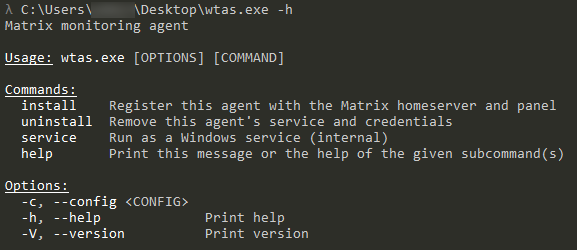
The MatrixDoor backdoor, also written in Rust, was distributed as wtas.exe. The malware enables remote command execution on compromised hosts via the CMD interpreter.
On the host, the attackers established further persistence through modified shell-profile files and PostgreSQL cron jobs.
A separate intrusion chain focused on externally accessible 1C:Enterprise server clusters.
Feral Wolf connected to exposed cluster-manager services on TCP port 1541, associated with rmngr.exe, before interacting with rphost.exe processes on ports 1570–1571.
GenieLocker Ransomware
In affected environments, missing cluster-administrator controls or debug-mode configuration appeared to let the operators perform administrative actions without adequate authentication.
The attackers abused 1C-Shell database dumps and malicious external processing files to execute operating-system commands through the 1C platform.
They also attempted to deploy PrintSpoofer for local privilege escalation, although that effort failed because the compromised rphost.exe account lacked the required SeImpersonatePrivilege permission.
For credential theft, Feral Wolf relied on legitimate tools rather than more conspicuous credential-dumping malware.
The group used Magnet DumpIt to create a full physical memory image and MemProcFS to mount and examine the resulting dump, including artifacts linked to lsass.exe.
This technique could enable offline extraction of credentials from process memory while reducing dependence on tools such as Mimikatz.
The campaign also introduced three notable tools: MQTTDoor, MatrixDoor, and RDPSocksProxy. MQTTDoor and MatrixDoor are Rust-based backdoors that execute PowerShell or CMD commands while using MQTT and Matrix, respectively, for C2 communications.
MQTTDoor used the public HiveMQ broker, while MatrixDoor used meet.element[.]tw as its Matrix homeserver.
Both can masquerade as legitimate Windows services and encrypt configuration data using keys derived from the victim’s MachineGuid value.
RDPSocksProxy provides SOCKS4/5 proxying through an RDP Dynamic Virtual Channel, allowing attackers to tunnel traffic through an otherwise legitimate Remote Desktop Protocol session.
In the final phase, Feral Wolf used GenieLocker ransomware to encrypt victim data.
Defenders should urgently patch exposed Confluence deployments, restrict external access to 1C cluster-management services, enforce strong PostgreSQL credentials, and review 1C debug-mode usage.
Security teams should also hunt for suspicious service names such as cplsupport and wtas, unexpected GSocket binaries, altered shell profiles, memory-dump activity, and outbound traffic to public MQTT or Matrix infrastructure.
BI.ZONE notes that effective incident response should include identifying the root cause, isolating compromised systems, and investigating infrastructure misconfigurations that could enable recurrence.
IOCs
| Indicator | SHA-256 |
|---|---|
memfix.zip | 487886e5058294b7d965421f1d937b721fad95c63374f7dd0570d1b1e9d96c41 |
gs-dbus (GSocket) | 2539170c4c1ffeeb17e87917687b5f86104cc88de9478696cee6e0ecaddfc9bb |
gs-dbus (GSocket) | cb5f62bf7b591e69bd38e6bf8e40e8d307d154b2935703422d44f02e403d2e78 |
exploit_cve_2026_31431.py | 1e2e08a36b6126f2363c24b5fe7a6dbd755c35b1cb6f15cdea13fc93274019f3 |
Note: IP addresses and domains are intentionally defanged (e.g., [.]) to prevent accidental resolution or hyperlinking. Re-fang only within controlled threat intelligence platforms such as MISP, VirusTotal, or your SIEM.
Cut every SOC alert investigation by 21 min. Power your SOC with instant IOC context for immediate response: Integrate TI Lookup in your SOC
Mayura Kathirhttps://gbhackers.com/
Mayura Kathir is a cybersecurity reporter at GBHackers News, covering daily incidents including data breaches, malware attacks, cybercrime, vulnerabilities, zero-day exploits, and more.
Text extracted automatically; images, tables and formatting may be missing. Original: https://gbhackers.com/genielocker-ransomware/