CISA warns admins to immediately fix Ivanti flaw exploited as zero-day
CISA says patch Ivanti Connect Secure CVE-2026-104935, exploited as a zero-day for unauthenticated command execution.
CISA warned administrators to immediately patch CVE-2026-104935, a high-severity authentication bypass in Ivanti Connect Secure exploited as a zero-day since at least October 1. Unauthenticated attackers can run arbitrary commands; Volexity says actor UTA0576 chained the issue with remote code execution and privilege escalation for unauthenticated root access, then stole Active Directory secrets including LAPS passwords and BitLocker recovery keys. Ivanti shipped fixes in versions 22.8R2.5, 25.1.3.0, 25.1.3.1, and 25.1.1.2 and reported limited in-the-wild exploitation. CISA added the flaw to its exploited-vulnerability list and ordered federal agencies to remediate by Friday, while Shadowserver tracks more than 5,600 internet-exposed ICS hosts.
- CVE-2026-104935 is an unauthenticated Ivanti Connect Secure authentication bypass enabling remote commands.
- Exploitation observed since at least October 1; CISA added it to the KEV catalog.
- UTA0576 chained it with RCE and privilege escalation for root and credential theft.
- Fixed in ICS 22.8R2.5, 25.1.3.0, 25.1.3.1, and 25.1.1.2; federal deadline is Friday.
- Integrity Checker may miss in-memory commands; factory reset and credential rotation advised.
Vulnerabilities mentionedAll →
- CVE-2024-218879.1100%Command Injection RCE in Ivanti Connect Secure and Policy Securepublished · Ivanti Connect Secure (ICS, formerly Pulse Connect Secure) KEV ransomware PoC
Indicators of compromiseauto-extracted · verify before use · export allAll →
| Type | Indicator | Context |
|---|---|---|
| ipv4 | 25.1.1.2 | nti released ICS versions 22.8R2.5, 25.1.3.0, 25.1.3.1, and 25.1.1.2 on Tuesday to address this security flaw and warned custome |
| ipv4 | 25.1.3.1 | teraction. Ivanti released ICS versions 22.8R2.5, 25.1.3.0, 25.1.3.1, and 25.1.1.2 on Tuesday to address this security flaw and |
Full article666 words · extracted from bleepingcomputer.com · click to collapse

The U.S. Cybersecurity and Infrastructure Security Agency (CISA) urged security teams to immediately patch an Ivanti Connect Secure (ICS) flaw exploited in zero-day attacks since at least October 1st.
Tracked as CVE-2026-104935, this high-severity authentication bypass vulnerability lets remote threat actors without privileges execute arbitrary commands on targeted ICS systems in low-complexity attacks that don't require user interaction.
Ivanti released ICS versions 22.8R2.5, 25.1.3.0, 25.1.3.1, and 25.1.1.2 on Tuesday to address this security flaw and warned customers to "act immediately" because of "limited exploitation in the wild."
While Ivanti didn't share additional information about ongoing attacks targeting CVE-2026-104935, cybersecurity firm Volexity reported that an unknown threat actor it tracks as UTA0576 has been chaining this security issue with two other flaws in attacks since at least October 3rd.
"This exploit chain combined an authentication bypass, a remote code execution (RCE), and a privilege escalation vulnerability to achieve unauthenticated root-level code execution. The RCE and authentication bypass vulnerabilities are tracked under CVE-2026-104935," Volexity said.
"Volexity identified a range of post-exploitation actions undertaken by the threat actor that targeted Active Directory credentials and secrets, including Local Administrator Password Solution (LAPS) passwords and BitLocker recovery keys."
Threat intel firm Defused also confirmed Volexity's report, saying it first found evidence that attackers are abusing CVE-2026-104935 in the wild on October 1st.
Internet threat watchdog Shadowserver now tracks over 5,600 Internet-exposed hosts with ICS fingerprints. However, there is no information on how many are secured against ongoing attacks or how many are honeypots designed to catch malicious activity.
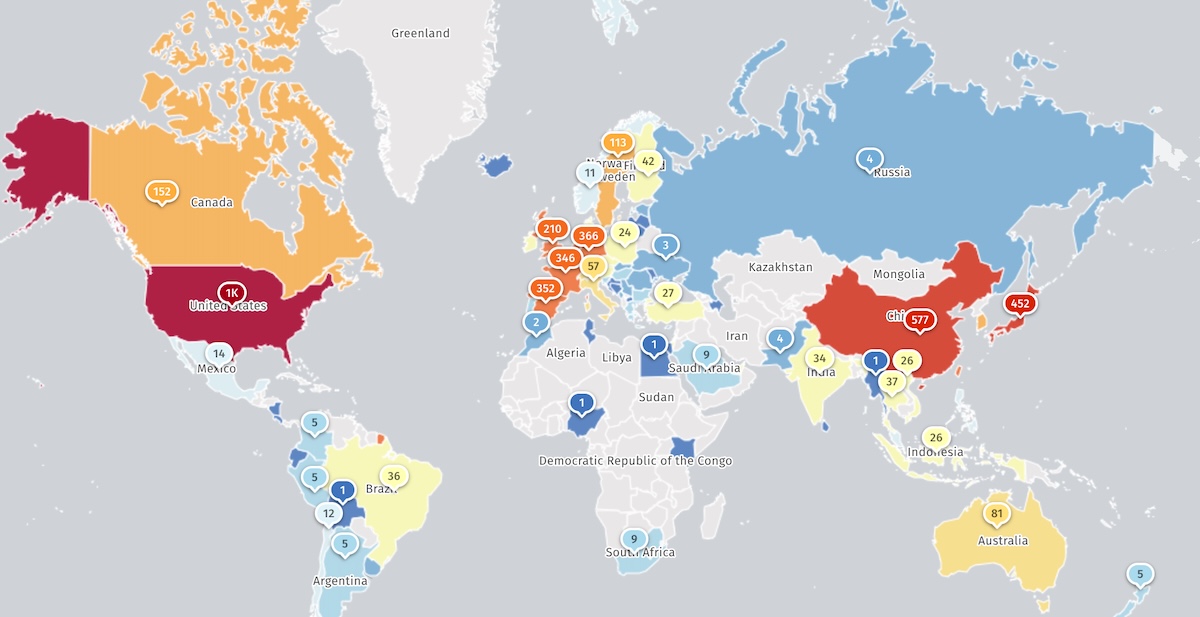
Admins urged to patch vulnerable Ivanti systems
On Tuesday, CISA also added CVE-2026-104935 to its list of actively exploited security flaws and ordered federal agencies to secure their networks against attacks by Friday, as mandated by its June Binding Operational Directive 26-04.
While BOD 26-04 applies only to Federal Civilian Executive Branch (FCEB) agencies, the cybersecurity agency also issued a separate advisory urging all security teams and network defenders to patch this vulnerability immediately and check for evidence of compromise.
"CISA is aware of cyber threat actors exploiting this zero-day authentication bypass vulnerability, which allows remote, unauthenticated execution of arbitrary commands, to conduct credential theft and data exfiltration. [..] CISA urges organizations with affected Ivanti Connect Secure appliances and deployments to immediately update to the latest version," it warned.
"Organizations seeking to determine whether they were compromised will need to conduct network and memory forensics to identify evidence of exploitation. [..] Ivanti's Integrity Checker Tool may not detect evidence of exploitation of CVE-2026-104935 because threat actor commands execute in memory."
CISA advised defenders to take the following actions if they discover compromised Ivanti ICS appliances:
- Create a backup of the appliance configuration.
- Perform a factory reset and upgrade the appliance to the latest version (for cloud and virtual systems, rebuild the virtual instance and upgrade to the latest version).
- Restore the appliance configuration from the backup created in step 1.
- Reset passwords for all accounts, including domain, administrator, and local accounts. Revoke and reissue stored certificates; reset stored API keys and license server credentials.
Ivanti addressed multiple other Connect Secure zero-days exploited in the wild over the last several years, including an authentication bypass (CVE-2023-46805) and a command injection (CVE-2024-21887) in early January 2024, and a server-side request forgery (CVE-2024-21893) two weeks later.
More recently, it patched a remote code execution (RCE) flaw (CVE-2025-0282) in January 2025 and another RCE vulnerability (CVE-2025-22457) that China-linked cyber spies have exploited since at least mid-March 2025.
CISA has added 36 Ivanti vulnerabilities to its list of actively exploited security issues since November 2021, 12 of which have also been abused in ransomware attacks.
Build your security blueprint for AI-powered attacks
Join Mikko Hyppönen and security leaders from the NFL, CHANEL, and Atlassian for a two-hour digital summit on what AI-speed attacks change, what defenders should stop doing, and how to validate, decide, fix, and re-validate at machine speed.