Yandex confirms service outage as users lose access to cloud files
Drone strikes knocked out Yandex data centers, cutting customers off from cloud files and services.
Yandex said drone attacks damaged data centers in Sasovo (October 8), Kaluga (October 9), and Vladimir (October 11), fully shutting Sasovo and Vladimir and degrading Kaluga. Customers cannot reliably download Yandex Disk files, reporting HTTP 302, 500, and 504 errors and backups missing thumbnails. The company, whose cloud supports much of Russia’s government and business internet, called remaining capacity unstable and told customers to use alternative disaster-recovery infrastructure. No injuries were reported, permanent data loss is unconfirmed, and services such as Console, API, S3, and Kubernetes remain only partly available while Monium is offline.
- Sasovo and Vladimir data centers are fully offline; Kaluga is degraded.
- Strikes hit on October 8, 9, and 11; Ukraine is the suspected source.
- Customers report HTTP 302, 500, and 504 errors fetching cloud files.
- Yandex calls remaining capacity unstable and urges alternate disaster recovery.
- Whether stored data was permanently lost has not been confirmed.
Full article441 words · extracted from bleepingcomputer.com · click to collapse

Russian cloud services provider Yandex announced that drone attacks damaged three of its data centers, forcing it to shut down two facilities and partially disable a third.
Yandex customers are experiencing service outages, some of them reporting inability to access files stored on the company’s cloud infrastructure.
The impacted data centers are in Sasovo (hit on October 8), Kaluga (hit on October 9), and Vladimir (attacked on October 11). The Sasovo and Vladimir facilities stopped operating completely, while the Kaluga facility's operations are degraded.
The attacks are believed to have been carried out by Ukrainian forces trying to cause widespread operational disruptions. Yandex reported no injuries related to these incidents.
As Russia’s largest technology companies, Yandex is often called “Russia’s Google,” offering search engine, maps, and navigation services. The company also offers ride-hailing, delivery, shopping, streaming, email, cloud storage, and business cloud infrastructure services.
Much of the country's internet infrastructure, serving both government and private-sector organizations, relies on Yandex's services.
EU MEP Tomáš Zdechovský highlighted a potential connection between Yandex outages and a sudden drop in communication from online accounts promoting far-right ideals in Germany.
.png)
On its status page, Yandex said its teams are working around the clock to maintain services and help affected customers and partners, but it cannot provide a reliable service-restoration timeline.
For this reason, Yandex urged customers to use alternative infrastructure for disaster recovery.
“We consider the remaining resource configuration to be unstable,” reads one of Yandex’s status updates from yesterday.
“The platform's operating mode is emergency – we recommend using any other alternative disaster recovery plans. Technical-supported communication channels can be unstable.”
As of the most recent update, Yandex’s Console, API, IAM, Container Registry, databases, S3 storage, and Kubernetes were available, with some performance or availability issues. Compute, AI Studio, and security services were partially available, while Monium is still offline.
One Yandex customer reported issues starting on October 8, with backups to their Yandex Disk missing thumbnails and an inability to download previously submitted files.
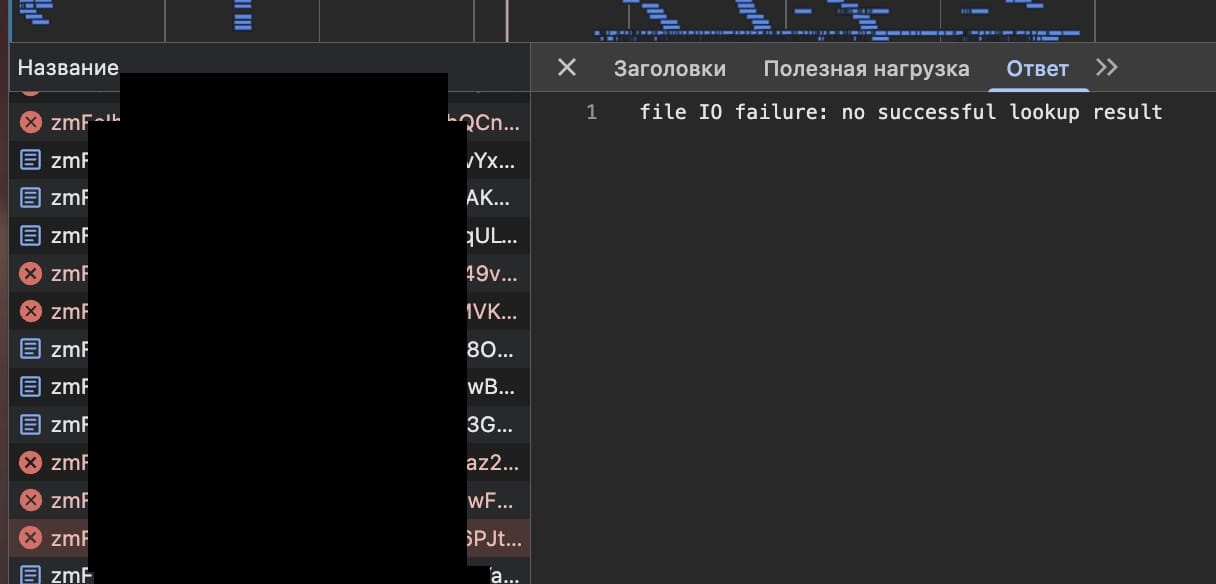
Source: habr.com
The user reports getting HTTP 302 redirects, HTTP 504 Gateway Timeout errors, and HTTP 500 errors when trying to access or work on the files.
It is currently unclear whether any data stored in the affected data centers has been irreversibly lost, as Yandex has not addressed the problem in its status updates.
Build your security blueprint for AI-powered attacks
Join Mikko Hyppönen and security leaders from the NFL, CHANEL, and Atlassian for a two-hour digital summit on what AI-speed attacks change, what defenders should stop doing, and how to validate, decide, fix, and re-validate at machine speed.